Sciences Library Winter Interim Hours, December 15, 2012 – January 21, 2013:
| Monday – Friday | 9:00am – 5:00pm |
| Saturday – Sunday | CLOSED |
Exceptions: CLOSED December 24-28 & 31, January 1 & 21.
Sciences Library Winter Interim Hours, December 15, 2012 – January 21, 2013:
| Monday – Friday | 9:00am – 5:00pm |
| Saturday – Sunday | CLOSED |
Exceptions: CLOSED December 24-28 & 31, January 1 & 21.
The August 2012 theses and dissertations are now available in Iowa Research Online (IRO), which is the repository of the research and scholarly output selected and deposited by the faculty, researchers and students of the University of Iowa. IRO is part of the larger Open Access movement to transform scholarly communication.
The sciences departments in the College of Liberal Arts and Sciences are well represented in IRO with the following departments contributing new disserations and theses.
The UI Libraries are also happy to announce some improved functionality in Iowa Research Online.
If you have any questions about the IRO or if you would like to deposit your research there, please contact the Sciences Library.
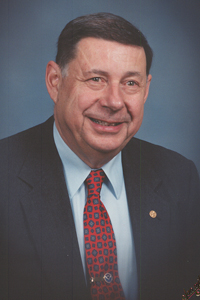 We depend on weather satellite images daily for our forecasts and travel plans. Without the groundwork laid by the National Earth Satellite Service beginning in 1972, though, these images would not be possible today. A distinguished UI alumnus, George H. Ludwig (BA ’56, MS -59, Ph.D. ’60) was a founding director of NESS and led its operations throughout the 1970s. It is part of Mr. Ludwig’s long and significant career in physics and environmental research, now documented in his papers recently donated to the University Archives.
Mr. Ludwig, a native of rural Johnson County, Iowa, was a graduate student under James Van Allen during the pioneering Explorer space exploration missions in the late 1950s. He was the principal developer of the cosmic ray and radiation belt instruments for the successfully launched Explorers I, III, IV, and VII. He was also a research engineer at the Jet Propulsion Laboratory in Pasadena, California for a five month period following the 1957 launch of Sputnik I by the Soviet Union.
His papers chronicle his research in physics as a doctoral candidate at UI as well as the many projects he supervised or consulted while with NASA, the National Oceanic and Atmospheric Administration, and other organizations throughout his 40-plus year career. The guide to his papers is at http://www.lib.uiowa.edu/scua/archives/guides/RG99.0004.html; the guide does not yet account for the most recent materials received by the Archives.
George Ludwig’s contributions to space exploration and environmental research are invaluable, and the University Archives is honored to document his achievements.
(Original post by David McCartney on December 4, 2012)
 The UI Libraries has been awarded $200,000 from the Carver Trust to digitize the data tapes from the Explorer I satellite mission that led to the discovery of the Van Allen radiation belts. These tapes were recovered from the basement of Maclean Hall through the outstanding efforts of our Preservation Dept. in 2010-2011. During that time, tapes containing the original data from Explorer I, III, IV, and a few subsequent satellites, were cleaned and transferred to the Van Allen collection here in the University Archives. We will be using the funds from the Carver Trust to digitize the data from the Explorer I tapes and make it freely accessible online in its original raw format, to allow researchers or any interested parties to download the full data set. This resource will be complemented by an immersive online site containing material from the Van Allen archive that provides historical context and interpretation for the interested general public. This material includes scans of memos, planning documents, diagrams, correspondence, and diary entries, along with photographs, video, and audio items. The site will tell the story of James Van Allen’s work and the Explorer I mission in an interactive manner, and will also provide curriculum that will harness these unique historical and scientific resources to engage a new generation of students with the possibilities of scientific discovery.
For more information on NASA’s recent announcements relating to renaming efforts honoring James Van Allen see the November 12th article in “Iowa Now” and the announcement from NASA.
(Original post by Colleen Theisen on November 27, 2012)
Are you overwhelmed with sources and citations for your research project? Please join Sciences Research and Instruction Librarian, Sara Scheib, to learn how to evaluate the credibility of sources and manage your citations using web-based tools.
Lunch @ the Sciences Library: Evaluating and Citing Sources
12:30-1:20 pm, Wednesday, November 28th
102 SL (Sciences Library classroom)
In this workshop you will learn:
The workshop is open to all UI students, faculty and staff. There is no need to register. You may bring your lunch if desired. If you have any questions, please contact Sara Scheib at (319) 335-3024 or sara-scheib@uiowa.edu.
The UI Libraries is trying out a new resource. The trial ends on December 15, 2012.
The Data Citation Index supports data discovery, reuse and interpretation that benefits everyone involved in the research lifecycle.
Please send comments to Michael Wright.
Sciences Library hours during Thanksgiving Recess (November 16-25, 2012):
| Friday, November 16 | 9:00am – 5:00pm |
| Sat-Sun, November 17-18 | CLOSED |
| Mon-Wed, November 19-21 | 9:00am – 5:00pm |
| Thurs-Sun, November 22-25 | CLOSED |
Please contact the Sciences Library at (319) 335-3083 or lib-sciences@uiowa.edu if you have any questions.
Do you use PubMed or other NCBI databases in your research? Would you like to learn some expert tips and tricks? Shane Wallace and Chris Childs from the Hardin Library for the Health Sciences will be coming to the Sciences Library to demonstrate the advanced features of PubMed and other NCBI databases and answer your questions. Please join us.
Lunch @ the Sciences Library: PubMed & NCBI
12:30-1:20 pm, Wednesday, November 14th
102 SL (Sciences Library classroom)
In this workshop you will learn:
The workshop is open to all UI students, faculty and staff. There is no need to register. You may bring your lunch if desired. If you have any questions or concerns, please contact Sara Scheib at (319) 335-3024 or sara-scheib@uiowa.edu.
My Friend, Rachel Carson: Shirley Briggs and the Iowa Connection to “Silent Spring”
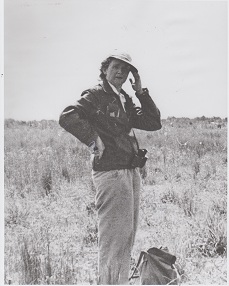 Fifty years ago, Rachel Carson published “Silent Spring,” a lucid and compelling book about how DDT and other pesticides were damaging the environment and human health. The book called for a change in the way humankind viewed the natural world and became an inspiration for the environmental movement. One of Carson’s staunchest advocates and closest friends was Iowan Shirley Briggs, who met Carson when they worked together at the U.S. Fish and Wildlife Service in the 1940s.
To recognize this Iowa connection to “Silent Spring,” the University of Iowa Libraries and Office of Sustainability are presenting a symposium and exhibition opening, Thursday, Nov. 15, inspired by the extensive collection of Briggs’ diaries, letters, photos and artwork in the Iowa Women’s Archives.
The symposium begins at 4:30 p.m. Nov. 15 in Phillips Hall Auditorium (100 PH), followed by an opening reception in the UI Sciences Library, where an exhibit of Briggs’ photos, writings, art work and memorabilia will be on display through Jan. 7. “A Sense of Wonder,” a short film about the last days of Rachel Carson as she struggled with cancer, will be shown from noon to 1 p.m., Wednesday, Nov. 14 at the Iowa City Public Library.
Speaking at the symposium will be Liz Christiansen, director of the UI Office of Sustainability, who will read from “Silent Spring” and tell about Carson’s legacy to the environmental movement. Kären Mason, curator of the Iowa Women’s Archives, will talk about Briggs and her connection to Carson’s work. Brief clips from “A Sense of Wonder” will also be shown.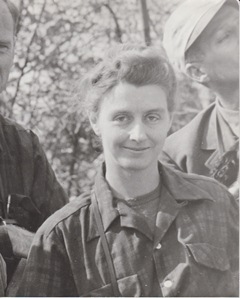
Briggs, an Iowa City native, was the author of “Basic Guide to Pesticides” (1992), inspired by the many requests for information about pesticides after “Silent Spring” was published in 1962. Briggs attended the University of Iowa earning a B.A. in art, art history, and botany in 1939 and an M.A. in art and art history in 1940. She studied with Grant Wood at UI. In 1945, she was hired by the U.S. Fish and Wildlife Service as an artist. She became close, lifelong friends with Carson and with other noted naturalists, such as Roger Tory Peterson, through her work as editor of the Atlantic Naturalist, a publication of the Audubon Naturalist Society of the District of Columbia.
After years of research in the United States and Europe, Carson made the decision to produce “Silent Spring.” This landmark work was linked to the increase of awareness of the impact of persistent, bio-accumulative chemical pollutants in the environment – these include DDT, mercury, Chlordane and Dieldrin, among others. These deadly chemicals are still being cleaned up and removed from the environment.
After her book’s publication, Carson was vilified by chemical companies. Her writings about the impact of legacy chemicals led to landmark legislation and the banning of the use of DDT. She died in 1964 after a long battle against breast cancer. After Carson’s death, Briggs created a non-profit organization, the Rachel Carson Council, a pesticide research information clearinghouse for both scientists and lay people.
Just eight years after “Silent Spring” was published, President Richard Nixon established the Environmental Protection Agency and with an extensive directive, helped pave the way for a series of important environmental laws, such as the Clean Air and Clean Water Acts.
Please join the Sciences Library for:
Lunch @ the Library: Gray Literature
At 12:30-1:20pm on Wednesday, November 7th in 102 SL (Sciences Library classroom).
What is gray (or grey) literature? Characteristics of gray literature include:
Document types include:
In this workshop, Marianne Mason, U.S. Federal Information Librarian, will teach you how to find gray literature, how to use it in your research, and how to cite it. And as always, how to get help when you need it.
The workshop is open to all UI students, faculty and staff. There is no need to register. You may bring your lunch if desired, but coffee and cookies will be provided. If you have any questions or concerns, please contact Sara Scheib at (319) 335-3024 or sara-scheib@uiowa.edu.