Skip to content
Skip to main content

Data Management Xpress Class Today, April 16!!

This is an introduction to an online tool called DMPTool which will help you to create data management plans that meet institutional and funder requirements.

Today, 2:30 p.m., 2001C Seamans Center Library Computer Classroom, 30 minute class.

Taught by Qianjin (Marina) Zhang, Engineering & Informatics Librarian, Lichtenberger Engineering Library.

LIB_April_16_Data Management

It Is National Library Week!

It is National Library Week!!

National_Library_week


Do you know how much your Engineering Library has to offer?

Stack_of_books


The Lichtenberger Engineering Library – YOUR library – has a collection of more than 150,000 books! We also provide access to over 5,000 current electronic journal titles, and over 100 engineering-related DVDs!

On or off-campus, you have access to multiple databases, including Web of Science, Compendex and PubMed.  Compendex is the most comprehensive bibliographic database of scientific and technical engineering research available, covering all engineering disciplines. It includes millions of bibliographic citations and abstracts from thousands of engineering journals and conference proceedings. When combined with the Engineering Index Backfile (1884-1969), Compendex covers well over 120 years of core engineering literature. And that is just one of the available databases!

That’s a lot of information to sift through.  Where do you even start? We have resource/subject guides related to specific departments or resources. Looking for information on patents or biomedical engineering? We’ve got the subject guides to help you get started.  Still at a bit of a loss? Come to us for personal assistance! From locating resources within the library to demonstrations on resources and services for individuals, classes or groups, we can help.  Please interrupt us!

What is a research project or paper without Standards or Patents? We have electronic access to standards from various agencies, including International Standard Organization (ISO), American National Standards Institute (ANSI), ASTM International and many others. You also have access to the patents from many different countries – all available electronically!

Even with all these resources, we might not have exactly what you are looking for right here in the Engineering Library. Never fear, there are several ways to get resources to you. If what you are looking for is in another of our on-campus libraries, you may request to have that book delivered to the Engineering Library, ready for you to check out. Is that article or book chapter fewer than 50 pages? You can have it copied and a pdf will be emailed directly to you – for free! That resource in an off-campus library? InterLibrary Loan can help with that.

Pyle PLMT68 Light Meter

Pyle PLMT68 Light Meter


Sometimes you need more than books and articles for an assignment or project. Do you need a light meter, sound meter, eyeball webcam or wrenches, pliers and screwdrivers for that project? We have them, and more! Check out all the tools are available in our Tool Library!
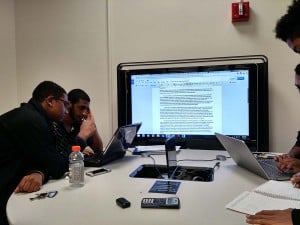
 

Group_Study_Room4_small


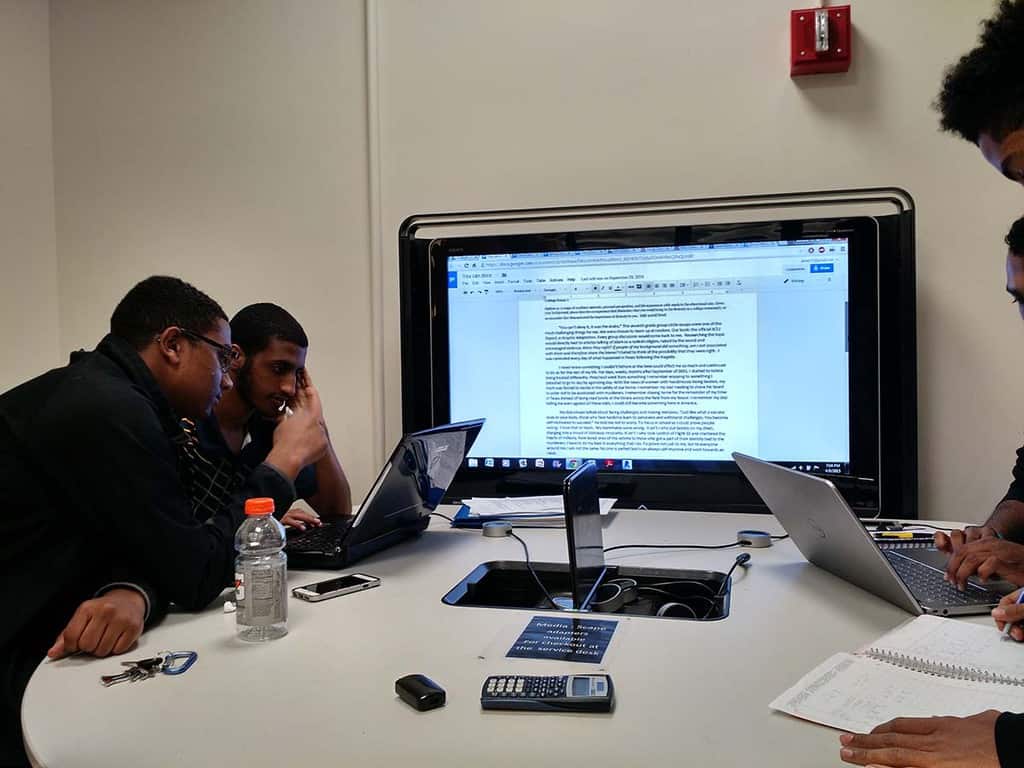
We have two new group study rooms available for you to reserve for those group projects. They both have whiteboard walls and one includes a large-screen TV with laptop connections.  Besides the group study rooms there are several other areas in which to study.  Tables, individual carrels – both upstairs and down, beanbag chairs downstairs, and comfy chairs throughout the library all provide both spaces for collaboration and for quiet study.

When you are ready to pull that research paper or project together we have several software programs available that will create bibliographies and citations in a wide variety of formatting styles. One of the software packages is Endnote and it, along with the others, will help you wind up that paper in style!

Kari_and_Koala3

Kari Kozak, Head, Lichtenberger Engineering Library

Qianjin (Marina) Zhang, studio portrait

Qianjin (Marina) Zhang, Engineering & Informatics Librarian


Want more information?

Visit our website

email lib-engineering@uiowa.edu

call 319.335.6047

or stop in and meet the staff!


Kari Kozak, Head, Lichtenberger Engineering Library:  Collections, Instruction, Reference

Qianjin (Marina) Zhang, Engineering and Informatics Librarian: Data Management, Informatics

Carol Dewey: Library Assistant IV, Circulation, Course Reserves, InterLibrary Loan

Carol Johnk: Library Assistant III, Social Media, PR

Celebrate National Library Week by stopping in and discovering your Engineering Library!

It’s official!

Fluxus Digital Collection Launch

www.fluxusdigitalcollection.org


Photo: Left/Right, Ben Vautier, “Theatre D’Art Total,” 1967, Center, Milan Knížák, “Aktual Provo Fluxus,” 1965

Photo: Left/Right, Ben Vautier, “Theatre D’Art Total,” 1967, Center, Milan Knížák, “Aktual Provo Fluxus,” 1965


April 7, 2015—We are pleased to announce the launch of The Fluxus Digital Collection.  This online collection gathers an eclectic range of artworks by one of the most important movements of the twentieth century. Global in scope, Fluxus members moved between the USA, Europe, East Asia, and elsewhere. They worked across and between traditional media, opting for ephemeral materials, participatory approaches, and playful humor.

The collection includes digital tools that make interactive objects and text-based works available to viewers—many of which have not been read, seen, or heard outside of select archives. With technical tools that include 3D modeling, digital scanning, photography, and film, the Fluxus Digital Collection gives worldwide access to scholars, teachers, students, and art-lovers.

“Video pioneer Nam June Paik organized the first art exhibition on the World Wide Web in 1994,” explains Fluxus artist and collection donor Ken Friedman. “Since then, Fluxus artists and composers have had a durable presence of event scores, images, documents, web sites, exhibitions, publications, and more. Some vanished when links broke and web sites disappeared. Others continue to overcome the limits of fragile artifacts that museums preserve by protecting them from people. The Fluxus Digital Collection brings works back to life, returning them to the world where they belong with a future as lively as the past.”

The University of Iowa Special Collections houses a trove of yet-to-be processed Fluxus art, writing, and correspondence. The Fluxus Digital Collection will continue to grow as we add new content.

Artists featured in the collection include: John Cage, Dick Higgins, George Brecht, Robert Watts, Ken Friedman, George Maciunas, Yoko Ono, Joseph Beuys, Milan Knížák, Ben Vautier, Nam June Paik, Frank Zappa, Robert Filliou, Mieko Shiomi, Shigeko  Kubota, Ben Patterson, Dieter Roth, Eric Andersen, Takehisa Kosugi, Ay-O, and others.


Supporting Partners

The University of Iowa

Digital Studio for Public Arts & Humanities

UI Library Digital Research & Publishing

Special Collections


Contact: Stephen Voyce (Director) | stephen-voyce@uiowa.edu | 1.319.333.1923

It’s official!

Fluxus Digital Collection Launch

www.fluxusdigitalcollection.org


Photo: Left/Right, Ben Vautier, “Theatre D’Art Total,” 1967, Center, Milan Knížák, “Aktual Provo Fluxus,” 1965

Photo: Left/Right, Ben Vautier, “Theatre D’Art Total,” 1967, Center, Milan Knížák, “Aktual Provo Fluxus,” 1965


April 7, 2015—We are pleased to announce the launch of The Fluxus Digital Collection.  This online collection gathers an eclectic range of artworks by one of the most important movements of the twentieth century. Global in scope, Fluxus members moved between the USA, Europe, East Asia, and elsewhere. They worked across and between traditional media, opting for ephemeral materials, participatory approaches, and playful humor.

The collection includes digital tools that make interactive objects and text-based works available to viewers—many of which have not been read, seen, or heard outside of select archives. With technical tools that include 3D modeling, digital scanning, photography, and film, the Fluxus Digital Collection gives worldwide access to scholars, teachers, students, and art-lovers.

“Video pioneer Nam June Paik organized the first art exhibition on the World Wide Web in 1994,” explains Fluxus artist and collection donor Ken Friedman. “Since then, Fluxus artists and composers have had a durable presence of event scores, images, documents, web sites, exhibitions, publications, and more. Some vanished when links broke and web sites disappeared. Others continue to overcome the limits of fragile artifacts that museums preserve by protecting them from people. The Fluxus Digital Collection brings works back to life, returning them to the world where they belong with a future as lively as the past.”

The University of Iowa Special Collections houses a trove of yet-to-be processed Fluxus art, writing, and correspondence. The Fluxus Digital Collection will continue to grow as we add new content.

Artists featured in the collection include: John Cage, Dick Higgins, George Brecht, Robert Watts, Ken Friedman, George Maciunas, Yoko Ono, Joseph Beuys, Milan Knížák, Ben Vautier, Nam June Paik, Frank Zappa, Robert Filliou, Mieko Shiomi, Shigeko  Kubota, Ben Patterson, Dieter Roth, Eric Andersen, Takehisa Kosugi, Ay-O, and others.


Supporting Partners

The University of Iowa

Digital Studio for Public Arts & Humanities

UI Library Digital Research & Publishing

Special Collections


Contact: Stephen Voyce (Director) | stephen-voyce@uiowa.edu | 1.319.333.1923

Happy National Library Week!

This year, National Library week is April 12-18, 2015 and National Library Assistants Day is April 14, 2015. This is a time to celebrate your local library personnel. Library staff members and student workers keep the library running by doing a wide variety of things like interlibrary loan, stack maintenance, circulation, etc. They also answer your questions.

To help celebrate, we’ve put up a display in Hardin Library with the names of all of the people that work here. We’re also hosting a little contest.

If you can guess how many questions were answered by Hardin Library staff members during April of 2014, you’ll be entered to win a fancy Hawkeye water bottled filled with candy.

Check out our display for details on how to enter this contest. The display can be found on the 3rd floor of Hardin Library to your left as you enter the building.


National Library Week Poster

fancy Hawkeye water bottle

Learn nuts & bolts of a systematic review – Wednesday, April 15

This class will provide a framework for developing a literature search for a systematic review. Topics will include the following: standards and criteria to consider, establishing a plan, registering a protocol, developing a research question, determining where to search, identifying search terms, reporting search strategies, and managing references.


Our next session is Wednesday, April 15, 12pm-1pm, Information Commons East

Changes in the Main Library Periodical Collection

The Libraries is making the periodical collection on the third floor of Main Library more orderly and accessible by reorganizing all volumes into a single alphabetically arranged sequence. A project is underway to shelve the current issues with the rest of their bound volumes. Bound periodicals run in alphabetical order on the east side of third floor. If you are having problems locating an issue, please call 335-5299, text 319-313-2395, or visit the Service Desk on the 1st floor.

I have just learned that there is a possibility of sending out letters

Joseph Culver Letter, April 14, 1865, Page 1

Head Qurs. Co. “A” 129th Ills.
Raleigh, N. C. April 14th/65
My Dear Wife

I have just learned that there is a possibility of sending out letters, & I haste to write hoping it may reach you. We arrived at this place yesterday evening & have not yet started out & will not probably until to-morrow as it is already late in the afternoon. We left Goldsboro at sunrise on Monday morning [the 10th] moving in the direction of Smithfield, our corps being on the extreme left. We had several light skirmishes which retarded our progress; &, the country being very swampy, we moved only about 8 or 9 miles & went into camp. It rained considerable during the afternoon & evening.1

We broke camp Tuesday morning [the 11th] about day-light & moved very rapidly. There was only one light skirmish during this day. The weather was very warm & many fell by the way. Two of our Brigade died & several took sick. We reached Smithfield about 4 P.M., having marched about 20 miles. When we halted for dinner, I had but six men of my Company with me, all the rest had fallen out. At Smithfield we recd. the news (official) of the surrender of Lee’s Army.2

At an early hour on Wednesday [the 12th], we started for Raleigh,3 our Brig. acting as train guard until near noon. There was skirmishing in our front but done by Kilpatrick’s Cavalry. In the evening the cavalry captured over 60 wagons loaded with ammunition.4 It was the rear of the Rebel Army retiring from Smithfield. We marched about 16 or 18 miles & went into camp near Swift Creek at about 4 P.M.

Yesterday morning we started at daybreak for this place anticipating a hard day’s battle.5 After moving about 5 miles, we heard the cannon booming in our front, & we supposed the time was near at hand but we kept moving on & on until we came in sight of this place but found no enemy. It seems that the 14th Corps having had some ten miles the shortest route, were two or three hours in advance of us & kept up a skirmish with the Rebel rear guard.6 We are therefore in possession of Raleigh without a battle.

We have lost track of Johnson’s [sic] Army which accounts probably for our stay here to-day.7 Gov. Vance surrendered the city on the approach of our army.8 There are a vast number of Rebel sick & wounded here with their Surgeons, nurses, &c. I was through the City this morning. It is quite a small place, though in its prosperity has been beautiful. The Rebs blew up the depots.

Citizens say that Johnson’s Army passed through in great haste the evening before we came & that Johnson declared he would not fight another battle. They have no Official news of the surrender of Lee’s Army, Grant having destroyed their communication. Some of our boys saw a rebel soldier who was present when Lee surrendered but escaped afterward & reached his home. He was hid while Johnson’s Army passed through but made his appearance this morning. He said that all of Lee’s Army supposed Johnson had surrendered to Sherman. Unless Stonemann’s or Sheridan’s cavalry stop him, we will have a severe foot race yet.

The prospects look glorious. Let us praise God for all his blessings. We had good meetings after going into camp at Smithfield & Swift Creek & a most excellent one here last night. There were three forward for prayers, & God was with us.

We recd. to-day New York papers of the 7th with full acounts of the battles. This is doubtless a day of great rejoicing in the north as it has been set apart especially for that purpose.9

I have felt like getting home soon. I do not think we will have any more severe battles. So far as we have learned, Johnson’s Army is very much demoralized & have no intention of fighting longer if they can help it. May God grant us a bloodless victory. I am unable to see what they can gain by holding out longer. The train is expected from Goldsboro to-morrow, but, as all our mail was ordered to Fortress Monroe, I cannot expect a letter.10 We are all well. The weather is very pleasant though a little warm. We have a beautiful camp in a pine grove near the city.

Give my love to all. Kiss Howard for Papa. May Our Father in Heaven keep & bless you. With much love, I remain

Your affectionate Husband
J. F. Culver

  1. The XX Corps camped on the night of the 10th at Atkinson’s, one mile west of Moccasin Creek. During the day, Slocum’s advance had skirmished with troopers of the 1st South Carolina Cavalry, losing two killed and five wounded. Orders for the next day’s march called for General Geary’s Second Dvision to take the advance, followed by the Third and First Divisions. O.R., Ser. I, Vol. XLVII, pt. III, pp. 155-157.
  2. General Sherman, in acknowledging receipt of Grant’s telegrams reporting surrender of Lee’s army, replied on the 12th, “I hardly know how to express my feelings, but you can imagine them. The terms you have given Lee are magnanimous and liberal. Should Johnston follow Lee’s example, I shall, of course, grant the same. He is retreating before me on Raleigh, but I shall be there to-morrow.” Ibid., p. 177.
  3. Mower’s orders for the day’s march called for the XX Corps to cross Neuse River, and march on the Leechburg road to the intersection of the Elevation and Raleigh roads, where it would turn north to Swift Creek. General Ward’s Third Division had the lead, with the 1st Brigade guarding the trains. Ibid., pp. 170-71.
  4. Brig. Gen. Judson Kilpatrick’s cavalry, as it spearheaded the Union advance from Swift Creek toward Raleigh, skirmished frequently with Confederate horse soldiers of Lt. Gen. Wade Hampton’s command covering the retreat of Johnston’s army. Ibid., p. 186.
  5. Swift Creek was 14 miles from Raleigh. On the 13th the XX Corps marched in the following order : First, Second, and Third Divisions. Ibid., p. 185.
  6. Sherman’s cavalry entered Raleigh on the morning of the 13th, the city being surrendered by the mayor to General Kilpatrick. Johnston’s army, covered by Hampton’s and Wheeler’s cavalry, had evacuated the city on the 12th, retreating toward Hillsboro. Kilpatrick’s horse-soldiers ,not wanting to give the Rebels a chance to regroup, pressed on ten miles to Morrisville, and in doing so, smashed a number of roadblocks manned by Wheeler’s troopers. Ibid., pp. 197-98.
  7. On the 14th Generals Sherman and Johnston had agreed to a temporary suspension of hostilities, with the object of finding a formula for ending the war. Sherman accordingly promised to limit the advance of his main columns to Morrisville and his cavalry to Chapel Hill, while expecting Johnston to maintain his present position. Johnston’s army was camped in and around Hillsboro. Ibid., pp. 206-07.
  8. J.F.C. was mistaken. The mayor (not Governor Zebulon B. Vance) surrendered the city to the Federals. Ibid., p. 197.
  9. The War Department on April 9 had ordered “a salute of 200 guns to be fired at the headquarters of every army and department, and at every post and arsenal in the United States, and at the Military Academy at West Point, on the day of the receipt of the order, in commemoration of the surrender of General R. E. Lee and the Army of Northern Virginia to Lieutenant-General Grant and the army under his command.” Ibid., pp. 351-52. Meanwhile, President Lincoln was getting ready to call for a day of national thanksgiving.
  10. Working parties had been turned to repairing railroad bridges and trestles burned by the retreating Confederates. By the 17th the only bridge not rebuilt spanned the Neuse, and trains were running north from Goldsboro and south from Raleigh to the Neuse, where transfers were effected. Ibid., p. 238.

National Submarine Day

We all live in a yellow submarine....

We all live in a yellow submarine….


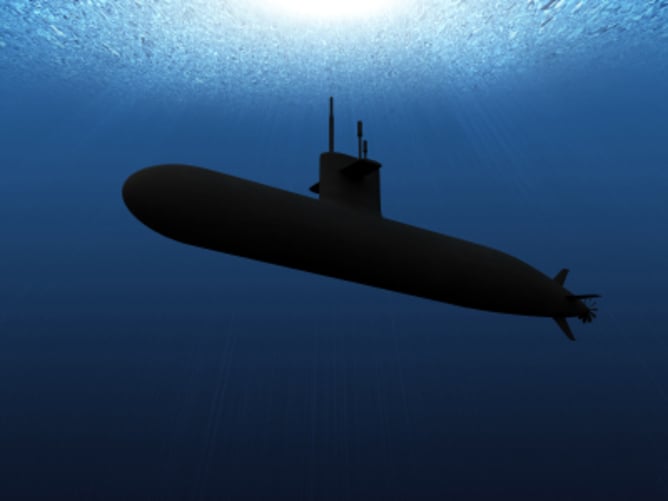
When you think of submarines, you might think of sub sandwiches, or start singing “…We all live in a yellow submarine, yellow submarine, yellow submarine….”1

But, as we recognize April 11th as National Submarine Day, it is good to remember that living on a US Naval Submarine is a hazardous place to be. On April 11, 1900 the first commissioned submarine, the USS Holland, was acquired by the United States Navy. The Holland was not the first Navy sub, however. That honor goes to the Alligator which was the first submarine ordered and built by the Navy, although it was never commissioned.

In 1863, the Alligator was being towed by the Sumpter, with the plan for the two ships to join the Union attack on Charleston, South Carolina. They were caught in a Nor’easter and the captain of the Sumpter made the decision to cut the ties to the Alligator. The submarine was lost in the “Graveyard of the Atlantic” and was forgotten for nearly 140 years. 2

No lives were lost when the Alligator sank, but there have been many submarine disasters since then. As submarines become larger and more sophisticated, more and more crew are needed, and the loss of life becomes more dramatic.

"Potent, lethal, secret. The ultimate war machine."

“Potent, lethal, secret. The ultimate war machine.”


“Potent, lethal, secret. The ultimate war machine. Nothing else on earth is so densely packed with men and firepower. Submarines truly fought the Cold War. Yet for all their might they are no match for the power of the sea. The submariner’s deadliest enemy is not the other side, it is the ocean itself.” 3


The Civil War submarine HL Hunley was the first submarine to sink a ship in combat. It is known as the “murdering ship,” not because of the lives she took, but because her own crew died when she sank. So many lives were lost that World War I submarines became known as the “coffin service.“ 3

There are many causes of submarine disasters and loss of life, including water rushing in through cracks in the submarine’s hull, torpedoes exploding, valves not sealing, electrical problems, and a loss of power. The intense pressure of the deep seas can crush a submarine, causing a “humane,” instantaneous death. Most of the submarine deaths are much less humane and include suffocation and drowning.  After nuclear powered subs were introduced, radiation poisoning also became a threat. 3

Safety was a concern about submarines from the very beginning. The earliest patents were often for safety equipment on submarines. In 1907 a patent was granted for “Means of Escape from Sunken Submarines.”4 But ways to more reliably rescue crews from downed subs weren’t developed until 1927 when the “Momsen Lung” was developed. The Momsen Lung recycled exhaled air and was hung around the sailors’ neck. It provided oxygen for the ascent and allowed the submariner to slowly rise to the surface, thus avoiding the bends.5

The Steinke Hood.

The Steinke Hood.


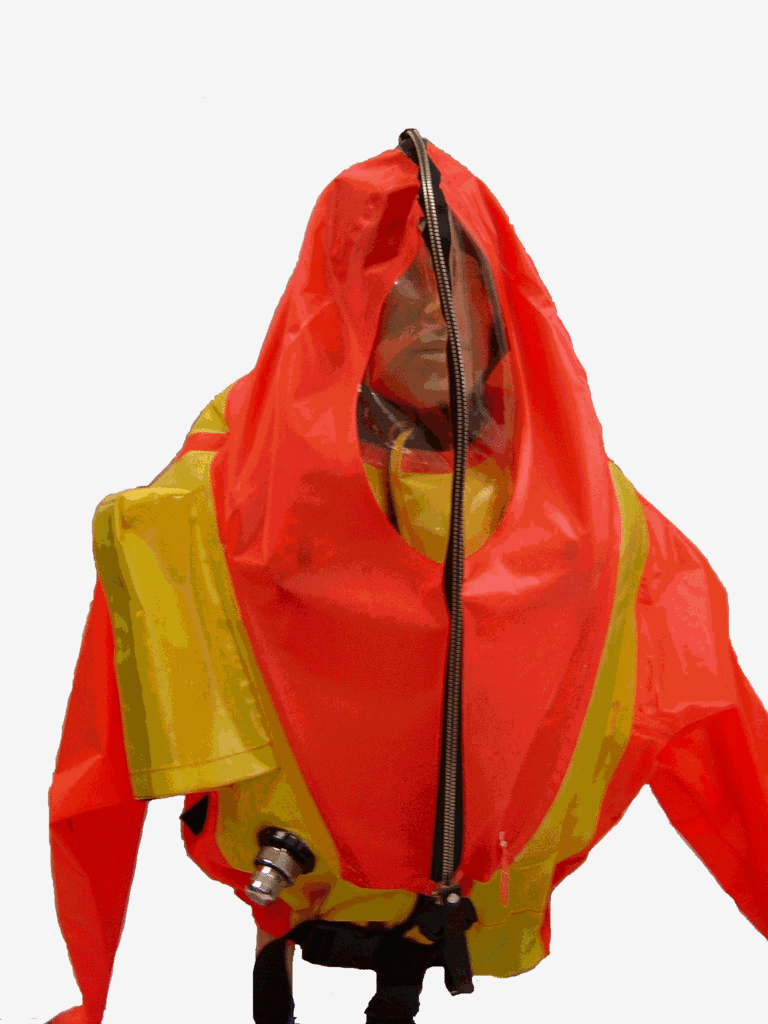
In 1962, the U.S. Navy introduced the Steinke Hood, an inflatable life jacket with a hood that trapped a bubble of breathing air and completely enclosed the submariner’s head. The Steinke Hood was standard equipment on all Navy submarines throughout the Cold War. The Navy then began replacing the Steinke Hood with the Submarine Escape Immersion Equipment (SEIE). This was a combination whole-body suit and one-man life raft. It provided protection against hypothermia in the freezing water – which is something that neither the Momsen Lung nor Steinke Hood was equipped to do. 6

Currently the Navy is working not only to improve survival rates on submarines but  also means of escape and rescue. One improvement are the  Deep Submergence Rescue Vehicles (DSRV) which are capable of rescues down to 2000 feet. Another one of the future rescue systems will include the ability to transfer personnel under pressure. This would allow crew members to be rescued at deep depths under immense pressure and then be transferred to a decompression chamber. 

Cross section of a submarine

Cross section of a submarine

For more information on this fascinating subject, check out the resources listed below, and the others we have here in the library.

Engineering Library video record 39620 DVD

Engineering Library video record 39620 DVD


REFERENCES:

  1. George Martin, Paul McCartney, John Lennon, George Harrison. Copyright: Sony/ATV Tunes LLC, Sony/ATV Music Publishing (UK) Limited, Northern Songs
  2. Undersea Warfare. Spring 2006. The Official Magazine of the U.S. Submarine Force. vol. 8, no. 3.
  3. Lost Subs: disaster at sea. 2002. National Geographic Television & Film : Burbank CA. Engineering Library video record 39620 DVD
  4. Means of escape from sunken submarines. 1907 patent.
  5. Swede Momsen: Diving & Rescue – Momsen Lung. Science & Technology Focus, Office of Naval Research. Date accessed: March 2015.
  6. Steinke Hood. 2000-2015. Global Security.org. Date accessed: March 2015.
  7. Submarine rescue: ready for the unthinkable. Fall 2000. Undersea Warfare: the Official Magazine of the U.S. Submarine Force, vol. 3, no. 1


OTHER RESOURCES:

  1. The nuclear pioneers: atomic subs and nuclear missiles. 2007. Periscop Film. Engineering Circulation Desk Video Record 39515 DVD
  2. Coen, Ross Allen. 2012. Breaking ice for Arctic oil : the epic voyage of the SS Manhattan through the Northwest Passage. Fairbanks : University of Alaska Press. Engineering Library HE595 .P4 C64 2012.
  3. Fossen, Thor I. 2011. Handbook of marine craft hydrodynamics and motion control. Chichester, West Sussex, U.K. ; Hoboken N.J. : Wiley. Engineering Library VM156 .F67 2011
  4. The story of the AlligatorThe Hunt for the Alligator, The Navy & Marine Living History Association (NMLHA), in cooperation with the National Oceanic & Atmospheric Association (NOAA) and the Office of Naval Research (ONR). Date accessed: March 2015.
  5. Delgado, James P. 2011. Silent killers: submarines and underwater warfare. Oxford : New York : Osprey. Engineering Library V210 .D45 2011.
  6. Submarine Frequently Asked Questions. Chief of Naval Operations, Submarine Warfare Division. Date accessed, March 2015. (some of the answers are dated – #10, women are, as of 2010, now allowed to be Naval submariners. See Navy Policy Will Allow Women to Serve Aboard Submarines. America’s Navy. 4/29/2010


Yours of the 7th inst. inquiring about my box is just received

Joseph Culver Letter, April 10, 1865, Page 1Office Chief of Artillery, District of Tennessee, Nashville, Tenn., April 10th 1865.
Dear Mollie,

Yours of the 7th inst. inquiring about my box &c. is just received. The box reached me more than a week ago, and I immediately wrote to Maggie and Mrs. Johnston, acknowledging receipt. I forwarded Morton’s box without delay. The Agent of Adam’s Express Co. told me that it would reach him in East Tenn. He has probably received ere this.

I did not mention this in my letter to Mr. Johnston, supposing that my preceding letters had been received. Mollie please inform me who paid the Express charges on my box and how much they were. I had a letter from Sammy and James Rollins day before yesterday. They are enjoying life as well as soldiers can be expected to do. The Battry is now at Cleveland Tenn. I had a call day before yesterday from Wm McCord. and quite a pleasant visit with him. He was on his way from Columbia, Tenn. to Murfreesboro. Will looks very healthy and robust- seems to stand the service well. He is about as tall as Sammy but rather heavier.

I wrote you a few days ago. Love to all. Good bye- in haste

Ever Your Affectionate Brother
Wm J. Murphy
Box 1182
Nashville
Tenn