Skip to content
Skip to main content

SAGE Research Methods Cases — Trial ends 24 October 2015

SAGE Research Methods Cases is a collection of hundreds of case studies of real social research, specially commissioned and designed to support teaching and learning in research methods. Each case is written to help students understand the often abstract-feeling methodological concepts by seeing how methods have been used in actual projects.

Please send additional comments to Ericka Raber.

Raising of America | Hardin Library Film Series |Moderated Discussion November 5

ROA-logo_flag-boy-wordmark

Join us at Hardin Library for the Health Sciences for a screening and moderated discussion  of the film The Raising of America.

Thursday, November 5, from 6-8pm, Hardin Library for the Health Sciences
RSVP for the event

More information about the Hardin Library Film Series is available online.

About the film
The Raising of America will reframe the way we look at early child health and development. This ambitious documentary series by the producers of Unnatural Causes: Is Inequality Making Us Sick? explores how a strong start for all our kids leads not only to better individual life course outcomes (learning, earning and physical and mental health) but also to a healthier, safer, better educated and more prosperous and equitable America.

Discussion Panelists
Resmiye Oral, MD, Director, Child Protection Program, Clinical Professor of Pediatrics-General Pediatrics and Adolescent Medicine
Renita Schmidt, PhD, Associate Professor, Teaching and Learning
Christine M. Catney, PharmD, MA, Clinical Assistant Professor, Applied Clinical Science

For more information, see our guide.
All 5 episodes are available via streaming for University of Iowa affiliates:
The Raising of America    Once Upon a Time   Are We Crazy About Our Kids?  Wounded Places  DNA Is Not Destiny


New York Times: Print Makes a Come-Back

The Plot Twist, featured in the New York Times, describes a strong resurgence in print sales, fueled in part by sharper business practices by sellers, as well as a drop in e-books’ popularity.

University students and staff can also read the article via Bloomberg (requires sign-in):

https://global.factiva.com/redir/default.aspx?P=sa&NS=16&AID=9UNI006500&an=NYTF000020150923eb9n0004l&cat=a&ep=ASI

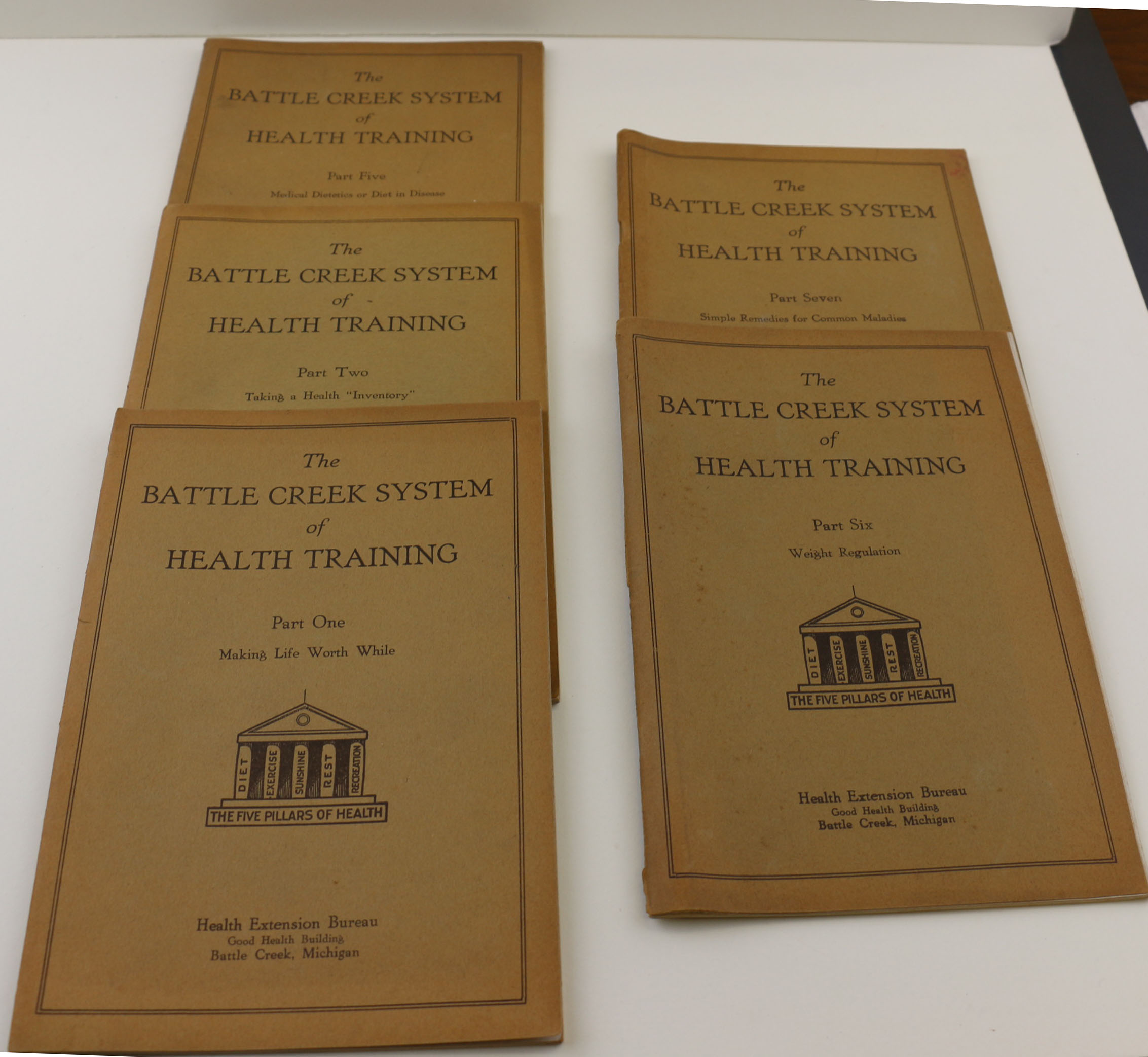
New Acquisition: The Battle Creek System of Health Training

By Jacque Roethler

The Battle Creek Sanitarium was opened in 1866 by John Harvey Kellogg and his brother W. K. Kellogg, promoting health through a regimen of dietetics, exercise, hydrotherapy, phototherapy, thermotherapy, electotherapy, mechanotherapy, and enemas. They were joined in this enterprise by C.W. Post. In some areas they were ahead of their time, such as their emphasis on a low fat diet including whole grains, fiber-rich foods, and nuts, as well as getting lots of fresh air and exercise. But other areas were on the fringe and were open to ridicule, such as the treatment the Sanitarium received in the book and movie The Road to Wellville, the title of which is a spoof of John Harvey Kellogg’s book The Road to Wellness. The Sanitarium suffered during the depression and was scaled back in 1933 and permanently closed in 1952. What lives on are the cereals created by the Kelloggs and C.W. Post Companies, derivatives of the healthy foods promoted by the Sanitarium.

2015-09-02 11 33 03In the Brinton collection we recently found these books, entitled The Battle Creek System of Health Training. While not emanating from the Sanitarium, the books are from Battle Creek’s Health Extension Bureau and carry a publication dates of 1922 and 1924, during the height of the Sanitarium’s popularity. There were seven volumes in the series: 1) Making Life Worth While; 2) Taking a Health Inventory; 3) The Digestibility of Different Foods; 4) Foods and Feeding; 5) Diet in Disease; 6) Weight Regulation; and 7) Simple Remedies for Common Maladies.

The books in this collection are in near perfect condition. Unfortunately volumes 3 and 4 are missing so this is not a complete set. On a search in OCLC First Search, only four other libraries were named as having these volumes.

Endnote Basic Xpress Class Tomorrow at 2:30!!

We are offering 30 minute Xpress classes Thursdays at 2:30 p.m. They will take place in the Library Multipurpose Room (2001C SC).

XpressClasses_Endnote_Sept_24_weeklong


Endnote Basic is an introduction to an online citation management system that is free for everyone at the University of Iowa. It will help you manage all your references for a paper (or papers) as well as help you create the incite citations and bibliographies in a wide variety of formatting styles.

This class teaches the web version of Endnote Basic, not the full client version.

Liz Kiscaden, Head of Hardin Library Services, Hardin Library for the Health Sciences will teach this class. Liz will be available after class if you have any further questions.

Stop in and learn more about Endnote Basic!


New Laptops!

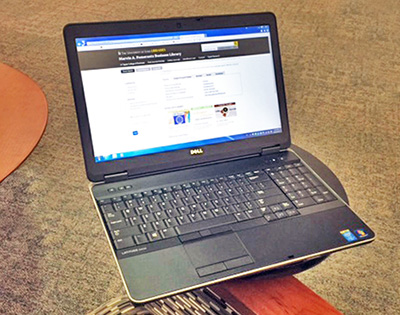
The Pomerantz Business Library has 12 new Dell Latitudes.

  • Software includes Microsoft Office 2013.
  • Laptops have Webcams for use with Skype (included).
  • Users can print with Web printing (http://printing.its.uiowa.edu).
  • University students and staff can use their ID’s to borrow a laptop for 4-hour loan (Library use only).

New dell laptop

Come Explore Our Library! We have 2 Scanners!!

We added a brand-new overhead scanner this fall! We now have two and they are both free of charge!

Scan_Save

Both scanners have large touch screens make them easy to use.

The scanners are easy to use. They have large touch screens to guide you through the scanning process. You are also able to either save your scanned document to a USB drive or email the document to yourself. Each scanner will scan in black & white or in color. If a USB drive is inserted, the scanner automatically recognizes this and will indicate that this is where the document will be saved. Since both scanners will scan color or black & white, they are perfect for scanning graphs, photos, magazines and journals.

KIC_T21

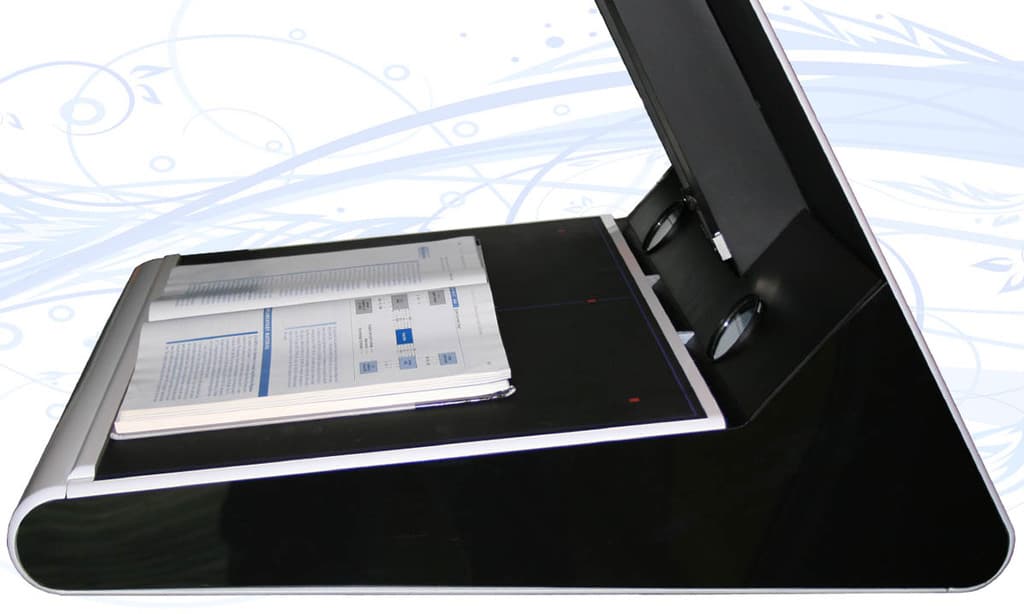
The new scanner is an overhead, face-up scanner, so there will be no more book spine damage.

The new scanner is an overhead, face-up scanner. These means that books don’t have to be flattened in order to be scanned – thus preventing bo0k spine damage. You are also able to split the two pages of a book into separate images. Black edges can be removed and the content can be straightened. It also has a much larger capture area so is able to scan larger images than either copiers or typical scanners. It is much easier and quicker to scan multiple pages of a book – there is no need to flip them over to turn the page and then flip them over again to scan. You simply turn the page. There is a foot peddle so the user may use that rather than the hand scan screen. It is also wheel-chair accessible.

The scanners are located with the print station and the photocopier.

Come explore our library and find out how easy and convenient our scanners are!

Data Management for Researchers

Image courtesy of University of Virginia Library

Image courtesy of University of Virginia Library

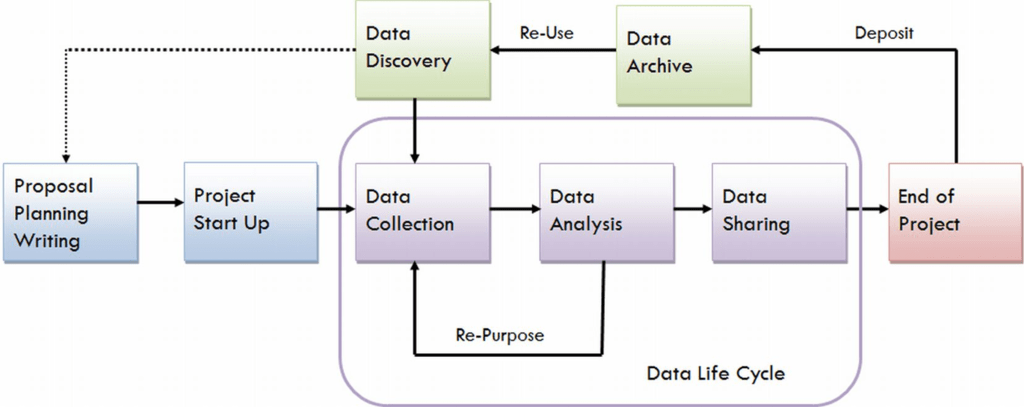
Are you confused about funding agencies’ new data management and sharing policies? Or do you need some help managing your research data? You’re not alone and we can help! Join us for one of five upcoming workshops (each session is identical):

The purpose of this workshop is to explain research data management and its importance, help identify some common data management issues, and learn about best practices and resources that are available. This workshop is open to all UI students, faculty, and staff. Registration is requested. To register, please click on one of the dates above.

If you have any questions, or if you’d like to request a session for your group, please contact Sara Scheib or Marina Zhang.

Learn how to find U.S. Patents & Trademarks | Sept. 22, 3-4pm |@Hardin Library

The purpose of this hands-on class is to introduce several resources found on the U.S. Patent & Trademark Office website that may be used to locate information on patents, trademarks and patent applications. Google’s patent searching feature  will be also be covered.

Our session:
Tuesday, September 22nd, 3:00-4:00pm (Location: East Information Commons, 2nd floor, Hardin Library)

Register online or by calling 319-335-9151.

Instructor Kari Kozak Head, Lictenberger Engineering Library

Instructor Kari Kozak
Head, Lictenberger Engineering Library