Skip to content
Skip to main content

Guest Post: On generous scholarship

During the month of Open Access week (October 19-25) we will be highlighting a number of guest posts from University of Iowa Faculty and Staff who have personal experience making their work Open Access.  We appreciate their contributions.

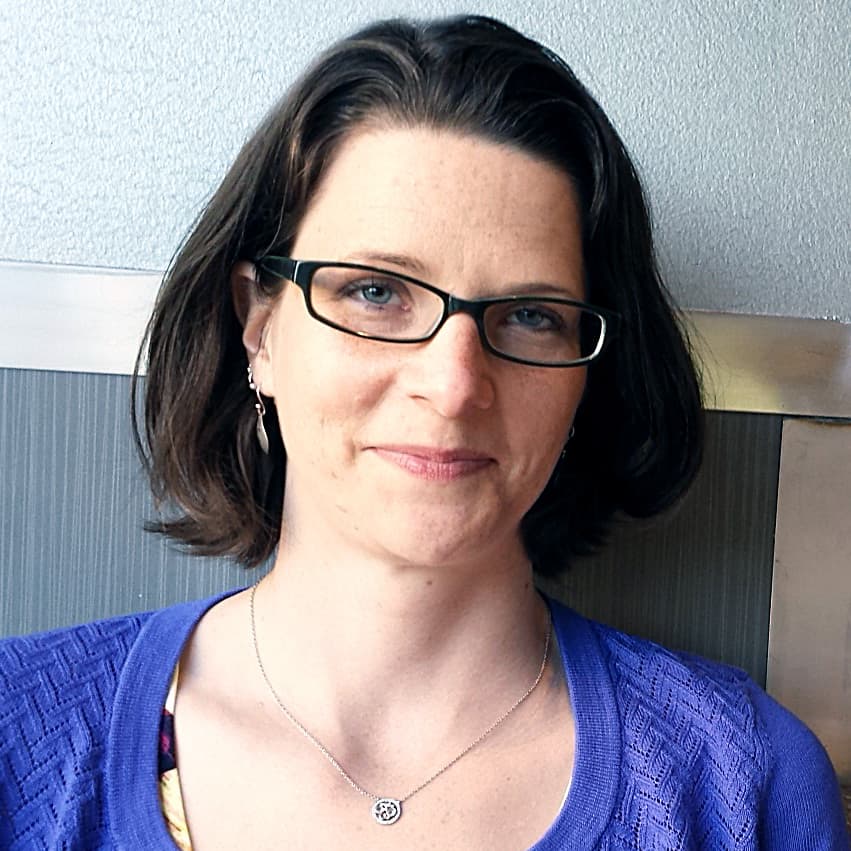
The third guest post is by Meenakshi Gigi Durham, distinguished scholar, teacher, and writer whose work centers on media and the politics of the body. Her research emphasizes issues of gender, sexuality, race, youth cultures, and sexual violence.  She holds a joint appointment in the Department of Gender, Women’s and Sexuality Studies.

See her Iowa Research Online deposited publications here.

On generous scholarship

A vital aspect of doing academic work is disseminating the knowledge we create so as to maximize its potential to have positive effects on the world. That’s why I’m a fan of institutional repositories. The impetus in the United States today seems to be to corporatize and commoditize education, somehow turning it into a for-profit enterprise instead of a public good. Institutional repositories are a great way to challenge and resist that impulse, returning us to the recognition that research is a crucial element of a collective vision of social progress.

I lived for years in a resource-poor country, and I know that even in the wealthier nations, there are many institutions and scholars who don’t have access to the treasure trove of databases we are privileged to use every day via the wonderful library system at the University of Iowa. But scholarship can’t happen without access to up-to-date knowledge; as scholars, we build on the work that advances our fields. It’s always been inspiring to me that some of the world’s greatest ideas and inventions have been catalyzed by an encounter with some prior work: Galileo read Copernicus and came up with his theory of heliocentrism; Srinivasa Ramanujam read G.S. Carr and made groundbreaking contributions to number theory; Toni Morrison read Virginia Woolf and went on to write Nobel Prize-winning novels. Connecting with the thoughts and ideas and perspectives of others inspires and informs us. We need to make sure the next great scholar can read everything he or she wants to. Part of our work is facilitating the discoveries of the future. That takes generosity and a social conscience —that’s the spirit behind teaching, just as it is behind scholarship.

So whenever I can, I contribute my writings to Iowa Research Online. I offer my work humbly, as part of a community of thinkers whose aims are to change the world for the better. It’s truly gratifying that my IRO papers have been downloaded far more often than they have from commercial journal websites or databases. I hope they are contributing to the way others are thinking about the issues I study: gender, sexuality, and the media. I hope they are sparking new ways to think about these issues, and I hope those ideas will translate into the real goals of my own work, which include social justice, gender equity, and an end to sexual violence.


Guest Post: On generous scholarship

During the month of Open Access week (October 19-25) we will be highlighting a number of guest posts from University of Iowa Faculty and Staff who have personal experience making their work Open Access.  We appreciate their contributions.

The third guest post is by Meenakshi Gigi Durham, distinguished scholar, teacher, and writer whose work centers on media and the politics of the body. Her research emphasizes issues of gender, sexuality, race, youth cultures, and sexual violence.  She holds a joint appointment in the Department of Gender, Women’s and Sexuality Studies.

A vital aspect of doing academic work is disseminating the knowledge we create so as to maximize its potential to have positive effects on the world. That’s why I’m a fan of institutional repositories. The impetus in the United States today seems to be to corporatize and commoditize education, somehow turning it into a for-profit enterprise instead of a public good. Institutional repositories are a great way to challenge and resist that impulse, returning us to the recognition that research is a crucial element of a collective vision of social progress.

I lived for years in a resource-poor country, and I know that even in the wealthier nations, there are many institutions and scholars who don’t have access to the treasure trove of databases we are privileged to use every day via the wonderful library system at the University of Iowa. But scholarship can’t happen without access to up-to-date knowledge; as scholars, we build on the work that advances our fields. It’s always been inspiring to me that some of the world’s greatest ideas and inventions have been catalyzed by an encounter with some prior work: Galileo read Copernicus and came up with his theory of heliocentrism; Srinivasa Ramanujam read G.S. Carr and made groundbreaking contributions to number theory; Toni Morrison read Virginia Woolf and went on to write Nobel Prize-winning novels. Connecting with the thoughts and ideas and perspectives of others inspires and informs us. We need to make sure the next great scholar can read everything he or she wants to. Part of our work is facilitating the discoveries of the future. That takes generosity and a social conscience —that’s the spirit behind teaching, just as it is behind scholarship.

So whenever I can, I contribute my writings to Iowa Research Online. I offer my work humbly, as part of a community of thinkers whose aims are to change the world for the better. It’s truly gratifying that my IRO papers have been downloaded far more often than they have from commercial journal websites or databases. I hope they are contributing to the way others are thinking about the issues I study: gender, sexuality, and the media. I hope they are sparking new ways to think about these issues, and I hope those ideas will translate into the real goals of my own work, which include social justice, gender equity, and an end to sexual violence.

Patent Searching Class TOMORROW at 2:30 pm!

We are offering 30 minute Xpress classes Thursdays at 2:30 p.m. They will take place in the Library Multipurpose Room (2001C SC).

XpressClasses_PatentSearching_weeklong


This class, Patent Searching, is a basic introduction to what a patent is and how to complete patent searches. Patents provide the inventor exclusive rights to products they produce and also gives great detailed information on certain products and methods.

This class will be taught by Kari Kozak, Head, Lichtenberger Engineering Library. Kari will be available after class to answer any further questions.

Stop in and learn about patent searching!


The Janus Faces of Open Access Publishing | Guest Post by Dr. Frederick Domann

Frederick E. Domann, PhD @RickDomann

by Willow Fuchs

During the month of Open Access Week (October 19-25) we will be highlighting a number of guest posts from University of Iowa Faculty and Staff who have personal experience making their work Open Access.  We appreciate their contributions.

The second guest post is by Frederick Domann, PhD; Director, Molecular & Cellular Biology Graduate Program; Co-director, Radiation and Antioxidant Enzyme Core Service; Co-director, Free Radical Cancer Biology Program; Professor of Radiation Oncology; Professor of Pathology, Surgery

There is little doubt that the open access (OA) model for publishing scientific literature has revolutionized the academic approach to publishing and the publication industry itself. Since the advent of OA publishing there has been an exponential proliferation of OA journals which currently number greater than 10,000 (https://doaj.org).

I personally receive countless requests to serve on the editorial boards of these journals which I typically ignore and promptly delete. Academic institutions have embraced the OA model since traditional journals can cost as much as $20,000 per year for an institutional subscription. Indeed, universities such as the University of Iowa offer incentives in the form of payment of publication fees for their faculty to publish in OA journals. Indeed my trainees and I have benefitted from these incentives and have published several papers in OA journals within the last several years.

One of these (http://www.ncbi.nlm.nih.gov/pubmed/24672806), published two years ago in the reputable Dove Press journal Hypoxia is currently the most viewed and downloaded paper since the journal’s inception. Clearly this has provided a brilliant showcase for our work and we have benefitted from the university’s OA policy. Open access allows free and ready access to its readers, while passing the costs of production and publication off to the contributors of literary content.

And while this “pay to publish” approach opens opportunities for investigators to quickly and broadly disseminate their findings, OA publishing also has a dark side. This dark side is manifest in the proliferation of “predatory” journals that accept work that may be of questionable quality and significance. Such journals should be actively avoided and are identified on Beall’s list of predatory journals which can be found at http://scholarlyoa.com/publishers/.

One of the perils of the pay to publish model are the presentation of opportunities for blatant conflicts of interest in the publication process http://www.nejm.org/doi/full/10.1056/NEJMc1307577). For example, pharma businesses might take advantage of the lower rejection rates and relaxed journal standards in OA journals to publish prematurely or incompletely to promote the interests of their company.  Another troubling aspect of the proliferating OA model is the pressure to provide qualified competent reviewers from a limited pool of knowledgeable experts, the demands on whose time are typically already overextended, to review the avalanche of submitted manuscripts.

Since the material in OA journals is disseminated digitally there are essentially no page limits and so the numbers of papers and rate of papers published is astronomical. Already more than 2 million papers are published in the greater than 10,000 OA journals mentioned above. Almost certainly the rigor of review that is afforded these papers is on average substantially below that of traditional journals. These acknowledgements appear to have led to an improved perception of the value of publications in traditional journals for the communication of highly reliable and reproducible results.

Other digital resources such as ArXiv (http://arxiv.org/) enable investigators to disseminate their own findings before they are peer-reviewed in pre-print form known as e-prints, so the information can be distributed to interested parties without delays or compromising the quality of the finally published work. And while ArXiv may have downsides of its own (http://mathoverflow.net/questions/65090/downsides-of-using-the-arxiv) it may present a viable alternative to OA publishing, and at minimal or no expense.

Hopefully this discussion highlighting the two-faced nature of OA publishing will leave the reader with a better sense of risks and benefits of both publishing in and reading from OA journals.


Seeking Nominations | Arthur Benton Librarian’s Award for Excellence

The University Libraries is seeking nominations for the Arthur Benton University Librarian’s Award for Excellence. Funded by a generous endowment, this prestigious award acknowledges a library staff member’s professional contributions in the practice of librarianship, service to the profession, scholarship, or leadership which has had a significant impact or innovation to the operations of the Libraries or the University of Iowa. The library staff member will receive $1,500 to be used for professional development activities.

Criteria for the award and the nomination form are available at:   http://www.lib.uiowa.edu/admin/bentonaward/

Nominations are due by Friday, October 16.


Public Seminar on Research Data

Imker_sq

On Wednesday, November 11 at 10:30 – 11:30 a.m., the University of Iowa Libraries will host guest speaker Heidi Imker, director of the Research Data Service (RDS) at the University of Illinois at Urbana-Champaign.

Imker’s seminar, “Capitalizing on Research Data: Management, Dissemination, and Archiving,” will explain how researchers can meet new funder requirements for research data management and leverage public access requirements to increase the visibility and impact of their research. Discussion will follow her seminar.

The seminar will be held in the Illinois Room (348) IMU. An informal meet and greet with refreshments will follow. RSVP is requested.

New data sharing requirements

Recently, many federal funding agencies have expanded their requirements for public access to research results. Researchers in all disciplines must now “better account for and manage the digital data resulting from federally-funded research.”

Imker urges researchers to view this requirement as an opportunity to regard research data as an important product of scholarly work. Sharing data widely can enhance visibility for researchers, as well as create a collaborative environment of research process verification and results validation.

Such activities will be key to increasing the pace of discovery and demonstrating the importance of research.

In addition, Imker says higher demand for efficient data management tools means researchers may have better options to choose from when it comes to gathering, analyzing, and depositing data in public access repositories.

About the speaker

Imker_sqAs director of RDS, Imker oversees a campus-wide service headquartered in the University of Illinois Library. RDS provides the Illinois research community with the expertise, tools, and infrastructure necessary to manage and steward research data.

Prior to joining the Library, Imker was the Executive Director of the Enzyme Function Initiative, a large-scale collaborative center involving nine universities, funded by the National Institutes of Health and located in the Institute for Genomic Biology.

Imker holds a Ph.D. in Biochemistry from the University of Illinois and completed her postdoctoral research at Harvard Medical School.

For more information, please visit http://guides.lib.uiowa.edu/data. To RSVP, please visit: http://tiny.cc/Data11-11-15. Please contact us at lib-data@uiowa.edu if you have any questions.

UI Libraries to host public seminar on research data

On Wednesday, November 11 at 10:30 – 11:30 a.m., the University of Iowa Libraries will host guest speaker Heidi Imker, director of the Research Data Service (RDS) at the University of Illinois at Imker_sqUrbana-Champaign.

Imker’s seminar, “Capitalizing on Research Data: Management, Dissemination, and Archiving,” will explain how researchers can meet new funder requirements for research data management and leverage public access requirements to increase the visibility and impact of their research. Discussion will follow her seminar.

The seminar will be held in the Illinois Room (348) IMU. An informal meet and greet with refreshments will follow. RSVP is requested.

New data sharing requirements
Recently, many federal funding agencies have expanded their requirements for public access to research results. Researchers in all disciplines must now “better account for and manage the digital data resulting from federally-funded research.”

Imker urges researchers to view this requirement as an opportunity to regard research data as an important product of scholarly work. Sharing data widely can enhance visibility for researchers, as well as create a collaborative environment of research process verification and results validation.

Such activities will be key to increasing the pace of discovery and demonstrating the importance of research.

In addition, Imker says higher demand for efficient data management tools means researchers may have better options to choose from when it comes to gathering, analyzing, and depositing data in public access repositories.

About the speaker
As director of RDS, Imker oversees a campus-wide service headquartered in the University of Illinois Library. RDS provides the Illinois research community with the expertise, tools, and
infrastructure necessary to manage and steward research data.

Prior to joining the Library, Imker was the Executive Director of the Enzyme Function Initiative, a large-scale collaborative center involving nine universities, funded by the National Institutes of Health and located in the Institute for Genomic Biology.

Imker holds a Ph.D. in Biochemistry from the University of Illinois and completed her postdoctoral research at Harvard Medical School.

For more information, please visit http://guides.lib.uiowa.edu/data. To RSVP, please visit: http://tiny.cc/Data11-11-15. Please contact us at lib-data@uiowa.edu if you have any questions.

UI Libraries to host public seminar on research data

On Wednesday, November 11 at 10:30 – 11:30 a.m., the University of Iowa Libraries will host guest speaker Heidi Imker, director of the Research Data Service (RDS) at the University of Illinois at Imker_sqUrbana-Champaign.

Imker’s seminar, “Capitalizing on Research Data: Management, Dissemination, and Archiving,” will explain how researchers can meet new funder requirements for research data management and leverage public access requirements to increase the visibility and impact of their research. Discussion will follow her seminar.

The seminar will be held in the Illinois Room (348) IMU. An informal meet and greet with refreshments will follow. RSVP is requested.

New data sharing requirements
Recently, many federal funding agencies have expanded their requirements for public access to research results. Researchers in all disciplines must now “better account for and manage the digital data resulting from federally-funded research.”

Imker urges researchers to view this requirement as an opportunity to regard research data as an important product of scholarly work. Sharing data widely can enhance visibility for researchers, as well as create a collaborative environment of research process verification and results validation.

Such activities will be key to increasing the pace of discovery and demonstrating the importance of research.

In addition, Imker says higher demand for efficient data management tools means researchers may have better options to choose from when it comes to gathering, analyzing, and depositing data in public access repositories.

About the speaker
As director of RDS, Imker oversees a campus-wide service headquartered in the University of Illinois Library. RDS provides the Illinois research community with the expertise, tools, and
infrastructure necessary to manage and steward research data.

Prior to joining the Library, Imker was the Executive Director of the Enzyme Function Initiative, a large-scale collaborative center involving nine universities, funded by the National Institutes of Health and located in the Institute for Genomic Biology.

Imker holds a Ph.D. in Biochemistry from the University of Illinois and completed her postdoctoral research at Harvard Medical School.

For more information, please visit http://guides.lib.uiowa.edu/data. To RSVP, please visit: http://tiny.cc/Data11-11-15. Please contact us at lib-data@uiowa.edu if you have any questions.

UI Libraries to host public seminar on research data

On Wednesday, November 11 at 10:30 – 11:30 a.m., the University of Iowa Libraries will host guest speaker Heidi Imker, director of the Research Data Service (RDS) at the University of Illinois at Urbana-Champaign.

Imker’s seminar, “Capitalizing on Research Data: Management, Dissemination, and Archiving,” will explain how researchers can meet new funder requirements for research data management and leverage public access requirements to increase the visibility and impact of their research. Discussion will follow her seminar.

The seminar will be held in the Illinois Room (348) IMU. An informal meet and greet with refreshments will follow. RSVP is requested.

New data sharing requirements

Recently, many federal funding agencies have expanded their requirements for public access to research results. Researchers in all disciplines must now “better account for and manage the digital data resulting from federally-funded research.”

Imker urges researchers to view this requirement as an opportunity to regard research data as an important product of scholarly work. Sharing data widely can enhance visibility for researchers, as well as create a collaborative environment of research process verification and results validation.

Such activities will be key to increasing the pace of discovery and demonstrating the importance of research.

In addition, Imker says higher demand for efficient data management tools means researchers may have better options to choose from when it comes to gathering, analyzing, and depositing data in public access repositories.

About the speaker

As director of RDS, Imker oversees a campus-wide service headquartered in the University of Illinois Library. RDS provides the Illinois research community with the expertise, tools, and infrastructure necessary to manage and steward research data.

Prior to joining the Library, Imker was the Executive Director of the Enzyme Function Initiative, a large-scale collaborative center involving nine universities, funded by the National Institutes of Health and located in the Institute for Genomic Biology.

Imker holds a Ph.D. in Biochemistry from the University of Illinois and completed her postdoctoral research at Harvard Medical School.

For more information, please visit http://guides.lib.uiowa.edu/data. To RSVP, please visit: http://tiny.cc/Data11-11-15. Please contact us at lib-data@uiowa.edu if you have any questions.

Guest Post: The Janus Faces of Open Access Publishing

Two-faced image of the god Janus.

During the month of Open Access week (October 19-25) we will be highlighting a number of guest posts from University of Iowa Faculty and Staff who have personal experience making their work Open Access.  We appreciate their contributions.

The second guest post is by Frederick Domann, PhD; Director, Molecular & Cellular Biology Graduate Program; Co-director, Radiation and Antioxidant Enzyme Core Service; Co-director, Free Radical Cancer Biology Program; Professor of Radiation Oncology; Professor of Pathology, Surgery

@RickDomann

The Janus Faces of Open Access Publishing

Two-faced image of the god Janus.There is little doubt that the open access (OA) model for publishing scientific literature has revolutionized the academic approach to publishing and the publication industry itself. Since the advent of OA publishing there has been an exponential proliferation of OA journals which currently number greater than 10,000 (https://doaj.org). I personally receive countless requests to serve on the editorial boards of these journals which I typically ignore and promptly delete. Academic institutions have embraced the OA model since traditional journals can cost as much as $20,000 per year for an institutional subscription. Indeed, universities such as the University of Iowa offer incentives in the form of payment of publication fees for their faculty to publish in OA journals. Indeed my trainees and I have benefitted from these incentives and have published several papers in OA journals within the last several years. One of these (http://www.ncbi.nlm.nih.gov/pubmed/24672806), published two years ago in the reputable Dove Press journal Hypoxia is currently the most viewed and downloaded paper since the journal’s inception. Clearly this has provided a brilliant showcase for our work and we have benefitted from the university’s OA policy. Open access allows free and ready access to its readers, while passing the costs of production and publication off to the contributors of literary content. And while this “pay to publish” approach opens opportunities for investigators to quickly and broadly disseminate their findings, OA publishing also has a dark side. This dark side is manifest in the proliferation of “predatory” journals that accept work that may be of questionable quality and significance. Such journals should be actively avoided and are identified on Beall’s list of predatory journals which can be found at http://scholarlyoa.com/publishers/. One of the perils of the pay to publish model are the presentation of opportunities for blatant conflicts of interest in the publication process http://www.nejm.org/doi/full/10.1056/NEJMc1307577). For example, pharma businesses might take advantage of the lower rejection rates and relaxed journal standards in OA journals to publish prematurely or incompletely to promote the interests of their company.  Another troubling aspect of the proliferating OA model is the pressure to provide qualified competent reviewers from a limited pool of knowledgeable experts, the demands on whose time are typically already overextended, to review the avalanche of submitted manuscripts. Since the material in OA journals is disseminated digitally there are essentially no page limits and so the numbers of papers and rate of papers published is astronomical. Already more than 2 million papers are published in the greater than 10,000 OA journals mentioned above. Almost certainly the rigor of review that is afforded these papers is on average substantially below that of traditional journals. These acknowledgements appear to have led to an improved perception of the value of publications in traditional journals for the communication of highly reliable and reproducible results. Other digital resources such as ArXiv (http://arxiv.org/) enable investigators to disseminate their own findings before they are peer-reviewed in pre-print form known as e-prints, so the information can be distributed to interested parties without delays or compromising the quality of the finally published work. And while ArXiv may have downsides of its own (http://mathoverflow.net/questions/65090/downsides-of-using-the-arxiv) it may present a viable alternative to OA publishing, and at minimal or no expense. Hopefully this discussion highlighting the two-faced nature of OA publishing will leave the reader with a better sense of risks and benefits of both publishing in and reading from OA journals.