Skip to content
Skip to main content

Guest Post: Walt Whitman Quarterly Review Goes Open Access

During the month of Open Access week (October 19-25) we will be highlighting a number of guest posts from University of Iowa Faculty and Staff who have personal experience with Open Access.  We appreciate their contributions.

The fourth guest post is by Ed Folsom, the Roy J. Carver Professor of English at The University of Iowa. He is the editor of the Walt Whitman Quarterly Review, co-director of the Whitman Archive , and editor of the Whitman Series at The University of Iowa Press. He is the author or editor of numerous books and essays on Whitman and other American writers.

Walt Whitman Quarterly Review Goes Open Access

Walt Whitman has always been a kind of open-access author. While he did guard the copyright to his books (primarily because as a bookmaker he was always concerned about having a say in how his physical books looked), he was most concerned with getting his poetry and prose widely and inexpensively distributed. He continually made his work available to publishers overseas, to translators, and to newspapers, magazines, and anthologists. He saw himself as the first democratic poet, trying to create a truly democratic voice, one that broke down hierarchy and discrimination and privilege. For a democratic literature to function effectively, all citizens needed access. When Whitman died, he put his work in the hands of three literary executors in order to make it widely available; he never set up a protective estate that would police access to his published books and unpublished manuscripts and notebooks. The executors quickly published the materials they had, and Whitman’s work traveled into the public domain expeditiously. Anyone today can quote or reprint or put online his poetry and prose without any worries about rights or permissions.

Whitman scholarship has long been marked by this same democratic spirit. Whitman scholars are legendary for their generosity in sharing their work and supporting young scholars who are challenging and questioning the assumptions of previous generations. When Kenneth M. Price and I decided back in the mid-1990s to create the online Walt Whitman Archive, we were determined to make the site open and freely available to students, scholars, and general readers around the world. Thanks to the generosity of the University of Iowa, the University of Nebraska-Lincoln, the National Endowment for the Humanities, the National Historical Publications and Records Commission, along with other agencies and private contributors, we have been able to keep the growing archive of Whitman’s work and work about Whitman freely accessible to users of the Web.

With the generous support of the UI Library’s Digital Research & Publishing unit, the Walt Whitman Quarterly Review—the international journal of record for Whitman studies, published at the University of Iowa since 1983—went online in 2010. As part of the Iowa Research Online initiative, all back issues of the journal were digitized and made freely available through the new WWQR website. As was the case with many academic journals going online in the early 2000s, WWQR embargoed the most recent year’s issues and made them accessible only to subscribers; meanwhile, we continued producing and distributing print issues. During the five years we have been online, we have learned a great deal about our readership that we never knew when we were solely a print journal—how many readers access our articles, for example. It became clear that most readers—even our print subscribers—were now reading the journal online, and the expensive print issues were largely going unread (like my Sunday print copy of The New York Times, which I have delivered to my house only so that I can have access to the Times online site, where I have read most of what’s in the Sunday paper long before the unread print copy arrives).

We have, since 2010, been making WWQR articles available on the Walt Whitman Archive, where they are linked to the Archive’s bibliography of Whitman scholarship. Readers, then, can access WWQR journal articles either on the Archive site or on the WWQR site maintained by Iowa Research Online. This past year, I began discussions with members of the WWQR Advisory Board, with digital librarians at Iowa, and with my RAs, about moving the journal entirely online as a fully open-access publication. There was surprisingly little resistance and in fact some very real enthusiasm, and the decision solved what were becoming increasingly problematic financial concerns. The costs of printing and distributing the print copies, as well as the costs of paying for a subscription fulfillment service, were steadily increasing, even while our subscriber base was holding steady. To make the transition, we have added compositing work to the tasks the WWQR RA now handles, and our first issue—the first number of volume 33 of the journal—appears this week, appropriately, as a contribution to Open Access Week. In collaboration with the Digital Scholarship and Publishing Studio, we have added color and undertaken some modest re-design in order to create a new look that works effectively online while also maintaining the feel of the thirty-three-year-old journal. I’m proud of what we have been able to accomplish in a short period of time, and I look forward to working with the Studio to make the full transition to a new-old journal, available worldwide to anyone interested in Whitman—a journal that is now taking a giant step toward realizing Whitman’s dream of free and equal access to the ongoing understanding of the ever-evolving democratic writing that Whitman initiated, nurtured, and continues to sustain.

Guest Post: Walt Whitman Quarterly Review Goes Open Access

During the month of Open Access week (October 19-25) we will be highlighting a number of guest posts from University of Iowa Faculty and Staff who have personal experience with Open Access.  We appreciate their contributions.

The fourth guest post is by Ed Folsom, the Roy J. Carver Professor of English at The University of Iowa. He is the editor of the Walt Whitman Quarterly Review, co-director of the Whitman Archive , and editor of the Whitman Series at The University of Iowa Press. He is the author or editor of numerous books and essays on Whitman and other American writers.

Walt Whitman Quarterly Review Goes Open Access

Walt Whitman has always been a kind of open-access author. While he did guard the copyright to his books (primarily because as a bookmaker he was always concerned about having a say in how his physical books looked), he was most concerned with getting his poetry and prose widely and inexpensively distributed. He continually made his work available to publishers overseas, to translators, and to newspapers, magazines, and anthologists. He saw himself as the first democratic poet, trying to create a truly democratic voice, one that broke down hierarchy and discrimination and privilege. For a democratic literature to function effectively, all citizens needed access. When Whitman died, he put his work in the hands of three literary executors in order to make it widely available; he never set up a protective estate that would police access to his published books and unpublished manuscripts and notebooks. The executors quickly published the materials they had, and Whitman’s work traveled into the public domain expeditiously. Anyone today can quote or reprint or put online his poetry and prose without any worries about rights or permissions.

Whitman scholarship has long been marked by this same democratic spirit. Whitman scholars are legendary for their generosity in sharing their work and supporting young scholars who are challenging and questioning the assumptions of previous generations. When Kenneth M. Price and I decided back in the mid-1990s to create the online Walt Whitman Archive, we were determined to make the site open and freely available to students, scholars, and general readers around the world. Thanks to the generosity of the University of Iowa, the University of Nebraska-Lincoln, the National Endowment for the Humanities, the National Historical Publications and Records Commission, along with other agencies and private contributors, we have been able to keep the growing archive of Whitman’s work and work about Whitman freely accessible to users of the Web.

With the generous support of the UI Library’s Digital Research & Publishing unit, the Walt Whitman Quarterly Review—the international journal of record for Whitman studies, published at the University of Iowa since 1983—went online in 2010. As part of the Iowa Research Online initiative, all back issues of the journal were digitized and made freely available through the new WWQR website. As was the case with many academic journals going online in the early 2000s, WWQR embargoed the most recent year’s issues and made them accessible only to subscribers; meanwhile, we continued producing and distributing print issues. During the five years we have been online, we have learned a great deal about our readership that we never knew when we were solely a print journal—how many readers access our articles, for example. It became clear that most readers—even our print subscribers—were now reading the journal online, and the expensive print issues were largely going unread (like my Sunday print copy of The New York Times, which I have delivered to my house only so that I can have access to the Times online site, where I have read most of what’s in the Sunday paper long before the unread print copy arrives).

We have, since 2010, been making WWQR articles available on the Walt Whitman Archive, where they are linked to the Archive’s bibliography of Whitman scholarship. Readers, then, can access WWQR journal articles either on the Archive site or on the WWQR site maintained by Iowa Research Online. This past year, I began discussions with members of the WWQR Advisory Board, with digital librarians at Iowa, and with my RAs, about moving the journal entirely online as a fully open-access publication. There was surprisingly little resistance and in fact some very real enthusiasm, and the decision solved what were becoming increasingly problematic financial concerns. The costs of printing and distributing the print copies, as well as the costs of paying for a subscription fulfillment service, were steadily increasing, even while our subscriber base was holding steady. To make the transition, we have added compositing work to the tasks the WWQR RA now handles, and our first issue—the first number of volume 33 of the journal—appears this week, appropriately, as a contribution to Open Access Week. In collaboration with the Digital Scholarship and Publishing Studio, we have added color and undertaken some modest re-design in order to create a new look that works effectively online while also maintaining the feel of the thirty-three-year-old journal. I’m proud of what we have been able to accomplish in a short period of time, and I look forward to working with the Studio to make the full transition to a new-old journal, available worldwide to anyone interested in Whitman—a journal that is now taking a giant step toward realizing Whitman’s dream of free and equal access to the ongoing understanding of the ever-evolving democratic writing that Whitman initiated, nurtured, and continues to sustain.

Endnote Basic Xpress Class TOMORROW at 2:30 p.m.

We are offering 30 minute Xpress classes Thursdays at 2:30 p.m. They will take place in the Library Multipurpose Room (2001C SC).

XpressClasses_Endnote_Oct_22_weeklong


Endnote Basic is an introduction to an online citation management system that is free for everyone at the University of Iowa. It will help you manage all your references for a paper (or papers), as well as help you create the incite citations and bibliographies in a wide variety of formatting styles.

This class will teach the web version of Endnote Basic, not the full client version.

This class will be taught by Steve Ostrem, Research & Instruction Librarian, Main Library. Steve will be available after class for any further questions.

Stop in and learn more about Endnote Basic!


Explore Our Library: Media:Scape!

Working on a group project? Finding it difficult to find a space to collaborate? Need a space where it is easy to share your ideas and information from your laptop?

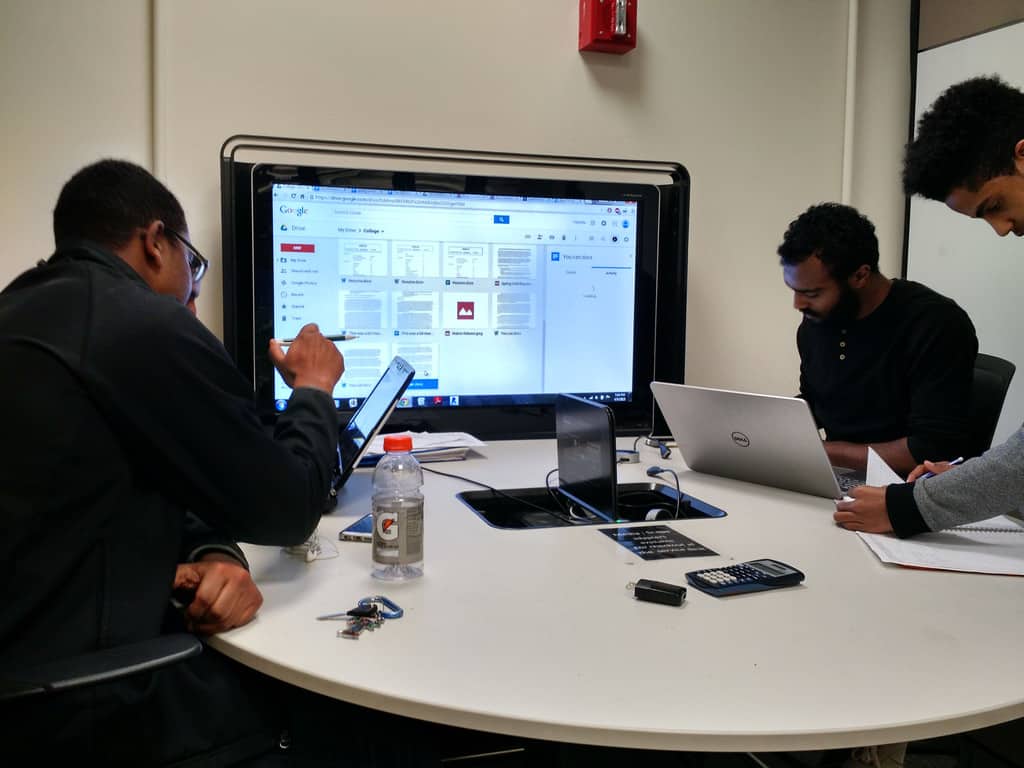
We have just the space you need! We have 2 group study pods – and pod 1 is equipped with media:scape!

Group Study Pod 1

Group Study Pod 1

Media:scape is designed for easy collaboration – your group may connect up to 6 electronic devices. Each device is then able to send the info on their screens to the large-screen monitor. This allows your group to share documents, images, videos, or websites instantly. Connection cords are located in the “well” in the center of the table and each connection cord has a “puck” which will glow when it is properly connected.  Once your device is connected, you simply tap the puck and the information from your laptop is instantly displayed on the monitor. Being able to share your information so quickly and easily has obvious advantages when you are working on a group project. Each person is able to work individually and immediately share with the rest of the group. Being able to view all the group members’ contributions can really enhance brainstorming and the the creative process.

The adapters which are needed to connect personal devices to the media:scape are available for check out at the circulation desk. A reservation sign-up sheet is posted on the window of each group study pod. Both group study pods are also equipped with a large whiteboard and dry erase markers are available at the circulation desk.

The combination of the media:scape and the whiteboard makes group study pod 1 the ideal space to work on that group project!


Capitalizing on Research Data | Public Seminar | Wednesday, Nov. 11, 10:30am-11:30am

The University of Iowa Libraries will host guest speaker Heidi Imker, director of the Research Data Service (RDS) at the University of Illinois-Champaign.

Imker’s seminar, Capitalizing on Research Data: Management, Dissemination, and Archiving, will explain how researchers can meet new funder requirements for research data management and leverage public access requirements to increase the visibility and impact of their research. Discussion will follow her seminar.

November 11, 10:30am-11:30am, meet and greet with refreshments following.

Heidi Imker, PhD

Heidi Imker, PhD


Illinois Room, Iowa Memorial Union (348 IMU)
RSVP 
please.

New data sharing requirements
Recently, many federal funding agencies have expanded their requirements for public access to research results. Researchers in all disciplines must now “better account for and manage the digital data resulting from federally-funded research.”

Imker urges researchers to view this requirement as an opportunity to regard research data as an important product of scholarly work. Sharing data widely can enhance visibility for researchers, as well as create a collaborative environment of research process verification and results validation.

Such activities will be key to increasing the pace of discovery and demonstrating the importance of research.

In addition, Imker says higher demand for efficient data management tools means researchers may have better options to choose from when it comes to gathering, analyzing, and depositing data in public access repositories.

About the speaker
As director of RDS, Imker oversees a campus-wide service headquartered in the University of Illinois Library. RDS provides the Illinois research community with the expertise, tools, and
infrastructure necessary to manage and steward research data.

Prior to joining the Library, Imker was the Executive Director of the Enzyme Function Initiative, a large-scale collaborative center involving nine universities, funded by the National Institutes of Health and located in the Institute for Genomic Biology.

Imker holds a Ph.D. in Biochemistry from the University of Illinois and completed her postdoctoral research at Harvard Medical School.

For more information, please visit http://guides.lib.uiowa.edu/data.  Please contact us at lib-data@uiowa.edu if you have any questions.

Pediatric Nutrition at the UI | History of Medicine Lecture | Thursday, Oct. 22, 5:30pm

Ekhard Ziegler, MD Professor Emeritus, Dept. of Pediatrics

Ekhard Ziegler, MD
Professor Emeritus, Dept. of Pediatrics

The University of Iowa History of Medicine Society invites you to a lecture on Pediatric Nutrition at The University of Iowa.  
Nutrition research was an important part of the Department of Pediatrics’ activities,  beginning with the departments’ founding in 1914.  Nutrition research reached national and international fame under Samuel J. Fomon’s four decades of leadership.

Thursday, October 22, 2015
5:30-6:30pm
2117 Medical Education Research Facility (MERF)


pediatric nutrition

Donate to The University of Iowa History of Medicine Society


DIY for the Weekend: Build Your Own Trebuchet!!

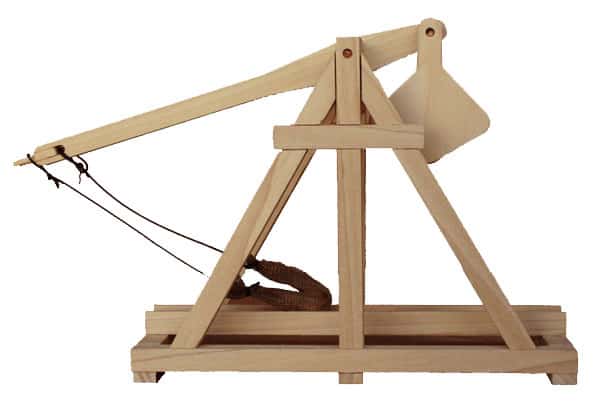
A trebuchet is a medieval engine of war with a sling for hurling missiles. As Halloween comes around, wouldn’t you like to spend your weekend building your very own pumpkin-launching trebuchet?

Trebuchets have been around since the middle ages and were often used to throw objects at the enemy’s fortress. Usually it was large rocks, but often dead and rotting livestock were thrown. Depending on the size of the trebuchet you build, you will probably be throwing smaller objects, like tennis balls. Or pumpkins….

A trebuchet

A trebuchet

There is a difference between a trebuchet and a catapult. A trebuchet uses a sling and has a counter-weight which, as it is dropped, forces the long arm up to pull the sling and the projectile along a slide at the base. The counter-weight uses the pull of gravity to provide the force necessary for the arm to swing upwards. The sling increases the length of the arm and the performance. The catapult uses a leaf spring mechanism to release the long arm. A rope is wrapped around a rotating drum and when the spring mechanism is released, so is the arm and the projectile. A catapult has a cup at the end rather than a sling.

In 15 Dangerously Mad Projects for the Evil Genius, author Simon Monk says, “The trebuchet takes its energy from the weight that falls as the arm swings. The ‘potential’ energy is transferred to the arm and sling of the trebuchet and is released as kinetic energy in the tennis ball.”

When you know the energy stored in the weight and how far the projectile can be thrown, the energy going into the system and the energy released can be measured.  Input energy can be calculated using the formula: E=mgh where ‘m’ is the mass of the weight, ‘g’ is the gravitational acceleration on Earth (9.8) and ‘h’ is the height.  You can also calculate the amount of energy transferred to the tennis ball using the distance it traveled and its weight. E=1|2 mv2 where d=v2|g v2=dg. You can then calculate the efficiency of the catapult by dividing the energy transferred by the energy input.  From this, you are then able to calculate the efficiency of your trebuchet!

Model of the da Vinci catapult

Model of the da Vinci catapult

Sometime in the 1480s, Leonardo da Vinci drafted two designs that would improve on the catapult. There were drawbacks to each of the designs and included the considerable cost to produce the steel mechanism and the swing arm tension would have been tremendous. It is believed that neither of the catapults were built during his lifetime. However, if you’d like to see a life-size working model of his catapult check out the DVD Doing da Vinci from our DVD collection. In this 2-DVD collection, 4 builders and engineers tackle building some of da Vinci’s never-before-built designs.

Monk says, “It’s a simple design that should only take a few hours to construct and needs little in the way of special tools or equipment.” A list of materials needed is listed and instructions are clearly laid out, including how to make the weight from a plastic cereal container filled with wet sand. The sling is made with rope and a patch of square cloth. Monk also says, “A reasonably strong material like denim is ideal. The Evil Genius’ minions can often be found wearing jeans with large patches of cloth removed. The Evil Genius tells them that this is the latest fashion and the minions are pleased.” (pg. 20).

If you prefer a smaller, desk-top version, you can make one using popsicle sticks.

You have a couple of weeks to build and fine-tune your trebuchet before Halloween! Have a fun (and safe) one!


Video from dangerouslymad.com

Resources: 

15 Dangerously Mad Projects for the Evil Genius. Engineering Library TK9965 .M66 2011

15 Dangerously Mad Projects for the Evil Genius. Engineering Library TK9965 .M66 2011

Doing da Vinci. 2010. [Silver Spring, MD : Discovery Channel : Louisville, CO : Gaiam Americas. Engineering Circulation Desk Video record 37148 DVD.

Monk, Simon. 2011. 15 dangerously mad projects for the evil genius. New York : McGraw Hill. Engineering Library TK9965 .M66 2011

Leonardo Da Vinci’s Life. Da Vinci’s Life. Date accessed, October 14, 2015.

Trebuchet. dangerouslymad.com Date accessed Oct. 14, 2015

How to Build a Catapult – a Popsicle Stick Catapult. Stormthecaslte.com. Date accessed Oct. 15, 2015

Other Resources:

Medieval Siege. 2004 [Boston] : WBBH Boston Video. Engineering Circulation Desk Video Record 39034 DVD

How to Build a Catapult. Storm the Castle.com. Date accessed Oct. 15, 2015.


Database of the Week: American Firms Operating in Foreign Countries

Each week we will highlight one of the many databases we have here at the Pomerantz Business Library.

The database: Uniworld: American Firms Operating in Foreign Countries uniworld

Where to find it: You can find it here, and under A in the databases A-Z list.

Uniworld Online, […] offer[s] two unique directories to unravel the maze of “who operates where” and “who owns whom” regardless of whether you’re sourcing, building your business, selling, tracking competitors, or seeking employment with a multinational firm.  With Uniworld Online, you’ll find contact information for headquarters, branches, subsidiaries, and affiliates of the multinational firm. Since 1955, it’s all we’ve done and we do it well.  All of the firms we list are multinational firms.

Use it to find:

  • American Firms Operating in Foreign Countries
  • Foreign Firms Operating in the United States

Tips for searching:

  • Search by: country, region, state, keyword, zip code, radius, industry codes, revenue, number of employees
  • Filter results to show only: public firms, private firms, US branch locations, etc.
  • Download to Excel or view resultsuniworld2

Want help using Uniworld: American Firms Operating in Foreign Countries? Contact Willow or Kim and set up an appointment.

Guest Post: On generous scholarship

During the month of Open Access week (October 19-25) we will be highlighting a number of guest posts from University of Iowa Faculty and Staff who have personal experience making their work Open Access.  We appreciate their contributions.

The third guest post is by Meenakshi Gigi Durham, distinguished scholar, teacher, and writer whose work centers on media and the politics of the body. Her research emphasizes issues of gender, sexuality, race, youth cultures, and sexual violence.  She holds a joint appointment in the Department of Gender, Women’s and Sexuality Studies.

See her Iowa Research Online deposited publications here.

On generous scholarship

A vital aspect of doing academic work is disseminating the knowledge we create so as to maximize its potential to have positive effects on the world. That’s why I’m a fan of institutional repositories. The impetus in the United States today seems to be to corporatize and commoditize education, somehow turning it into a for-profit enterprise instead of a public good. Institutional repositories are a great way to challenge and resist that impulse, returning us to the recognition that research is a crucial element of a collective vision of social progress.

I lived for years in a resource-poor country, and I know that even in the wealthier nations, there are many institutions and scholars who don’t have access to the treasure trove of databases we are privileged to use every day via the wonderful library system at the University of Iowa. But scholarship can’t happen without access to up-to-date knowledge; as scholars, we build on the work that advances our fields. It’s always been inspiring to me that some of the world’s greatest ideas and inventions have been catalyzed by an encounter with some prior work: Galileo read Copernicus and came up with his theory of heliocentrism; Srinivasa Ramanujam read G.S. Carr and made groundbreaking contributions to number theory; Toni Morrison read Virginia Woolf and went on to write Nobel Prize-winning novels. Connecting with the thoughts and ideas and perspectives of others inspires and informs us. We need to make sure the next great scholar can read everything he or she wants to. Part of our work is facilitating the discoveries of the future. That takes generosity and a social conscience —that’s the spirit behind teaching, just as it is behind scholarship.

So whenever I can, I contribute my writings to Iowa Research Online. I offer my work humbly, as part of a community of thinkers whose aims are to change the world for the better. It’s truly gratifying that my IRO papers have been downloaded far more often than they have from commercial journal websites or databases. I hope they are contributing to the way others are thinking about the issues I study: gender, sexuality, and the media. I hope they are sparking new ways to think about these issues, and I hope those ideas will translate into the real goals of my own work, which include social justice, gender equity, and an end to sexual violence.