Skip to content
Skip to main content

Raising of America |Screening & Panel Discussion |Thursday, November 5, 6-8pm @Hardin Library

ROA-logo_flag-boy-wordmark

Join us at Hardin Library for the Health Sciences for a screening and moderated discussion of the film The Raising of America.

Thursday, November 5, from 6-8pm, Hardin Library for the Health Sciences
RSVP for the event

More information about the Hardin Library Film Series is available online.

About the film
The Raising of America will reframe the way we look at early child health and development. This ambitious documentary series by the producers of Unnatural Causes: Is Inequality Making Us Sick? explores how a strong start for all our kids leads not only to better individual life course outcomes (learning, earning and physical and mental health) but also to a healthier, safer, better educated and more prosperous and equitable America.

Discussion Panelists
Resmiye Oral, MD, Director, Child Protection Program, Clinical Professor of Pediatrics-General Pediatrics and Adolescent Medicine
Renita Schmidt, PhD, Associate Professor, Teaching and Learning
Christine M. Catney, PharmD, MA, Clinical Assistant Professor, Applied Clinical Science

For more information, see our guide.
All 5 episodes are available via streaming for University of Iowa affiliates:
The Raising of America Once Upon a Time Are We Crazy About Our Kids? Wounded Places DNA Is Not Destiny


Guest Post: Open Access Publication Just Makes Sense

Open Access logo

During the month of Open Access week (October 19-25) we will be highlighting a number of guest posts from University of Iowa Faculty and Staff who have personal experience with Open Access.  We appreciate their contributions.

The seventh, and final post, is by Kelly Cole, Associate Professor and Departmental Executive Officer, College of Liberal Arts and Sciences, Department of Health and Human Physiology.

Open Access Publication Just Makes Sense

According to the PLOS organization, “Open Access ..stands for unrestricted access and unrestricted reuse” of peer-reviewed original scholarly work (emphasis added).  I’m tempted to stop right there.  Unrestricted access and unrestricted reuse of our discoveries that mostly were supported by public funds and hence deserve to be in the public’s hands rapidly (and the NIH agrees).  With digital access worldwide assured by the world-wide-web, we assure the second of the two basic tenets of modern science – dissemination (the first being discovery).  What else is left to debate?

This is the simple, honest motivation for me to publish in Open Access journals – rapid, worldwide dissemination.  The profit-driven and slightly unsavory alternative has been well-discussed from the very first thoughts about the possibility of open access publishing; namely print publishers (in paper or digital format) who own the rights to the published articles, then charge fees for digital access, and who then require permission for reuse at a fee (they own copyright).  (We’ve all been through the copyright torture when we attempt to write a chapter in a book using figures from our published work.)  Clearly, these are the expected policies of a for-profit, bottom-line enterprise, and a partnership with scholars that worked to the advantage of both parties.  I accepted that early in my career.  The model worked in its own perverse way, and it was the only game in town for world-wide dissemination, not to mention its role in career advancement through peer-review and the need to publish in high-impact journals for maximum gain.

The burgeoning success of Open Access publication, along with digital media and the world-wide-web, clearly shows that it is time to move on.  The remaining barriers to each individual scholar for deciding whether or not to publish in Open Access seem to be rooted in decisions about career advancement; that is, the need to publish in elite, supposedly high-impact journals.    Last year Prof. Bernd Fritzch wrote a wonderful entry to this blog site concerning the eroding utility of journal impact factors, and the ongoing evolution of newer ways of tracking citation impact of a scientist’s work (such as the h-index and others).  It would seem that with digital access (and digital searching), amplified further by open access, the impact of a paper is now less a matter of where it was published, and more a matter of the content of the paper (as it should).

I too remember long days in the library with Index Medicus, tracking down papers, which then evolved into Current Contents mailed to your lab periodically.  We didn’t have time to scour every possible key word or topic heading (remember, we were turning pages in a catalog and we couldn’t use arbitrary key words and the magic of Boolean operators).  We focused first on the keywords and terms that made the most sense (and were always amazed when someone turned up an important paper that escaped our search), and then on a subset of high-impact journals.  Many of these journals were high impact because of the shared, tacit agreement amongst our peers to publish our best work in just the places where we all tended to look first.

Folks, those days are over.  With digital search across large, publicly supported databases, our work can be found just about anywhere, barring our poor choices of titles or keywords.  That means your work will be found in Open Access journals, and it will be cited based on the merits of your scholarship and not just the reputation of the journal. This scenario continues to evolve, but the direction seems clear and we’re building speed.  Prof. Fritzsch asked the question “Are we witnessing a revolution in information flow…?”  I’m wondering if Bernd asked the question as a rhetorical device.  It seems to me the answer is a resounding ‘Yes’!

Guest Post: Open Access Publication Just Makes Sense

Open Access logo

During the month of Open Access week (October 19-25) we will be highlighting a number of guest posts from University of Iowa Faculty and Staff who have personal experience with Open Access.  We appreciate their contributions.

The seventh, and final post, is by Kelly Cole, Associate Professor and Departmental Executive Officer, College of Liberal Arts and Sciences, Department of Health and Human Physiology.

Open Access Publication Just Makes Sense

According to the PLOS organization, “Open Access ..stands for unrestricted access and unrestricted reuse” of peer-reviewed original scholarly work (emphasis added).  I’m tempted to stop right there.  Unrestricted access and unrestricted reuse of our discoveries that mostly were supported by public funds and hence deserve to be in the public’s hands rapidly (and the NIH agrees).  With digital access worldwide assured by the world-wide-web, we assure the second of the two basic tenets of modern science – dissemination (the first being discovery).  What else is left to debate?

This is the simple, honest motivation for me to publish in Open Access journals – rapid, worldwide dissemination.  The profit-driven and slightly unsavory alternative has been well-discussed from the very first thoughts about the possibility of open access publishing; namely print publishers (in paper or digital format) who own the rights to the published articles, then charge fees for digital access, and who then require permission for reuse at a fee (they own copyright).  (We’ve all been through the copyright torture when we attempt to write a chapter in a book using figures from our published work.)  Clearly, these are the expected policies of a for-profit, bottom-line enterprise, and a partnership with scholars that worked to the advantage of both parties.  I accepted that early in my career.  The model worked in its own perverse way, and it was the only game in town for world-wide dissemination, not to mention its role in career advancement through peer-review and the need to publish in high-impact journals for maximum gain.

The burgeoning success of Open Access publication, along with digital media and the world-wide-web, clearly shows that it is time to move on.  The remaining barriers to each individual scholar for deciding whether or not to publish in Open Access seem to be rooted in decisions about career advancement; that is, the need to publish in elite, supposedly high-impact journals.    Last year Prof. Bernd Fritzch wrote a wonderful entry to this blog site concerning the eroding utility of journal impact factors, and the ongoing evolution of newer ways of tracking citation impact of a scientist’s work (such as the h-index and others).  It would seem that with digital access (and digital searching), amplified further by open access, the impact of a paper is now less a matter of where it was published, and more a matter of the content of the paper (as it should).

I too remember long days in the library with Index Medicus, tracking down papers, which then evolved into Current Contents mailed to your lab periodically.  We didn’t have time to scour every possible key word or topic heading (remember, we were turning pages in a catalog and we couldn’t use arbitrary key words and the magic of Boolean operators).  We focused first on the keywords and terms that made the most sense (and were always amazed when someone turned up an important paper that escaped our search), and then on a subset of high-impact journals.  Many of these journals were high impact because of the shared, tacit agreement amongst our peers to publish our best work in just the places where we all tended to look first.

Folks, those days are over.  With digital search across large, publicly supported databases, our work can be found just about anywhere, barring our poor choices of titles or keywords.  That means your work will be found in Open Access journals, and it will be cited based on the merits of your scholarship and not just the reputation of the journal. This scenario continues to evolve, but the direction seems clear and we’re building speed.  Prof. Fritzsch asked the question “Are we witnessing a revolution in information flow…?”  I’m wondering if Bernd asked the question as a rhetorical device.  It seems to me the answer is a resounding ‘Yes’!

DIY for the Weekend: Light Up Your Halloween Costume!

Okay, so Halloween is tomorrow and you still don’t have any really good ideas for a costume…

Want a costume that lights up? LED eyelashes? Or maybe a mask that will control your music wirelessly? We have the resources to help you turn your bright idea into the perfect costume.

You are a Super Hero and need to contact your Super Hero partner. Make: Wearable Electronics will help you learn the skills necessary to create your own super hero communicator cuffs. Each pair of cuffs has an electronic switch and when the wrists are crossed, a wireless signal is sent to your partner’s cuffs. The transmitted signal causes the cuffs to light up, letting your partner know you need them. Or maybe you want to let them know you found the best Halloween candy at the party….

"Dream Squawk" mask created by Amy Khoshbi.

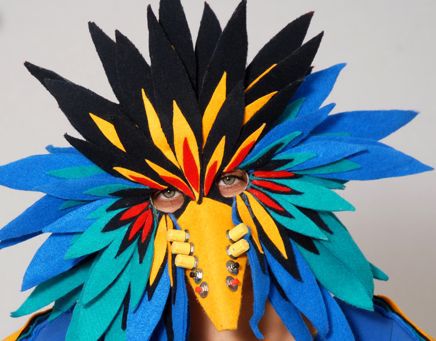
“Dream Squawk” mask created by Amy Khoshbi.


Make: Wearable Electronics will help you learn Lilypad Arduino and Xbee – which are used to make the cuffs – and so much more.  Maybe you want to make a  “Dream Squawk” mask which allows you to control music and sound wirelessly. That could really amp up your party…..


"Tron: Quorra Costume" by Syuzi Pakchyan

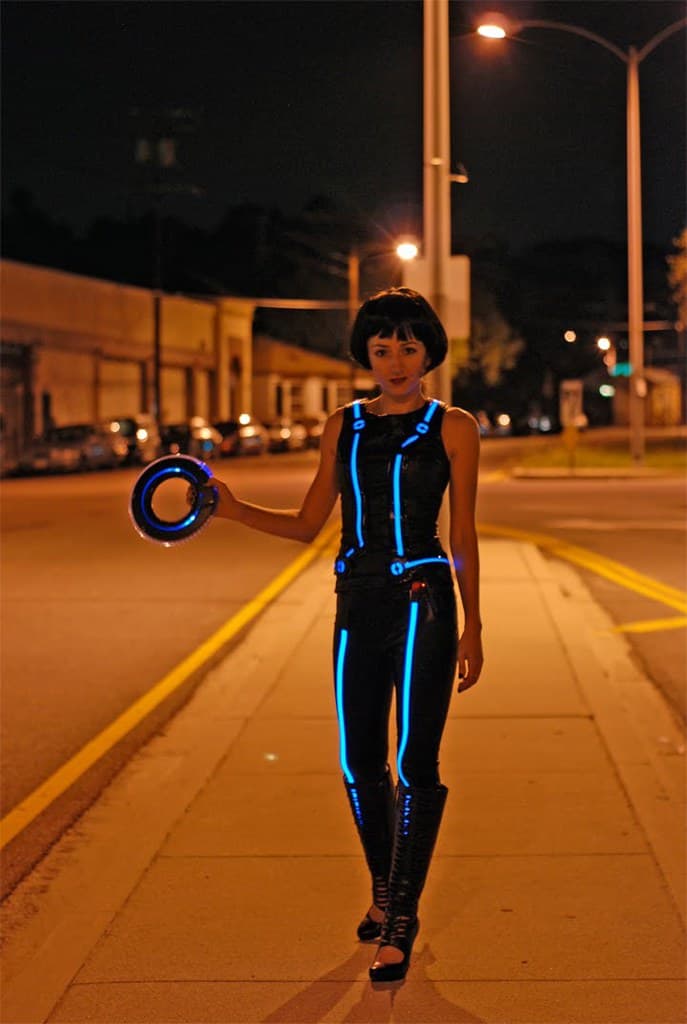
“Tron: Quorra Costume” by Syuzi Pakchyan


How about Quorra from Tron: Legacy? This costume also uses LilyPad and Cool Neon‘s LED ribbon.  LilyPad was designed specifically for e-textiles and clothing and Make: Wearable Electronics provides experiments so you are able to try those new LilyPad skills.

Starboards are flexible circuits that can be sewn directly into garments. Creator Meredith Scheff also offers low resistance (2.5 ohms per yard) solderable conductive thread. It is a conductive thread that is also solderable and it strong enough to be used like regular sewing thread.


Space Face LED Galaxy Makeup

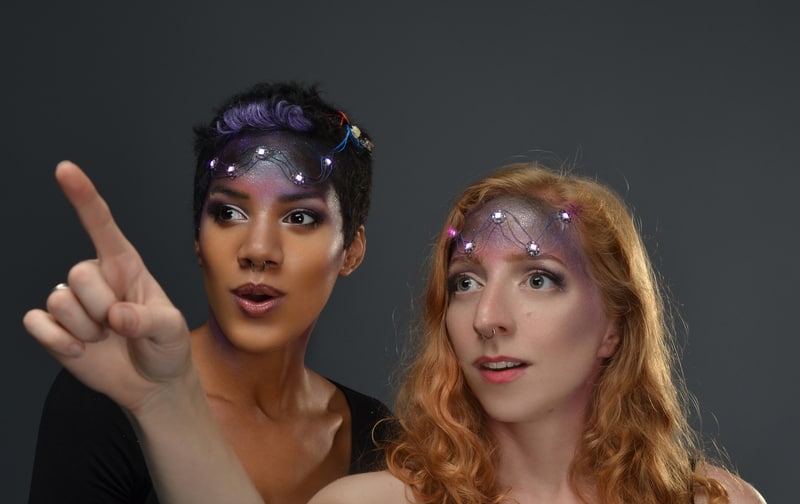
Space Face LED Galaxy Makeup

Wear Space Face Galaxy Light Up Makeup, inspired by the constellation Cassiopeia, and you could be the star of the evening. This spacey headpiece uses 5 FLORA NeoPixels. Make:Wearable Electronics has an example to help you get started using this versatile module. It is wearable, sewable, easily wired, individually addressable, ultra-bright, multicolored LEDs – what’s not to love?

Butterfly Dress designed by Alexander Reeder

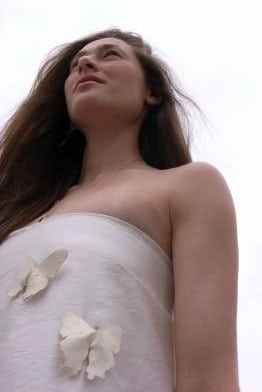
Butterfly Dress designed by Alexander Reeder


Perhaps you are going dressed as a “social butterfly.” What could be better than a dress with butterflies that actually flap their wings? If you are interested in wearable tech that utilizes motors, both Make: Wearable Electronics and Making Things Move: DIY Mechanisms for Inventors, Hobbyists, and Artists can help you learn to do just that!


LED Eyelashes

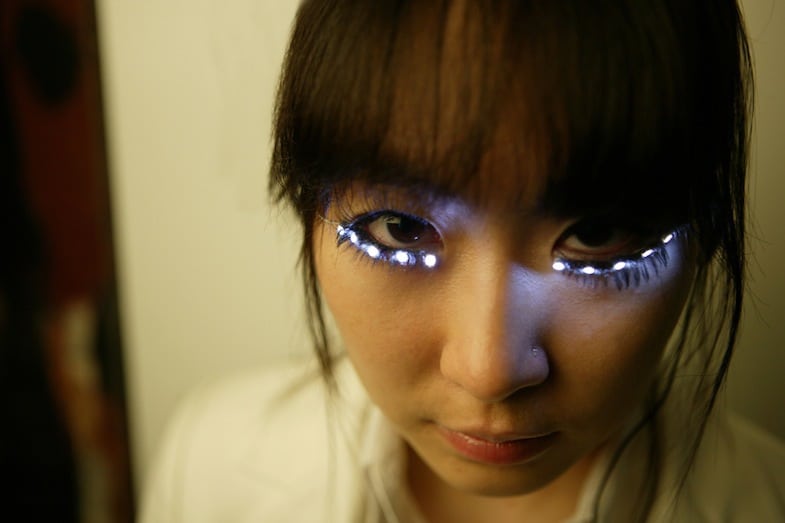
LED Eyelashes by Soomi Park

How about LED eyelashes to go with your butterfly dress? Again, LillyPad is used to build those LED eyelashes that will brighten your eyes! Make: Wearable Electronics also also explains how to work with Aniomagic – an e-textile toolkit that is similar to LilyPad and FLORA. Use Aniomagic to create a light-up bracelet, belts and almost anything else you can dream up to go with those bright eyes and butterfly wings!
thinking_cap
 

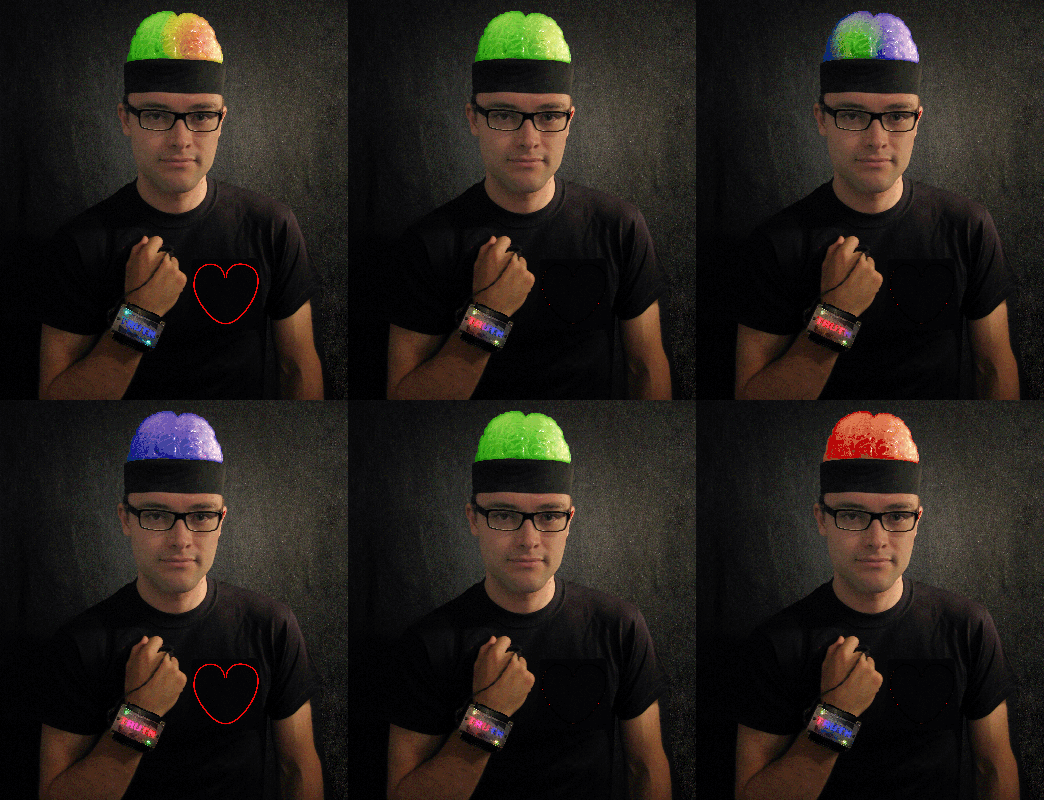
Want to have the brightest brain in the room? Create your own “Thinking Cap.” It is biometric-data-driven, and responds to fluctuations in EEG signals.


Whatever bright idea you have about a wearable tech costume – we’ve got the resources – information on everything from circuits and batteries to conductive materials and how to make your ideas wearable!

Happy Halloween!!!


Resources:

Hartman, Kate. 2014. Make: wearable electronics. Sebastopol, CA : Maker Media. Engineering Library QA76.592 .H37 2014.

DIY: Superhero Communicator Cuffs. 2012. OCAD University.

Light Up Your Life With LEDs, Sewable Circuitry. May 29, 2011. Wired.

Roberts, Dustyn. 2011. Making things move: DIY mechanisms for inventors, hobbyists, and artists. New York : McGraw-Hill. Engineering Library TJ147 .R56 2011

XBee Buying Guide. Sparkfun Electronics. Accessed: Oct. 27, 2015

About LilyPad. LilyPad. Accessed: Oct. 27, 2015

Cool Neon Lighting. 2011. Cool Neon EL Wire.

SparkFun Inventor’s Kit. SparkFun Electronics. Accessed Oct. 27, 2015

How-To: Space Face LED Galaxy Makeup. Oct. 10, 2013.  Maker Media.

LED Galaxy Makeup – SPACE FACE. youtube. Oct. 9, 2013.


Other resources:

LED Eyelash_Soomi Park. youtube. July 20, 2009

Mom’s Homemade ‘Star Wars’ Costumes Will Blow You Away. Oct. 27, 2015. Yahoo! News. abc Good Morning America.

El Nino Costume with Lightning and Real Rain. Oct. 26, 2015. youtube.com

IRO featured in Open Access Week guest blog posts

The University of Iowa Libraries celebrated Open Access Week Month in a variety of ways, including several guest blog posts from faculty on why they support open access. Of particularly note to us is that all the authors include Iowa Research Online as an important component of their open access. We are happy that our repository supports our faculty member’s publication and allows more people to benefit from their research.

Open Access is the way that new knowledge is made…easier by Rachel Marie-Crane Williams, Oct. 7, 2015

The Janus Faces of Open Access Publishing by Frederick Domann, Oct. 12, 2015

On generous scholarship by Meenakshi Gigi Durham, Oct. 15, 2015

Walt Whitman Quarterly Review Goes Open Access by Ed Folsom, Oct. 21, 2015

Expectations Exceeded – My Experience with the Open Access Fund by Matthew Uhlman, Oct. 23, 2015

Interview – Kembrew McLeod on Open Access by Kembrew McLeod, Oct. 28, 2015

To include your content in Iowa Research Online, you can either click the “Submit Research” link in the sidebar or contact your subject specialist. Anything that is appropriate for your CV may be included in IRO.

Guest Post: Interview – Kembrew McLeod on Open Access

Open Access logo

During the month of Open Access week (October 19-25) we will be highlighting a number of guest posts from University of Iowa Faculty and Staff who have personal experience with Open Access.  We appreciate their contributions.

The sixth guest post is by Kembrew McLeod,  Professor of Communication Studies at the University of Iowa and an independent documentary producer. A prolific author and filmmaker, he has written and produced several books and documentaries that focus on popular music, independent media and copyright law.

See all of Kembrew’s Iowa Research Online deposited publications here.

Q: Two of the publications you have deposited in the IRO received an extraordinary number of downloads in the first half of this year, “Freedom of Expression: Overzealous Copyright Bozos and Other Enemies of Creativity” (had 1772 from Jan-July 2015), and “Genres, Subgenres, Sub-Subgenres and More: Musical and Social Differentiation Within Electronic/Dance Music Communities“(had 1347 from Jan-July 2015). Could you tell us a little about these two publications?

Freedom of Expression was my second book, which originally was published by Doubleday-a trade press that miraculously allowed me to license it under a Creative Commons license. These licenses make it easy for authors to legally encourage the sharing of their work, and it has been an enormously successful project (since 2004, millions of books, songs, etc. have been published under Creative Commons licenses). “Genres, Subgeners, Sub-Subgenres and more” is an article I wrote when I was a grad student, which happens to be one of my most cited publications.

Q: Were there specific reasons behind putting these two publications in the IRO?

Quite simply, I wanted to make it easy to share my work, and by putting it in the hands of librarians, I knew that it would be properly archived and made accessible to the public

Q: Have you seen any benefits from having these works available freely and openly through the IRO?

Yes, definitely. By making it accessible, it increases the chances that other scholars (and, more generally, the public) might be exposed to my writing. This has certainly increased the number of other scholarly publications that have cited my work, which is obviously a good thing.

Q: What are your general thoughts on the value and importance of academics making their work open access?

Open Access is hugely important. In fact, I no longer publish in journals that have overly restrictive copyright policies. The final straw was when I was prevented from sharing one of my own articles because Digital Rights Management (DRM) crippled the PDF file. DRM is a technological protection system that limits the number of times-or the ways in which-a work may be copied and distributed. After I emailed the PDF of my article to my undergrad class, a student tried to print out a copy of my article. Unfortunately, all that was printed out was a blank sheet of paper, save for a notice at the bottom that read: “Reproduced with permission of the copyright owner. Further reproduction prohibited without permission.”

I had no idea Blackwell, the company that published it, set limits on the distribution of my own article, though I’m not at all surprised. I can’t think of a more disturbing, yet poetic, expression of copyright-gone-mad than a blank sheet of paper where published research should be. The most insane thing is that I got the PDF from a database that the University of Iowa subscribes to-which means that the state paid me a salary to produce knowledge, and then my library had to pay a private company to access that knowledge, and on top of all that I was still prevented from distributing my own writing!

Guest Post: Interview – Kembrew McLeod on Open Access

During the month of Open Access week (October 19-25) we will be highlighting a number of guest posts from University of Iowa Faculty and Staff who have personal experience with Open Access.  We appreciate their contributions.

The sixth guest post is by Kembrew McLeod,  Professor of Communication Studies at the University of Iowa and an independent documentary producer. A prolific author and filmmaker, he has written and produced several books and documentaries that focus on popular music, independent media and copyright law.

See all of Kembrew’s Iowa Research Online deposited publications here.

Q: Two of the publications you have deposited in the IRO received an extraordinary number of downloads in the first half of this year, “Freedom of Expression: Overzealous Copyright Bozos and Other Enemies of Creativity” (had 1772 from Jan-July 2015), and “Genres, Subgenres, Sub-Subgenres and More: Musical and Social Differentiation Within Electronic/Dance Music Communities“(had 1347 from Jan-July 2015). Could you tell us a little about these two publications?

Freedom of Expression was my second book, which originally was published by Doubleday-a trade press that miraculously allowed me to license it under a Creative Commons license. These licenses make it easy for authors to legally encourage the sharing of their work, and it has been an enormously successful project (since 2004, millions of books, songs, etc. have been published under Creative Commons licenses). “Genres, Subgeners, Sub-Subgenres and more” is an article I wrote when I was a grad student, which happens to be one of my most cited publications.

Q: Were there specific reasons behind putting these two publications in the IRO?

Quite simply, I wanted to make it easy to share my work, and by putting it in the hands of librarians, I knew that it would be properly archived and made accessible to the public

Q: Have you seen any benefits from having these works available freely and openly through the IRO?

Yes, definitely. By making it accessible, it increases the chances that other scholars (and, more generally, the public) might be exposed to my writing. This has certainly increased the number of other scholarly publications that have cited my work, which is obviously a good thing.

Q: What are your general thoughts on the value and importance of academics making their work open access?

Open Access is hugely important. In fact, I no longer publish in journals that have overly restrictive copyright policies. The final straw was when I was prevented from sharing one of my own articles because Digital Rights Management (DRM) crippled the PDF file. DRM is a technological protection system that limits the number of times-or the ways in which-a work may be copied and distributed. After I emailed the PDF of my article to my undergrad class, a student tried to print out a copy of my article. Unfortunately, all that was printed out was a blank sheet of paper, save for a notice at the bottom that read: “Reproduced with permission of the copyright owner. Further reproduction prohibited without permission.”

I had no idea Blackwell, the company that published it, set limits on the distribution of my own article, though I’m not at all surprised. I can’t think of a more disturbing, yet poetic, expression of copyright-gone-mad than a blank sheet of paper where published research should be. The most insane thing is that I got the PDF from a database that the University of Iowa subscribes to-which means that the state paid me a salary to produce knowledge, and then my library had to pay a private company to access that knowledge, and on top of all that I was still prevented from distributing my own writing!

Writing Data Management Plans Xpress Class TOMORROW at 2:30!

We are offering 30 minute Xpress classes Thursdays at 2:30 p.m. They will take place in the Library Multipurpose Room (2001C SC).

XpressClasses_DataManagement_week

This Writing Data Management Plans class is an introduction to DMPTool . DMPTool is an online management tool to help you create data management plans that meet funding agency requirements. Key elements of a data management plan and a demonstration on how to use DMPTool will be covered.

Qianjin (Marina) Zhang, Engineering & Informatics Librarian, Lichtenberger Engineering Library, will teach this class.  Marina will be available after class to answer any further questions.

Stop in and learn more about writing a data management plan!

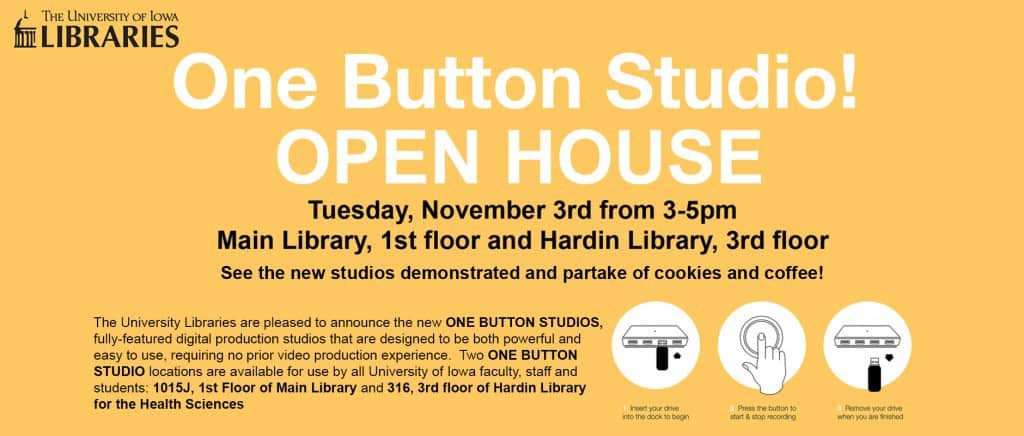
One Button Studio |Open House Grand Opening |Tuesday, Nov. 3 from 3pm-5pm

OBS-OpenHouse1880X800 (3)

What is One Button Studio?

One Button Studio is a user-friendly way to practice presentations. There are six simple steps:
1. Plug your own flash drive into the system
2. Load your background or PowerPoint slides (we will have several backgrounds to choose from if you don’t bring your own)
3. Activate the lights and camera with the touch of a single button
4. Record your presentation
5. Stop recording by pressing the button
6. Remove your flash drive and go

Why use it?

One Button Studio is a great tool for practicing a presentation. When view a presentation you’ve recorded, you’ll be able to spot verbal tics, hand gestures, and facial expressions that can detract from your presentation.  At this time, we do not have staffing at the library to help you edit your videos.

Examples of studio use:

•UI Instructors and faculty can use One Button Studio for a wide range of class assignments, such as documenting small-group discussions, presentations, and mock interviews. Clinical training can be enhanced by using the Studios to participate in variety of mock patient interactions, such as medical history intake.

•UI staff can use the Studios to create instruction videos for student employees.

•Community members can also use One Button Studio. Popular projects include recording family history and creating presentations.

•If you have some basic video editing skills, you can even use One Button Studio to create a video that includes other elements such as music, titles, captions, photography, and video footage shot outside the studio.

Want a personal tour?
Email Sarah Andrews to set up a time.

DH Salon Recap: The Walt Whitman Archive’s pre-Leaves of Grass Fiction Project

On Friday, Oct. 23rd, the Digital Scholarship and Publishing Studio hosted the fourth DH Salon of the semester. I was very glad to welcome an enthusiastic group of faculty, staff, and graduate students to the Studio for my presentation, “From Periodical Page to Digital Edition: The Walt Whitman Archive’s pre-Leaves of Grass Fiction Project.” The goal of this project, which is funded by the National Endowment for the Humanities, is to make Walt Whitman’s early fiction easily and freely accessible on The Walt Whitman Archive. For this project, my co-editor Nicole Gray (University of Nebraska-Lincoln) and I have been working to create a digital edition of Whitman’s fiction.

Most people know Walt Whitman as America’s poet and the author of Leaves of Grass, a volume of poetry first published in 1855. But when the poet was in his 20s, he wrote a temperance novel Franklin Evans; or, the Inebriate. A Tale of the Times and about 25 pieces of short fiction, all of which were first published in nineteenth-century newspapers and magazines.

The holdings of the University of Iowa Special Collections include several periodicals that published Whitman’s fiction. I collaborated with Special Collections Librarians to create an exhibit of these items to accompany my talk. Audience members were able to see Whitman’s temperance novel and his first short story in the periodicals. I discussed some of the major editorial decisions, as well as the process of text encoding that lead to the production and publication of the digital edition.

Audience members explored the digital edition of Whitman’s novel and got a preview of the short fiction that is still being edited for publication on the Archive in the summer of 2016. They were also able to interact with two of the Archive’s newest features, a bibliography of the printings and reprints of Whitman’s fiction and a map charting the circulation of the stories across the United States and around the world. These elements of the digital edition are based, in part, on five years of my research, which has revealed several new discoveries, including approximately 350 previously unknown reprints of Whitman’s short fiction in newspapers and magazines and the earliest known printing of at least one of Whitman’s stories.

The question and answer session following my talk was an incredibly valuable experience. My colleagues asked thoughtful questions and generously offered suggestions for future work on the project such as adding a time slider to the Whitman Archive’s current map of the printings and reprints of the fiction and using network analysis and data visualization to further examine the circulation of Whitman’s fiction and its relationship to his early journalism.  I am grateful for this feedback on our digital edition, and I am excited to continue exploring the publication history and circulation of Whitman’s fiction.