Skip to content
Skip to main content

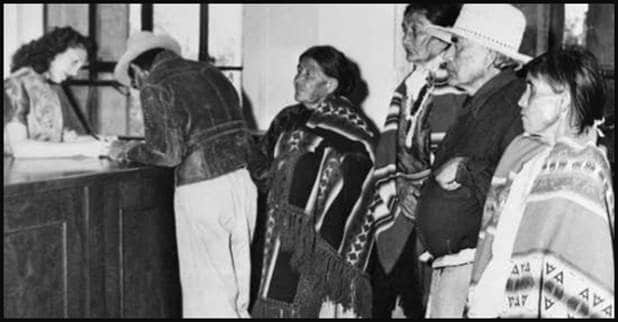
Healthcare for native Americans : Triumphs and Tragedies |UI History of Medicine Society Talk| Thurs. Nov. 19, 5:30pm

Dr. Tony Franken, Jr.  Professor Emeritus UI Dept. of Radiology

Dr. Tony Franken, Jr.
Professor Emeritus
UI Dept. of Radiology

Thursday, November 19
5:30-6:30pm
2117 MERF (Medical Education Research Facility)

The health status of Native Americans has, for 200 years, been substantially poorer than other U.S. Citizens.  Responsibility for their healthcare has (theoretically) been with the federal government.  Franken will cover ups and downs of this unique arrangement, as well as the special status of these Natives in our society today.

The National Library of Medicine has a related online exhibit: Native Voices : Native Peoples Concept of Health and Illness.

For more information on the History of Medicine Society, or to donate please see Fore more information on the History of Medicine Society, or to donate, please see http://hosted.lib.uiowa.edu/histmed/index.html.

indians signing up

Research Data Seminar This Week!

The UI Libraries is hosting a Research Data Seminar this Wednesday, November 11th. It will be held in the Illinois room (348) in the Iowa Memorial Union (IMU) from 10:30 to 11:30 a.m. Capitalizing on Research Data: Management, Dissemination, and Archiving is a public seminar and will be presented by Dr. Heidi Imker.

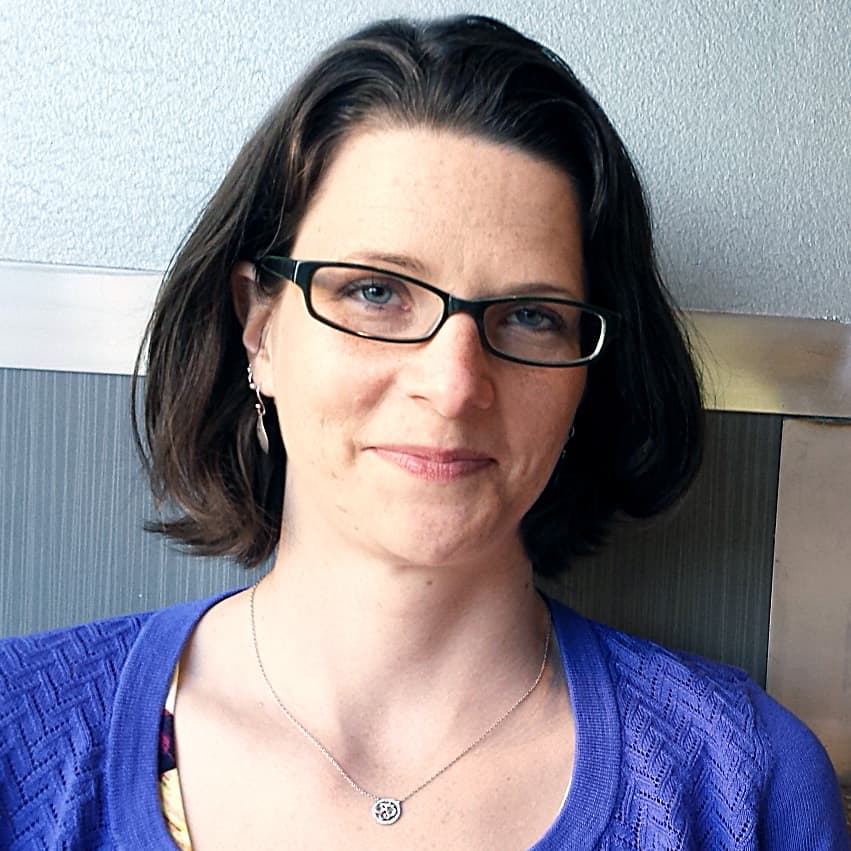
Heidi Imker, Data Management Guest Presenter

Heidi Imker, Data Management Guest Presenter

The seminar will explain how researchers can meet new funding requirements for research data management and also how to leverage public access requirements to increase the visibility and impact of their research. A time for discussion will follow the presentation and there will be refreshments during an informal meet and greet.

Dr. Imker is the Director of the Research Data Service (RDS) at the University of Illinois at Urbana-Champaign. The RDS is a campus-wide service headquartered in the University Library that provides the Illinois research community with the expertise, tools, and infrastructure necessary to manage and steward research data.  Prior to her position as Director of RDS, she was the Executive Director of the Enzyme Function Initiative, a large-scale collaborative center involving more universities. It is funded by the National Institutes of Health, and located in the Institute for Genomic Biology. She holds a Ph.D in biochemistry from the University of Illinois, and did her postdoctoral research at the Harvard Medical School.

Registrations are requested and are still being accepted. You may RSVP by going to http://tiny.cc/Data11-11-15. Please contact lib-data@uiowa.edu if you have any questions.

Become more efficient! |Hardin Open Workshops |

The semester ends soon.  Come to the Hardin Library and learn something to help you save time.

November Workshops @Hardin Library

EndNote Desktop, Tuesday, November 17, 11am-12pm
Searching for Nutrition Subjects in PubMed and Embase, Wednesday, November 11, 2-3pm
PubMed, Wednesday, November 11, 10-11am
Scopus & Web of Science, Monday, November 9, 1-2pm
Systematic Reviews: Literature Searching, Tuesday, November 17, 10-11am
Systematic Reviews: Developing a Framework (Nuts & Bolts), Tuesday, November 10, 10-11am

Sign up for these free workshops online or by calling 319-335-9151.

No time for a workshop?  Request a personal session.

How do I get there?  Take Pentacrest Cambus to the VA Loop Stop.  The library is just up the hill.


Database of the Week: Political Risk Yearbook

Each week we will highlight one of the many databases we have here at the Pomerantz Business Library.

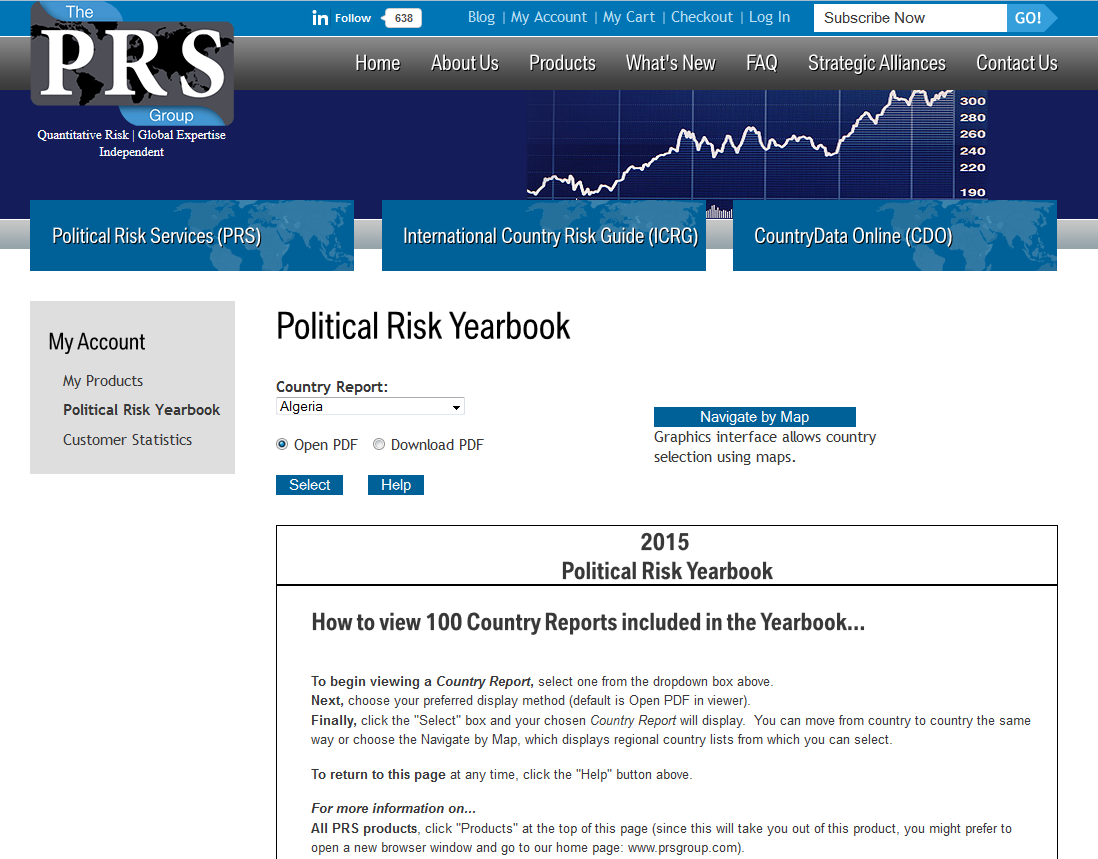
The database: Political Risk Yearbookpolitical_Risk_YEarbook

Where to find it: You can find it here, and under P in the databases A-Z list.

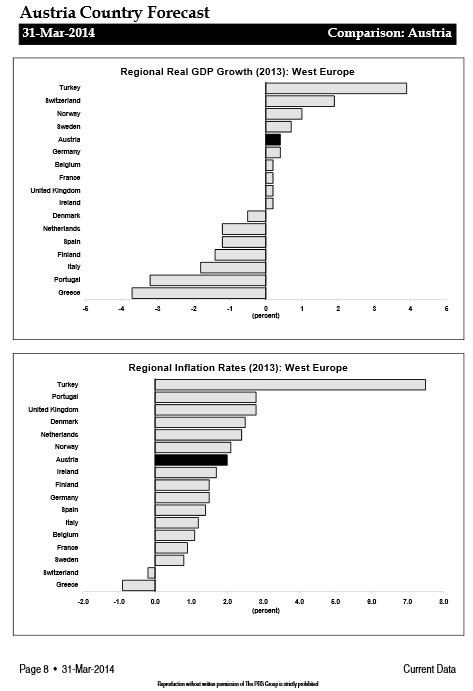
Political Risk Yearbook includes all 100 of Political Risk Services‘ Country Reports. Published annually in January, every report in the Yearbook is updated each year to include the latest report for each country, as of December of the previous year. This set includes eight regional volumes, covering countries around the world.

Use it to find:

  • Country Reports for 100 different countries
  • Reports include:
    • Country Update
    • Country Forecast: Map, Highlights, Current Data, Comment & Analysis, Forecast Scenarios, Political Framework
    • Country Conditions: Climate for Investment & Trade, Background (Geography, Social Conditions, Government)

Tips for searching:

  • Search by Country (drop down menu)
  • Use the table of contents to navigate the report

political_Risk_YEarbook2

Want help using the Political Risk Yearbook? Contact Willow or Kim and set up an appointment.

DIY for the Weekend: Dancing Dolphins, Talking Puppets, and an Electric You

Have you ever wanted to know how ‘electric’ or ‘resistive’ you really are? Have a wall of dancing dolphins or a talking puppet? Whatever electronics project you’d like to try – we’ve got the resources you need!

Making Everyday Electronics Work: a Do-It-Yourself Guide will help you learn the basics of electricity, about everyday electronics, and what makes them work – or not. Author Stan Gibilisco starts with the basics by explaining direct current, alternative current, working his way through magnetic force, semiconductors and vacuum tubes. Each section has “Did you know?”, “Fact or Myth?” and “For Nerds Only” boxes and sidebars. And, since I’m sure you don’t want to be electrocuted, there are also warnings about dangers of which you will want to be aware!

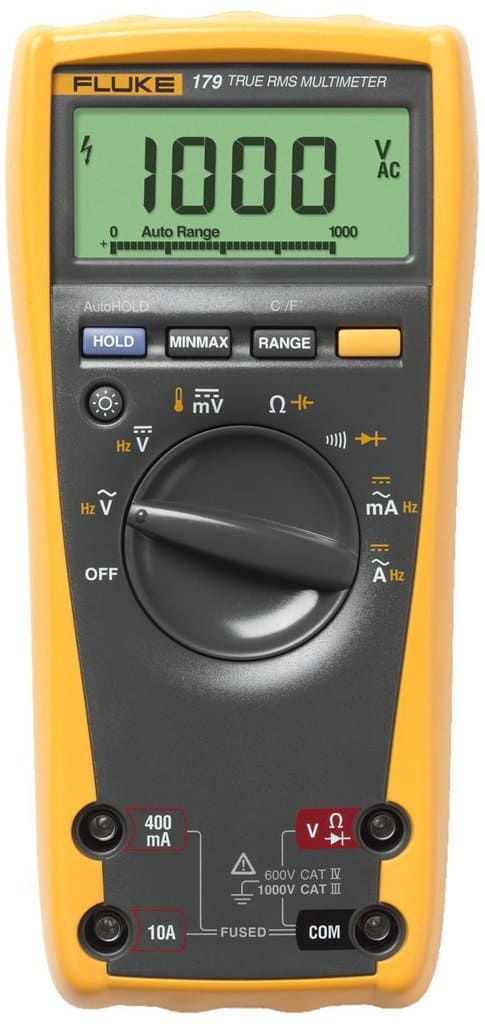
Multimeter (Voltmeter) available for check out from our Tool Library

Multimeter available in our Tool Library

Gibilisco talks about building and stocking your workbench. He includes a detailed list of what you’ll need to have a well-stocked place to experiment. One of the items mentioned is a multimeter. We have one in our Tool Library – ready for you to check out!

Now that you are ‘grounded’ in the basics of electricity and everyday electronics, you can move on to the experiments that Gibilisco provides.. You can start by building a wet cell using distilled white vinegar, table salt and other items from your workbench. And, once you’ve created the wet cell, Gibilisco will walk you through using the left-over items to test both how electric and resistive you are!


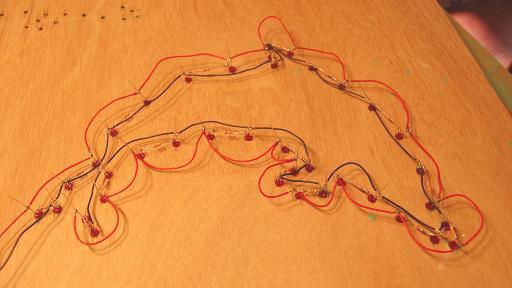
Dancing Dolphins. Electronics Projects for Dummies

Dancing Dolphins. Electronics Projects for Dummies

Or maybe you’d like to have a wall of Dancing Dolphins….or birds…. or spaceships…. Using the dancing dolphins as an example, Electronics Projects for Dummies will teach you everything you need to know about putting the schematic together and building “a circuit with a porpoise.” (their words, not mine. Really). From making the circuit, the dolphins and the lighting, Electronics Projects for Dummies walks you through each of the steps, complete with photos to help you through the process.

Murmuring Merlin. Electronics Projects for Dummies

Murmuring Merlin. Electronics Projects for Dummies

Talking puppets (or just about anything else) more your style? You can learn about working with sound synthesizer chips and have fun making a “Murmuring Merlin” puppet. The project that is demonstrated in Electronics Projects for Dummies uses a wizard hand puppet. You can program the synthesizer chip to say anything you’d like.  Have anything you’d like to say to your roommate?

If you want to try your hand at making light dance to music, controlling a Go-Kart “infrared style,” or making your own metal detector, Electronics Projects for Dummies will help you through.


Have fun using these projects and your new knowledge as a jumping off point for your own projects and ideas!

Resources:

Gibilisco, Stan. 2014. Making everyday electronics work: a do-it-yourself guide. New York : McGraw-Hill Education. Engineering Library TK7819 .G37 2014.

Ham Radio. February 24, 2008. Ham Radio.

Boysen, Earl. 2006. Electronics projects for dummies. Hoboken, NJ : Wiley. Engineering Library TK7819 .M38 2006

Other Resources:

Giblisco, Stan. 2005. Electronics demystified. New York : McGraw-Hill. Engineering Library TK7819 .G35 2005

Giblisco, Stan. 2011. Teach yourself electricity and electronics. New York : McGraw-Hill. Engineering Library TK7819 .G38 2011

Nuts & volts magazine. Corona, CA : T & L Publications.  Journal. Engineering Library No call number

The DIY History transcription API

Since the launch of the Civil War Diaries & Transcription Project, the goal of DIY History has been to promote the University of Iowa Libraries digital collections. Part of this mission includes making the trove of transcriptions from handwritten diaries, manuscripts, and letters widely available to researchers for use in their work.

At the time of this writing there are 61,987 transcribed pages spanning nine public collections in such wide-ranging historical topics as pioneer diaries, war letters, culinary manuscripts and recipes, railroadiana, and specimen cards. Each page has been transcribed and checked by one or more volunteers from around the world. This type of crowdsourcing effort transcends our ability as a staff to catalog, display, and transcribe every handwritten item in the library.  A project such as DIY History invites library users to do more than just visit and browse, but to actively participate in and transform the archive by typing what they read.

Participatory Archives

While DIY History items have always been indexed by search engines, there hasn’t been a robust method of making the entire body of transcription text available to researchers. Previously, a scholar interested in mining the entire collection of cookbooks from the Szathmary collection, for example, would need to perform hundreds of tedious queries using simple keywords. A better method of making our transcription data available was needed.

Early in the Fall 2015 semester, we debuted the DIY History Application Programming Interface. This API provides researchers with the ability to access much more metadata on each file than is displayed on the DIY History website. The API makes DIY History a platform on which to build applications, research projects, and other potentially innovative tools using the transcription data provided by our volunteers.

Read more about APIs

This opens the possibility to text analysis not practical before, even at the web-scale of crowdsourcing. Having programmatic access to the item-level and file-level metadata means researchers can use machine learning techniques to extract and analyze named entities. Just as it’s not feasible for a small staff to transcribe 100,000 scanned pages, it’s not feasible for a small crowd to tag an arbitrary number of entities each time a new research question arises. This is a realistic task, however, for a properly trained machine.

To demonstrate this idea, here is a simple entity extractor using DIY History transcription text, an NER module provided by MonkeyLearn, and Google’s Geocoding service to return latitude and longitude values for extracted place names.

Historical Manuscript Entity Extraction
http://iws.mx/entity-extract/

Source:
https://github.com/mbutler/entity-extractor

To test this demo app, enter any DIY History file ID (the last parameter of a transcription URL) and it will automatically return any person, place, or organization it detects. This is a probabilistic method, so results may not be accurate is there is ambiguity. For this demonstration, each ID is entered manually, but a production application could iterate through thousands of records, storing results in a database.

For example in the following transcription URL, the ID is 73120

http://diyhistory.lib.uiowa.edu/transcribe/3156/73120

Here are a few IDs to get started with:

73120 – Eno family letters, November 1813-September 1827 1824-09 Page 1

2392 – Nile Kinnick correspondence, December 1942-March 1943 1942-12-13: Page 01

33315 – Wise-Clark family papers, December 1864-February 1865 1864-12-18-Page 04


If you have questions about the DIY History API contact matthew-butler@uiowa.edu.
 

Veterans Week Activity | Discussions in Progress About Military Life @Main Library

Discussions in Progress About Military Life is a four-day event series offered by Military & Veteran Student Services in the Center for Diversity & Enrichment and the UI Libraries. Event will be held Monday, Nov 9-Thursday, Nov 12 in the Main Library Learning Commons. 

Each day will begin with a Call of Duty tournament from 11:30 am until 2:30 pm in Group Room 1103/1105 Main Library, with opportunities to engage in conversation with UI student veterans during the tournament. 

Immediately following at 2:30 will be a discussion on various themes related to video games. Discussions will be in Group Area E Main Library.vets

Monday: “Gamer to Gamer”  As gamers with different life experiences, a veteran (Ben Rothman) and a non-veteran (Kaitlin Jones) will lead a conversation about varying perspectives on the video game “Call of Duty.”

Tuesday: “Video Games & Art” Matt Butler, UI Libraries Digital Scholarship & Publishing Studio, will talk about video games as art, tracing how advances in technology have enhanced the realistic look and feel of the gaming environment. Has visual realism prompted game developers to make controversial narrative choices?

Wednesday: “Video Games & the Brain” Michael Hall, UI faculty in psychology and neuroscience, will talk about research on video games and the brain, including areas of the brain activated by gaming, gaming’s effect on the brain’s pleasure centers, early data on whether gaming can be neuroprotective, and what too much gaming can do to the brain.

Thursday: “Stereotypes & Video Games” Hannah Scates Kettler, UI Libraries Digital Scholarship & Publishing Studio, will talk about stereotypes and gaming. Arguably more than any other media, video games challenge/re-inscribe our notions about identity. Who gets to participate in gaming? What roles are gamers encouraged to adopt? Do video games promote more fiction than reality regarding military service?

This four-day event series is designed to:

  • teach students how to engage in civil discourse about controversial issues.
  • debunk common stereotypes of military life and wartime experiences.
  • use the popular video game “Call of Duty” as an entry point to discuss specific issues such as violence in media, stereotypes in gaming, the effect of life-like graphics on game content, and video games’ effect on the brain.
  • honor our veterans on Veteran’s Day by encouraging all students to engage in discussions with veterans, get to know them, learn about their experiences and travels, discover how veterans’ perspectives enrich our campus, and create a sense of campus community that includes our UI student veterans.

Individuals with disabilities are encouraged to attend all University of Iowa-sponsored events. If you are a person with a disability who requires a reasonable accommodation in order to participate in this program, please contact Brittney Thomas in advance at 319-384-2439.

Complete schedule of Veterans Week activities online.

Free Movie: CinemAbility

The Universtiy of Iowa Libraries is proud to present a screening of the documentary CinemAbility on Thursday, November 12 at 6:30pm in Shambaugh Auditorium.

From the early days of silent films to present day, from Chaplin to X-Men, disability portrayals are ever changing. This dynamic documentary takes a detailed look at the evolution of “disability” in entertainment by going behind the scenes to interview Filmmakers, Studio Executives, Film Historians, and Celebrities, and by utilizing vivid clips from Hollywood’s most beloved motion pictures and television programs to focus attention on the powerful impact that the media can have on society.

Do disability portrayals in the media impact society or does the media simply reflect our ever-changing attitudes? Has the media has had a hand in transforming the societal inclusion of people with disabilities? CinemAbility shows how an enlightened understanding of disability can have a positive impact on the world.

Featuring Academy Award Winners Ben Affleck, Jamie Foxx, Marlee Matin, Helen Hunt, Gina Davis, and narrated by Jane Seymour.

The movie is 1 hour and 40 minutes.

This screening will include open captioning and audio description. Please note that the audio description will be audible to the entire audience.  

Discussion in Progress: About Military Life

“Discussions in Progress: About Military Life” is a four-day event series offered by Military & Veteran Student Services in the Center for Diversity & Enrichment and the UI Libraries. Event will be held Monday, Nov 9-Thursday, Nov 12 in the Main Library Learning Commons. 

This four-day event series is designed to:

  • teach students how to engage in civil discourse about controversial issues.
  • debunk common stereotypes of military life and wartime experiences.
  • use the popular video game “Call of Duty” as an entry point to discuss specific issues such as violence in media, stereotypes in gaming, the effect of life-like graphics on game content, and video games’ effect on the brain.
  • honor our veterans on Veteran’s Day by encouraging all students to engage in discussions with veterans, get to know them, learn about their experiences and travels, discover how veterans’ perspectives enrich our campus, and create a sense of campus community that includes our UI student veterans.

Each day will begin with a Call of Duty tournament from 11:30 am until 2:30 pm in Group Room 1103/1105, with opportunities to engage in conversation with UI student veterans during the tournament. 

Immediately following at 2:30 will be a discussion on various themes related to video games. Discussions will be in Group Area E.

Monday: “Gamer to Gamer”  As gamers with different life experiences, a veteran (Ben Rothman) and a non-veteran (Kaitlin Jones) will lead a conversation about varying perspectives on the video game “Call of Duty.”

Tuesday: “Video Games & Art” Matt Butler, UI Libraries Digital Scholarship & Publishing Studio, will talk about video games as art, tracing how advances in technology have enhanced the realistic look and feel of the gaming environment. Has visual realism prompted game developers to make controversial narrative choices?

Wednesday: “Video Games & the Brain” Michael Hall, UI faculty in psychology and neuroscience, will talk about research on video games and the brain, including areas of the brain activated by gaming, gaming’s effect on the brain’s pleasure centers, early data on whether gaming can be neuroprotective, and what too much gaming can do to the brain.

Thursday: “Stereotypes & Video Games” Hannah Scates Kettler, UI Libraries Digital Scholarship & Publishing Studio, will talk about stereotypes and gaming. Arguably more than any other media, video games challenge/re-inscribe our notions about identity. Who gets to participate in gaming? What roles are gamers encouraged to adopt? Do video games promote more fiction than reality regarding military service?

Individuals with disabilities are encouraged to attend all University of Iowa-sponsored events. If you are a person with a disability who requires a reasonable accommodation in order to participate in this program, please contact Brittney Thomas in advance at 319-384-2439.