Skip to content
Skip to main content

New Exhibit on Thomas Edison!

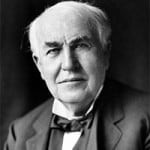
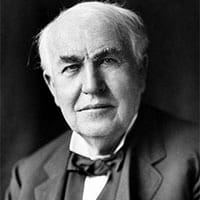
Thomas Edison

Thomas Edison, Feb. 11, 1847 to Oct. 18, 1931

Thomas Edison, Feb. 11, 1847 to Oct. 18, 1931

We  have a brand new exhibit honoring Thomas Edison’s 169th Birthday!

Thomas Alva Edison was born February 11, 1847 and died October 18, 1931 at the age of 84. Even though his primary school teacher, Rev. G.B. Engle, believed him to be “addled,” Edison went on to be awarded 1,093 U.S. Patents. When his foreign patents are included, he was received a total of 2,332! Our new display honoring him highlights some of those inventions.

To say he was creative and inventive seems well, obvious. However, much of that comes from his ability to learn from his failures and re-use and refine ideas and machinery. This ability is summed up in this famous quote:

I haven’t failed.
I’ve just found 10,000 ways that won’t work.
— Thomas Edison

The fact that Edison and his team of researchers tested more than 3,000 designs for the light bulb between 1878 and 1880 is evidence of his persistence and ability to learn from his failures. In 1879 he filed for a patent for an electric lamp with a carbon filament. But even after the patent was awarded, he continued to test over 6,000 plants until it was discovered that a carbonized bamboo filament could burn for more that 1,200 hours.

It is reported that Edison’s favorite invention was the phonograph. He developed a way to record sound on tinfoil-covered cylinders. The first thing that Edison recorded? “Mary had a little lamb!” He suggested there were many other uses for the phonograph, such as books for the blind music boxes and toys, and a connection with the telephone so messages could be recorded, So many are now reality!
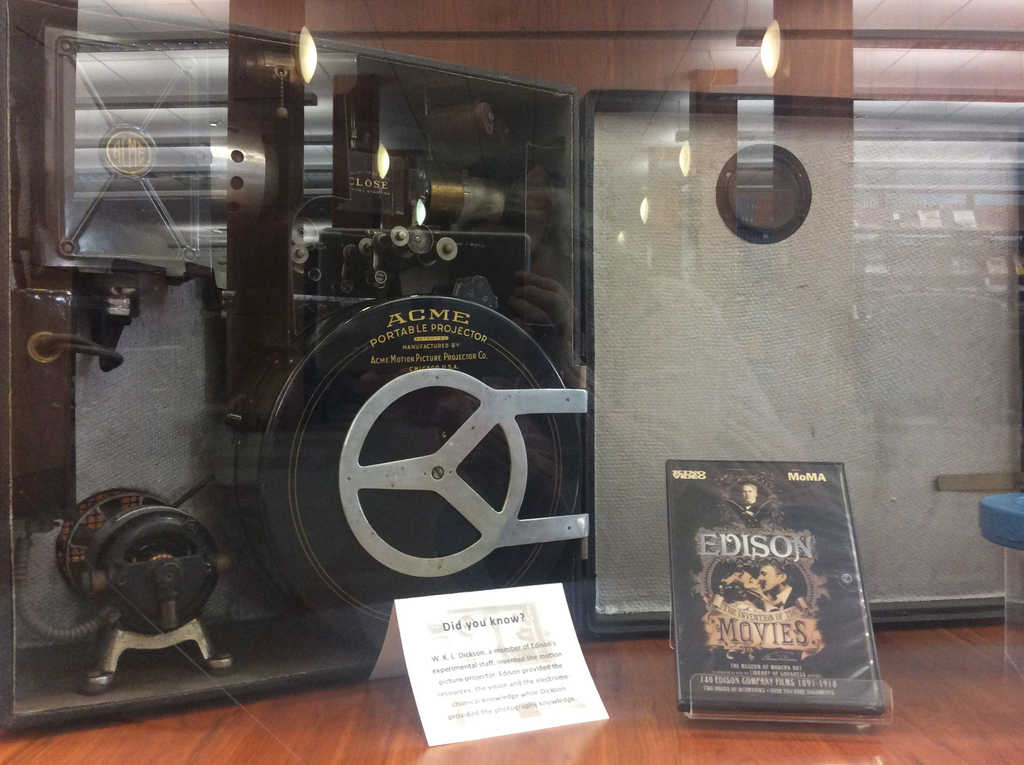
Acme Motion Picture Projector. Patented in 1922.

Acme Motion Picture Projector. Patented in 1922.

From 1888 to 1893 Edison worked with William Dickson on a motion picture camera. Edison always worked with very capable assistants, but this is the first really clear case where Edison took sole credit for a joint project. Dickson was a photographer and provided the photographic knowledge and Edison worked on the electromechanical parts. Edison and Dickson were only some of the many inventors who were working on motion pictures at the time but Edison is credited with introducing the first commercially viable system.

Even though the first projector used by the Edison film company was called the Edison Vitascope, Edison really didn’t have much to do with projector technology. Edwin S. Porter, a former Edison Studios cameraman, directed The Great Train Robbery, in 1903. He used innovative techniques which included composite editing, location shooting, and cross cutting. And some, but not all, of the prints from The Great Train Robbery were hand colored. This was the also the first movie that presented a story and not short skits. The Great Train Robbery is now largely considered to be the first American action film.


The Great Train Robbery. youtube.com

Our thanks to The University of Iowa Libraries Special Collections for the loan of several books for this exhibit. Thanks also to The University of Iowa Libraries Main Media Collection for lending us a copy of The Great Train Robbery. The University of Iowa Department of Mechanical and Industrial Engineering donated the motion picture projector and the film reels. Our thanks to them, also. Their contributions are invaluable to the exhibit.

So stop by and see our latest exhibit!! 
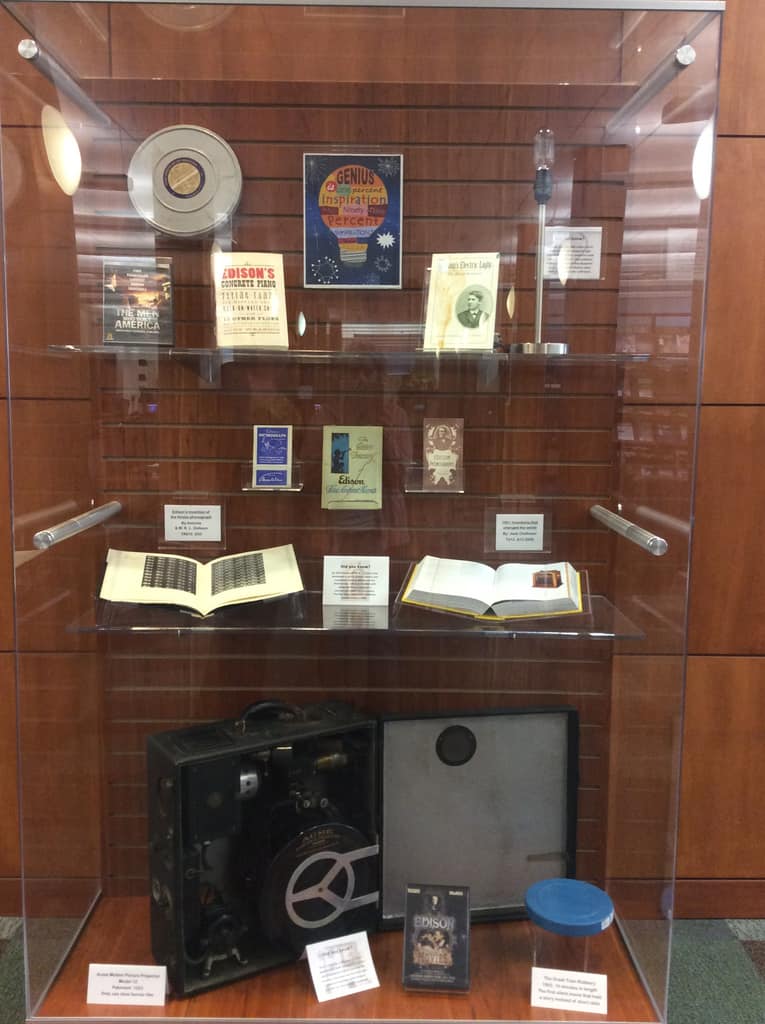
Our exhibit celebrating Thomas Edison

Our exhibit celebrating Thomas Edison

Interesting facts:

Edison had 3 children with his first wife, Mary Stillwell: Marion Estelle Edison was nicknamed ‘Dot,’ and Thomas Alva Edison, Jr. was nicknamed ‘Dash.’ The 3rd child, William Leslie Edison was also an inventor, but had no nickname…

Edison developed “foam concrete” which was used in building concrete homes. These homes were inexpensive, and easier to heat and cool. Ten of the 11 homes were still standing and occupied in 2009.

Edison also invented a ‘spirit phone.’ It was intended to open the lines of communications with the spirit world…

Resources:

Jonnes, Jill. 2003. Empires of light: Edison, Tesla, Westinghouse, and the race to electrify the world. New York : Random House. Engineering Library TK18 .J66 2003.

After a Schoolteacher Called Thomas Edison “Addled,”….  TurthOrFiction.com Accessed Jan. 12, 2016.

Edison’s concrete piano : flying tanks, six-nippled sheep, walk-on-water shoes, and 12 other flops from great inventors. 2009. Toronto : ECW Press. Engineering Library T47 .W42 2009.

10 Inventions by Thomas Edison (That You’ve Never Heard Of).  HowStuffWorks. Accessed January 13, 2016.

Motion Pictures. February 20, 2012. The Thomas Edison Papers. Rutgers.

The Great Train Robbery. youtube. Accessed January 13, 2016

The Great Train Robbery (1903 Film). Jan. 24, 2016. Wikipedia.

Edison Invents the Phonograph. America’s Story from America’s Library. The Library of Congress. Date accessed Jan. 28, 2016.

Other Resources:

The Papers of Thomas A. Edison. October, 13, 2015. Rutgers.

Who Invented the Light Bulb? Palermo, Elizabeth. Feb. 15, 2014. livescience.com

Thomas Edison’s Most Famous Inventions. 2014. Edison Innovation Foundation.

Filmsite Movie Review: The Great Train Robbery (1903).  2016. AMC Networks.

Sustainable Business: Book Display in Business Library & Online

SustainablebusinessThis semester the business library book display theme is Sustainable Business. The display is located by the entrance of the business library. If you are unable to stop by in person, you can view the display online. All of the books are available for check out. New materials will be added during the semester.

Thank you to Dave Collins for his support in the development of this collection and to members of the Tippie Sustainability Committee for their title suggestions.

Database of the Week: ProQuest Dissertations and Theses Global (PQDT Global)

Each week we will highlight one of the many databases we have here at the Pomerantz Business Library.

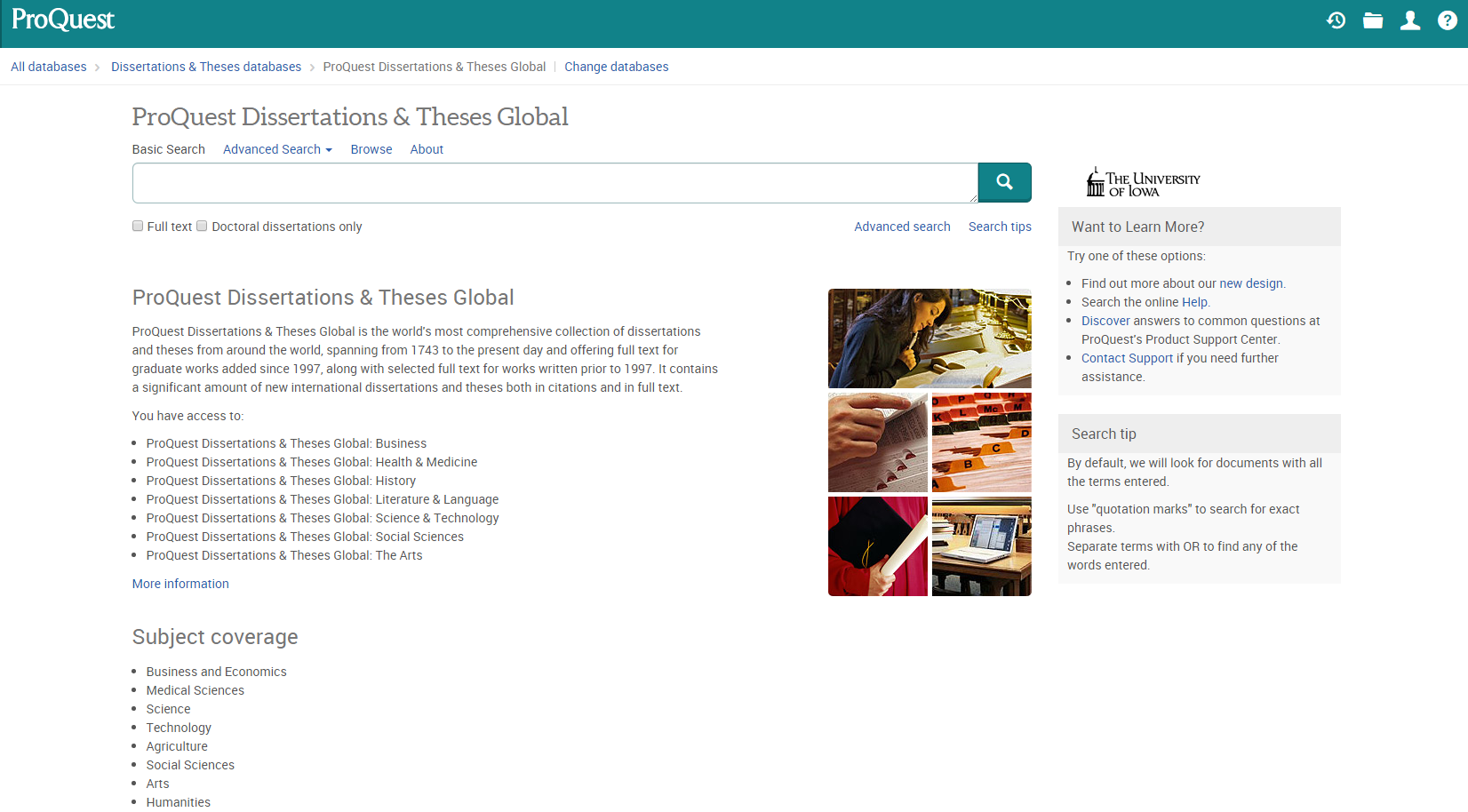
PQDT Home Screen

The database: ProQuest Dissertations and Theses Global (PQDT Global)

ProQuest Dissertations & Theses Global is the world’s most comprehensive collection of dissertations and theses from around the world, spanning from 1743 to the present day and offering full text for graduate works added since 1997, along with selected full text for works written prior to 1997. It contains a significant amount of new international dissertations and theses both in citations and in full text.

Where to find it: You can find it here, and under “P” in the Databases A to Z page.

Use it to find:

  • Dissertations and theses on a variety of business and economic topics as well as technology, medicine, the social sciences, and more.
  • Faculty members who served as advisors on specific dissertations and theses.
  • Dissertations and theses from specific institutions and/or on particular topics.

Tips for searching:

  • Use the main search box to do a Basic Search. Narrow your results using the limiters on the left.
  • Or do an Advanced Search to search in a more targeted manner by specifying author, advisor, university/institution, subject, or keyword.

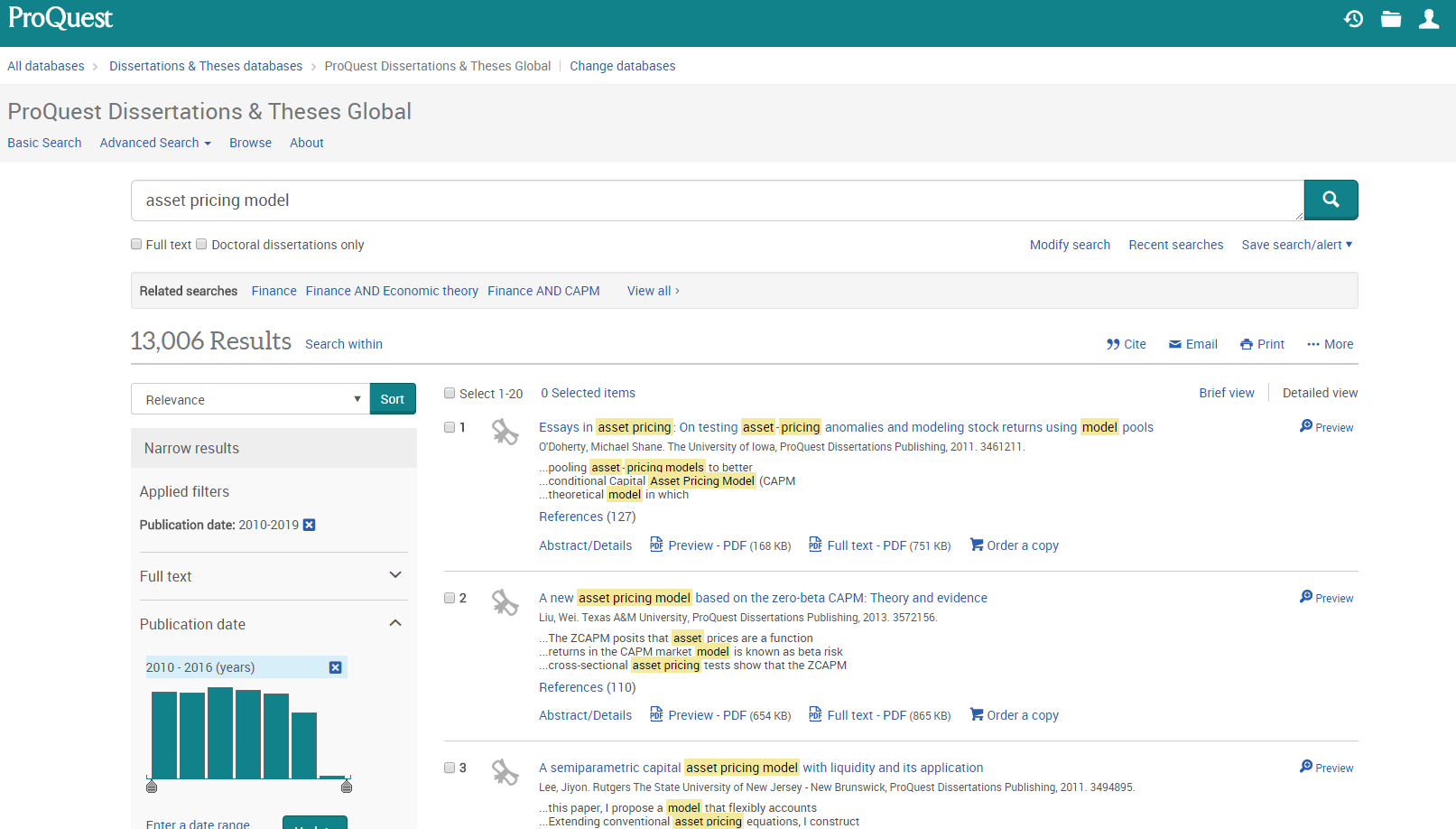
PQDT Results Page


Want help using the ProQuest Dissertations & Theses Global? Contact Jim or Kim to set up an appointment.

Hardin Open Workshops | Be there! |Learn EndNote Basic and More

endnote

Learn something new or how to save time with Hardin Library’s Open Workshops.
EndNote Basic  is free web-based citation management software.  You can organize and format your references for papers or articles.

Our sessions this semester:

Tuesday, January 26, 2-3pm
Thursday, March 10, 10-11am

Register for either session online.

This semester we are offering workshops on CINAHL, APA Style, EMBASE, PubMed, Patents, Nutrition, and more.  Register for a workshop or request a personal session.

No time for a class?  Need to start right now?  Try our guide.

New journals in Emergency Medicine, Urology, Psychiatry available in ClinicalKey

Favicon_large

ClinicalKeyBanner_160x600


Injections, Itches & Institutions: Rural Medicine in Iowa 1910-1950 | Lecture Thursday, Jan. 28 5:30pm

Clara Skott

Jennifer Gunn

Jennifer Gunn

The University of Iowa History of Medicine Society and Iowa Women’s Archives present Jennifer Gunn, History of Medicine Endowed Professor, Director of the Institute for Advanced Study, University of Minnesota.  Dr. Gunn’s talk is titled “Injections, Itches, and Institutions: The Experience of Rural Medicine in Iowa, 1910-1950.”

Thursday, January 28
5:30pm-6:30pm
2117 Medical Education Research Facility (MERF)

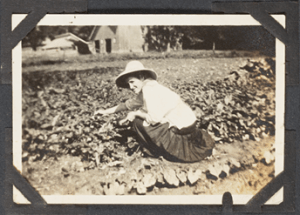
Clara Skott was an Iowa farm wife living in South Dakota during the 1918 influenza pandemic.  She received a series of injections to save off the flu.  In 1918, the hypodermic needle was a symbol of modern medical practice.

Iowa doctors’ ledger books show hypos were a staple of their treatments.  The records do not always indicate what was in the hypo.  Clara was given a homegrown influenza vaccine.  Some patients received barbiturates, vitamins, or placebos.  $1.00 per injection was beyond the reach of many Iowans.

Gunn will explore county doctors’ practices and the range of ways rural Iowans handled health issues in the first half of the 20th century.

Clara Skott

Clara Skott

Parking?  Use the Newton Road Ramp.  Cambus?  Take Pentacrest Route Bus to MERF/Newton Road Ramp stop.

For more information on the History of Medicine Society, or to donate see http://hosted.lib.uiowa.edu/histmed/index.html.

Donate to Iowa Women’s Archives


January 28: Injections, Itches, and Institutions: The Experience of Rural Medicine in Iowa, 1910-1950

Portrait of Jennifer GunnPortrait of Jennifer Gunn

The University of Iowa History of Medicine Society and the Iowa Women’s Archives
invite you to hear:
Injections, Itches, and Institutions:
The Experience of Rural Medicine in Iowa, 1910-1950


speakerJennifer Gunn
History of Medicine Endowed Professor
Director of the Institute for Advanced Study
University of Minnesota

Thursday, January 28, 2016, 5:30-6:30
Medical Education Research Facility (MERF) 2117

Free and Open to the Public


When Clara Skott, an Iowa farm wife living in South Dakota during the 1918 influenza pandemic, received a series of injections to stave off the flu, the hypodermic needle was a symbol of modern medical practice. Iowa doctors’ ledger books show “hypos” were a staple of their treatment repertoire. What was in the hypo was not always clear. Clara was given a homegrown influenza vaccine; other patients received barbiturates, vita-mins, or placebos. $1.00 for an injection was beyond the reach of many Iowans. This talk explores country doctors’ practices and the range of ways rural Iowans handled health issues in the first half of the 20th century.


clara


If you are a person with a disability requiring an accommodation in order to participate in this program, please contact Donna Hirst, Hardin Library for the Health Sciences (donna-hirst@uiowa.edu), 335-9154. The UI History of Medicine Society website is located at: http://hosted.lib.uiowa.edu/histmed/

New Research databases: Historical Annual Reports & Private Company data

The business library has recently acquired two databases:

Mergent Historical Annual Reports (available in Mergent Archives)
This collection starts in the early 1900’s and contains over just over 1,000,000 global annual reports.

Mergent Intellect
Intellect provides Hoovers private company data on over 100 million privately held companies globally (plus 145 million inactive global companies) and allows you the ability to download the data to a spreadsheet – up to 2,000 records at a time. This service also contains information on over 220 million individuals through WhitePages Pro and executive contacts on over 90 million professional decision makers. Also included is global family tree information. Note: The Business library has arranged to trial this database for year

Searching for Food, Diet & Nutrition in PubMed Just Got A Lot Easier!

By Eric Rumsey, Janna Lawrence and Xiaomei Gu

As we’ve written earlier, the way that nutrition, food and diet subjects have been arranged in the MeSH tree explosion system has made it tricky to do comprehensive, all-inclusive searching. This has been the case because the three subjects have been in different places in the MeSH tree structure, so that each of them had to be searched separately, and then combined together to cover the subject. It’s likely that many people have searched only for “nutrition,” since that seems to them like the most general term to cover the field. By doing this, however, they have been missing citations on “food” and “diet,” which actually are much larger explosions in the MeSH tree structure than “nutrition.”

We are happy to report that the newly released MeSH changes for 2016 do have a new explosion that goes a long way to fixing the problem:

Diet, Food, and Nutrition [MeSH page]
… Beverages +
… Food +
… Nutritional Physiological Phenomena +
… … Diet+

This is a great advance! It’s no longer necessary to search nutrition, food and diet subjects because they’re now together in the new explosion –  Click here to see the results of  a search of the new explosion.

There are still a few nutrition-food-diet subjects that the new MeSH explosion does not cover (that are included in our hedge) but for most we recommend the new explosion highly!