Celebrate Pi day – March 14 – with pie bites at 3:14pm today – until they are gone.
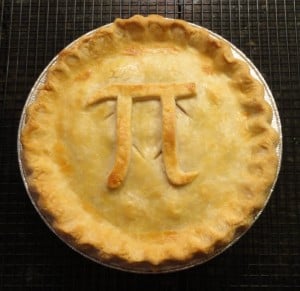
photo from www.tastyretreat.com
Celebrate Pi day – March 14 – with pie bites at 3:14pm today – until they are gone.
photo from www.tastyretreat.com

By Eric Rumsey, Janna Lawrence and Xiaomei Gu
Searching for nutrition topics in PubMed is tricky. It’s especially difficult to search for plant-based foods (PBF’s). In 2014, we published an article that addresses this problem that contained a hedge for searching for PBF’s. A few months ago, the National Library of Medicine introduced a new explosion that makes it a lot easier to search for nutrition topics in PubMed, which we discussed here.
In this article we are revising our PBF hedge to incorporate the new PubMed explosion. While there may still be a few occasions when our previous hedge for PBF’s would be appropriate, in almost all cases we do not recommend using the old hedge. Instead, we recommend using the hedge below:
((Plants[mesh] OR Plant Preparations[mesh]) AND Diet, Food, and Nutrition [mesh]) OR (Vegetables[mesh] OR Fruit[mesh] OR Plants, Edible [mh:noexp] OR Dietary Fiber[mesh] OR Flour[mesh] OR Bread[mesh] OR Diet, Vegetarian[mesh] OR Nuts[mesh] OR Condiments[mesh] OR Vegetable Proteins[mesh] OR Tea[mesh] OR Coffee[mesh] OR Wine[mesh] OR Vegetable Products[mesh])
The big change in this PBF hedge from the previous PBF hedge is, of course, replacing the food-diet-nutrition hedge that was part of the previous PBF hedge with the the new Diet, Food, and Nutrition explosion. Otherwise, the main change is the addition of the new MeSH term Vegetable Products.
By Eric Rumsey, Janna Lawrence and Xiaomei Gu
Searching for Food, Diet & Nutrition has long been one of the most difficult subjects to search in PubMed. We were happy to report earlier this year that the National Library of Medicine has gone a long way toward fixing this problem, with a new explosion for Diet, Food, and Nutrition.
Before the new explosion came out, searching for the subject was very tricky because diet, food and nutrition were all in different places in the MeSH tree structure, and so they had to be searched separately. To help with this problem, we created a detailed search strategy, or hedge, that would bring together all of the components in one search. We no longer recommend using this hedge. We have examined the new explosion, and find that it covers the field very adequately.
We strongly recommend the new explosion for most nutrition searches. But there are some aspects of the field that are not covered in the new explosion that were part of our hedge, in particular obesity and vitamins. Both of these terms are closely connected to the subject of food, diet & nutrition. But we understand why NLM has not included them in the new explosion, since they will not always be wanted. Both of these subjects are somewhat complicated to search in PubMed. In both cases, however, a simple one-word text word search will retrieve almost all of the relevant citations. So in cases when you want to include these subjects in your nutrition searching, you can do these searches:
Diet, Food, and Nutrition [mh] OR vitamins
Diet, Food, and Nutrition [mh] OR obesity
Diet, Food, and Nutrition [mh] OR vitamins OR obesity
“Good job, NLM!”
In conclusion, good words for the National Library of Medicine – Thank you for fixing the long-standing problem in searching for nutrition! With the surging interest in the subject, you’ve made things a lot easier for the many people searching for it.

Overwhelmed by the number of databases that the National Center for Biotechnology Information has to offer on nucleotide sequences, genes and proteins? Wondering which database you should always start with?
Chris Childs, instructor
Would you like to learn how to set up an NCBI account to link articles in PubMed to records in other databases?
Do you know about PubMed’s Gene Sensor?
Are you familiar with the concept of linear navigation?
Learn all of these tips and more in this session that is designed for anyone who needs to search the NCBI databases for genetic information.
Our next session is:
Tuesday, March 22nd , 1-2p – East Commons
Register online

Hardin Library will be open regular semester hours beginning Sunday, March 20.
A 24-hour study is available when the library is closed. Apply for 24-hour study access at the 3rd Floor service desk.

 Newsfeed: Blog post: The History of the Book: The Game to be used in Fall 2016 curricula by Amy Chen. Blog post: In Plain Sight: Autograph Collections Yield Unrealized Riches by Jacque Roethler. Blog […]

WILLIAM PORTERFIELD (1695-1771). A treatise on the eye, the manner and phaenomena of vision 1st edition. 2 vol. Edinburgh: Printed for A. Miller at London, 1759.
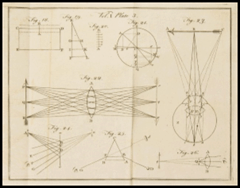 Porterfield was born in Ayrshire, Scotland, received his M.D. in 1717 at Rheims, and by 1721 was practicing in Edinburgh. Porterfield was made a professor at the University of Edinburgh in 1724 but apparently never taught.
Porterfield devoted himself chiefly to research on the physiology of vision, reporting his experiments and observations in this book. Porterfield’s Treatise was carefully read by all of the subsequent great contributors to ophthalmology and visual science for more than a century after its publication.
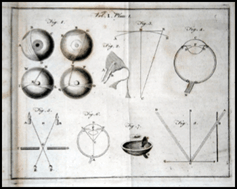 One of the most erudite of 18th century medical authors, Porterfield quoted widely from both the ‘old’ and ‘modern’ authors of his day. This book’s greatest strength, however, lies in numerous original experiments and observations about visual physiology.
You may view this book in the John Martin Rare Book Room, Hardin Library for the Health Sciences. Make a gift to the Hardin Library for the Health Sciences by donating online or setting up a recurring gift with The University of Iowa Foundation.
Wednesday, March 16, 2016
 With much trepidation yesterday, I went off to work with Tish Boyer at the National Mississippi River Museum & Aquarium in Dubuque to assist her in salvage efforts of significantly damaged photographic negatives. Tish had shared photos of the damaged items ahead of my visit. The sight was not pretty! The negatives had been stored in a refrigerator that quit working some days before staff discovered there was a problem. Some of the emulsion on the negatives had turned to liguid and oozed out over the edges of the negatives, making for a gooey mess. I fully expected to just provide moral support as we declared the collection a total loss. Much to our pleasant surprise, we salvaged a lot of the collection! A reinforced lesson that one should never make assumptions about a disaster until there is damage assessment.
 Tish had located a great place to work in within their building. We were able to work in an old kitchen that had a big exhaust fan. It did its job and kept the fumes away. (One of my biggest worries.) We worked with the “best” looking photographic negatives first. This allowed us to establish a work flow and to figure out how to handle the collection. We took photographs of the container or the stack of negatives if no container, before separating out the negatives and interleafing them into groups of 15 and placing into a folder. We kept a log, documenting the package or stack that the negative came from, making note of actual number per folder, and any comments on condition. We learned some tricks. If the stack of negatives got too gooey and seemed to be too stuck together, we turned the stack over and worked from the bottom up. If a stack looked completely “gone”, we looked for an edge within the stack that we could work open and worked from the inside out. It was amazing. Often we would find salvageable negatives within a very gooey, impossible looking group of negatives.
 We worked for 6 hours, separated a little over 1300 negatives with a loss of 250. Not bad considering the state the negatives are in. The salvaged negatives will need additional work. They will need to be cleaned and stabilized. Many have damage around the edges. They will need to be sent off to a photo conservator and then, probably, digitized. The images are a mix of acetate and nitrate film dating around 1925-1932. We didn’t get through the entire collection. Tish has her work cut out for her for the rest of the week. I left her in good spirits. I did accomplish my goal of providing moral support!
 By: Amy H. Chen “The year is 1450. Johannes Gutenberg is printing a book, one of the first in the world. When he is finished, the printed book is born. Follow the […]
Archives of Human Sexuality and Identity: LGBTQ History and Culture since 1940 uses material drawn from hundreds of institutions and organizations, including both major international activist organizations and local, grassroots groups, to present important aspects of LGBTQ life in the second half of the twentieth century and beyond.
Please send additional comments to Chris Africa or Janalyn Moss.