Skip to content
Skip to main content

It’s National Library Week!

NLW-button_0

April 10th through the 16th is National Library Week.
The theme this year is “Libraries Transform!”


NLW-button_0

National Library Week is a national observance which is sponsored by the American Library Association (ALA). It occurs in April and all types of libraries from across the country participate.

In the 1950s, research began to show that Americans were spending less time reading and more time with television and radio. ALA and American Book Publishers formed a nonprofit organization called the National Book Committee. In 1957, they developed a plan for National Library Week and the first was observed in 1958 with the theme “Wake Up and Read!” National Library Week was observed again in 1959 and it was then decided to make it a yearly event. ALA took over full sponsorship in 1974 when the National Book Committee disbanded.

So, what do we, your Engineering Library, provide for you?
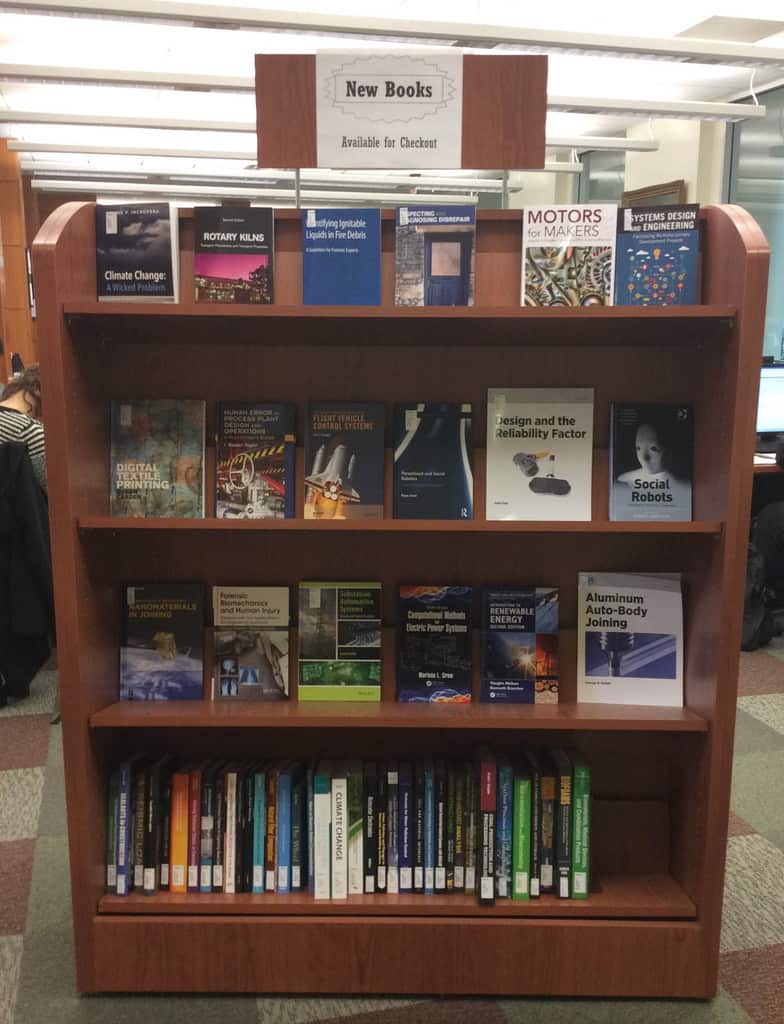
new_book_shelf
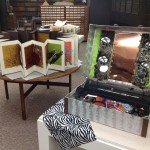
We have all types of resources that can ‘transform’ your studies. We have books, journals, e-resources, DVDs, Tool Library, subject guides, handbooks, and more – all accessible from our webpage. We are constantly getting new resources, too. We have a New Book Shelf where you can browse a selection of our newest acquisitions. Another way to find out what is new in the library is to check our Pinterest page!

We also have two group study pods (one with MediaScape), two scanners, 35 ITS computers, comfy chairs, study carrels, bean bag and gamer chairs, and our lower level is a designated quiet space. We are always looking at ways to improve our space and help you find the resources you need.

We are also connected to your favorite social media! Besides Pinterest, follow us on Twitter and Facebook.

National Library Workers Day is recognized on April 12th this year. Take a moment to thank a library employee!

Happy Library Week – we look forward to seeing you!

Resources:

Celebrate National Library Week. 2016. American Library Association.

National Library Week Fact Sheet: ALA Online Message Book. 2016. ALA American Library Association.

Other Resources:

I Love Libraries. ilovelibraries.org
 

EMBASE : discover information not in PubMed | Workshop Wed. April 13, 10am

embase square

embase square

EMBASE is a biomedical and pharmaceutical database containing bibliographic records with abstracts. Although there is overlap with records from PubMed, there are also many unique records.

This hands-on session will show you how to conduct basic searches using EMBASE’s quick search box, how to conduct searches using EMTREE subject headings, and how to use subheadings for drug and disease topics.

Our next session:
Wednesday, April 13th, 10-11a – West Commons, 2nd Floor, Hardin Library

Register online.

Organize your references | EndNote Desktop workshop @Hardin Library | Tuesday, April 12, 2pm

endnote-nieuw

endnote_logoEndNote is a reference management tool that helps you to easily gather together your references in one place, organize them, and then insert them into papers and format them in a style of your choosing.
This session will walk you through the basics of using EndNote to collect and format your citations. The class will be hands-on and there will be time for questions at the end.

EndNote Desktop is available free to University faculty, staff, and graduate students.

Our next session:

Tuesday, April 12th, 2-3p – East Commons, 2nd Floor Hardin Library

Register online

Research Data Seminar

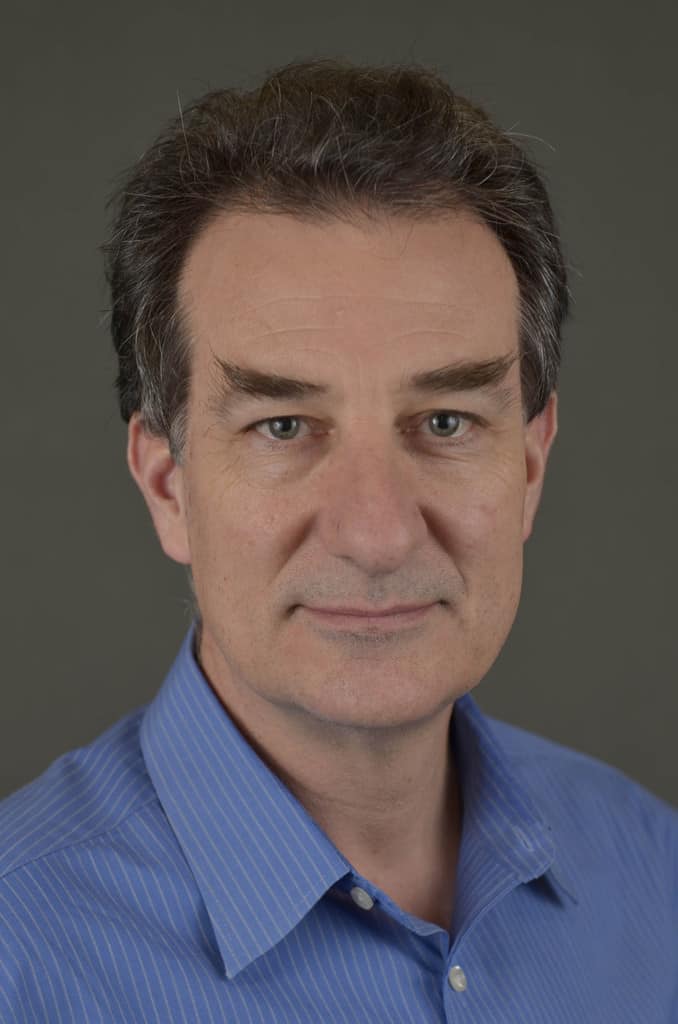
Open Data From NOAA and Its GranteesHead shot 2015-12-16_crop

Thursday, April 21st, 2016
10:30 to 11:30 a.m.
Iowa Memorial Union, Illinois Room (348)
Presented by Jeff de La Beaujardière
Sponsored by University of Iowa Libraries

The United States National Oceanic and Atmospheric Administration (NOAA) generates many terabytes of data every day. Data comes from hundreds of sensors on satellites, radar, aircraft, ships, buoys, and from numerical models.

With rare exceptions, all of this data should be made publicly accessible in a timely and usable fashion. NOAA has long been both an advocate and a practitioner of Open Data. Recent White House mandates are expanding public access to the results of federally funded research. In addition, NOAA has initiated research and development agreements with several cloud computing providers to explore new methods for data access and use.

Jeff will address these NOAA policies and activities during his presentation.

Jeff de La Beaujardière has been the NOAA Data Management Architect since May 2011 and Chair of the Environmental Data Management Committee since 2012. He also serves on inter-agency and international groups aimed at enhancing data sharing and interoperability, including the international Group on Earth Observations Data Management Principles Task Force, the US Group on Earth Observations Data Management Working Group, and the Open Geospatial Consortium. In these roles he works toward the vision that NOAA’s rich and unique data holdings shall be discoverable, accessible, well-documented, compatible, and preserved for future use.

Previously, Jeff was Senior Systems Architect for the US Integrated Ocean Observing System Program Office at NOAA, where he guided the implementation of interoperability standards by IOOS partners for data access and discovery. Prior to joining NOAA, Jeff spent 13 years at NASA Goddard Space Flight Center in such roles as Geospatial One-Stop Portal Manager; web services developer for the Modeling, Analysis and Prediction 2005 project, the GLOBE Program, and the Public Use of Remote Sensing Data Program; and NASA’s representative to OGC and to the Unidata Policy Committee. He participated in the first OGC Web Mapping Testbed in 1998, implemented the first Web Map Server at NASA, and was Editor of the WMS specification for OGC and the International Organization for Standardization.Jeff de La Beaujardière has been the NOAA Data Management Architect since May 2011 and Chair of the Environmental Data Management Committee since 2012. He also serves on inter-agency and international groups aimed at enhancing data sharing and interoperability, including the international Group on Earth Observations Data Management Principles Task Force, the US Group on Earth Observations Data Management Working Group, and the Open Geospatial Consortium. In these roles he works toward the vision that NOAA’s rich and unique data holdings shall be discoverable, accessible, well-documented, compatible, and preserved for future use.

Dr. de La Beaujardière holds a BA in Physics (1985) from the University of California at Berkeley and a PhD in Astrophysics (1990) from the University of Colorado at Boulder.

This presentation is sponsored by the University of Iowa Libraries. The Libraries’ Research Data Services, in collaboration with other campus offices, including the Division Sponsored Programs, Information Technology Services and Iowa Informatics Initiative, support the data management and publishing needs of researchers.

Please RSVP at https://goo.gl/JLYEb4

Individuals with disabilities are encouraged to attend all University of Iowa-sponsored events. if you are a person with a disability who requires a reasonable accommodation in order to participate in this program, please contact Sara Sheib in advance at 319-335-3024.

Data Management Presentation!

Open Data From NOAA and Its Grantees

April 21st, 2016
10:30 to 11:30 a.m.
Iowa Memorial Union, Illinois Room (348)
Presented by Jeff de La Beaujardiere
Sponsored by University of Iowa Libraries and organized by Library Research Data Services


The United States National Oceanic and Atmospheric Administration (NOAA) generates many terabytes of data every day. Data comes from hundreds of sensors on satellites, radar, aircraft, ships, buoys, and from numerical models.

With rare exceptions, all of this data should be made publicly accessible in a timely and usable fashion. NOAA has long been both an advocate and a practitioner of Open Data. Recent White House mandates are expanding public access to the results of federally funded research. In addition, NOAA has initiated research and development agreements with several cloud computing providers to explore new methods for data access and use.

Jeff will address these NOAA policies and activities during his presentation.

Head shot 2015-12-16_crop

Jeff de La Beaujardière

Jeff de La Beaujardière has been the NOAA Data Management Architect since May 2011 and Chair of the Environmental Data Management Committee since 2012. He also serves on inter-agency and international groups aimed at enhancing data sharing and interoperability, including the international Group on Earth Observations Data Management Principles Task Force, the US Group on Earth Observations Data Management Working Group, and the Open Geospatial Consortium. In these roles he works toward the vision that NOAA’s rich and unique data holdings shall be discoverable, accessible, well-documented, compatible, and preserved for future use.

Previously, Jeff was Senior Systems Architect for the US Integrated Ocean Observing System Program Office at NOAA, where he guided the implementation of interoperability standards by IOOS partners for data access and discovery. Prior to joining NOAA, Jeff spent 13 years at NASA Goddard Space Flight Center in such roles as Geospatial One-Stop Portal Manager; web services developer for the Modeling, Analysis and Prediction 2005 project, the GLOBE Program, and the Public Use of Remote Sensing Data Program; and NASA’s representative to OGC and to the Unidata Policy Committee. He participated in the first OGC Web Mapping Testbed in 1998, implemented the first Web Map Server at NASA, and was Editor of the WMS specification for OGC and the International Organization for Standardization.

Dr. de La Beaujardière holds a BA in Physics (1985) from the University of California at Berkeley and a PhD in Astrophysics (1990) from the University of Colorado at Boulder.

This presentation is organized by the Library Research Data Services. The Libraries’ Research Data Services, in collaboration with other campus offices, including the Division Sponsored Programs, Information Technology Services and Iowa Informatics Initiative, support data management needs of researchers.

Please RSVP at https://goo.gl/JLYEb4

Individuals with disabilities are encouraged to attend all University of Iowa-sponsored events. if you are a person with a disability who requires a reasonable accommodation in order to participate in this program, please contact Sara Sheib in advance at 319-335-3024.

Dottie and Jack: An Epistolary Friendship

Dot and Jack 001Dot and Jack 001

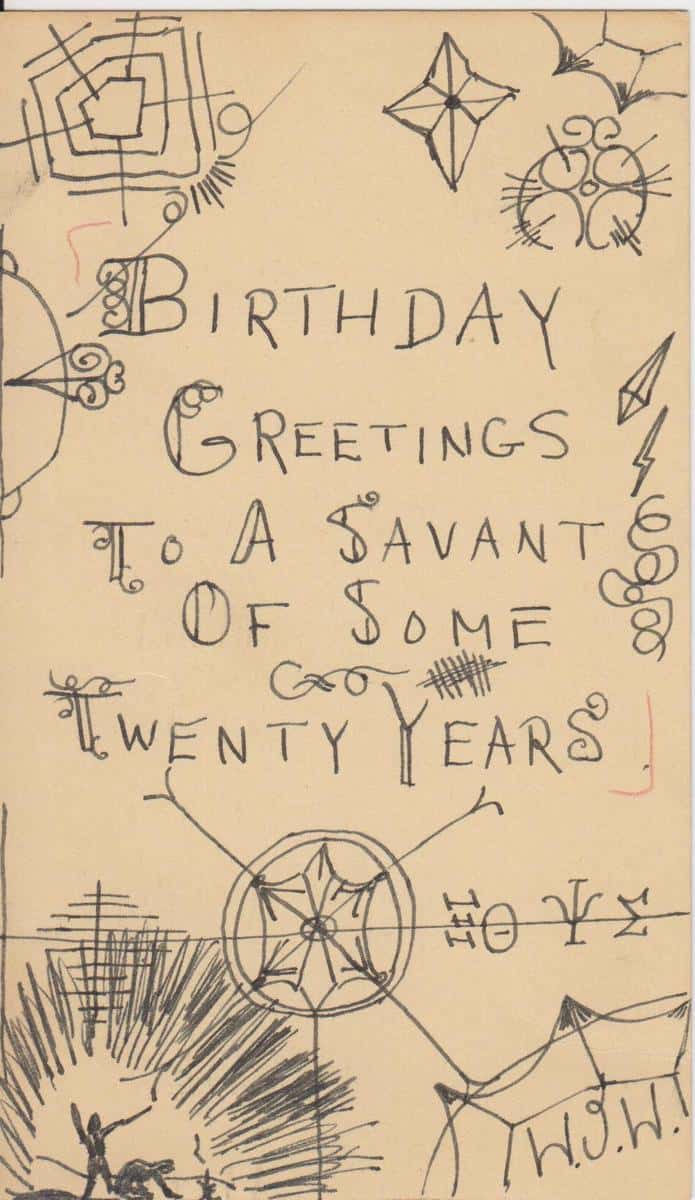
Card from Jack

Jack’s postcard to Dorothy, on her 20th Birthday in 1935.

“Schöner Bruder,” “Ma Chère Petite,” “Sonny Boy,” Honey Child,” these are just a few of the salutations used by Dorothy and Warren “Jack” Wirtz in their letters to each other. Although their greetings may have been somewhat tongue in cheek, Dorothy and Jack’s correspondence reveals a relationship full of common interests, good humor, and affection. What helps make this so immediately apparent is that Wirtz kept her family correspondence separate from the rest. Additionally, she transcribed over 1000 pages of it, ensuring its legibility. In fact, the order of and attention Dorothy paid to her correspondence gives insight into how she prioritized her relationships and organized her life.

When I began to process this collection, I conducted a quick survey of its boxes and determined that Wirtz’s correspondence and diaries comprised over half of it. Normally, processing these portions of collections for use would involve a straightforward, chronological order. But, Wirtz was a little more complicated than that. She kept letters from her parents and her brother separate from her letters from friends and colleagues, and kept correspondence with students in a box on its own. Additionally, she kept postcards from her family distinct from all other correspondence.

Although the original letters remained, Wirtz also transcribed many of them, occasionally editorializing. After Jack’s “Hello. Hawaii?” she explained, “This must have been a greeting heard frequently on radio.” In a 1934 letter she had written to her brother about the notorious bank robber Pretty Boy Floyd, “At last you are in no immediate danger. ‘Pretty

Happy Birthday, my brother.

Dorothy’s birthday card to her brother. The pianist in the sketch is probably Jack, a composer.

Boy’ Floyd has been killed.” Next to her transcription of that letter she wrote in red pen “Mother worried about him being at large while Jack hitchhiked to various places.”

Recognizing Wirtz’s arrangement of her letters as intentional, I chose not reorganize them, but instead followed the archival principle of original order. Except in cases where letters are misfiled, I maintained Wirtz’s order rather than imposing an artificial one. Not only is this simpler for me as a processor, but it gives future researchers the benefit of seeing Wirtz’s correspondence as she did, with the spheres of her life distinct from each other. Dr. Wirtz, professor of French is stern, incisive, and businesslike. But the letters of “Dot” to her family are more playful. It’s a delight to see her brother play right along without interruption. The siblings sprinkled their letters with French and German, closed them with phrases like “all agog” and “d’amour,” and generally infused their prose with a mock formality.

Dottie and Jack

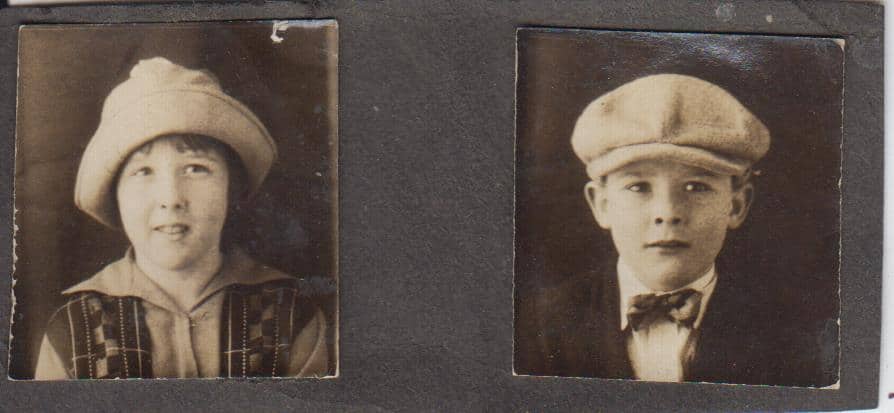
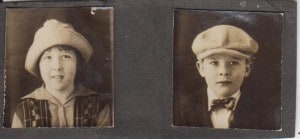
Dorothy (left) and Warren “Jack” Wirtz (right) as children.

“Would it derange you at all if we drop in on Sunday?” Dorothy asked her brother one September while he was living in Grinnell.

“Derange me?” he responded the next day, “Why I should say not. I’ll be tickled to have you come.”

Born one year apart, the siblings were as close in age as they were in everything else. Both pursued higher education, wrote poetry, spoke multiple languages, and traveled abroad. Dorothy outlived her brother by over 40 years. But you can conjure up parts of their relationship by traversing their correspondence, just as Dorothy might have each time she sat down to transcribe one of their letters.

Welcome Darlene Kaskie, Technology & Communication Librarian for the Regional Medical Library

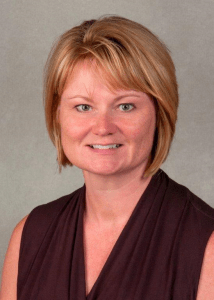
picture of Darlene Kaskie

Darlene Kaskie Technology and Communications Librarian, NN/LM, Greater Midwest Region

Darlene Kaskie
Technology and Communications Librarian, NN/LM, Greater Midwest Region

Please welcome Darlene Kaskie, our first Regional Medical Library (RML) librarian to join the team. Darlene will be serving as the Technology and Communications Librarian for the National Network of Libraries of Medicine (NN/LM) Greater Midwest Region (GMR) program office.

In her new role, Darlene will be managing the GMR website and social media, and handling communication for members in the ten state region. Darlene will be permanently located in the GMR offices, for which construction is still underway. Until that time, Darlene is in a temporary location at Hardin Library.

Previously, Darlene served as the Student Computer Services Librarian for the Law Library at the University of Iowa. In this role, Darlene assisted with technology and network services and served as the editor for the Law Library’s website.  Darlene also worked as a temporary  librarian for the University of Iowa Engineering Library, helping with marketing and educational outreach using social media.

Darlene received her MLS from Indiana University, Bloomington. Prior to joining the University of Iowa, Darlene worked as a managing research librarian for the law firms of Latham & Watkins in Chicago, McCutchen, Doyle Brown & Enersen (now known as Bingham McCutchen) in Los Angeles, and Beveridge & Diamond in San Francisco.  Darlene researched corporate healthcare client information as a law firm librarian.  Darlene is looking forward to discovering healthcare from the academic perspective in her new position. 

Darlene’s husband teaches health policy for the College of Public Health, and their two daughters keep them busy with soccer, volleyball, and all things tween.

University of Iowa Alumni Association “Lifelong Learning” event

The University of Iowa Libraries is proud to present an exhibition of materials and experiences related to the work of UI alumnus and faculty astrophysicist James Van Allen, 36MS, 39PhD. The UIAA invites you to join Greg Prickman, head of UI Libraries Special Collections, as he guides you on a tour of the Main Library’s new gallery space, featuring an exhibition of Van Allen’s stellar career. Artifacts, writings, photos, and recordings launch visitors into the heart of the Space Age to tell the compelling story of the Iowan’s groundbreaking discovery of the Van Allen Radiation Belts.

WHEN: Wednesday, April 6, 2016, 6 p.m.
WHERE: The University of Iowa Main Library, 125 W. Washington St., Iowa City
COST: This lecture is FREE and open to the public; however, RSVPs are encouraged.

Pre-registration for this event has ended, however, walk-ups are welcome and may register at the event.

See more at: http://www.iowalum.com/lifelonglearning/vanallen/#sthash.nL7xUD5h.dpuf

Details found here:  http://www.iowalum.com/lifelonglearning/vanallen/

4/4/16 = Square Root Day!!

square_root_square

square_root_square

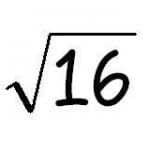
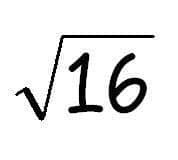
April 4, 2016 is Square Root Day – so let’s get to the root of it!!

The next square root day won’t be until May 5, 2025, so let’s celebrate! There are only nine square root days in a century – so don’t miss this one!

The square root is an important mathematical concept used in many different occupations – including carpentry, engineering, architects, landscapers, and artists and designers. So, what is a square root? The square root of any number (x) is equal to the number (y) that when multiplied by itself or squared returns the first number (x). In other words, the square root of x is y, because x X x or x²2 is y.

Did you know that the symbol for square root (√) is called the radix or the radical sign? And Christoff Rudolff first used it in 1525?

Maurice Machover wrote a proof poem of the irrationality of √2:

Double a square is never a square, and here is the reason why:
If m-squared were equal to two n-squared, then to their prime factors we’d fly.
But the decomposition that lies on the left has all its exponents even.
But the power of two on the right must be odd: so one of the twos is bereaven.*


What fun ways can you find to celebrate this auspicious day? 

How about:
  • Square Dancing
  • Learn to tie a square knot
  • Eat square shaped food – made from root vegetables (what else!?). How about square sweet potato fries, make a square carrot cake!
  • Try root vegetables you might not have eaten before: rutabagas, parsnips, yucca roots, and kohlrabi.
  • Onions, garlic and ginger are also root veggies – find new recipes

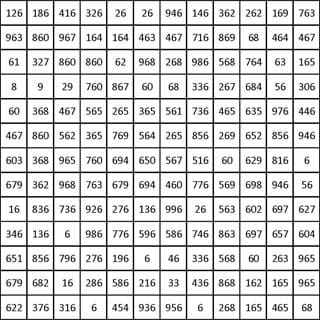
Be SURE to come into the library and work on our Color by Numbers (Engineering Style!)


Grid_squared

*breaven is a derivation of the word “bereave.”

Resources:

Fun Holiday – Square Root Day. 2016. timeanddate.com

Flannery, David. The square root of 2: a dialogue concerning a number and a sequence. 2006. New York : Copernicus : [Chichester, England] : Praxis. Engineering Library QA247.5 .F53 2006

Other Resources:

Square Root Day. 4/4/16 Opening Day and Square Root Day!! Square Root Day. Date accessed March 25, 2016