Hit your study stride for finals in the UI Libraries
The UI Libraries offers great places to concentrate on final exam prep, with extended hours, free coffee, and activities for short study breaks.
Studies indicate that students who take short, fairly frequent breaks during their study time are more productive. Give your brain a break by taking a walk or doing a mind-clearing activity to make your study time more productive.
In the Main Library Learning Commons, students can take advantage of activity stations featuring puzzles, colored pencils, and postcard making.
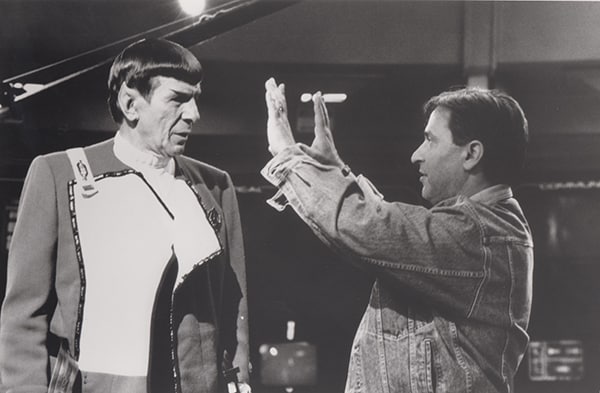
Photo credit: Nicholas Meyer on set with Leonard Nimoy during the shooting of Star Trek VI: The Undiscovered Country. The photo is archived in the University of Iowa Libraries’ Special Collections as part of a collection donated by Nicholas Meyer.
The UI Libraries is pleased to host Nicholas Meyer, who will make an appearance as a guest speaker in conjunction with the Main Library Gallery exhibition 50 Years of Star Trek.
A long-time Sherlockian, Meyer’s writing prowess led to a best-selling novel, The Seven-Per-Cent Solution: Being a Reprint from the Reminiscences of John H. Watson, M.D. The novel, crafted by Meyer in a style faithful to the original series, follows Holmes through cocaine addiction and recovery. Meyerreceived an Oscar nomination for his screenplay of the novel.
Meyer will deliver a brief talk, titled The Last Man To Understand Anything. There will be a Q&A session afterward.
Important Announcements: The Iowa Women’s Archives will be closed May 16-27th for painting. Newsfeed: Talk of Iowa: Brinton Films Make Second Debut in 100 Years at World’s Longest Running Movie […]
UI Libraries’ Digital Scholarship & Publishing Studio champions DH initiatives
Under the guidance of Senior Scholar Judith Pascoe, the Studio Scholars Program steering committee has selected ten faculty members and five graduate students from a competitive pool of applicants for Digital Humanities (DH) support.
Prior to the selection process, the Scholars steering committee worked with the Digital Scholarship & Publishing Studio to identify digital humanities initiatives.
With an eye toward synergistic use of university resources to support digital humanities projects across the campus, the committee defined collaborative scholarly contexts to attract compelling DH project proposals. The result was five digital humanities initiatives in two categories:
Over the coming months, winners of Studio Scholars Initiatives Awards will receive immersive support from the Studio, which will provide resources, expertise, technical assistance, and access to specialized equipment for their DH projects.
DIGITAL ARCHIVES Initiatives
Winners of Digital Archives Initiatives Awards receive $1500 and support for projects that engage with archival material and voices from the past or present. This year, there are two initiatives in this category: Embracing Difference in Iowa and Memory & Knowledge.
Embracing Difference in Iowa connects scholars with existing archives at the University of Iowa and brings to light narratives from across the UI community.
Michael Hill, associate professor of English, won for his project titled “Black Students in the Iowa Writers’ Workshop (1939-1959). Hill is creating a digital platform to give the public access to the collegiate experiences of Margaret Walker, Herbert Nipson, and Michael Harper, a trio of black students who constitute the earliest black students of the Iowa Writers’ Workshop.
Memory & Knowledge helps develop cross-generational conversations about the changing nature of academic disciplines. It also encourages responsible archiving of existing scholarly material and the development of a digital skillset increasingly in demand for academia.
Frances Cannon, an MFA student in nonfiction writing, was selected for her project “Mapping the gardens of memory: the Carl Klaus Archive.” Cannon will collaborate with Carl Klaus, emeritus professor of English and founder of the UI’s nonfiction writing program. With their shared interest in writing about botany, agriculture, and horticulture, the project will benefit both. Cannon will create a digital repository of Klaus’ archives, while Klaus, in return, will provide editorial and professional guidance.
Heidi Lung, lecturer in museum studies and anthropology, will develop a digital exhibit/archive focusing on the 34-year career of George Schrimper, former curator and director of the Natural History Museum as part of her project titled “George Schrimper and UI Museum Studies.” The project will also document the history of museum studies at the University of Iowa.
Heather Wacha, PhD candidate in history, will be pursuing a project titled “Marilyn Thomas and the Bonaparte Pottery Museum.” Ms. Wacha will create a digital repository documenting the life and work of Marilyn Thomas, who, over a period of 45 years, revived, researched and developed the historic Bonaparte Pottery Museum in Bonaparte Iowa.
DH JUMPSTART Initiatives
The DH Jumpstart Initiative Awards provide faculty members and graduate students to explore digital approaches to their work.
This year, there are three initiatives in this category: Get Digital with Your Scholarship, Get Digital with Your Dissertation, and DH Researcher.
Get Digital with Your Scholarship offers awardees an immersive, three-day consultation and work session with Studio staff members. Awardees will work with staff to develop digital components of their research, including videos, maps, infographics, etc. Scholars could also create a digital manifestation of a monograph or embark on new projects enabled by new research applications (e.g., mapping or network analysis).
Jenna Supp-Montgomerie, assistant professor in religious studies and communication studies, is text-mining newspaper archives to study the incidence and usage of “connection” at the moment of global telegraphy establishment, as part of her project, “World-Wide Wire: Religion, Technology, and Dreams of Global Unity before the Internet.” She is also designing a map that will chart the convergence or divergence of colonial shipping routes, early telegraph cables, and later fiber-optic cables.
Kim Marra, professor in theatre arts and American studies, is working with Studio staff to develop a digital component to her project “The Pull of Horses: Embodied Interactions across Urban American Species, 1865-1920.” Marra’s work addresses cross-species interactions and brings together a rich archive of newspaper and magazines illustrations, as well as silent film footage, documenting the central role horses played in American city life.
Brenda Longfellow, associate professor, art & art history, with Studio staff support, is designing a digital project to supplement her book manuscript as part of her project, “Past Lives, Present Meanings: Recycled Statues in Imperial Rome.” Professor Longfellow is examining the origins and afterlives of statues that were moved to Rome from other parts of the Roman Empire, possibly mapping these movements digitally.
Anne Stapleton, lecturer in English, is working with Studio staff on her project “Walter Scott’s Swath of Influence: Mapping Towns Named Waverly in the Midwest.” Stapleton is digitally mapping and collecting images and histories associated with American towns named after Scott’s novel. She will, in turn, use these materials in an undergraduate class that explores the long aftermath of Scott’s literary fame.
With the support of Studio staff, Natalie Fixmer-Oraiz, assistant professor, communication studies, is developing a digital supplement to her book manuscript, which focuses on motherhood in the context of homeland security culture. For her project, “Homeland Maternity: Risk, Security, and the New Reproductive Regime,” she plans to use GIS software to map key locales in contemporary U.S. reproductive politics.
Get Digital with Your Dissertation invites graduate students to explore digital components for their dissertation.
As part of “Creative Alternatives: Experimental Art Scenes and Cultural Politics in Berlin 1971-1999,” Briana Smith, PhD student in history, is working with Studio staff to develop a mapping element to enhance her dissertation’s exploration of ephemeral art actions and performances in late twentieth-century Berlin.
Gemma Goodale-Sussen, PhD student in English, is working with Studio staff to explore options for annotating historical images related to prison photography and modernist literature for her “Prison Portraiture and Modernist Literature” project.
As part of “Mapping National Park Historiography: Iowa Effigy Mounds,” Mary Wise, PhD student in history, is honing her mapping skills and working with Studio staff on ArcGIS Online and ArcGIS approaches to the materials. Wise will construct maps that shed light on Iowa National Park Service historiography, with a particular focus on Effigy Mounds.
DH Researcher, student research support, pairs faculty and students who have an interest in digital scholarly research and addresses a range of research tasks associated with ongoing projects in the Studio.
Paul Dilley, assistant professor in classics and religious studies, with the help of a student research assistant, is compiling a database of all known Greek authors and titles (including fragmentary and lost works) as part of “Philology Extended: Towards a Distant Reading of Ancient Greek Literature.” The project will facilitate a preliminary distant reading of the entire ancient literary field.
Loren Glass, professor of English, with the assistance of a student researcher and digital humanities librarian Nikki White, is mapping the professional itineraries and connections of everyone who ever attended or taught at the Iowa Writers’ Workshop from its inception in 1936 to the present date. Their project, “Mapping the Workshop” will help visualize an array of social and historical networks related to the growth of creative writing at the University of Iowa.
Julia Oliver Rajan lecturer, Spanish and Portuguese, with the help of a student translator, will heighten the accessibility of materials in the “Coffee Zone” project, which documents the regional dialect of the western Puerto Rico coffee zone and preserves the oral histories of the people who work there.
The Studio Scholars Program, administered by the University of Iowa Libraries’ Digital Scholarship & Publishing Studio (DSPS), is a faculty research group dedicated to supporting faculty projects related to the Digital Humanities (DH).
Contact: Tom Keegan, head of the University of Iowa Libraries’ Digital Scholarship & Publishing Studio, thomas-keegan@uiowa.edu
UI Libraries’ Digital Scholarship & Publishing Studio champions DH initiatives
Under the guidance of Senior Scholar Judith Pascoe, the Studio Scholars Program steering committee has selected ten faculty members and five graduate students from a competitive pool of applicants for Digital Humanities (DH) support.
Prior to the selection process, the Scholars steering committee worked with the Digital Scholarship & Publishing Studio to identify digital humanities initiatives.
With an eye toward synergistic use of university resources to support digital humanities projects across the campus, the committee defined collaborative scholarly contexts to attract compelling DH project proposals. The result was five digital humanities initiatives in two categories:
Over the coming months, winners of Studio Scholars Initiatives Awards will receive immersive support from the Studio, which will provide resources, expertise, technical assistance, and access to specialized equipment for their DH projects.
DIGITAL ARCHIVES Initiatives
Winners of Digital Archives Initiatives Awards receive $1500 and support for projects that engage with archival material and voices from the past or present. This year, there are two initiatives in this category: Embracing Difference in Iowa and Memory & Knowledge.
Embracing Difference in Iowa connects scholars with existing archives at the University of Iowa and brings to light narratives from across the UI community.
Michael Hill, associate professor of English, won for his project titled “Black Students in the Iowa Writers’ Workshop (1939-1959). Hill is creating a digital platform to give the public access to the collegiate experiences of Margaret Walker, Herbert Nipson, and Michael Harper, a trio of black students who constitute the earliest black students of the Iowa Writers’ Workshop.
Memory & Knowledge helps develop cross-generational conversations about the changing nature of academic disciplines. It also encourages responsible archiving of existing scholarly material and the development of a digital skillset increasingly in demand for academia.
Frances Cannon, an MFA student in nonfiction writing, was selected for her project “Mapping the gardens of memory: the Carl Klaus Archive.” Cannon will collaborate with Carl Klaus, emeritus professor of English and founder of the UI’s nonfiction writing program. With their shared interest in writing about botany, agriculture, and horticulture, the project will benefit both. Cannon will create a digital repository of Klaus’ archives, while Klaus, in return, will provide editorial and professional guidance.
Heidi Lung, lecturer in museum studies and anthropology, will develop a digital exhibit/archive focusing on the 34-year career of George Schrimper, former curator and director of the Natural History Museum as part of her project titled “George Schrimper and UI Museum Studies.” The project will also document the history of museum studies at the University of Iowa.
Heather Wacha, PhD candidate in history, will be pursuing a project titled “Marilyn Thomas and the Bonaparte Pottery Museum.” Ms. Wacha will create a digital repository documenting the life and work of Marilyn Thomas, who, over a period of 45 years, revived, researched and developed the historic Bonaparte Pottery Museum in Bonaparte Iowa.
DH JUMPSTART Initiatives
The DH Jumpstart Initiative Awards provide faculty members and graduate students to explore digital approaches to their work.
This year, there are three initiatives in this category: Get Digital with Your Scholarship, Get Digital with Your Dissertation, and DH Researcher.
Get Digital with Your Scholarship offers awardees an immersive, three-day consultation and work session with Studio staff members. Awardees will work with staff to develop digital components of their research, including videos, maps, infographics, etc. Scholars could also create a digital manifestation of a monograph or embark on new projects enabled by new research applications (e.g., mapping or network analysis).
Jenna Supp-Montgomerie, assistant professor in religious studies and communication studies, is text-mining newspaper archives to study the incidence and usage of “connection” at the moment of global telegraphy establishment, as part of her project, “World-Wide Wire: Religion, Technology, and Dreams of Global Unity before the Internet.” She is also designing a map that will chart the convergence or divergence of colonial shipping routes, early telegraph cables, and later fiber-optic cables.
Kim Marra, professor in theatre arts and American studies, is working with Studio staff to develop a digital component to her project “The Pull of Horses: Embodied Interactions across Urban American Species, 1865-1920.” Marra’s work addresses cross-species interactions and brings together a rich archive of newspaper and magazines illustrations, as well as silent film footage, documenting the central role horses played in American city life.
Brenda Longfellow, associate professor, art & art history, with Studio staff support, is designing a digital project to supplement her book manuscript as part of her project, “Past Lives, Present Meanings: Recycled Statues in Imperial Rome.” Professor Longfellow is examining the origins and afterlives of statues that were moved to Rome from other parts of the Roman Empire, possibly mapping these movements digitally.
Anne Stapleton, lecturer in English, is working with Studio staff on her project “Walter Scott’s Swath of Influence: Mapping Towns Named Waverly in the Midwest.” Stapleton is digitally mapping and collecting images and histories associated with American towns named after Scott’s novel. She will, in turn, use these materials in an undergraduate class that explores the long aftermath of Scott’s literary fame.
With the support of Studio staff, Natalie Fixmer-Oraiz, assistant professor, communication studies, is developing a digital supplement to her book manuscript, which focuses on motherhood in the context of homeland security culture. For her project, “Homeland Maternity: Risk, Security, and the New Reproductive Regime,” she plans to use GIS software to map key locales in contemporary U.S. reproductive politics.
Get Digital with Your Dissertation invites graduate students to explore digital components for their dissertation.
As part of “Creative Alternatives: Experimental Art Scenes and Cultural Politics in Berlin 1971-1999,” Briana Smith, PhD student in history, is working with Studio staff to develop a mapping element to enhance her dissertation’s exploration of ephemeral art actions and performances in late twentieth-century Berlin.
Gemma Goodale-Sussen, PhD student in English, is working with Studio staff to explore options for annotating historical images related to prison photography and modernist literature for her “Prison Portraiture and Modernist Literature” project.
As part of “Mapping National Park Historiography: Iowa Effigy Mounds,” Mary Wise, PhD student in history, is honing her mapping skills and working with Studio staff on ArcGIS Online and ArcGIS approaches to the materials. Wise will construct maps that shed light on Iowa National Park Service historiography, with a particular focus on Effigy Mounds.
DH Researcher, student research support, pairs faculty and students who have an interest in digital scholarly research and addresses a range of research tasks associated with ongoing projects in the Studio.
Paul Dilley, assistant professor in classics and religious studies, with the help of a student research assistant, is compiling a database of all known Greek authors and titles (including fragmentary and lost works) as part of “Philology Extended: Towards a Distant Reading of Ancient Greek Literature.” The project will facilitate a preliminary distant reading of the entire ancient literary field.
Loren Glass, professor of English, with the assistance of a student researcher and digital humanities librarian Nikki White, is mapping the professional itineraries and connections of everyone who ever attended or taught at the Iowa Writers’ Workshop from its inception in 1936 to the present date. Their project, “Mapping the Workshop” will help visualize an array of social and historical networks related to the growth of creative writing at the University of Iowa.
Julia Oliver Rajan lecturer, Spanish and Portuguese, with the help of a student translator, will heighten the accessibility of materials in the “Coffee Zone” project, which documents the regional dialect of the western Puerto Rico coffee zone and preserves the oral histories of the people who work there.
The Studio Scholars Program, administered by the University of Iowa Libraries’ Digital Scholarship & Publishing Studio (DSPS), is a faculty research group dedicated to supporting faculty projects related to the Digital Humanities (DH).
Contact: Tom Keegan, head of the University of Iowa Libraries’ Digital Scholarship & Publishing Studio, thomas-keegan@uiowa.edu
Hard to believe that it is already time for finals! We have added hours and free coffee to help you make it through!
Extended hours:
Sunday, May 8th: 2:00 p.m. to Midnight
Monday through Thursday, May 9th through 12th: 8:30 a.m to midnight
Friday, May 13th: 8:30 to 5 p.m.
May 14th and 15th: Closed
We also will have free coffee, and lemonade (while supplies last)! We’ll keep the coffee hot and the lemonade cold for you!
Please help save the environment and bring your own cup!
Don’t forget the lower level of the library is a dedicated quiet study space, with study carrels, easy chairs, bean bag and gamer chairs!
We also have plenty of space on the main level for individual or group study. We have two group study pods with white boards and pod 1 has MediaScape®. (Please reserve study time in the pods by using the sign-up sheets by each pod). We have several group study tables. We also have 2 print stations, 2 scanners, study carrels, and computers. And, don’t forget the computers in the multipurpose room!
If you are in need a bit of a break – we’ve got you covered there, too! We have more Color by Number – Engineering Style grids! There will also be Legos® on hand! Take a break and let your mind relax for a bit!
There is a complete list of supplies needed to create any of the crafts in the book. Most of them are easily accessible or found around the house. Supplies include (but are not limited to) a needle-nose plier, sandpaper, tape measure, ruler, tape and binder clips. Each of the crafts has step-by-step instructions and are illustrated in full-color.
For the holidays you can have a Wookiee pumpkin for Halloween, a Mistle-TIE Fighter, or a Hanukkah Droidel. Nature & Science includes a Dagobah carnivorous plant habitat, a Wookiee bird house and an AT-AT herb garden.
Whether you choose to celebrate by making your own Daisy Ridley’s blaster (or a lightsaber!), or looking at the intersection of games and film, enjoy and May the 4th be with you!!
Resources:
Papazian, Gretchen, Sommers, Joseph Michael, editors of compilation. 2013. Game on, Hollywood : essays on the intersection of video games and cinema. Jefferson, North Carolina. Engineering Library, PN1995.9 .V46 G37 2013
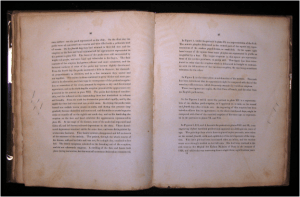
JOHN DIX FISHER (1797-1850). Description of the distinct confluent, and inoculated small pox, varioloid disease, cow pox, and chicken pox. 2nd ed. Boston, 1834
Our copy has six vaccination needles inserted into the margins of two of the pages, seemingly indicating the book may have been used as a treatment room reference tool.
Fisher graduated from Harvard Medical School in 1825 and went to Paris where he spent the next two years studying under Laennec, Andral, and Velpeau. Fisher was present at Massachusetts General Hospital when ether was introduced into surgery and was one of the first to use it during childbirth.
Fisher founded the Perkins Institution for the Blind in Boston, was its physician, and was a proponent of education for the blind. The paintings from which the plates were engraved were made when Fisher was studying at Paris in 1825 and were available for this edition. The delicately colored plates, drawn from life, illustrate the various forms and stages of pox and varioloid disease as recognized by the author.
Use it to find: Authoritative and interpretive literature on accounting, auditing, and related topics.This content includes standards from bodies such the FASB, AICPA, IASB, GAO, and SEC.
Tips for Browsing:
CCH ARM offers a variety of browsing options. There are three key entry points to begin browsing content from the home screen.
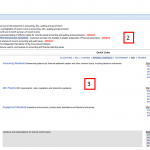
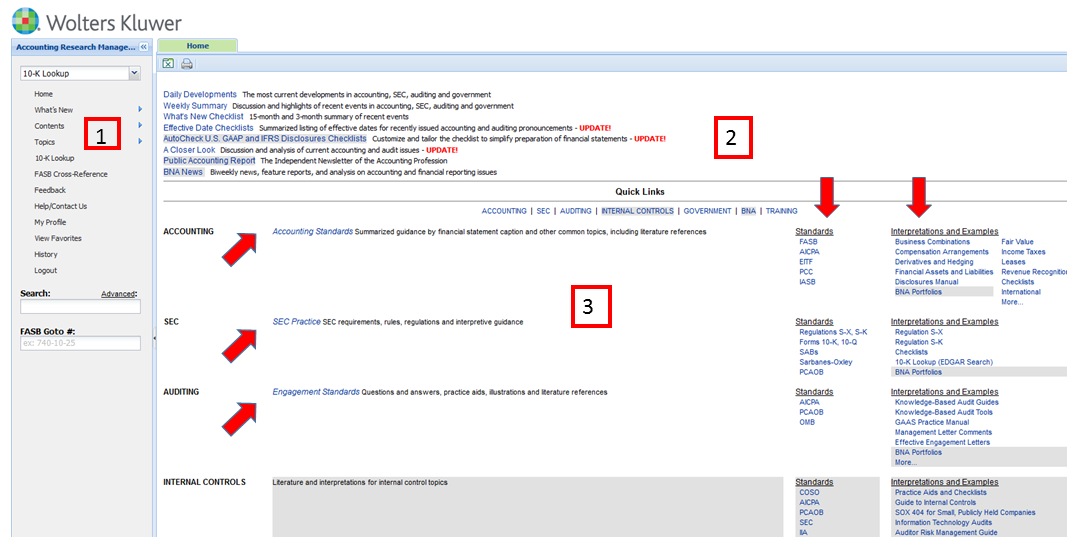
Left Navigation Pane (See area “1” in image). In addition to browsing options, this section offers a number of search tools such as “FASB Goto #,” “10-K Lookup,” and a basic general search.
News and Updates can be found at the top center of the page (See area “2” in image).
The Quick Links section takes up the bulk of the home page (see area “3” in image). It offers easy access to standards or interpretations and examples under each of the following topic areas: Accounting, SEC, Auditing, and Government.
Tips for Searching:
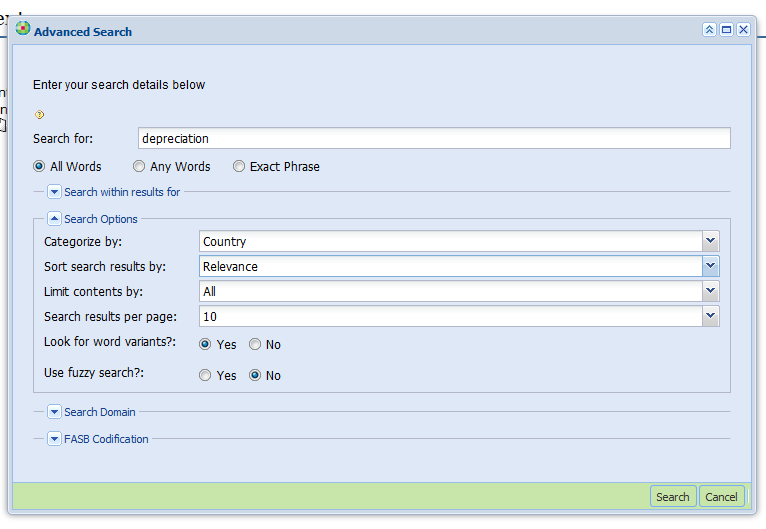
As noted above, Basic searching begins via the search box on the left side of the screen (See area “1” in image above). This option searches all content in CCH ARM.
The Advanced Search option can be accessed via the link just above the basic search box.
This option allows one to focus a search on specific publications or standards bodies; choose the number of results to display per page and how to sort them (by relevance or alphabetically); search word variants; fuzzy search (to account for alternate international spellings); and search within results.
Helpful Hint:
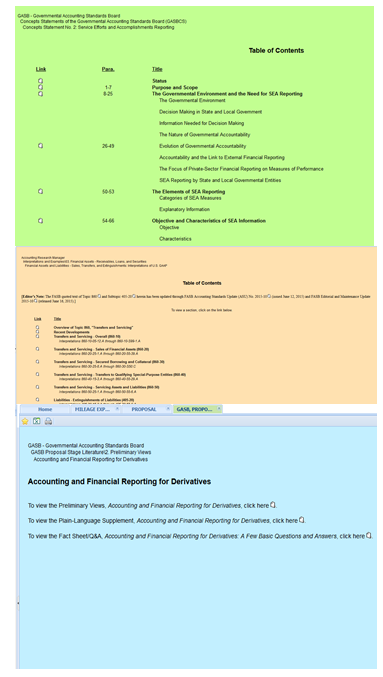
Document colors indicate document types:
White = authoritative guidance
Buff = interpretive guidance
Blue = proposal stage literature
Green = other
Want help using the CCH Accounting Research Manager? Contact Jim or Kim to set up an appointment.
More of a self-starter? CCH ARM has a great built-in tutorial. Look for the “Accounting Research Manager Tutorial” link toward the bottom of the CCH ARM home screen. (Note: to view the tutorial it will ask you to enter your name, email address, and institution.)
Use it to find: Authoritative and interpretive literature on accounting, auditing, and related topics.This content includes standards from bodies such the FASB, AICPA, IASB, GAO, and SEC.
Tips for Browsing:
CCH ARM offers a variety of browsing options. There are three key entry points to begin browsing content from the home screen.
Left Navigation Pane (See area “1” in image). In addition to browsing options, this section offers a number of search tools such as “FASB Goto #,” “10-K Lookup,” and a basic general search.
News and Updates can be found at the top center of the page (See area “2” in image).
The Quick Links section takes up the bulk of the home page (see area “3” in image). It offers easy access to standards or interpretations and examples under each of the following topic areas: Accounting, SEC, Auditing, and Government.
Tips for Searching:
As noted above, Basic searching begins via the search box on the left side of the screen (See area “1” in image above). This option searches all content in CCH ARM.
The Advanced Search option can be accessed via the link just above the basic search box.
This option allows one to focus a search on specific publications or standards bodies; choose the number of results to display per page and how to sort them (by relevance or alphabetically); search word variants; fuzzy search (to account for alternate international spellings); and search within results.
Helpful Hint:
Document colors indicate document types:
White = authoritative guidance
Buff = interpretive guidance
Blue = proposal stage literature
Green = other
Want help using the CCH Accounting Research Manager? Contact Jim or Kim to set up an appointment.
More of a self-starter? CCH ARM has a great built-in tutorial. Look for the “Accounting Research Manager Tutorial” link toward the bottom of the CCH ARM home screen. (Note: to view the tutorial it will ask you to enter your name, email address, and institution.)
 Hit your study stride for finals in the UI Libraries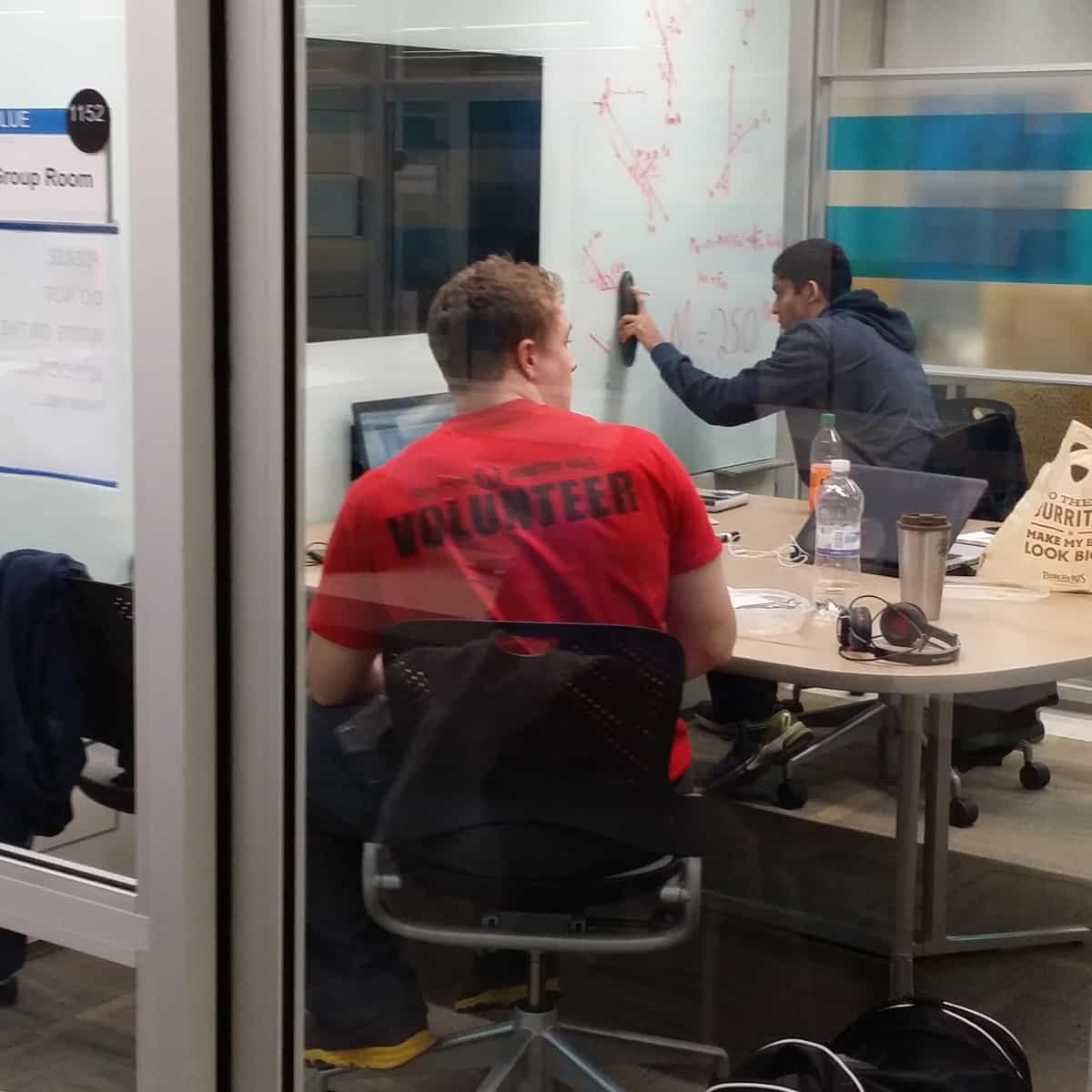
 Important Announcements: The Iowa Women’s Archives will be closed May 16-27th for painting. Newsfeed: Talk of Iowa: Brinton Films Make Second Debut in 100 Years at World’s Longest Running Movie […]