Skip to content
Skip to main content

Pomerantz Business Library: A Look Back at FY 2016

Business Library FY 2016 Inforgraphic

Today the Pomerantz Business Library looks back at the recently ended fiscal year 2016. What follows provides a window into the impact that the business library has on the teaching, learning, and research activities of students, faculty, and staff of the Tippie College of Business and the entire University of Iowa community.

Thanks for a great FY 2016 and here’s to a strong and productive FY 2017!

Loading...

Loading…


Pomerantz Business Library: A Look Back at FY 2016

Today the Pomerantz Business Library looks back at the recently ended fiscal year 2016. What follows provides a window into the impact that the business library has on the teaching, learning, and research activities of students, faculty, and staff of the Tippie College of Business and the entire University of Iowa community.

Thanks for a great FY 2016 and here’s to a strong and productive FY 2017!

Loading...

Loading…


UI Librarians Serving the Iowa Library Association

2016Q&A with Duncan Stewart

ILA’s past president and UI special collections catalog librarian

Q: How long have you been an active member of ILA?

A: I joined ILA in 1998 when I got my first professional library job as a cataloger at the State Historical Society of Iowa in Iowa City. I joined ILA because ALA was not affordable or vital to my job as a state librarian.

Q: List any positions or projects you’ve worked on for ILA

A:  When I joined, I volunteered to be a member of ILA Governmental Affairs Committee (GAC). I was a member for several years, assisting with ILA Lobbying Day at the State Capitol in the Law Library. Then I became chair of GAC and held that position for several years, working closely with ILA leadership and ILA professional lobbyists in Des Moines. ILA actually has a fairly powerful lobbying voice in the state legislature. Over the years, I have served on the ILA-ACRL board, as a member of the ILA Executive board, and as vice president, president, and now past president of ILA.

Q: How would you describe what ILA is and how it serves Iowa/Iowans?

A: ILA serves Iowa librarians, libraries, and librarians as the organized voice of the library community in the state. With 1500 members from every county of Iowa, we combine all types of librarians (teacher librarians, public librarians, academics, special librarians) into one strong group. This works well in Iowa because we are a small state and separate groups for every type of librarian would be impractical, though ILA does have subdivisions where like-minded librarians gather for professional development. ILA serves Iowa by explaining the need for and huge impact of state assistance to Iowa libraries through the State Library of Iowa. ILA has partnered with the State Library to ask for state financial aid for Inter Library Loan, making books much more available to participating libraries. ILA has worked to support and shape the State Library and the services it provides. But the best example of ILA benefiting Iowans is the statewide contract for Ebsco Host, the database of journal articles and news stories—the State Library, with ILA’s ongoing assistance, uses this contract to provide access (paid) to every library in the state. ILA has also been instrumental in garnering legislative support for ongoing access to Learning Express, which is a database of professional tests and educational materials available to all Iowa libraries.

Q: Please explain why, as a University of Iowa librarian, you joined and participate in ILA

A: I continued my membership in ILA, even though I also became active with ALA after being hired at UIL in 2002. I did this because I had seen the positive effects that ILA had on Iowa libraries, I enjoyed working with librarians from across the state and from many kinds of libraries, and because I am convinced that membership and participation in ILA is one way for UI librarians to fulfill the mission of the library and the university to serve the people of Iowa. UI librarians have had strong support for ongoing membership in ILA and have served at every level from committee member to president (I was ILA president in 2015). ILA benefits greatly from the commitment and energy of UI Librarians and would not be the same organization without us.

Q: What is something you learned through participating in ILA that you might not have learned at another conference or on-the-job?

A:  The most basic thing I learned as a member of ILA is the strength and diversity of the library community in Iowa and our power when we all work together. ILA includes para-professional staff members, state certified librarians without MLS, as well as MLS librarians. Together we span the spectrum of libraries in the state and cooperate to improve all library services. I learned that it is not only possible, but highly powerful to work with people of greatly differing backgrounds, job experience, and training. ILA taught me that there is strength in cooperation and numbers.

Q: What do you value most about your participation in ILA?

A: The thing I value most about ILA is the chance to meet, work with, and celebrate successes with librarians from across Iowa and from every kind of library. ILA is, at heart, the center of the Iowa library community. And I see my work in ILA as a direct contribution to serving the people of Iowa. ILA allows you to meet the citizens and librarians of Iowa that we are here to serve. ILA unites librarians, government, and library users into a force for library support.

 

CloydPortraitWEBQ&A with Brett Cloyd

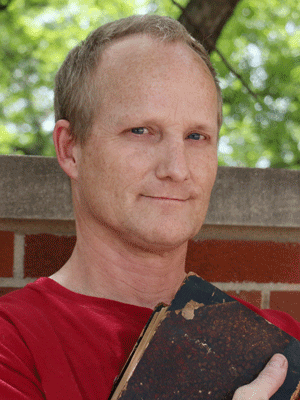
Active in ILA leadership and UI government information librarian

Q: How long have you been an active member of ILA?

A; I joined ILA as a student in the UI School of Library and Information Science in 1996.

Q: List any positions or projects you’ve worked on for ILA

A: I have been active in the Iowa chapter of the Government Documents Round Table (I’ve held all of the executive board positions) and the Iowa chapter of the Association of College and Research Libraries (I’ve chaired the Spring Conference Planning Committee and held the office of President).  I am currently an Executive Board Member of ILA. I am also the ILA Membership Committee Chair for 2016. I have been able to gain leadership experience and make an impact on improving Iowa libraries.

Q: How would you describe what ILA is and how it serves Iowa/Iowans?

A: ILA provides learning and engagement opportunities for Iowa libraries and Iowa library staff.  We share best practices, inspiration as well as challenges via on-line communication channels, personal connections, and conferences. ILA advocates for Iowa libraries by way of its lobbyists and special events like the ILA Legislative Reception at the state capitol..

Q: Please explain why, as a University of Iowa librarian, you joined and participate in ILA

A: I felt that I could make a direct impact by way of my participation. It was very easy for me to become involved in the organization and I saw the benefits of gaining leadership opportunities and working with librarians from across the state. Service to the state has been important part of my work with a public university.

Q: What is something you learned through participating in ILA that you might not have learned at another conference or on-the-job?

A: I really appreciate my contacts with the State Library of Iowa. I see their dedicated staff at ILA events and I am able to learn about their interesting projects and share their work with students and faculty on campus.

Q: What do you value most about your participation in ILA? 

A: I really value my friendships with members of ILA. This is my 20th year as an ILA member. I appreciate the variety of people I have met over the years. ILA has helped me expand my views of Iowa by meeting people from across the state.
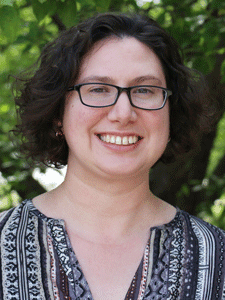
 

SaraScheibWEBQ&A with Sara Scheib

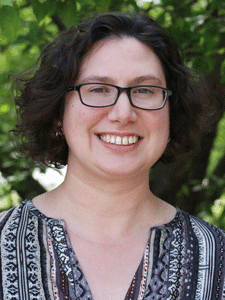
Current ILA/ACRL president and UI Sciences librarian

Sara Scheib and ILA/ACRL

Q: How long have you been an active member of ILA?

A: I joined ILA as a SLIS student in 2006. I knew I wanted to get a job in a library in Iowa, so I wanted an opportunity to attend the conference and network with other Iowa librarians. Plus, ILA membership is free for full-time students, so it was a bit of a no-brainer. I joined the ILA/ACRL subdivision in 2008 when I got my first professional job as the Emerging Technologies Librarian at Kirkwood Community College.

Q: List any positions or projects you’ve worked on for ILA.

A: I was fresh out of library school and working in a community college library when I joined. I knew I had a lot to learn, so I joined the Community College Roundtable and the Iowa chapter of ACRL. Iowa ACRL was looking for volunteers for committees, so I volunteered for the Electronic Communications Committee. It was ideal for a first committee because it helped me stay on top of the subdivision’s activities and all our business was conducted electronically, so I didn’t have to miss work to attend lots of meetings.

The following year, Kirkwood was slated to host the subdivision’s annual conference, so I volunteered to work on the local arrangements for the Spring Conference Planning Committee. The same year, I was recruited to chair the Electronic Communications Committee. This gave me a vote on the Executive Board, which was an excellent group of librarians who really helped to mentor me. It was my first real leadership position, and I enjoyed my work.

After a brief hiatus while I worked in a rural public library, I knew I wanted to get involved again, so I returned to the Executive Board as chair of the Electronic Communications Committee in 2013. In 2014, I was nominated to be Vice President/President-Elect of ILA/ACRL. It’s a three-year commitment (1st year – chair of Nominations Committee; 2nd year – President; 3rd year – chair of Awards Committee), so it’s not something I undertook lightly, but I knew it was time to step up and take a stronger leadership role in the group. I was elected in 2014 and spent my first year as Nominations Chair picking my team for the following year. This year, I’m serving as President. It’s a lot of work, but I have great team on the Executive Board and they make my job much easier. Next year, I’ll be the Awards Chair. That involves selecting the winners for scholarships and other awards, which should be lots of fun.

I’m also the Advisor to the Student Subdivision of ILA, which allows me to help library school students as they build careers of their own.

Q: How would you describe what ILA is and how it serves Iowa/Iowans?

A: ILA and ILA/ACRL serves Iowa/Iowans as a state-level advocate for libraries of all sizes and types. We help to make sure there’s a library staffed by a qualified teacher librarian in your child’s school. We help libraries conserve their limited budgets by making it more affordable for them to borrow books and other materials from one another. We provide access to valuable news, research, and job training materials to all Iowans by making sure every library has access to high quality databases like EBSCOHost and Learning Express. Finally, we are the primary professional development organization for librarians working in all kinds of libraries all over the state. We learn from one another so we can serve you better.

Q: Please explain why, as a University of Iowa librarian, you joined and participate in ILA?

A: I participate in ILA and ILA/ACRL because I recognize the excellent work my colleagues are doing at all kinds of libraries across the state and I want to learn from their experiences. And as I develop my own areas of expertise, I have a responsibility to share that knowledge and give back to the Iowa library community.

Q: What is something you learned through participating in ILA that you might not have learned at another conference or on-the-job?

A: While extremely valuable, the national-level conferences I attend as a science librarian tend to be very specialized and have a narrow focus. Sometimes, it’s important to get out of the corner you’ve painted yourself into and see what others are working on. I get some of my best programming ideas from public librarians. And my colleagues at small liberal arts colleges have some of the most engaging and innovative teaching methods. Plus, I get to meet and develop relationships with some of the most passionate, smart, and funny people in the state.

Q: What do you value most about your participation in ILA?

A: I graduated from library school less than 10 years ago. ILA/ACRL has given me the extraordinary opportunity to take on a leadership role very early in my career. By giving presentations, working on committees, planning conferences, and leading meetings, I have gained the skills and confidence I need to become more active within my own department and on the national level. This has been very advantageous to my career and I did it all while working to provide more opportunities to the citizens of my home state!

Q: Is there anything else you’d like to add?

A: I encourage all librarians working in Iowa to get involved in ILA in some form. No matter what your interests or skills are, you can find your niche in ILA. It will be hard work at times, but the benefits you’ll receive and the relationships you’ll build will be worth it.

 

UI Librarians Serving the Iowa Library Association

2016Q&A with Duncan Stewart

ILA’s past president and UI special collections catalog librarian

Q: How long have you been an active member of ILA?

A: I joined ILA in 1998 when I got my first professional library job as a cataloger at the State Historical Society of Iowa in Iowa City. I joined ILA because ALA was not affordable or vital to my job as a state librarian.

Q: List any positions or projects you’ve worked on for ILA

A:  When I joined, I volunteered to be a member of ILA Governmental Affairs Committee (GAC). I was a member for several years, assisting with ILA Lobbying Day at the State Capitol in the Law Library. Then I became chair of GAC and held that position for several years, working closely with ILA leadership and ILA professional lobbyists in Des Moines. ILA actually has a fairly powerful lobbying voice in the state legislature. Over the years, I have served on the ILA-ACRL board, as a member of the ILA Executive board, and as vice president, president, and now past president of ILA.

Q: How would you describe what ILA is and how it serves Iowa/Iowans?

A: ILA serves Iowa librarians, libraries, and librarians as the organized voice of the library community in the state. With 1500 members from every county of Iowa, we combine all types of librarians (teacher librarians, public librarians, academics, special librarians) into one strong group. This works well in Iowa because we are a small state and separate groups for every type of librarian would be impractical, though ILA does have subdivisions where like-minded librarians gather for professional development. ILA serves Iowa by explaining the need for and huge impact of state assistance to Iowa libraries through the State Library of Iowa. ILA has partnered with the State Library to ask for state financial aid for Inter Library Loan, making books much more available to participating libraries. ILA has worked to support and shape the State Library and the services it provides. But the best example of ILA benefiting Iowans is the statewide contract for Ebsco Host, the database of journal articles and news stories—the State Library, with ILA’s ongoing assistance, uses this contract to provide access (paid) to every library in the state. ILA has also been instrumental in garnering legislative support for ongoing access to Learning Express, which is a database of professional tests and educational materials available to all Iowa libraries.

Q: Please explain why, as a University of Iowa librarian, you joined and participate in ILA

A: I continued my membership in ILA, even though I also became active with ALA after being hired at UIL in 2002. I did this because I had seen the positive effects that ILA had on Iowa libraries, I enjoyed working with librarians from across the state and from many kinds of libraries, and because I am convinced that membership and participation in ILA is one way for UI librarians to fulfill the mission of the library and the university to serve the people of Iowa. UI librarians have had strong support for ongoing membership in ILA and have served at every level from committee member to president (I was ILA president in 2015). ILA benefits greatly from the commitment and energy of UI Librarians and would not be the same organization without us.

Q: What is something you learned through participating in ILA that you might not have learned at another conference or on-the-job?

A:  The most basic thing I learned as a member of ILA is the strength and diversity of the library community in Iowa and our power when we all work together. ILA includes para-professional staff members, state certified librarians without MLS, as well as MLS librarians. Together we span the spectrum of libraries in the state and cooperate to improve all library services. I learned that it is not only possible, but highly powerful to work with people of greatly differing backgrounds, job experience, and training. ILA taught me that there is strength in cooperation and numbers.

Q: What do you value most about your participation in ILA?

A: The thing I value most about ILA is the chance to meet, work with, and celebrate successes with librarians from across Iowa and from every kind of library. ILA is, at heart, the center of the Iowa library community. And I see my work in ILA as a direct contribution to serving the people of Iowa. ILA allows you to meet the citizens and librarians of Iowa that we are here to serve. ILA unites librarians, government, and library users into a force for library support.


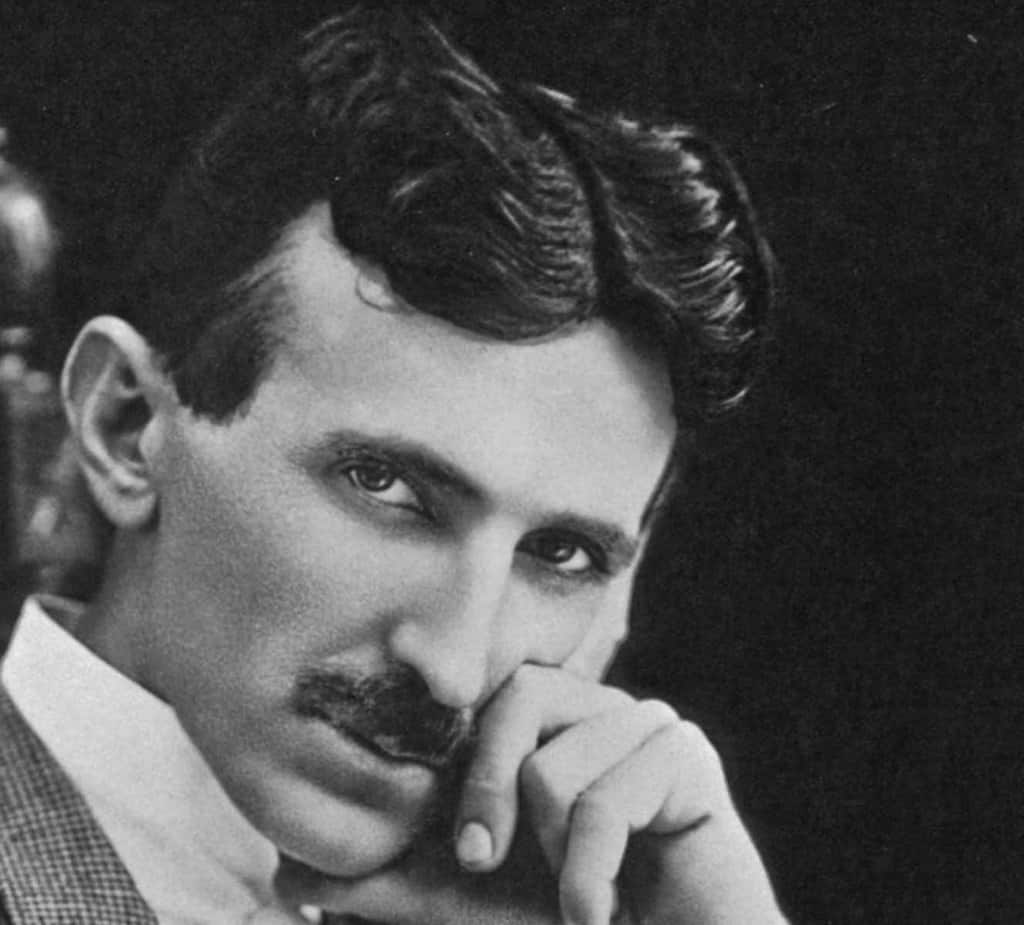
Happy 160th Birthday Nikola Tesla!!

Tesla_coil3_square

Happy 160th Birthday!!!
Nikola Tesla
July 10, 1856 – January 7, 1943
tesla

Photo Credit: http://www.teslabg.edu.rs/

Nikola Tesla  had a fascinating childhood. The son of a Serbian Orthodox Priest and a mother, who came from a long line of inventors, he was able to spend much of his childhood inventing and trying new things. During a long, cold and dry spell, he ‘discovered’ static electricity. He thought of this often and it profoundly influenced his adult life and his inventions. As a child he invented a cornstalk popgun, which contained the principles he adapted when he devised particle-beam weapons. And, after seeing a picture of Niagara Falls, young Nikola (he was somewhere between 10- and 14-years-of-age) told his Uncle Josip that one day he would place a gigantic wheel under the waterfall and harness it. In 1895, he and George Westinghouse built the first hydro-electric power plant in Niagara Falls.

His older brother died after a fall from a horse and thereafter Nikola began having “out-of body” experiences. In fact, those experiences were so real he sometimes needed his sisters to help him tell which were real and which were hallucinations. Those experiences continued throughout his life and actually were an asset to his creativity. He could visualize his finished inventions and modify them in his mind before committing them to paper.  To learn more about the life of this fascinating and influential man, check out Wizard : the Life and Times of Nikoa Tesla : Biography of a Genius

Nikola began his career as an electrical engineer in 1881 while working with a a telephone company located in Budapest. It was there that the solution to the rotating magnetic field flashed through his mind, which led to the creation of the induction motor. In 1884, Tesla moved to the United States to work with Thomas Edison. He and Edison disagreed on direct current versus alternating current. Edison promoted the direct current, while Tesla believed the alternating current was more efficient. Tesla won that disagreement…

He was a pioneer in many fields – in 1896 the Electrical Review published X-rays of a man which had been taken by Tesla. Others were also experimenting with X-rays at the same time but Tesla didn’t claim priority. It is reported that he said, “I don’t care that they stole my idea…I care that they don’t have any of their own.”

Interestingly, in 1901 Tesla imagined a means of instant communication – he imagined receiving telegrams, stock quotes, etc., assigning them each a different frequency, which would then be broadcast to a device held in your hand. He essentially envisioned the internet and smart phones…

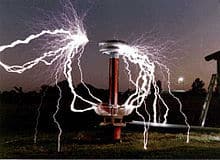
220px-TeslacoilHe is perhaps most well-known for the Tesla Coil, which he developed in 1891. The Tesla Coil transforms energy into extremely high-voltage charges, which create powerful electrical fields capable of producing electrical arcs. A Tesla Coil is made of two parts – a primary coil and a secondary coil. Each has its own capacitor (which stores electrical energy like a battery does).  The whole system is powered by a transformer. The two circuits are connected by a spark gap. The Tesla Coil revolutionized the way electricity was understood. Variations of the Tesla Coil are still used in radios and televisions.

Interesting Facts About Nikola Tesla:

  • He was born during a lightning storm, which the midwife claimed was a bad omen. She said he would be a child of darkness. The family legend is that his mother replied, “No. He will be a child of light.”
  • By around the age of 12, he developed strange “habits.” He developed an aversion to women’s earrings, and the sight of a pearl would give him “fits.” He would never touch another person’s hair and could develop a fever looking at a peach.
  • Not all his ideas were practical. One such idea was a ring around the equator which would transport people from one end of the globe to the other…

(Wizard : the life and times of Nikola Tesla : Biography of a Genius).


Resources:

Seifer, Marc. 1996. Wizard : the life and times of Nikola Tesla : biography of a genius. Seacaucus, N.J. : Carol Pub. Engineering Library TK140.T4 S65 1996

Nikola Tesla and George Westinghouse built the first hydro-electric power plant…. Tesla Memorial Society of New York. Date accessed July 7, 2016.

The 10 Inventions of Nikola Tesla That Changed the World. January 10,2012. Activist Post.

Martin, Thomas Commerford. 1995. The inventions, researches, and writings of Nikola Tesla. 2nd Edition. New York : Barnes & Noble. Engineering Library TK140.T4 M37 199

Wireless Electricity? How the Tesla Coil Works, by Kelly Dickerson. July 10, 2014. livescience.com

Tesla Coil.  Wikipedia. Page last modified July 5, 2016, accessed July 7, 2016.

**Other Resources:

Nikola Tesla : the Genius Who Lit the World. July 10, 1998. Tesla Memorial Society of New York.


Bernardino Genga |July 2016 Notes from The John Martin Rare Book Room @Hardin Library

gengabNLM

gengabNLM

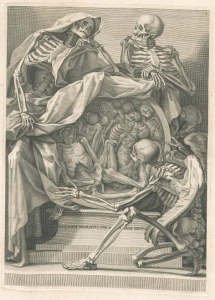
BERNARDINO GENGA (1620-1690). Anatomia per uso et intelligenza del disegno; ricercata non solo su gl’ossi, e muscoli del corpo humano… Rome: Domenico de Rossi, 1691.

An authoritative anatomist and surgeon in Rome, Genga stressed the importance of solid anatomical knowledge for the surgeon. Genga wrote the first book devoted entirely to surgical anatomy which remained a widely used manual for fifty years.

Genga was one of the first Italians to accept Harvey’s theory on the circulation of the blood, but Genga also maintained that the discovery was made by Colombo and Cesalpino before Harvey. The parts played by those two Italian investigators and anatomists in the unfolding of the facts of circulatory physiology have been a point of study and argument among medical historians.

This large atlas contains 40 magnificent full-page engraved plates depicting the human figure in various poses, with and without dissection. Some of the full-figure plates are engraved renditions of celebrated antique statues in Rome. The plates, probably engraved by François Andriot, were intended primarily for the use of painters and sculptors, and they are still considered to be one of the best collections for the use of student artists. The text is by Giovanni Maria Lancisi.

You may view this book in the John Martin Rare Book Room, Hardin Library for the Health Sciences.  Make a gift to the Hardin Library for the Health Sciences by donating online or setting up a recurring gift with The University of Iowa Foundation.


Documenting and Treating Scrolls: Part 1

Thursday July 7, 2016
Submitted by Katarzyna Bator and Bailey Kinsky

We are both graduate students at Buffalo State College Art Conservation Department. We are spending the summer at the University of Iowa Library Conservation Laboratory partaking in a practicum of treatment and care of library and archives material. Using theory and techniques learned during the school year, we will work to gain hand skills and real world experience in conservation treatments working side-by-side with conservators at the University.

Our first project includes photo documentation and treatment of several scrolls from the Ficke Collection. Each one is over 20 feet long and all have suffered extensive insect damage making their handling unsafe.

Picture 1 : Bailey Kinsky photographing a scroll from the Ficke Collection. The Photographic set up includes a neutral grey background, color checker, and a ruler to aid in accurate representation of the actual object.
Picture 2: Katarzyna Bator (left) and Bailey Kinsky (right) unrolling a scroll from the Ficke Collection for photo documentation.
Picture 3: Bailey Kinsky assessing the condition of the scrolls and testing ink solubility.

Photographing a scroll
Unrolling a scroll
Assessing condition

Our 2016 Kerber Fund Recipient: Lauren Feldmen

Kerber Grant RecipientKerber Grant Recipient

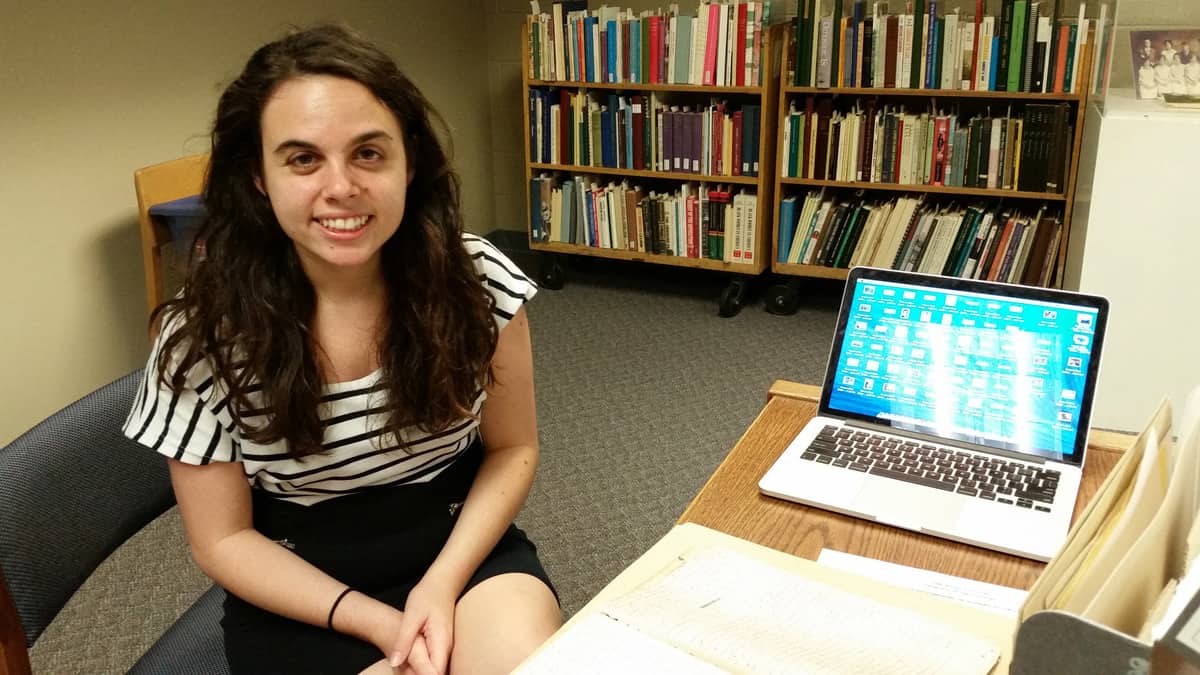
Last week, the Iowa Women’s Archives welcomes Lauren Feldman, a doctoral candidate in history from Johns Hopkins University. Lauren is the latest recipient of the Linda and Richard Kerber Fund for Research in the Iowa Women’s Archives, a $1000 travel grant to bring researchers to the IWA.

Kerber Grant Recipient

Lauren hard at work.

In her research, Lauren looks at the changing conceptions of marital engagement in the 19th century. She argues Americans worried about the future of marriage as divorce rates rose. She believes that in response to this fear engagement increased in importance and became a trial period for the marriages that would follow. Lauren wants to expand the scope of her research to include minorities, rural women, and sources outside of the Eastern United States. After finding the Kerber Grant on H-Net, she felt the IWA’s Kerber Fund would be a good fit for her research.

While here for the week, she consulted the papers of Lucy Van Voorhis White, Jennifer Riggs Cosson, and Mae Atkinson Robinson, among others. She also hopes to research in Giving Voice to their Memories: Oral Histories of African American Women in Iowa.

When asked at the beginning of her week here what her favorite documents were so far she admitted that she hadn’t had much time to read them yet. However, she couldn’t wait to sink her teeth into Van Voorhis White’s and Riggs Cosson’s courtship correspondences with the men who they would marry. It isn’t common to have both sides of a correspondence and, as Lauren says, “that’s exactly what I’m looking for.”

We were so happy to have Lauren visit us for the week as a Kerber Fund recipient, and cannot wait to hear about the scholarship she produces.

InfoHawk+ Is Coming!

InfoHawk+ Is Coming Soon!!

The University of Iowa Libraries is introducing a new way to access library resources and materials. This month, July 2016, we will switch to a new library management system. Changes have already begun and will continue throughout the month.

InfoHawk, which has been our online catalog system for the past 16 years, has been taken out of service. Links to InfoHawk will now take you to Smart Search. Smart Search has already been available as an alternative to the InfoHawk search tool.

InfoHawk+ will replace Smart Search and should be available on July 15th. InfoHawk+, which resembles Smart Search, will allow clear access to the UI Libraries holdings and resources. Users will be able to search for print journals and books, available electronic resources, and other resources which are unique to the UI Libraries collections.

Since the staff side – “behind the scenes” – will also be changing, some services will be either temporarily unavailable or delayed.  We apologize for any inconvenience this causes and are working to minimize the disruption in services.

If you’d like more information about the transition, please check the Library Guide.