Skip to content
Skip to main content

Bindings, UI Libraries Magazine, features story on Regional Medical Library @Hardin

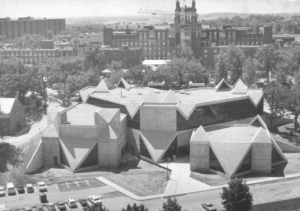
Hardin Library in 1974, just after opening

The Spring issue of Bindings has a story on Hardin Library’s $6.5 million dollar grant and designation as a Regional Medical Library.  Bindings also contains other information about the University of Iowa Libraries services, programs, and exhibits.

Hardin Library in 1974, just after opening

Hardin Library in 1974, just after opening

Read the complete issue online.

Request printed copies.


Van Allen Explorer Tapes in DPN

Van Allen Explorer Tapes Prior to Recovery (MacLean Hall 3/25/2010)

Van Allen Explorer Tapes Prior to Recovery (MacLean Hall 3/25/2010)

In May of this year, the University of Iowa Libraries became the first institution to deposit material into the Digital Preservation Network. You can read more about this on the DPN website or listen to an interview with about the process of adding this collection to DPN. As a member of DPN, the Libraries can deposit 5TB of data per year, and DPN guarantees that this data will be preserved for 20 years. The Libraries chose the Explorer I audio tapes from the James Van Allen Collection as its initial deposit for a variety of reasons:

  1. The expense of reformatting these items – If any of the digital files were lost, it would be too costly to reformat them again.
  2. The inability to reformat them with equipment in the library
  3. The poor condition of some of the originals
  4. The location of the original audio reels – they are no longer located on site making it harder to reformat them again
  5. The rarity of the items
  6. The research value of the collection

So far 500GB (300 audio reels) of Explorer I have been uploaded into DPN. Another 400 reels will be added in the near future. The deposit of this material marks the end of a long process of discovering and digitizing the original reel to reel audio tapes. Read more about the Van Allen Collection here:

http://explorer.lib.uiowa.edu/about

The Digital Preservation Network (DPN) is the only large-scale digital preservation service that is built to last beyond the life spans of individuals, technological systems, and organizations. DPN provides members of the academy and their successors with assurance that future access to their scholarly resources will be available in the event of disruptive change in administrative or physical institutional environments. By establishing a redundant and varied technical and legal infrastructure the survival, ownership and management of preserved digital content in the future is assured for DPN members.

Van Allen Explorer Tapes in DPN

Van Allen Explorer Tapes Prior to Recovery (MacLean Hall 3/25/2010)

Van Allen Explorer Tapes Prior to Recovery (MacLean Hall 3/25/2010)

In May of this year, the University of Iowa Libraries became the first institution to deposit material into the Digital Preservation Network. You can read more about this on the DPN website or listen to an interview with about the process of adding this collection to DPN. As a member of DPN, the Libraries can deposit 5TB of data per year, and DPN guarantees that this data will be preserved for 20 years. The Libraries chose the Explorer I audio tapes from the James Van Allen Collection as its initial deposit for a variety of reasons:

  1. The expense of reformatting these items – If any of the digital files were lost, it would be too costly to reformat them again.
  2. The inability to reformat them with equipment in the library
  3. The poor condition of some of the originals
  4. The location of the original audio reels – they are no longer located on site making it harder to reformat them again
  5. The rarity of the items
  6. The research value of the collection

So far 500GB (300 audio reels) of Explorer I have been uploaded into DPN. Another 400 reels will be added in the near future. The deposit of this material marks the end of a long process of discovering and digitizing the original reel to reel audio tapes. Read more about the Van Allen Collection here:

http://explorer.lib.uiowa.edu/about

The Digital Preservation Network (DPN) is the only large-scale digital preservation service that is built to last beyond the life spans of individuals, technological systems, and organizations. DPN provides members of the academy and their successors with assurance that future access to their scholarly resources will be available in the event of disruptive change in administrative or physical institutional environments. By establishing a redundant and varied technical and legal infrastructure the survival, ownership and management of preserved digital content in the future is assured for DPN members.

Van Allen Explorer Tapes in DPN

Van Allen Explorer Tapes Prior to Recovery (MacLean Hall 3/25/2010)

Van Allen Explorer Tapes Prior to Recovery (MacLean Hall 3/25/2010)

In May of this year, the University of Iowa Libraries became the first institution to deposit material into the Digital Preservation Network. You can read more about this on the DPN website or listen to an interview with about the process of adding this collection to DPN. As a member of DPN, the Libraries can deposit 5TB of data per year, and DPN guarantees that this data will be preserved for 20 years. The Libraries chose the Explorer I audio tapes from the James Van Allen Collection as its initial deposit for a variety of reasons:

  1. The expense of reformatting these items – If any of the digital files were lost, it would be too costly to reformat them again.
  2. The inability to reformat them with equipment in the library
  3. The poor condition of some of the originals
  4. The location of the original audio reels – they are no longer located on site making it harder to reformat them again
  5. The rarity of the items
  6. The research value of the collection

So far 500GB (300 audio reels) of Explorer I have been uploaded into DPN. Another 400 reels will be added in the near future. The deposit of this material marks the end of a long process of discovering and digitizing the original reel to reel audio tapes. Read more about the Van Allen Collection here:

http://explorer.lib.uiowa.edu/about

The Digital Preservation Network (DPN) is the only large-scale digital preservation service that is built to last beyond the life spans of individuals, technological systems, and organizations. DPN provides members of the academy and their successors with assurance that future access to their scholarly resources will be available in the event of disruptive change in administrative or physical institutional environments. By establishing a redundant and varied technical and legal infrastructure the survival, ownership and management of preserved digital content in the future is assured for DPN members.

Special Collections News & Updates 7/29/2016

Doom Patrol comic book coverNewsfeed: Documenting and Treating Scrolls: Part 3 Final from the “Preservation Beat” blog. http://blog.lib.uiowa.edu/preservation/2016/07/27/documenting-and-treating-scrolls-part-3-final/ A Visit to Himie Voxman’s Hometown from Iowa Now.  http://now.uiowa.edu/2016/07/visit-himie-voxmans-hometown James Alan McPherson, Pulitzer Prize-Winning Writer, […]

Meet IWA’s Graduate Assistants

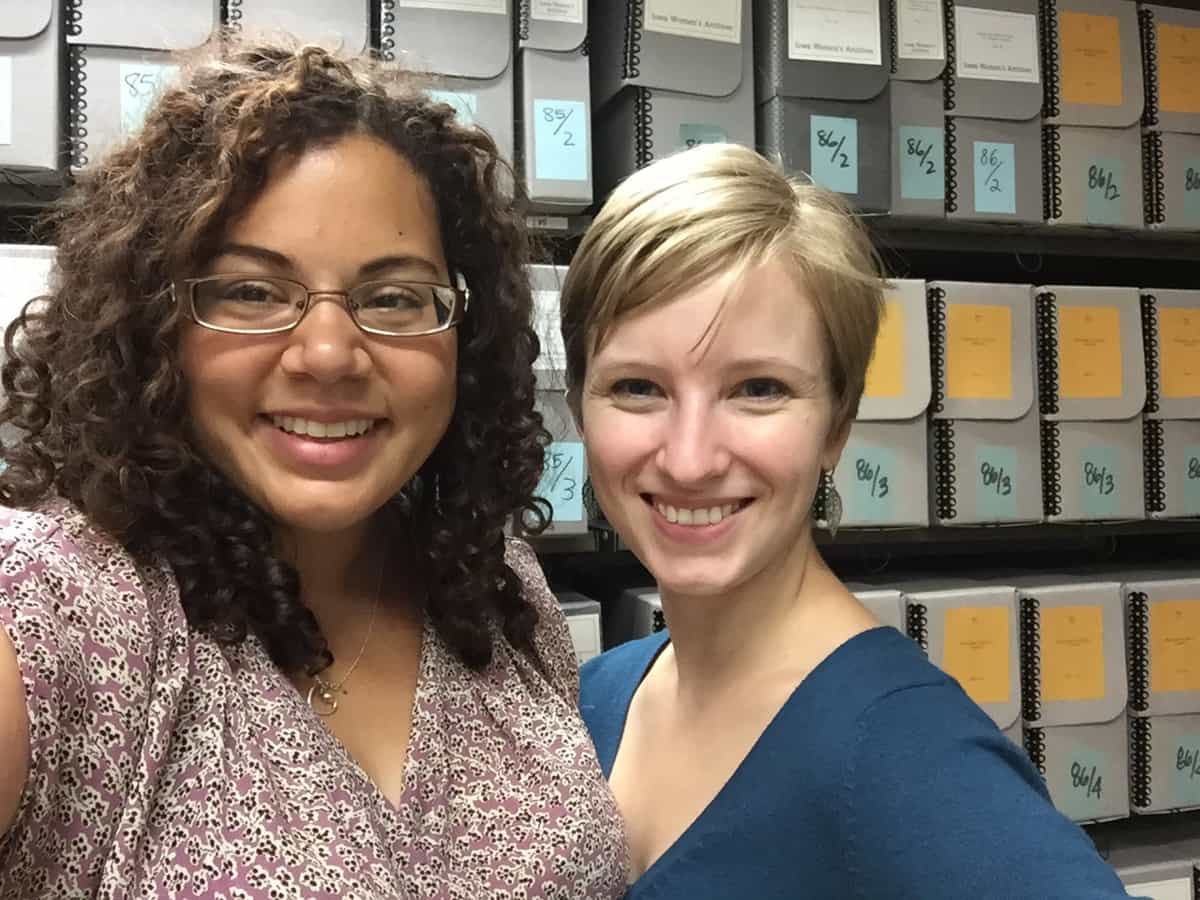
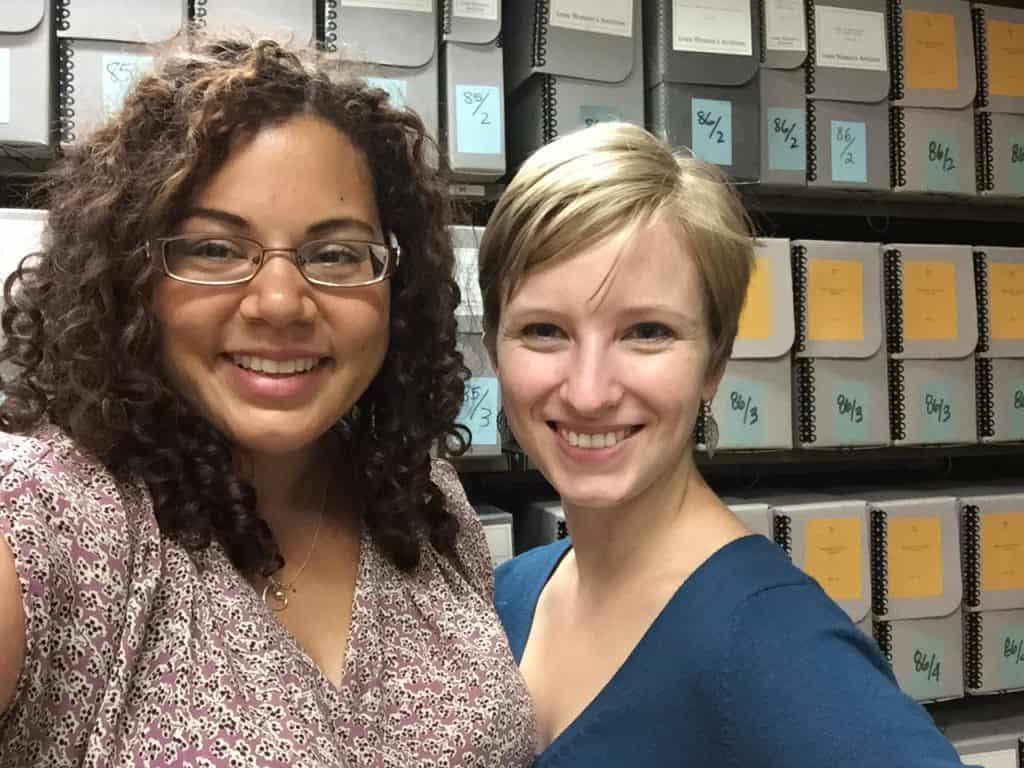
Image of Katie and RachelImage of Katie and Rachel

Image of Katie and Rachel

While these two fabulous ladies aren’t brand new to IWA, they both recently accepted positions as graduate assistants for the up-coming semesters.

Rachel Black grew up in the southwestern corner of Iowa in a tiny town that had more ponies than people. Now living in the Iowa City area, she hopes to graduate with a MLIS this December.

Her archives journey began last summer as a volunteer working on the Myrtle Hinkhouse papers. She is excited to tackle more collections this fall.

Outside of the archives, Rachel can be found knitting poorly constructed hand towels, messing up her kitchen while baking, losing arrows on the archery range, and just generally enjoying her life.

Katie Gandhi still doesn’t know what she wants to be when she grows up, but she does know she loves libraries, history, people, and archives. Other past-times include hiking, painting, weaving, and playing cello.

Since being hired in January, her primary focus has been helping Janet prepare content for the IWA’s “Migration is Beautiful” project Omeka site, which went live on July 5th.

Katie just finished an M.S. in Urban and Regional Planning and will be working to complete her M.A. in Library and Information Science this year.
Meet IWA’s Graduate Assistants

Image of Katie and RachelImage of Katie and Rachel

Image of Katie and Rachel

While these two fabulous ladies aren’t brand new to IWA, they both recently accepted positions as graduate assistants for the up-coming semesters.

Rachel Black grew up in the southwestern corner of Iowa in a tiny town that had more ponies than people. Now living in the Iowa City area, she hopes to graduate with a MLIS this December.

Her archives journey began last summer as a volunteer working on the Myrtle Hinkhouse papers. She is excited to tackle more collections this fall.

Outside of the archives, Rachel can be found knitting poorly constructed hand towels, messing up her kitchen while baking, losing arrows on the archery range, and just generally enjoying her life.

Katie Gandhi still doesn’t know what she wants to be when she grows up, but she does know she loves libraries, history, people, and archives. Other past-times include hiking, painting, weaving, and playing cello.

Since being hired in January, her primary focus has been helping Janet prepare content for the IWA’s “Migration is Beautiful” project Omeka site, which went live on July 5th.

Katie just finished an M.S. in Urban and Regional Planning and will be working to complete her M.A. in Library and Information Science this year.

Find James Alan McPherson’s work at the UI Libraries

James-Alan-McPhersonWEBWriter James Alan McPherson, professor in the Iowa Writers’ Workshop and winner of the Pulitzer, MacArthur, and Guggenheim, died July 27, 2016. He was 72.

Find these McPherson works at the UI Libraries:

Find James Alan McPherson’s work at the UI Libraries

James-Alan-McPhersonWEB

James-Alan-McPhersonWEBWriter James Alan McPherson, professor in the Iowa Writers’ Workshop and winner of the Pulitzer, MacArthur, and Guggenheim, died July 27, 2016. He was 72.

Find these two McPherson works at the UI Libraries:

Crabcakes  —  Main Library PS3563.A45544 Z476 1998

A region not home: reflections from exile — Main Library PS3563.A45544 .R4 2000


Documenting and Treating Scrolls: Part 3 Final

Wednesday, July 27, 2016
Submitted by Katarzyna Bator and Bailey Kinsky

Picture 1: Kate dipping the tissue through an acrylic paint bath.

Picture 1: Kate dipping the tissue through an acrylic paint bath.

The Buddhist scrolls from the Ficke collection had experienced pretty significant insect damage which greatly increased the risk of damage during handling. In order to stabilize the paper structure, Kate and I performed some basic paper mends using a remoistenable tissue. We had previously tested the inks to make sure that they were not water soluble, but we wanted to avoid exposing the scrolls to excessive moisture because tidelines easily formed and the sheets composing the scrolls were most likely adhered together using a starch-based paste.

We selected several types of Japanese tissue to prepare for the mending and began by first toning them with acrylic paint to better match the color of the scroll (Picture 1).

Picture 2: Area of loss traced on tissue.

Picture 2: Area of loss traced on tissue.

Next, a 50/50 mixture of methylcellulose and paste was brushed over the surface, and the tissues were allowed to dry.

To mend the paper, the area of loss was traced on the tissue using a needle point (Picture 2). A protective, transparent piece of Mylar was placed between the scroll and the mending tissue while tracing. Now comes the “remoistenable” phase of the treatment. The paste and methyl cellulose mixture becomes reactivated in a 1:1 mixture of water and ethanol. The mend was placed on a piece of Plexiglas or cotton blotter and the ethanol/water mix was brushed over the tissue (Picture 3). A tweezer was used to place the mend onto the loss on the paper surface (Picture 4), and then a blotter and weight are placed on top to help the repair to dry flat (Picture 5). All of the repairs were applied to the back of the scrolls so as not to interfere with the manuscript, and Picture 6 shows what a large section of mends look like after drying.

Picture 3

Picture 3

Picture 4

Picture 4

Picture 5

Picture 5

Picture 6

Picture 6