Skip to content
Skip to main content

Victorian Popular Culture – Trial ends 24 November 2016

Victorian Popular Culture is a portal comprised of four modules, inviting users into the darkened halls, small backrooms, big tops and traveling venues that hosted everything from spectacular shows and bawdy burlesque, to the world of magic, spiritualist séances, optical entertainments and the first moving pictures.

Please send additional comments to Chris Africa.

*Please note that PDF download options are not available during trials.

Open Access Week | Guest Post by Leonardo Marchini, DDS, MSD, PhD Preventative and Community Dentistry

open_access_logo_plos_svg

openaccessweek_logoby Willow Fuchs

During Open Access week (October 24-30, 2016) we will be highlighting a number of guest posts from University of Iowa Faculty and Staff who have personal experience making their work Open Access. marchini_leo_051716_200x300_0

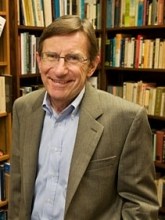
 Leonardo Marchini, DDS, MSD, PhD, Assistant Professor, Department of Preventative and Community Dentistry.

See his Iowa Research Online deposited publications here.

I consider open access publishing a better way to share research findings, since by removing the financial barrier to access it allows for a larger audience to read and use the findings worldwide. It also allows for authors to share their publications more widely, by promoting it in research oriented social media and e-mailing it to groups of researchers in the same field, allowing for even more exposure.

However, most journals in my research field are not open access. In a recent work with a broader focus, I searched for a journal capable of reaching a larger audience and then selected an open access Journal with a higher than average impact factor in my field. The submission process happened as usual, and the peer review was intense, but the manuscript was accepted after a couple review rounds.

However, the publication fees for this journal would be a problem if I was not supported by the UI Libraries Open Access Fund. My experience with the Open Access Fund was amazing! I applied and got funded really fast!

Since then the article has been published and received great attention from the scientific community in many countries, as we had a lot of comments and requests for additional information through channels that would not be available for non-open access articles, like researcher networks. I hope it will reflect in more citations in the near future.

Guest Post: Walt Whitman Quarterly Review – an OA Journal

Open Access logo

During the month of Open Access week (October 24-30, 2016) we will be highlighting a number of guest posts from University of Iowa Faculty and Staff who have personal experience making work Open Access.  We appreciate their contributions. folsom

The fourth guest post is by Ed Folsom, the Roy J. Carver Professor of English at The University of Iowa. He is the editor of the Walt Whitman Quarterly Review, co-director of the Whitman Archive , and editor of the Whitman Series at The University of Iowa Press. He is the author or editor of numerous books and essays on Whitman and other American writers.

The Walt Whitman Quarterly Review (WWQR) is now in its second year as an online open-access journal, and we could not be more pleased with our new format and open distribution. We are reaching a wider audience than ever before, since scholars, students, and the general public can now freely access the entire thirty-three-year run of the journal. Our third online-only issue, published last fall, was a testament to (and a test of) our new open-access platform. We published the complete book-length text of Whitman’s newly discovered Manly Health and Training along with an introduction by Zachary Turpin, who made the find. The discovery received front-page coverage in the New York Times and was the subject of feature articles in The Guardian, the Los Angeles Times, The Observer, and over a hundred other newspapers and websites around the country and around the world. Interviews about the discovery were broadcast on NPR, BBC, and CBC. Most outlets that reported on the find linked to the WWQR website, where readers and listeners could (and still can!) freely access the complete text of Whitman’s journalistic series. There were over 20,000 downloads of Manly Health during the first weekend following the Friday New York Times story. This meant we had thousands of first-time visitors to WWQR, and we hope many of those folks will return often to check out the latest work on Whitman. The journal is always free and open, and we welcome our new readers from every continent. Our website offers a daily map of downloads from WWQR, which demonstrates that our readers do indeed come from around the world.


While not every issue of WWQR contains a new book by Whitman, every issue contains important new discoveries and readings. The online open-access format of the journal has now allowed us to enhance articles by including high-quality scans of Whitman manuscripts. We are working now to add an HTML version of each new issue along with the PDF format. Our ability to publish longer works, like Manly Health, is a tremendous advantage, and WWQR has another major surprise in store for our forthcoming winter/spring 2017 issue—a discovery that will again generate international media coverage. The details are a secret for now, but everyone should be watching for another dose of big Whitman news this coming February.


One more interesting development resulting from last fall’s publication of Manly Health is worth mentioning. While WWQR offered PDF, Kindle, and eBook versions of the complete text of Whitman’s newly discovered journalistic series, print publishers sensed that there was still a market for a commercial edition of the find—in fact, our 20+ thousand downloads indicated that there were probably many readers who would welcome a print edition of Manly Health for their personal libraries. Regan Arts, a New York publisher, approached WWQR about publishing Manly Health as a book, enhanced with illustrations from nineteenth-century newspapers and periodicals. Stefan Schoeberlein, WWQR’s managing editor, and Stephanie Blalock, Digital Humanities Librarian and Associate Editor of the Walt Whitman Archive, joined Zachary Turpin and me in selecting illustrations. The book will be published in December, and WWQR will receive a modest royalty from the publisher, which will help support the journal, now that we no longer have paying subscribers. The evolving interactions between the new online open-access WWQR and the world of print publishing are fascinating and unpredictable. It’s an exciting new era we have entered into, and we remain optimistic about next thirty years of the journal.

Guest Post: Walt Whitman Quarterly Review – an OA Journal

Open Access logo

During the month of Open Access week (October 24-30, 2016) we will be highlighting a number of guest posts from University of Iowa Faculty and Staff who have personal experience making work Open Access.  We appreciate their contributions. folsom

The fourth guest post is by Ed Folsom, the Roy J. Carver Professor of English at The University of Iowa. He is the editor of the Walt Whitman Quarterly Review, co-director of the Whitman Archive , and editor of the Whitman Series at The University of Iowa Press. He is the author or editor of numerous books and essays on Whitman and other American writers.

The Walt Whitman Quarterly Review (WWQR) is now in its second year as an online open-access journal, and we could not be more pleased with our new format and open distribution. We are reaching a wider audience than ever before, since scholars, students, and the general public can now freely access the entire thirty-three-year run of the journal. Our third online-only issue, published last fall, was a testament to (and a test of) our new open-access platform. We published the complete book-length text of Whitman’s newly discovered Manly Health and Training along with an introduction by Zachary Turpin, who made the find. The discovery received front-page coverage in the New York Times and was the subject of feature articles in The Guardian, the Los Angeles Times, The Observer, and over a hundred other newspapers and websites around the country and around the world. Interviews about the discovery were broadcast on NPR, BBC, and CBC. Most outlets that reported on the find linked to the WWQR website, where readers and listeners could (and still can!) freely access the complete text of Whitman’s journalistic series. There were over 20,000 downloads of Manly Health during the first weekend following the Friday New York Times story. This meant we had thousands of first-time visitors to WWQR, and we hope many of those folks will return often to check out the latest work on Whitman. The journal is always free and open, and we welcome our new readers from every continent. Our website offers a daily map of downloads from WWQR, which demonstrates that our readers do indeed come from around the world.


While not every issue of WWQR contains a new book by Whitman, every issue contains important new discoveries and readings. The online open-access format of the journal has now allowed us to enhance articles by including high-quality scans of Whitman manuscripts. We are working now to add an HTML version of each new issue along with the PDF format. Our ability to publish longer works, like Manly Health, is a tremendous advantage, and WWQR has another major surprise in store for our forthcoming winter/spring 2017 issue—a discovery that will again generate international media coverage. The details are a secret for now, but everyone should be watching for another dose of big Whitman news this coming February.


One more interesting development resulting from last fall’s publication of Manly Health is worth mentioning. While WWQR offered PDF, Kindle, and eBook versions of the complete text of Whitman’s newly discovered journalistic series, print publishers sensed that there was still a market for a commercial edition of the find—in fact, our 20+ thousand downloads indicated that there were probably many readers who would welcome a print edition of Manly Health for their personal libraries. Regan Arts, a New York publisher, approached WWQR about publishing Manly Health as a book, enhanced with illustrations from nineteenth-century newspapers and periodicals. Stefan Schoeberlein, WWQR’s managing editor, and Stephanie Blalock, Digital Humanities Librarian and Associate Editor of the Walt Whitman Archive, joined Zachary Turpin and me in selecting illustrations. The book will be published in December, and WWQR will receive a modest royalty from the publisher, which will help support the journal, now that we no longer have paying subscribers. The evolving interactions between the new online open-access WWQR and the world of print publishing are fascinating and unpredictable. It’s an exciting new era we have entered into, and we remain optimistic about next thirty years of the journal.

Want Those Special Effects for Your Halloween Party?

peppersghost_square

Happy Halloween: Vol. 6

happy-halloween-words-clipart-2

Want to make that Halloween party extra scary? We have the resources to help you do just that with some DIY special effects!

How about a hologram of a ghoul? We have Holography Projects for the Evil GeniusIt is a DIY resource which includes step-by-step instructions, helpful illustrations, a list of required, easy-to-find components (and a list of sources!). It not only helps you create – and customize – your own hologram, you’ll also master the latest tools and techniques!

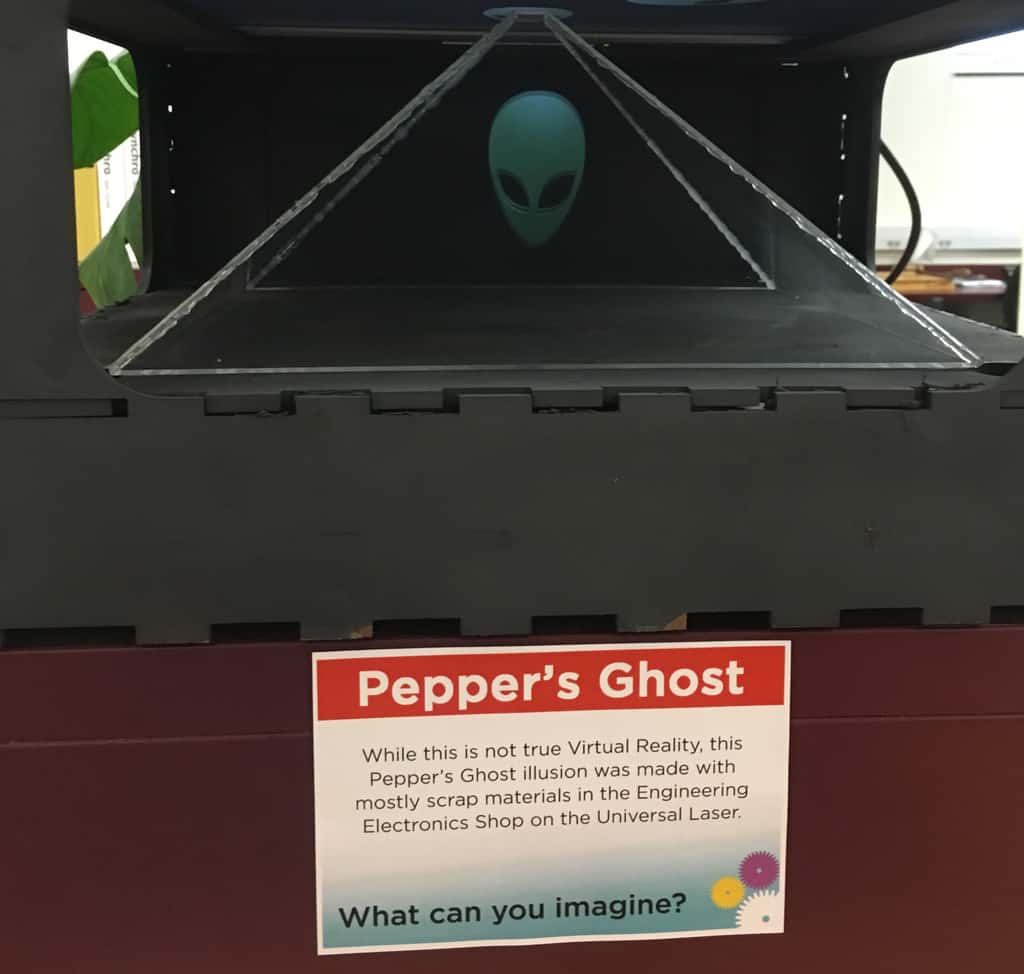
Pepper’s Ghost is a special effects technique for creating transparent and ghostly images! It was popularized in the 1800s by John Pepper. This effect has been used in theaters and haunted house since then! The photo below was created with mostly scrap materials in the Engineering Electronics Shop on the Universal laser. Stop by the Engineering Library and check it out. The images in our Pepper’s Ghost move and it rotates through several images.  Makezine has complete instructions on how to make a spooky ghost for your party! While the Pepper’s Ghost below is using a laptop, a computer or special equipment isn’t needed! If you are interested in a more elaborate hologram, How It’s Made : Season 1 & 2 (disc 1) will explain how a hologram is created from the beginning to end.
peppersghost_square

Pepper’s Ghost created in the Engineering Electronics Shop with mostly scrap materials.
 

Animotronic Eyes. Make: 3D Printing Projects.

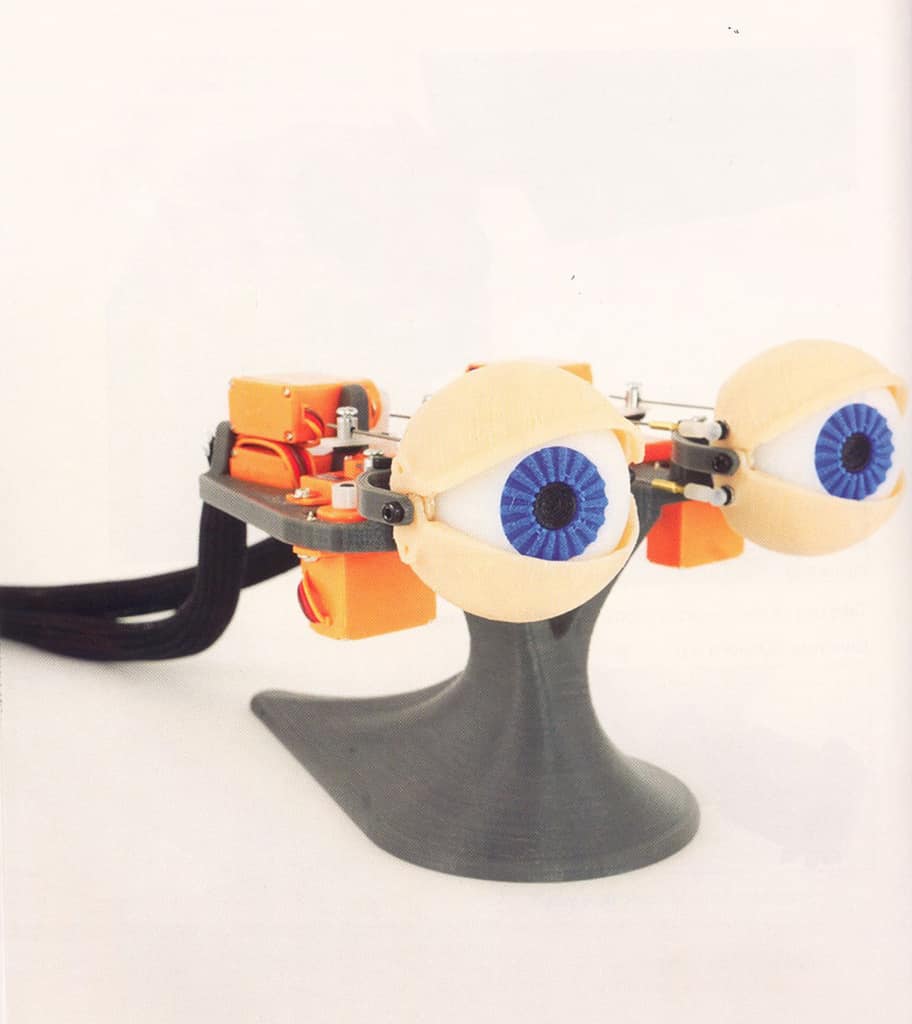
Animotronic Eyes. Make: 3D Printing Projects.

How about creating animatronic eyes? Make : 3D Printing Projects has step-by-step instructions with color illustrations and a parts list! What could be more fun than having a pair expressive, animatronic eyeballs at your party! (We have 3D scanners available in our Creative Space and the Engineering Machine Shop has 3D printers!)

Want to make both your own fog and fog machine? The fog “juice” is made with glycerin and water- which creates a dense vapor when  heated to the point of evaporation, which then becomes cloudy when it hits the room temperature air. (For more info on evaporation check our resources, including: Liquid-vapor phase-change phenomena : an introduction to the thermophysics of vaporization and condensation processes in heat transfer equipment.) The fog machine is quite simple also! All it takes is a large candle (with multiple wicks), a small aluminum pie plate, and the top of a 2-liter plastic soda bottle! You will want to be careful about where you place your fog machine – you definitely don’t want it to be tipped over!

Interested in learning about stage make-up? How It’s Made : Season 1 & 2 (disc 5)  has great information and shows the creation process. You’ll also be able to see the transformation of a young woman to an old woman. A full transformation mask can take a month or more to create and cost upwards of $10,000. Perhaps not the most cost effective for your Halloween party!

BWAHAHAHAHA!!

Resources:

How it’s made, Seasons 1 and 2. Discs 1 & 5. 2010. Silver Spring, MD : Discovery Communications. Engineering Library Circulation Desk video (Video Record 37144 DVD)

Harper, Gavin D.J. 2010. Holography projects for the evil genius. New York : McGraw Hill. Engineering Library TA1542 .H37 2010

Drumm, Brook. 2015. Make : 3D printing projects. San Francisco, CA : Maker Media, Inc. Engineering Library TS171.95 .D78 2016

How to Make a DIY Fog Machine for a Spooky Halloween. 2016. Popular Mechanics.

More Resources:

Iannini, Robert E. More electronic gadgets for the evil genius. 2006. New York : McGraw-Hill. Engineering Library TK9965 .I253 2006

The Pepper’s Ghost Illusion. 2016. instructables.com

Carey, V.P. 2008. Liquid-vapor phase-change phenomena : an introduction to the thermophysics of vaporization and condensation processes in heat transfer equipment Engineering Library TJ263 .C37 2008

Keith/Albee Vaudeville Collection in DIY History!

kadiy

The University of Iowa Libraries presents a wonderful and exciting opportunity for one and for all: The Keith/Albee Vaudeville Theater Collection in glorious DIY History! Now you too can step right up and take part in transcribing these exciting behind-the-scenes reports!

The first 24 books in the Keith/Albee collection, totaling 7,774 images, are now available for transcription in DIY History.  These initial volumes consist of typed theater managers’ reports, giving one a unique behind-the-scenes glimpse of vaudeville theater during its time. The managers give their own blunt impression of every act that has graced the Keith/Albee vaudeville stages, ranging wildly from lavish praise to scathing criticism. Included in these books are many people who later became legendary stars, such as W.C. Fields, Harry Houdini, and Buster Keaton.

page_64a

Page including internal review of Harry Houdini from Keith/Albee managers’ report book, March 9-December 14, 1908.

The Keith/Albee collection, one of the most important and comprehensive vaudeville archives in the country, has steadily become available in the Iowa Digital Library. This collection, spanning 150 over sized ledger volumes, documents several decades of vaudeville theater in New England. The Keith/Albee digitization project has been made possible by a generous Preservation and Access grant from the National Endowment for Humanities, with a projected completion date in 2017.

Start transcribing this collection here.

For more information contact:   Justin Baumgartner, Keith/Albee Digital Project Librarian, (319) 384-3431, justin-baumgartner@uiowa.edu