Skip to content
Skip to main content

Systematic Reviews | Free workshops @ Hardin Library

By Centre for Health Communication and Participation La Trobe University, Australasian Cochrane Centre [CC BY-SA 3.0 (http://creativecommons.org/licenses/by-sa/3.0)], via Wikimedia Commons

Are you interested in conducting a systematic review? We have two workshops to help you get started.

Step one-
Systematic Reviews: Nuts and Bolts of a Systematic Review

This class provides a framework for developing a literature search for a systematic review, including:

    • standards and criteria to consider
    • establishing a plan
    • registering a protocol,
    • developing a research question,
    • determining where to search
    • identifying search terms
    • reporting search strategies, and managing references.

 Thursday, November 1o, 2-3pm, Information Commons East, 2nd Floor, Hardin Library

Step two-

Systematic Reviews: Literature Searching for the Health Sciences

This class focuses on tips and techniques for carrying out a successful literature search in support of a health sciences systematic review. Topics include

    • techniques for developing search strategies
    • deciding which databases to search
    • how to seek out grey literature for a given topic
    • selecting journals for hand searching, documenting search strategies
    • saving and organizing references.

 Thursday, November 17, 2-3pm, Information Commons East, 2nd Floor, Hardin Library

Sign up for these workshops or request personal appointments online or by calling 319-335-9151.

By Centre for Health Communication and Participation La Trobe University, Australasian Cochrane Centre [CC BY-SA 3.0 (http://creativecommons.org/licenses/by-sa/3.0)], via Wikimedia Commons

By Centre for Health Communication and Participation La Trobe University, Australasian Cochrane Centre [CC BY-SA 3.0 (http://creativecommons.org/licenses/by-sa/3.0)], via Wikimedia Commons

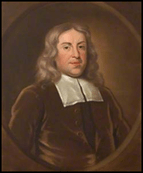
Francis Glisson | Anatomia Hepatis | November 2016 Notes from the John Martin Rare Book Room @Hardin Library

painting of Glisson

FRANCIS GLISSON (1597-1677). Anatomia hepatis. London: Typis DuGardianis, 1654.

painting of Glisson

Francis Glisson (1599?-1677)

Glisson was a graduate of Cambridge and Regius professor of physic there for more than forty years, although he was almost never in residence, as he carried on a busy medical practice in London.

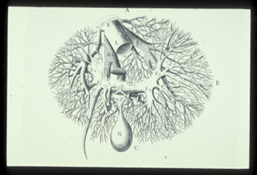
Glisson was a founder of the Royal Society and one-time president of the Royal College of Physicians. In this book he gives the first description of the capsule of the liver and describes its blood supply. Here, too, is the description of the sphincter of the bile duct.  In its time, the Anatomia hepatis was the most important treatise thus far on the physiology of the digestive system.

Our library owns a first edition of this work, as well as a 1681 edition published in The Hague.  Other editions came out in 1659 and 1665. Glisson also wrote books on rickets and the intestines.  For more information about Francis Glisson see the Oxford Dictionary of National Biography.

You may view this book in the John Martin Rare Book Room, Hardin Library for the Health Sciences. Make a gift to the Hardin Library for the Health Sciences by donating online or setting up a recurring gift with The University of Iowa Foundation.

drawing of liver

Image from first edition of Anatomia hepatis, 1654


Data Management for Researchers | Free workshop @Hardin Library | Wed., November 9, 2-3pm

Twitter

As a result of recent requirements to expand public access to the results of federally funded research, researchers in all disciplines are required to “better account for and manage the digital data resulting from federally funded research.”

The purpose of this workshop is to:

  • explain research data management and its importance,
  • help identify some common data management issues, and
  • learn about best practices and resources that are available to assist researchers.

Wednesday, November 9th, 2:00 – 3:00pm (Information Commons East, 2nd Floor, Hardin Library for the Health Sciences)

Register online or by calling 319-335-9151

graphic Hardin Library

Special Collections News 11/03/2016

Victoria dressed as Elsa for HalloweenNewsfeed: Edward Gorey’s Reawakening of Dracula by Hannah Hacker: http://blog.lib.uiowa.edu/speccoll/2016/10/24/edward-goreys-reawakening-of-dracula/ Keith/Albee Vaudeville Collection in DIY History! by Justin Baumgartner:  http://blog.lib.uiowa.edu/preservation/2016/10/26/keithalbee-vaudeville-collection-in-diy-history/ 15 Vintage Recipe Collections to Explore (Check out #7!): http://mentalfloss.com/article/87451/15-vintage-recipe-collections-explore […]

SpringerMaterials Database

SpringerMaterials

The UI Libraries now has access to the SpringerMaterials database, a unique and authoritative source SpringerMaterialsfor numerical and graphical data on the properties of materials. This database contains more than 500,000 online documents covering 3,000 properties spread across 250,000 materials and chemical systems. It consists of seven major parts:

  1. The Landolt-Börnstein Series: 461 volumes, 290,000 substances and 1,400,000 citations.
  2. The complete Linus Pauling Files: A comprehensive database covering the properties of inorganic solid phases and containing 255,000 documents with 129,000 interactive structures.
  3. A subset of the Dortmund Database of Software and Separation Technology which covers the thermophysical properties of pure liquids and binary mixtures, with 472,000 data points.
  4. An Adsorption Database covering over 1,500 reversible, equilibrium isotherms on 66 adsorbents.
  5. A Polymer Thermodynamics database containing 30,000 data points covering 150 polymers.
  6. The MSI Database, a collection of 4,100 critically evaluated reports on binary/ternary elemental systems and 7,500 interactive phase diagrams.
  7. Corrosion Database, compiled from various literature sources by the National Institute of Standards and Technology (NIST), contains 24,724 unique records of corrosion rates/ratings of 1,026 different materials in 288 different environments, under various exposure conditions.

You can use SpringerMaterials to search by keyword, element, or structure. There’s also a separate Corrosion Search. If you’re not sure what you’re looking for, you can also browse by collection. Property information is already collected and formatted, so you don’t need to retrieve and analyze the primary literature sources.

UI students, faculty, and staff can access SpringerMaterials on or off-campus using the links on the Libraries’ websites. It is linked from the Chemistry and Physics subject guides. It’s also listed in the A-Z Databases list and in the library catalog. If you are off-campus, you will be prompted to login with your HawkID and password.

If you have questions about SpringerMaterials or would like a demonstration, please contact the Sciences Library for assistance.

SpringerMaterials Database

SpringerMaterials

The UI Libraries now has access to the SpringerMaterials database, a unique and authoritative source SpringerMaterialsfor numerical and graphical data on the properties of materials. This database contains more than 500,000 online documents covering 3,000 properties spread across 250,000 materials and chemical systems. It consists of seven major parts:

  1. The Landolt-Börnstein Series: 461 volumes, 290,000 substances and 1,400,000 citations.
  2. The complete Linus Pauling Files: A comprehensive database covering the properties of inorganic solid phases and containing 255,000 documents with 129,000 interactive structures.
  3. A subset of the Dortmund Database of Software and Separation Technology which covers the thermophysical properties of pure liquids and binary mixtures, with 472,000 data points.
  4. An Adsorption Database covering over 1,500 reversible, equilibrium isotherms on 66 adsorbents.
  5. A Polymer Thermodynamics database containing 30,000 data points covering 150 polymers.
  6. The MSI Database, a collection of 4,100 critically evaluated reports on binary/ternary elemental systems and 7,500 interactive phase diagrams.
  7. Corrosion Database, compiled from various literature sources by the National Institute of Standards and Technology (NIST), contains 24,724 unique records of corrosion rates/ratings of 1,026 different materials in 288 different environments, under various exposure conditions.

You can use SpringerMaterials to search by keyword, element, or structure. There’s also a separate Corrosion Search. If you’re not sure what you’re looking for, you can also browse by collection. Property information is already collected and formatted, so you don’t need to retrieve and analyze the primary literature sources.

UI students, faculty, and staff can access SpringerMaterials on or off-campus using the links on the Libraries’ websites. It is linked from the Chemistry and Physics subject guides. It’s also listed in the A-Z Databases list and in the library catalog. If you are off-campus, you will be prompted to login with your HawkID and password.

If you have questions about SpringerMaterials or would like a demonstration, please contact the Sciences Library for assistance.

Free webinar on Team-Based Learning | Wed. November 9, 1-2:30pm

image MLA logo

Hardin Library for the Health Sciences will host the Medical Library Association’s webinar, Don’t Flip Out! Exploring Team-Based Learning on Wednesday, November 9th, 1:00-2:30 pm in Room 401 Hardin Library.

Presenter Rebecca Graves, Educational Services Librarian at the J. Otto Lottes Health Sciences Library at the University of Missouri–Columbia

Presenter Rebecca Graves, Educational Services Librarian at the J. Otto Lottes Health Sciences Library at the University of Missouri–Columbia

Explore common (and not so common) learning theories, how they’ve influenced us and how we can use them to design our teaching.

After attending this session, participants will be able to:

  • define instructional design and learning theory
  • distinguish among the schools of learning theory
  • identify and adapt a theory that best fits their values and students
  • draft an instructional plan using a learning theory

If you plan to attend, please register online.  No charge for attending.  Questions?  Contact Matt Regan.

Individuals with disabilities are encouraged to attend all University of Iowa-sponsored events. If you are a person with a disability who requires a reasonable accommodation in order to participate in this program please call Matt Regan at 319-384-1407.


Database Trial: Bureau van Dijk’s Orbis and Zephyr databases

default-blog-pic-business

Trial access has been arranged to Bureau van Dijk’s  Orbis and Zephyr databases. The trials end November 28th.   The Database trials are available on or off campus through IP range and UI Libraries proxy service.

Orbis is a global dataset for public and private company information. It allows researchers to access financials, ownership structures, patents, board members, and more in one standardized resource.

Zephyr is the most comprehensive database of M&A, IPO, private equity, and venture capital deals. Not only are researchers able to track large public deals they are able to track private to private and cross border deals as well.


Please send comments/feedback about the databases to Kimberly-bloedel@uiowa.edu.

Happy 130th Birthday to the Statue of Liberty!!

Happy 130th Birthday, Lady Liberty!!
sol_ellis_island

“Keep, ancient lands, your storied pomp!” cries she
With silent lips. “Give me your tired, your poor,
Your huddled masses yearning to breathe free,
The wretched refuse of your teeming shore.
Send these, the homeless, tempest-tossed to me,
I lift my lamp beside the golden door!

from Emma Lazarus’ sonnet “New Colossus”

Those widely recognized words come from the sonnet New Colossus by Emma Lazarus. She wrote it for a fundraising auction raising money for the pedestal upon which the Statue of Liberty now sits. The sonnet is not, as many assume, on the tablet that is held in her hand. The tablet is inscribed with JULY IV MDCCLXXVI (July 4, 1776), which is the day the United States adopted the Declaration of Independence. A plaque with the entire New Colossus poem is inscribed and mounted inside the pedestal of the statue.

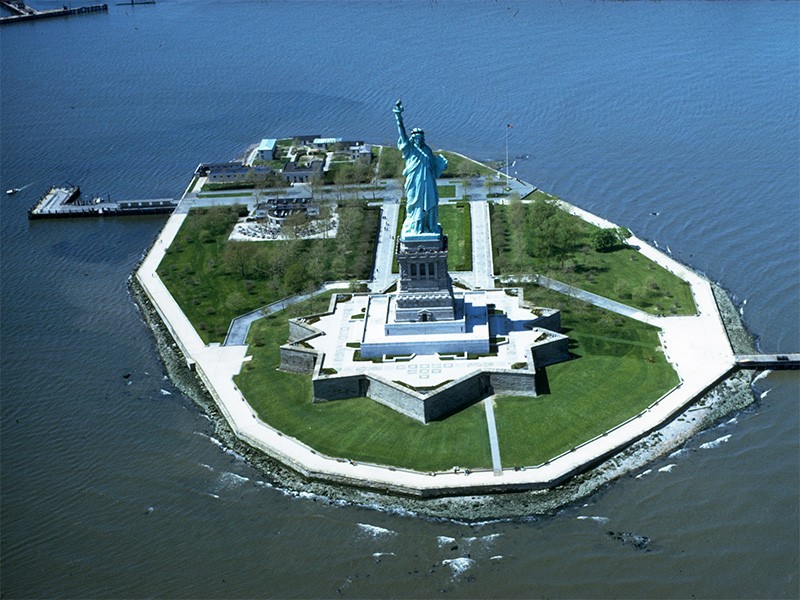
The Statue of Liberty stands on Liberty Island in Upper New York Bay and the entrance to New York. She has been welcoming visitors and immigrants to New York City since 1886! She was designed by Frédéric Auguste Bartholdi, a French sculptor, and built by Gustave Eiffel (yes, that Eiffel!), and dedicated on October 28, 1886. She was originally known as Liberty Enlightening the World.

It is said that the idea of the monument came about in an after-dinner conversation between Bartholdi and Edouard René de Laboulaye (an abolitionist and supporter of the Union during the Civil War). Others claim this is just legend, but legend or not, Laboulaye wanted to honor the Union victory and proposed a gift be built for the United States on the behalf of France. The Statue of Liberty represents the Roman goddess, Libertas. She holds a torch, a ‘tabula ansata’ (a tablet evoking the law), and a broken chain lies at her feet. The broken chain is said to be a symbol of the movement away from slavery.
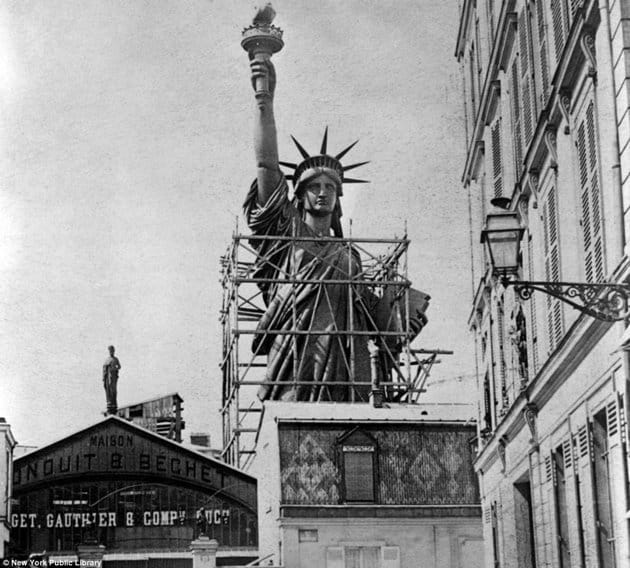
sof_under_constructionThe Statue of Liberty was the tallest metal statue in the world at that time. It was constructed of copper sheets and used Bartholdi’s 9-ft model. It was shipped – in 350 carefully marked pieces and packed in 214 crates – to New York City in 1885, reassembled, and dedicated in 1886. The Statue was reassembled on the pedestal in 4 months.

She originally served as a lighthouse, but in 1901 the operation was transferred from the United States Lighthouse Board to the War Department. The monument’s original boundaries were within Fort Wood, but were enlarged to encompass all of Bledsoe’s Island in 1937. In 1956 the name was changed to Liberty Island and in 1965 Ellis Island became part of the National Park Service (NPS). The base of the statue is an 11-pointed star, part of old Fort Wood and the 154-ft pedestal, built through American funding, is made of concrete faced with granite.

Renovation, which was completed in October 2012 (in time for 126th anniversary), added three new elevators and upgraded the stairs from the top of the pedestal to the crown and were among the $30 million “Life and Safety Upgrades.” Visitors in wheelchairs and other accessibility issues are now able to reach one of the observation decks at the top of the pedestal for the first time. A NPS official estimated that the renovations will allow 26,000 more people to visit the interior of the monument annually. In order to reach the crown from the top of the pedestal, visitors without accessibility issues must climb 393 steps.

Another renovation is a sophisticated rescue elevator which is used for emergency and maintenance activities and is the only elevator installed within the statue. It reaches from the pedestal to the crown and replaces an elevator that was over 30 years old. Public access to the balcony surrounding the torch has been closed since 1916 for safety reasons.

Fun Facts:

  • There are replicas of the Statue in more than 20 countries, the most notable of which are found in Paris, France and on the Las Vegas Strip.
  • Andy Warhol’s painting of the “Statue of Liberty” from his Pop Art series is estimated to be worth more than $35 million.
  • When winds are strong (around 50 miles-per-hour), Lady Liberty can sway up to 3 inches with her torch swaying up to 5 inches.
  • With a size 879 shoe, the Statue of Liberty might just have the largest feet on earth.
  • Lady Liberty has many film credits including – but certainly not limited to – The Saboteur, Titanic, Planet of the Apes, Independence Day, and The Day After Tomorrow.
  • It is believed that Lady Liberty is struck by lightning around 600 times each year.
  • The Statue of Liberty’s nose is 4 ft. 6 in.
  • The crown has seven points, representing the seven seas and seven continents. Each individual ray of the crown weighs about 150 pounds, and measures up to 9 ft.


Resources:

Motion Control: Statue of Liberty rescue elevator. April 1, 2013. Control Engineering. April 2013. Volume 60, Issue 4, pages 20-21.

Kelpin, Sarah. June 17, 2015 #The10: 10 Fun Facts About the Statue of Liberty on Its 130th birthday. Travel About Media Group Ltd.

Topic Page: Statue of Liberty. The Columbia Encyclopedia, © Columbia University Press 2016. Credo Reference.

Statue of Liberty. wikipedia.com Date Accessed Oct. 26, 2016

How Tall is the Statue of Liberty? Howtallisthestatueofliberty.org Date Accessed Oct. 26, 2016

The New Colossus by Emma Lazarus. Poetry Foundation, 2016.

The Statue of Liberty – Ellis Island, Foundation, Inc. The Statue of Liberty – Ellis Island Foundation, Inc. Date Accessed October 27, 2016


Other Resources:

Statue of Liberty Under Construction. Arvind Pariti. Arvind’s. Date Accessed Oct. 26, 2016

Liberty Island Chronology. Happy 100th birthday, National Park Service! National Park Service, U.S. Department of the Interior. Date Accessed October 27, 2016.

Blakemore, Erin. Nov. 24, 2015. The Statue of Liberty Was Originally a Muslim Woman. Smithsonian.com


Happy 130th Birthday to the Statue of Liberty!!

happy_birthday_statue_of_liberty_square

Happy 130th Birthday, Lady Liberty!!

sol_ellis_island

“Keep, ancient lands, your storied pomp!” cries she
With silent lips. “Give me your tired, your poor,
Your huddled masses yearning to breathe free,
The wretched refuse of your teeming shore.
Send these, the homeless, tempest-tossed to me,
I lift my lamp beside the golden door!

from Emma Lazarus’ sonnet “New Colossus”

Those widely recognized words come from the sonnet New Colossus by Emma Lazarus. She wrote it for a fundraising auction raising money for the pedestal upon which the Statue of Liberty now sits. The sonnet is not, as many assume, on the tablet that is held in her hand. The tablet is inscribed with JULY IV MDCCLXXVI (July 4, 1776), which is the day the United States adopted the Declaration of Independence. A plaque with the entire New Colossus poem is inscribed and mounted inside the pedestal of the statue.

The Statue of Liberty stands on Liberty Island in Upper New York Bay and the entrance to New York. She has been welcoming visitors and immigrants to New York City since 1886! She was designed by Frédéric Auguste Bartholdi, a French sculptor, and built by Gustave Eiffel (yes, that Eiffel!), and dedicated on October 28, 1886. She was originally known as Liberty Enlightening the World.

It is said that the idea of the monument came about in an after-dinner conversation between Bartholdi and Edouard René de Laboulaye (an abolitionist and supporter of the Union during the Civil War). Others claim this is just legend, but legend or not, Laboulaye wanted to honor the Union victory and proposed a gift be built for the United States on the behalf of France. The Statue of Liberty represents the Roman goddess, Libertas. She holds a torch, a ‘tabula ansata’ (a tablet evoking the law), and a broken chain lies at her feet. The broken chain is said to be a symbol of the movement away from slavery.

sof_under_constructionThe Statue of Liberty was the tallest metal statue in the world at that time. It was constructed of copper sheets and used Bartholdi’s 9-ft model. It was shipped – in 350 carefully marked pieces and packed in 214 crates – to New York City in 1885, reassembled, and dedicated in 1886. The Statue was reassembled on the pedestal in 4 months.

She originally served as a lighthouse, but in 1901 the operation was transferred from the United States Lighthouse Board to the War Department. The monument’s original boundaries were within Fort Wood, but were enlarged to encompass all of Bledsoe’s Island in 1937. In 1956 the name was changed to Liberty Island and in 1965 Ellis Island became part of the National Park Service (NPS). The base of the statue is an 11-pointed star, part of old Fort Wood and the 154-ft pedestal, built through American funding, is made of concrete faced with granite.

Renovation, which was completed in October 2012 (in time for 126th anniversary), added three new elevators and upgraded the stairs from the top of the pedestal to the crown and were among the $30 million “Life and Safety Upgrades.” Visitors in wheelchairs and other accessibility issues are now able to reach one of the observation decks at the top of the pedestal for the first time. A NPS official estimated that the renovations will allow 26,000 more people to visit the interior of the monument annually. In order to reach the crown from the top of the pedestal, visitors without accessibility issues must climb 393 steps.

Another renovation is a sophisticated rescue elevator which is used for emergency and maintenance activities and is the only elevator installed within the statue. It reaches from the pedestal to the crown and replaces an elevator that was over 30 years old. Public access to the balcony surrounding the torch has been closed since 1916 for safety reasons.

Fun Facts:

  • There are replicas of the Statue in more than 20 countries, the most notable of which are found in Paris, France and on the Las Vegas Strip.
  • Andy Warhol’s painting of the “Statue of Liberty” from his Pop Art series is estimated to be worth more than $35 million.
  • When winds are strong (around 50 miles-per-hour), Lady Liberty can sway up to 3 inches with her torch swaying up to 5 inches.
  • With a size 879 shoe, the Statue of Liberty might just have the largest feet on earth.
  • Lady Liberty has many film credits including – but certainly not limited to – The Saboteur, Titanic, Planet of the Apes, Independence Day, and The Day After Tomorrow.
  • It is believed that Lady Liberty is struck by lightning around 600 times each year.
  • The Statue of Liberty’s nose is 4 ft. 6 in.
  • The crown has seven points, representing the seven seas and seven continents. Each individual ray of the crown weighs about 150 pounds, and measures up to 9 ft.


Resources:

Motion Control: Statue of Liberty rescue elevator. April 1, 2013. Control Engineering. April 2013. Volume 60, Issue 4, pages 20-21.

Kelpin, Sarah. June 17, 2015 #The10: 10 Fun Facts About the Statue of Liberty on Its 130th birthday. Travel About Media Group Ltd.

Topic Page: Statue of Liberty. The Columbia Encyclopedia, © Columbia University Press 2016. Credo Reference.

Statue of Liberty. wikipedia.com Date Accessed Oct. 26, 2016

How Tall is the Statue of Liberty? Howtallisthestatueofliberty.org Date Accessed Oct. 26, 2016

The New Colossus by Emma Lazarus. Poetry Foundation, 2016.

The Statue of Liberty – Ellis Island, Foundation, Inc. The Statue of Liberty – Ellis Island Foundation, Inc. Date Accessed October 27, 2016


Other Resources:

Statue of Liberty Under Construction. Arvind Pariti. Arvind’s. Date Accessed Oct. 26, 2016

Liberty Island Chronology. Happy 100th birthday, National Park Service! National Park Service, U.S. Department of the Interior. Date Accessed October 27, 2016.

Blakemore, Erin. Nov. 24, 2015. The Statue of Liberty Was Originally a Muslim Woman. Smithsonian.com