Skip to content
Skip to main content

Caribbean Studies in Video: The Banyan Archive – Trial ended 8 February 2017

Banyan Productions has produced a film library of the highest international standards, covering documentary, drama, music, dance, and much more, spanning the past 40 years. With more than 1,100 hours of exclusive programming, Caribbean Studies in Video brings the oral and visual history of the people, culture, society, and identity of the Caribbean people, by the Caribbean people to the forefront.

Please send additional comments to Lisa Gardinier.

Caribbean Studies in Video: The Banyan Archive – Trial ends 8 February 2017

Banyan Productions has produced a film library of the highest international standards, covering documentary, drama, music, dance, and much more, spanning the past 40 years. With more than 1,100 hours of exclusive programming, Caribbean Studies in Video brings the oral and visual history of the people, culture, society, and identity of the Caribbean people, by the Caribbean people to the forefront.

Please send additional comments to Lisa Gardinier.

Preservation and Archiving Special Interest Group 2016

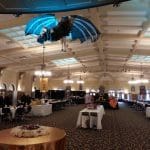
As a new librarian, I appreciate the privilege that my residency at the University of Iowa’s Preservation and Conservation department affords me; aside from the professional expectations of any other position, I’m encouraged to explore gaps in my LIS education and professional interests. However, there is never enough time to learn everything! Professional conferences are invaluable, particularly in this stage of my career, for continuing education and exposure to adjacent areas of focus in librarianship. Imagine my excitement when I learned that that 2016’s PASIG fall meeting would be in NYC. Yes, I WAS overjoyed. PASIG’s conference was envisioned as both a sharing and learning opportunity for preservation and archiving professionals at all levels, as well as those outside of the LIS profession, such as developers.

Founded in 2007, the practice-centered meeting focuses on questions and considerations as well as solutions, but keeps it light on theory. Too often, professional meetings and conferences’ pre-assumption of broad audience understanding and heavy use of LIS-centered jargon can leave one feeling intimidated and behind the pack. Day one at PASIG directly addressed the issue and leveled the plane in preparation for the deep dives to follow – all without an additional cost and additional travel accommodations of a “pre-conference.”  About half of the estimated 300 participants attended boot camp the first day, which serves as both an introduction, overview, and a refresher.

Sessions following the boot camp covered topics along the spectrum of the 3rd age of digital preservation, as well as preservation and archiving in relation to reference rot, new media, social justice, and the environmental impacts of digital preservation and professional responsibilities, among others. Though vendors were well-represented at the conference, the mix of professionals and scholars were the highlight of the conference. Presenters and lightning round speakers from libraries, archives, museums, universities, and cross-institutional partnerships shared case studies, challenges, successes, and pitfalls to avoid.

As always, librarians and archivists put together a lovely fete for attendants. Our hosts at MoMa arranged an after-hours reception and tours of two works that were recently treated by their Media Conservation department. Media Conservator Kate Lewis gave a tour of Teiji Furuhashi’s 1994 immersive work, Lovers. After we experienced the piece, conserved to maintain the integrity of Furuhashi vision as well as its condition in 1994, we were allowed a peek at the required wiring and networked coordinating components of sound and motion. After discussing the guaranteed obsolesce of hardware currently in use and the knowledge management in place in anticipation of treatment needed in 20 years, we moved on to Nan Goldin’s Ballad of Sexual Dependency (1979-2004). Peter Oleksik spoke of the use and conservation challenges of the work before we viewed MoMa’s iteration of the installation.

By conference close, I felt that I had valuable information and references to bring back to Iowa. By far, PASIG 2016 was the most useful professional conference I’ve attended thus far. Next year’s PASIG meeting will be in Oxford.
Preservation and Archiving Special Interest Group 2016

As a new librarian, I appreciate the privilege that my residency at the University of Iowa’s Preservation and Conservation department affords me; aside from the professional expectations of any other position, I’m encouraged to explore gaps in my LIS education and professional interests. However, there is never enough time to learn everything! Professional conferences are invaluable, particularly in this stage of my career, for continuing education and exposure to adjacent areas of focus in librarianship. Imagine my excitement when I learned that that 2016’s PASIG fall meeting would be in NYC. Yes, I WAS overjoyed. PASIG’s conference was envisioned as both a sharing and learning opportunity for preservation and archiving professionals at all levels, as well as those outside of the LIS profession, such as developers.

Founded in 2007, the practice-centered meeting focuses on questions and considerations as well as solutions, but keeps it light on theory. Too often, professional meetings and conferences’ pre-assumption of broad audience understanding and heavy use of LIS-centered jargon can leave one feeling intimidated and behind the pack. Day one at PASIG directly addressed the issue and leveled the plane in preparation for the deep dives to follow – all without an additional cost and additional travel accommodations of a “pre-conference.”  About half of the estimated 300 participants attended boot camp the first day, which serves as both an introduction, overview, and a refresher.

Sessions following the boot camp covered topics along the spectrum of the 3rd age of digital preservation, as well as preservation and archiving in relation to reference rot, new media, social justice, and the environmental impacts of digital preservation and professional responsibilities, among others. Though vendors were well-represented at the conference, the mix of professionals and scholars were the highlight of the conference. Presenters and lightning round speakers from libraries, archives, museums, universities, and cross-institutional partnerships shared case studies, challenges, successes, and pitfalls to avoid.

As always, librarians and archivists put together a lovely fete for attendants. Our hosts at MoMa arranged an after-hours reception and tours of two works that were recently treated by their Media Conservation department. Media Conservator Kate Lewis gave a tour of Teiji Furuhashi’s 1994 immersive work, Lovers. After we experienced the piece, conserved to maintain the integrity of Furuhashi vision as well as its condition in 1994, we were allowed a peek at the required wiring and networked coordinating components of sound and motion. After discussing the guaranteed obsolesce of hardware currently in use and the knowledge management in place in anticipation of treatment needed in 20 years, we moved on to Nan Goldin’s Ballad of Sexual Dependency (1979-2004). Peter Oleksik spoke of the use and conservation challenges of the work before we viewed MoMa’s iteration of the installation.

By conference close, I felt that I had valuable information and references to bring back to Iowa. By far, PASIG 2016 was the most useful professional conference I’ve attended thus far. Next year’s PASIG meeting will be in Oxford.
Preservation and Archiving Special Interest Group 2016

As a new librarian, I appreciate the privilege that my residency at the University of Iowa’s Preservation and Conservation department affords me; aside from the professional expectations of any other position, I’m encouraged to explore gaps in my LIS education and professional interests. However, there is never enough time to learn everything! Professional conferences are invaluable, particularly in this stage of my career, for continuing education and exposure to adjacent areas of focus in librarianship. Imagine my excitement when I learned that that 2016’s PASIG fall meeting would be in NYC. Yes, I WAS overjoyed. PASIG’s conference was envisioned as both a sharing and learning opportunity for preservation and archiving professionals at all levels, as well as those outside of the LIS profession, such as developers.

Founded in 2007, the practice-centered meeting focuses on questions and considerations as well as solutions, but keeps it light on theory. Too often, professional meetings and conferences’ pre-assumption of broad audience understanding and heavy use of LIS-centered jargon can leave one feeling intimidated and behind the pack. Day one at PASIG directly addressed the issue and leveled the plane in preparation for the deep dives to follow – all without an additional cost and additional travel accommodations of a “pre-conference.”  About half of the estimated 300 participants attended boot camp the first day, which serves as both an introduction, overview, and a refresher.

Sessions following the boot camp covered topics along the spectrum of the “3rd age of digital preservation,” as well as preservation and archiving in relation to reference rot, new media, social justice, and the environmental impacts of digital preservation and professional responsibilities, among others. Though vendors were well-represented at the conference, the mix of professionals and scholars were the highlight of the conference. Presenters and lightning round speakers from libraries, archives, museums, universities, and cross-institutional partnerships shared case studies, challenges, successes, and pitfalls to avoid.

As always, librarians and archivists put together a lovely fete for attendants. Our hosts at MoMa arranged an after-hours reception and tours of two works that were recently treated by their Media Conservation department. Media Conservator Kate Lewis gave a tour of Teiji Furuhashi’s 1994 immersive work, Lovers. After we experienced the piece, conserved to maintain the integrity of Furuhashi vision as well as its condition in 1994, we were allowed a peek at the required wiring and networked coordinating components of sound and motion. After discussing the guaranteed obsolesce of hardware currently in use and the knowledge management in place in anticipation of treatment needed in 20 years, we moved on to Nan Goldin’s Ballad of Sexual Dependency (1979-2004). Peter Oleksik spoke of the use and conservation challenges of the work before we viewed MoMa’s iteration of the installation.

By conference close, I felt that I had valuable information and references to bring back to Iowa. By far, PASIG 2016 was the most useful professional conference I’ve attended thus far. Next year’s PASIG meeting will be in Oxford.
Finals Week at the Sciences Library

You’re getting ready for Finals Week, and so is the Sciences Library! The following special activities will be available all week (Mon., Dec. 12 – Fri., Dec. 16)!:

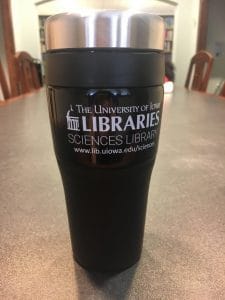
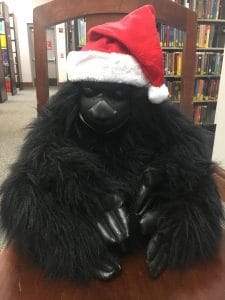
  1. Missing Mascot Mug Giveaway – Our mascot, Chauncey, is missing! Find him in the Library, bring him to the service desk, and win a free Sciences Library travel mug (while supplies last)!Travel mugChauncey
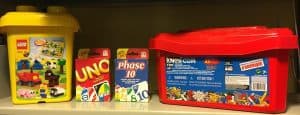
  2. Legos, K’Nex, and coloring – Take a study break and relax with building games and coloring pages/crayons!toys and games
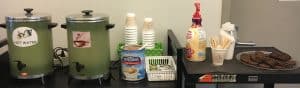
  3. Free coffee, tea, and treats – We always put out free coffee and tea to help fuel your studies, but Finals Week is special, so we have treats too! Pam is making her famous mini brownies!coffee and treats

We’ll be open from 8:30 a.m. – 10 p.m., Monday through Thursday, and 8:30 a.m. – 5 p.m. on Friday. Join us!


Finals Week at the Sciences Library

You’re getting ready for Finals Week, and so is the Sciences Library! The following special activities will be available all week (Mon., Dec. 12 – Fri., Dec. 16)!:

  1. Missing Mascot Mug Giveaway – Our mascot, Chauncey, is missing! Find him in the Library, bring him to the service desk, and win a free Sciences Library travel mug (while supplies last)!Travel mugChauncey
  2. Legos, K’Nex, and coloring – Take a study break and relax with building games and coloring pages/crayons!toys and games
  3. Free coffee, tea, and treats – We always put out free coffee and tea to help fuel your studies, but Finals Week is special, so we have treats too! Pam is making her famous mini brownies!coffee and treats

We’ll be open from 8:30 a.m. – 10 p.m., Monday through Thursday, and 8:30 a.m. – 5 p.m. on Friday. Join us!


Special Collections News & Updates 12/8/2016

20161207_110017News of Interest: Something Really Cool that You’ve Never Heard Of  http://blog.admissions.uiowa.edu/mina/2016/12/something-really-cool-that-youve-never-heard-of/ Before & After Treatment: Keith’s New Theatre clipping book  http://blog.lib.uiowa.edu/preservation/2016/12/01/before-after-treatment-keiths-new-theatre-clipping-book/ Events: Arthur Bonfield, “The Why, How, What, and […]


The birth of mankinde , othwise named the woman’s booke | December 2016 Notes from the John Martin Rare Book Room @Hardin Library

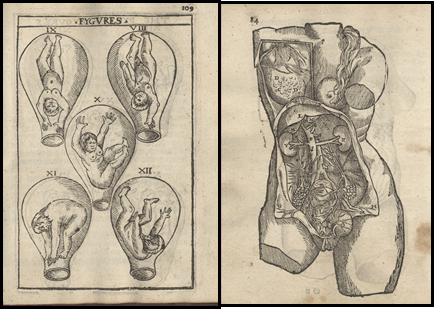
from The birth of mankinde, 1604

EUCHARIUS RÖSSLIN (d. 1526). The birth of mankinde, otherwise named the woman’s booke. Set foorth in English by Thomas Raynalde. London: Thomas Adams, [1604].

Based on the Latin version, De partu hominis was translated and published by Richard Jonas (fl. 1540).  The next English edition to appear was published by Thomas Raynalde. Raynalde borrowed freely from other authors and included several anatomical plates and descriptive text from Vesalius’ Fabrica. There were over ten subsequent editions of Raynalde’s translation.

English midwives and physicians were largely dependent on this book for guidance in the practice of obstetrics until the Eighteenth Century.  In addition to obstetrics, the book covers infant care, nursing, and the diseases of infancy. Illustrations of the birth chair, the lying-in chamber, and various positions of the fetus in utero are seen for the first time and are the earliest obstetrical illustrations printed from wood blocks.  This book was the first printed English book on the subject of midwifery.

You may view this book in the John Martin Rare Book Room, Hardin Library for the Health Sciences. Make a gift to the Hardin Library for the Health Sciences by donating online or setting up a recurring gift with The University of Iowa Foundation.

from The birth of mankinde, 1604

from The birth of mankinde, 1604