Skip to content
Skip to main content

Melt That Ice!

We haven’t had a lot of ice and snow here in Eastern Iowa,
but winter isn’t over yet!

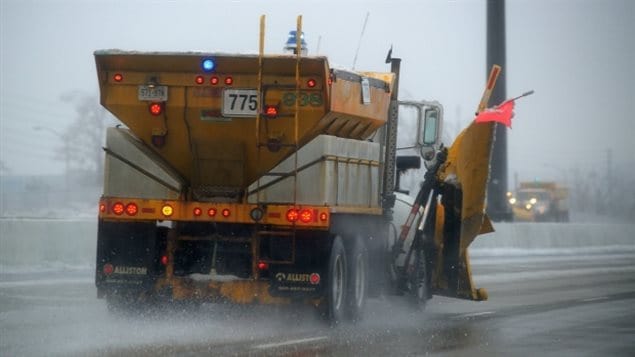
150409_y50lz_rci-m-salt-truck-back_sn635


When we think of those big trucks with the plows, clearing and de-icing our roads, we often call them “sand trucks.” But there is much more than simply sand in those trucks. You know the white stains you get on your shoes and the hem of your pants? Those stains are the result of the salt which is also used for de-icing roads and walkways.

Road salt lowers the freezing point of water, which thaws the ice and allows vehicle tires to reach the pavement for traction. Salt does make winter driving safer, but also leads to corrosion on vehicles – both cars and the road maintenance trucks. The rust and corrosion occurs on the underside of the vehicles making it hard to detect. It is recommended that consumers use car washes – with an under carriage spray – on a regular basis.

A road maintenance truck is made of many different components – not just steel, but many softer metals that can be found in the wiring and other places on the truck. More and more liquid de-icers are being used and they more easily penetrate the nooks and crannies of the truck’s underside, causing more corrosion. There are several methods which are used to minimize the corrosion – coatings, additives, and cleansing techniques. Another option is to do nothing, and accept the lessened equipment lifetime.

The chemicals that are used in the sand and salt mixture are formulated for different temperatures and types of snow.

The effectiveness of a de-icer is measured by the range of temperature in which it provides de-icing in a reasonable length of time. So, after the truck goes by, how long do you need to wait before the roads are safer to travel? Generally that time-frame is about 15-20 minutes.

Different chemicals have differing temperatures at which they are most effective. Calcium Chloride is effective at the lowest temperature, as seen below.

  1. Calcium Chloride (-25o F)
  2. Magnesium Chloride (5o F)
  3. Sodium Acetate (5o F)
  4. Calcium Magnesium Acetate (5oF)
  5. Potassium Chloride (12o F)
  6. Urea (15o F)
  7. Sodium Chloride (20-22o F)
  8. Various Blends (usually 20-22o F)

Here’s an interesting fact: in the United States and Canada, more salt is used on snow and ice than with cooking! Every year, nearly 140 pounds of salt per person are applied to roadways in the US alone. That amounts to over 20 million tons of salt. And that doesn’t include the use of salt on sidewalks, walkways or parking lots!
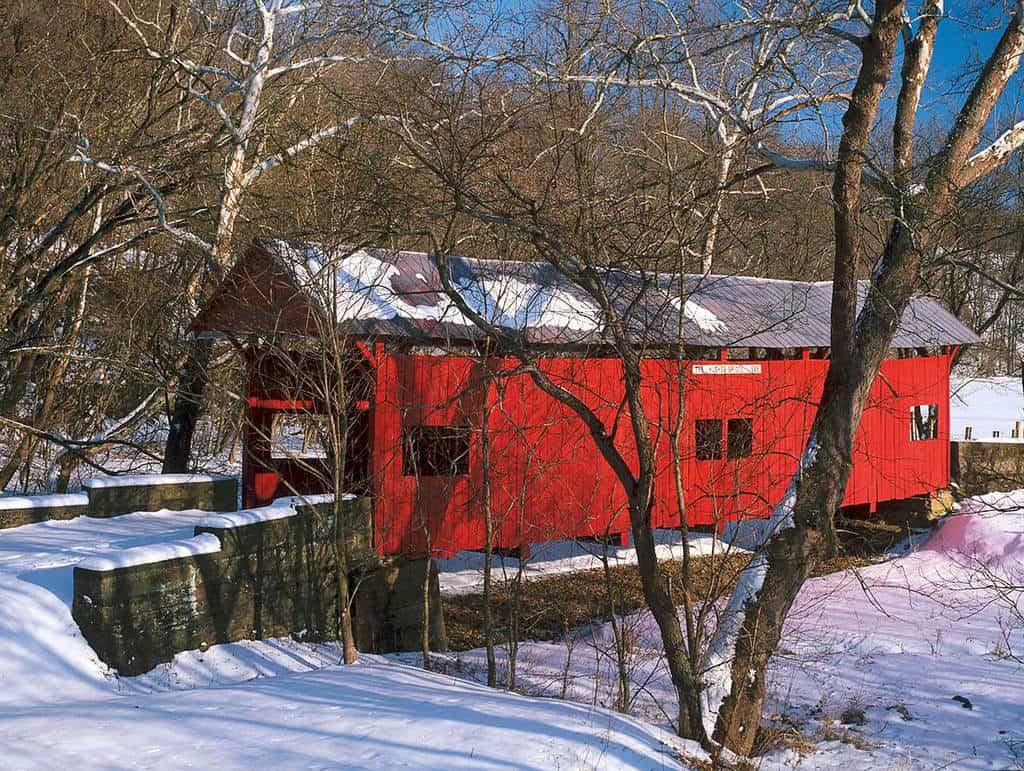
We sometimes hear the words “snow and ice control.” How is it possible to “control” snow and ice? Interestingly enough, there is a “heat island” effect around major metropolitan areas. The heat that is emitted by those major cities can modify the climate enough that the amount of snowfall is reduced or rain (or freezing rain) falls instead of snow. You’ve heard of covered bridges? They were – and are – built to protect bridges from snow and ice. Ever wonder why bridges are more slippery than the roadways? Both the roadway and the underside of bridges are exposed to the cold, making them more susceptible to ice – those covered bridges protect the top, making the bridges that much safer!

Sand, salt and chemicals are the common ways to de-ice roadways. However, there are some new methods that are gaining traction (see what I did there?). You may have heard that beet juice and brine – cheese brine – are being used to de-ice roadways. A company in Indiana is distributing a sugar beet molasses-based product that is mixed with rock salt. The mixture helps rock salt melt ice below the 15o limit. We know from our pancake and waffle experiences that syrup and molasses are very sticky. That is actually an advantage – that stickiness helps prevent the rock salt from bouncing off roadways as cars drive past.

And, cheese brine? Wisconsin (the “cheese state”) is turning to cheese brine to help with icy roads – it helps keep roads from freezing. Cheese brine is a farm waste product so the Wisconsin DOT often gets the brine for free. The downside is there are environmental concerns about effects on rivers and lakes if significant amounts were to enter the waterways. Another downside is, well, there’s an odor…
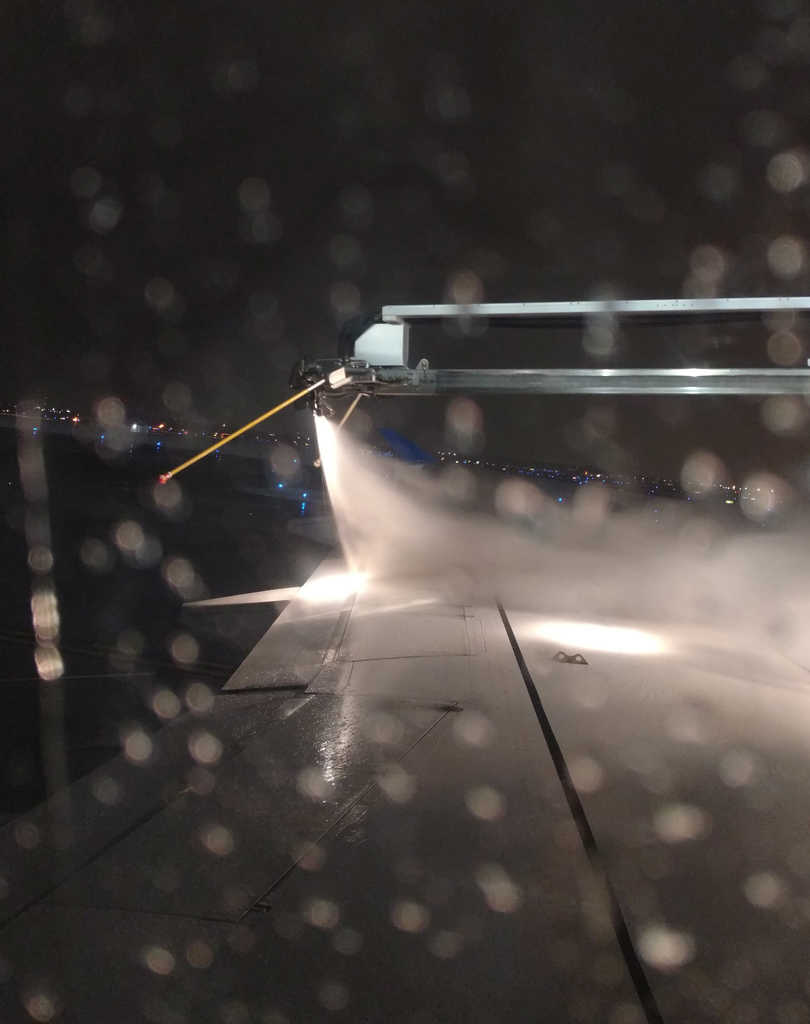
Airplane de-icer in action – taken through a snowy plane window.

Of course roads aren’t the only things that need to be de-iced. A patent for “Method and device for de-icing trains” was granted in 2013. A patent for “deicer composition” created for “melting ice on and defrosting a surface such as a windshield of a car” was granted in 1963. And a patent for “De-icing of aircraft” was granted in 2008.

Want a little help clearing your sidewalks and driveways, check out the Autonomous Snowplow Competition!


In case an autonomous snow plow isn’t in your future, there are now a number of different types of snow shovels, snow blowers, and ecological- and pet-friendly de-icers for your driveways and walkways.

Keep a safe distance from road maintenance vehicles, watch for ice and snow on uncleared roadways and be sure to clear your driveway and walkways – in other words – be safe this winter!

Resources:

Nixon, Wilfrid A. 2009. Investigation of materials for the reduction and prevention of corrosion on highway maintenance equipment. Iowa City, IA : IIHR-Hydroscience and Engineering, University of Iowa. Engineering Library TE233 .N59 2009

Novotny, Vladimir. 1999. Urban and highway snowmelt : minimizing the impact on receiving water. Alexandria, VA : Water Environment Research Foundation. Engineering Library TD427 .S24 U73 1999

Conger, Steven M. 2005. Winter highway operations : a synthesis of highway practice. Washington, D.C. : Transportation Research Board National Research Council. Engineering Library TE220.5 .C6544 2005

Trulove. Rex. 9 Astonishing Facts You Don’t know about Snow and Winter. Dec. 15, 2016. Niume

Minsk, L. David. 1998. Snow and ice control manual for transportation facilities. New York : McGraw-Hill. Engineering Library TE220.5 .M56 1998

Rodman, Kristen, AccuWeather.com Staff Writer. Hidden hazards of road salt: car corrosion can take a toll.  Dec. 15, 2016. accuweather.com 

How Beet Juice Is Helping Keep Roads Safe This Winter. Rhodan, Maya, Sanburn, Josh. February 10, 2014. Time

The Ion Autonomous Snowplow Competition : Saint Paul, MN – Winter Carnival, January 28-31, 2016.

De-icing of aircraftPatent

Method and device for de-icing of trains. Patent

Other Resources:

Wilfrid A. Nixon. Emeritus Faculty, Civil and Environmental Engineering. The University of Iowa College of Engineering.

Nick, Jean. Remove Winter Salt Stains From Pretty Much Anything. Deb. 11, 2016. Rodale’s Organic Life, Rodale Inc. 

Snowplow with deicer spray attachment. Patent

Deicer composition. Patent

Work  Zone Safety. 2017MN Department of Transportation.

Ice & Snow: Take It Slow. Winter travel information. 2016Iowa Department of Transportation.. 2016.

Qiu, Lin and Nixon, Wilfrid A.  Performance measurement for highway winter maintenance operations. 2009. Iowa City, IA : IIHR-Hydroscience and Engineering, University of Iowa. Engineering Library TE220.5 .Q228 2009

Dore, Guy. Cold regions pavement engineering. 2009. Reston, VA : ASCE Press. Engineering Library TE251 .D67 2009

Breaking the ice. 2006 (accessed Dec. 2016). Peters Chemical Company.

Mergen, Zhaia. Day in the life of snowplow operator. Feb. 8, 2016. Iowa DOT blog
 

Melt That Ice!

We haven’t had a lot of ice and snow here in Eastern Iowa,
but winter isn’t over yet!

150409_y50lz_rci-m-salt-truck-back_sn635


When we think of those big trucks with the plows, clearing and de-icing our roads, we often call them “sand trucks.” But there is much more than simply sand in those trucks. You know the white stains you get on your shoes and the hem of your pants? Those stains are the result of the salt which is also used for de-icing roads and walkways.

Road salt lowers the freezing point of water, which thaws the ice and allows vehicle tires to reach the pavement for traction. Salt does make winter driving safer, but also leads to corrosion on vehicles – both cars and the road maintenance trucks. The rust and corrosion occurs on the underside of the vehicles making it hard to detect. It is recommended that consumers use car washes – with an under carriage spray – on a regular basis.

A road maintenance truck is made of many different components – not just steel, but many softer metals that can be found in the wiring and other places on the truck. More and more liquid de-icers are being used and they more easily penetrate the nooks and crannies of the truck’s underside, causing more corrosion. There are several methods which are used to minimize the corrosion – coatings, additives, and cleansing techniques. Another option is to do nothing, and accept the lessened equipment lifetime.

The chemicals that are used in the sand and salt mixture are formulated for different temperatures and types of snow.

The effectiveness of a de-icer is measured by the range of temperature in which it provides de-icing in a reasonable length of time. So, after the truck goes by, how long do you need to wait before the roads are safer to travel? Generally that time-frame is about 15-20 minutes.

Different chemicals have differing temperatures at which they are most effective. Calcium Chloride is effective at the lowest temperature, as seen below.

  1. Calcium Chloride (-25o F)
  2. Magnesium Chloride (5o F)
  3. Sodium Acetate (5o F)
  4. Calcium Magnesium Acetate (5oF)
  5. Potassium Chloride (12o F)
  6. Urea (15o F)
  7. Sodium Chloride (20-22o F)
  8. Various Blends (usually 20-22o F)

Here’s an interesting fact: in the United States and Canada, more salt is used on snow and ice than with cooking! Every year, nearly 140 pounds of salt per person are applied to roadways in the US alone. That amounts to over 20 million tons of salt. And that doesn’t include the use of salt on sidewalks, walkways or parking lots!

We sometimes hear the words “snow and ice control.” How is it possible to “control” snow and ice? Interestingly enough, there is a “heat island” effect around major metropolitan areas. The heat that is emitted by those major cities can modify the climate enough that the amount of snowfall is reduced or rain (or freezing rain) falls instead of snow. You’ve heard of covered bridges? They were – and are – built to protect bridges from snow and ice. Ever wonder why bridges are more slippery than the roadways? Both the roadway and the underside of bridges are exposed to the cold, making them more susceptible to ice – those covered bridges protect the top, making the bridges that much safer!

Sand, salt and chemicals are the common ways to de-ice roadways. However, there are some new methods that are gaining traction (see what I did there?). You may have heard that beet juice and brine – cheese brine – are being used to de-ice roadways. A company in Indiana is distributing a sugar beet molasses-based product that is mixed with rock salt. The mixture helps rock salt melt ice below the 15o limit. We know from our pancake and waffle experiences that syrup and molasses are very sticky. That is actually an advantage – that stickiness helps prevent the rock salt from bouncing off roadways as cars drive past.

And, cheese brine? Wisconsin (the “cheese state”) is turning to cheese brine to help with icy roads – it helps keep roads from freezing. Cheese brine is a farm waste product so the Wisconsin DOT often gets the brine for free. The downside is there are environmental concerns about effects on rivers and lakes if significant amounts were to enter the waterways. Another downside is, well, there’s an odor…

Airplane de-icer in action – taken through a snowy plane window.

Of course roads aren’t the only things that need to be de-iced. A patent for “Method and device for de-icing trains” was granted in 2013. A patent for “deicer composition” created for “melting ice on and defrosting a surface such as a windshield of a car” was granted in 1963. And a patent for “De-icing of aircraft” was granted in 2008.

Want a little help clearing your sidewalks and driveways, check out the Autonomous Snowplow Competition!


In case an autonomous snow plow isn’t in your future, there are now a number of different types of snow shovels, snow blowers, and ecological- and pet-friendly de-icers for your driveways and walkways.

Keep a safe distance from road maintenance vehicles, watch for ice and snow on uncleared roadways and be sure to clear your driveway and walkways – in other words – be safe this winter!

Resources:

Nixon, Wilfrid A. 2009. Investigation of materials for the reduction and prevention of corrosion on highway maintenance equipment. Iowa City, IA : IIHR-Hydroscience and Engineering, University of Iowa. Engineering Library TE233 .N59 2009

Novotny, Vladimir. 1999. Urban and highway snowmelt : minimizing the impact on receiving water. Alexandria, VA : Water Environment Research Foundation. Engineering Library TD427 .S24 U73 1999

Conger, Steven M. 2005. Winter highway operations : a synthesis of highway practice. Washington, D.C. : Transportation Research Board National Research Council. Engineering Library TE220.5 .C6544 2005

Trulove. Rex. 9 Astonishing Facts You Don’t know about Snow and Winter. Dec. 15, 2016. Niume

Minsk, L. David. 1998. Snow and ice control manual for transportation facilities. New York : McGraw-Hill. Engineering Library TE220.5 .M56 1998

Rodman, Kristen, AccuWeather.com Staff Writer. Hidden hazards of road salt: car corrosion can take a toll.  Dec. 15, 2016. accuweather.com 

How Beet Juice Is Helping Keep Roads Safe This Winter. Rhodan, Maya, Sanburn, Josh. February 10, 2014. Time

The Ion Autonomous Snowplow Competition : Saint Paul, MN – Winter Carnival, January 28-31, 2016.

De-icing of aircraftPatent

Method and device for de-icing of trains. Patent

Other Resources:

Wilfrid A. Nixon. Emeritus Faculty, Civil and Environmental Engineering. The University of Iowa College of Engineering.

Nick, Jean. Remove Winter Salt Stains From Pretty Much Anything. Deb. 11, 2016. Rodale’s Organic Life, Rodale Inc. 

Snowplow with deicer spray attachment. Patent

Deicer composition. Patent

Work  Zone Safety. 2017MN Department of Transportation.

Ice & Snow: Take It Slow. Winter travel information. 2016Iowa Department of Transportation.. 2016.

Qiu, Lin and Nixon, Wilfrid A.  Performance measurement for highway winter maintenance operations. 2009. Iowa City, IA : IIHR-Hydroscience and Engineering, University of Iowa. Engineering Library TE220.5 .Q228 2009

Dore, Guy. Cold regions pavement engineering. 2009. Reston, VA : ASCE Press. Engineering Library TE251 .D67 2009

Breaking the ice. 2006 (accessed Dec. 2016). Peters Chemical Company.

Mergen, Zhaia. Day in the life of snowplow operator. Feb. 8, 2016. Iowa DOT blog
 

Pietro D’Abano | February 2017 Notes from the John Martin Rare Book Room @Hardin Library

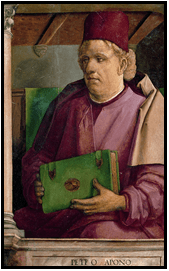
Pietro D’Abano painting by Justus van Gent

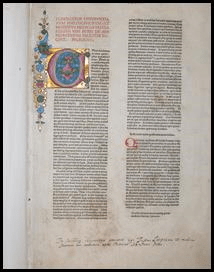
PIETRO d’ABANO (1250-1315?). Conciliator differentiarum philosophorum et medicorum. Venice: Gabriele di Pietro, for Thomas de Tarvisio, 1476.
Pietro d’Abano was an influential man of his time. A Paduan physician, philospher and astrologer, he was in demand for lectures and teaching.  Dante was among his pupils. For his heretical views he ran afoul of the Inquisition, but died before he could be executed.

The Conciliator is his greatest work. d’Abano presents the scattered medical knowledge, particularly from the Arabic and Grecian schools, in a series of questions with answers from both schools of thought.  d’Abano wanted truth to emerge and contradictions be resolved.  Among his important views presented in this book : air has weight, the heart is the source of veins and arteries, and that the brain is the source of nerves which convey sensation. The Library’s copy is decorated with two fine gilt and colored initials.

You may view this book in the John Martin Rare Book Room, Hardin Library for the Health Sciences. Make a gift to the Hardin Library for the Health Sciences by donating online or setting up a recurring gift with The University of Iowa Foundation.

PIETRO d’ABANO (1250-1315?). Conciliator differentiarum philosophorum et medicorum. Venice: Gabriele di Pietro, for Thomas de Tarvisio, 1476.

Pietro D’Abano | February 2017 Notes from the John Martin Rare Book Room @Hardin Library

Pietro D’Abano painting by Justus van Gent

PIETRO d’ABANO (1250-1315?). Conciliator differentiarum philosophorum et medicorum. Venice: Gabriele di Pietro, for Thomas de Tarvisio, 1476.
Pietro d’Abano was an influential man of his time. A Paduan physician, philospher and astrologer, he was in demand for lectures and teaching.  Dante was among his pupils. For his heretical views he ran afoul of the Inquisition, but died before he could be executed.

The Conciliator is his greatest work. d’Abano presents the scattered medical knowledge, particularly from the Arabic and Grecian schools, in a series of questions with answers from both schools of thought.  d’Abano wanted truth to emerge and contradictions be resolved.  Among his important views presented in this book : air has weight, the heart is the source of veins and arteries, and that the brain is the source of nerves which convey sensation. The Library’s copy is decorated with two fine gilt and colored initials.

You may view this book in the John Martin Rare Book Room, Hardin Library for the Health Sciences. Make a gift to the Hardin Library for the Health Sciences by donating online or setting up a recurring gift with The University of Iowa Foundation.

PIETRO d’ABANO (1250-1315?). Conciliator differentiarum philosophorum et medicorum. Venice: Gabriele di Pietro, for Thomas de Tarvisio, 1476.

Pro-Searching Tips Workshop

Pro-Searching Tips workshop

Wednesday, February 8 at 1-1:50 PM
Sciences Library, 102

This is your chance to learn how to search like a librarian! Bring your questions and learn how to save time and effort by applying some simple search strategies. You’ll learn how to improve your search results, which resources are the best bets for different types of information, and how to refine your results when you get overwhelmed. And you’ll learn how to evaluate the quality of the information you find, no matter where you find it.

Our workshops are open to everyone and there is no need to register. If you’re interested, but unable to attend this workshop, private appointments and webinars are available. Contact Sara Scheib for more information.

Individuals with disabilities are encouraged to attend all University of Iowa–sponsored events. If you are a person with a disability who requires a reasonable accommodation in order to participate in this program, please contact Sara Scheib in advance at sara-scheib@uiowa.edu.

Pro-Searching Tips Workshop

Pro-Searching Tips workshop

Wednesday, February 8 at 1-1:50 PM
Sciences Library, 102

This is your chance to learn how to search like a librarian! Bring your questions and learn how to save time and effort by applying some simple search strategies. You’ll learn how to improve your search results, which resources are the best bets for different types of information, and how to refine your results when you get overwhelmed. And you’ll learn how to evaluate the quality of the information you find, no matter where you find it.

Our workshops are open to everyone and there is no need to register. If you’re interested, but unable to attend this workshop, private appointments and webinars are available. Contact Sara Scheib for more information.

Individuals with disabilities are encouraged to attend all University of Iowa–sponsored events. If you are a person with a disability who requires a reasonable accommodation in order to participate in this program, please contact Sara Scheib in advance at sara-scheib@uiowa.edu.

Special Collections News & Updates 2/2/2017

Students designing for Codex ConquestNews of Interest: Old Gold: Researching Seymour Gray Jr., civil rights activist and Hawkeye. UI archivist seeks info about 1965 alumnus. https://now.uiowa.edu/2017/01/old-gold-researching-seymour-gray-jr-civil-rights-activist-and-hawkeye Adventures in Book Studies: Taking a Class inside Special Collections […]

Special Collections News & Updates 2/2/2017

Students designing for Codex ConquestNews of Interest: Old Gold: Researching Seymour Gray Jr., civil rights activist and Hawkeye. UI archivist seeks info about 1965 alumnus. https://now.uiowa.edu/2017/01/old-gold-researching-seymour-gray-jr-civil-rights-activist-and-hawkeye Adventures in Book Studies: Taking a Class inside Special Collections […]

Conversation Center: Improve Communication

Pomerantz Business Library

The Rhetoric Department’s Conversation Center comes to the Business Library!  The Center brings American and International students together to improve language skills and understanding.  Schedule an appointment through the Center’s site.  Participants meet Monday-Friday, 4-6 pm, at the tables near study room J.

Conversation Center: Improve Communication

Pomerantz Business Library

The Rhetoric Department’s Conversation Center comes to the Business Library!  The Center brings American and International students together to improve language skills and understanding.  Schedule an appointment through the Center’s site.  Participants meet Monday-Friday, 4-6 pm, at the tables near study room J.