Skip to content
Skip to main content

Move over, fried twinkies: Iowa State Fair historic recipe contest

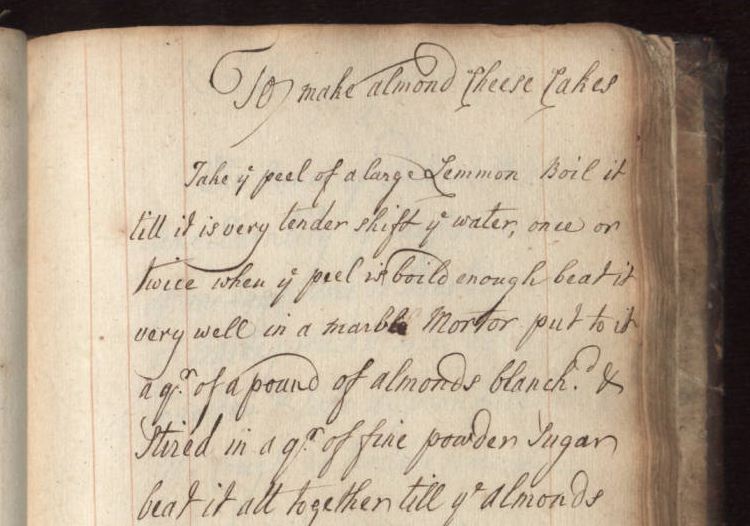
To make almond cheese cakes, Ann Kenwrick cookbook, 1770 | Szathmary Culinary Manuscripts

To make almond cheese cakes, Ann Kenwrick cookbook, 1770 | Szathmary Culinary Manuscripts

This August, traditional Fair fare such as deep-fried Twinkies, Snickers, and sticks of butter will be making room for even more old-school treats featured in the UI-sponsored Szathmary Historic Recipes cooking contest. Up for recreating 18th- and 19th-century desserts like Almond Cheese Cakes, Summer Mince Pies, and Mrs. Matson’s Marlborough Pies? Unintimidated by units of measurements such as “about the bigness of an Egg” and ingredients like “Orange Flower water”? Then see contest details on page 53 of the Iowa State Fair food booklet.

And to get in a historic mood, please visit our Iowa Digital Library Pinterest site to view a selection of digitized State Fair cartoons and clippings, ca. 1894-2004.

Iowa State Fair @ IDL Pinterest

Iowa State Fair @ IDL Pinterest

Thinnest Solar Cell Yet!

THINNEST LIGHT ABSORBER PUSHES SOLAR ENERGY LIMITS
Researchers at Stanford have developed the thinnest, most efficient solar cell yet. The wafer is dotted with trillions of round particles of gold, nanodots about 14 nanometers thick. A nanometer is a billionth of a meter.
More info >> http://tinyurl.com/mp7xe84“Achieving complete absorption of visible light with a minimal amount of material is highly desirable for many applications, including solar energy conversion to fuel and electricity. Our results show that it is possible for an extremely thin layer of material to absorb almost 100 percent of incident light of a specific wavelength.””�
– Stacey Bent, a professor of chemical engineering at Stanford and co-author of the study
More info >> http://news.stanford.edu/news/2013/july/thinnest-light-absorber-071813.html

Image credit: EARTH-The Operators’ Manual
_____________________________________________
“The important thing is to not stop questioning.”
– Albert Einstein

[M]

THINNEST LIGHT ABSORBER PUSHES SOLAR ENERGY LIMITS<br /><br />
Researchers at Stanford have developed the thinnest, most efficient solar cell yet. The wafer is dotted with trillions of round particles of gold, nanodots about 14 nanometers thick. A nanometer is a billionth of a meter.<br /><br />
More info >> http://tinyurl.com/mp7xe84</p><br />
<p>“Achieving complete absorption of visible light with a minimal amount of material is highly desirable for many applications, including solar energy conversion to fuel and electricity. Our results show that it is possible for an extremely thin layer of material to absorb almost 100 percent of incident light of a specific wavelength."”<br /><br />
— Stacey Bent, a professor of chemical engineering at Stanford and co-author of the study<br /><br />
More info >> http://news.stanford.edu/news/2013/july/thinnest-light-absorber-071813.html</p><br />
<p>Image credit: EARTH-The Operators’ Manual<br /><br />
_____________________________________________<br /><br />
"The important thing is to not stop questioning."<br /><br />
  — Albert Einstein</p><br />
<p>[M]” src=”https://fbcdn-sphotos-g-a.akamaihd.net/hphotos-ak-frc1/p320x320/998029_614414931922857_1105164468_n.png” width=”320″ height=”320″ /></div>
</div>
</div>
</div>
	</div><!-- .entry-content -->

	<footer class= Posted inUncategorized

Learn about trends in publishing with Hardin’s free workshop Wednesday, July 24

NIH Public Access, Open Access, Authors’ Rights, and Other Trends in Publishing: 

The NIH Public Access Policy, which assures that all articles arising from NIH-sponsored research are freely available within a year after publication, is the tip of the iceberg when it comes to changes in the scholarly publishing. Participants will learn more about these trends and to discuss experiences with publishing.

Our next session is:

An old Proverb says “That whom the Gods would destroy they first make mad.”

Joseph Culver Letter, July 21, 1863, Page 1

Head Quarters, Co. “A” 129th Regt. Ills. Vols.
Gallatin, Tenn., July 21st 1863

My Dear Wife

I have delayed writing for four days hoping to be able to answer your last two letters in person. An old Proverb says “That whom the Gods would destroy they first make mad.” Whether it will apply in my case or not cannot be determined, except as time may solve the problem.

Last week Genrl. Rosecrans was in Nashville1 & a few of the fortunate ones got permission to visit him & secured leave of absence to visit home. Flattered with a hope of success, I immediately sent in my petition but it arrived too late, as he spent but one day there, & I have been waiting very impatiently for it to reach him & receive his decision. After this long delay I can hardly hope for success, as it will fall into the hands of his aid whose orders prohibit the issue of any such document. I cannot say that I have no hope, but rather that the chances are growing very small in my favor. Let us wait & see.

I am sorry to inform you that Mrs. Smith is no better & but very little hope is entertained of her recovery.2 She is occupying the room you had at Kings. I saw her at noon to-day. She was scarcely able to speak & is entirely helpless. Everything is proceeding as usual.

I recd. a letter from Sister Hannah which I will enclose.3 They had not received my last letter & do not know where you are.

I will write as soon as my fate is decided if I am still to wait for the favorable opportunity. I hope you have entirely recovered from your illness & are enjoying yourself. I cannot write at length, but will either be with you soon or write a long letter. Till then Goodbye. May the richest of Heaven’s blessings rest upon you. Kiss Frankie & Mother [Murphy] for me & love to all.

Your affect. Husband
J. F. Culver
  1. General Rosecrans’ field headquarters were at Tullahoma. On July 18 the general was in Nashville. O. R., Ser. I, Vol. XXIII, pt. II, p. 542.
  2. Mrs. Margaret Smith was an invalid.
  3. Hannah Culver, in her six-page letter of July 9, had described in detail the occupation of Carlisle by Ewell’s corps, and the engagement on July 1 between the Rebel cavalry and Union militia. Hannah Culver to J.F.C., July 9, 1863, Culver Collection.

Clean Energy

Down On The Farm, Clean Energy Requirements Are Opportunities, Not Burdens

By Katie Valentine on Jul 18, 2013 at 3:23 pm


(Credit: AP/Ajit Solanki)

American farmers aren’t usually seen as champions of climate causes — in fact, they’re often known for their climate change skepticism. But farmers across the country have begun standing up for clean energy mandates in their states because they see them as an opportunity for profit in an increasingly uncertain industry. 

This year, at least 14 of the 29 states with renewable energy mandates, which require utility companies to purchase a certain amount of their energy from renewable sources, have considered bills to weaken or repeal the requirements, none of which have passed. That’s due in part to farmers, who have teamed up with environmentalists and other pro-green energy groups to push legislators to keep the mandates. Their voices, along with the voices of some local businesses and the prospect of new clean energy jobs, have made it difficult for local lawmakers to repeal the standards.

“It’s hard to be conservative when it affects your district,” Rep. Mike Hager, the majority whip in the North Carolina House, told the Wall Street Journal.

Farmers’ reasons for supporting the mandates are profit-based: some want to ensure they still have a healthy market for leasing their land to solar and wind companies, and others want to continue to harvest their animals’ waste as fuel. With the help of anaerobic digesters, hog farmers can capture the methane from pig waste and turn it into fuel, which they can use to power their equipment or sell to utility companies. North Carolina’s Renewable Energy and Energy Efficiency Portfolio Standard requires utilities in the state to purchase .2 percent of their fuel from hog waste by 2018 and 900,000 MWh from poultry waste by 2015 — requirements chicken and hog farmers don’t want to lose.

But regardless of their reasons, supporting renewable energy mandates, and thus ensuring that states uphold that portion of climate mitigation, makes sense for farmers, who are increasingly threatened by the effects of climate change. The 2012 U.S. drought hit the farming industry hard, with ranchers forced to sell their cattle herds and corn, wheat and soybean farmers suffering serious crop losses. Many farmers aren’t doing much better this summer: in the Midwest, the drought that began last year has ended with torrential rains, which, according to the New York Times, have “drowned corn and soybean plants, stunted their growth or prevented them from being planted at all.” Extreme drought and wildfires in New Mexico have helped cut the state’s cattle herd by more than half since 2008, and nowthreaten traditional, small-scale ranching most of all.

The farmers’ choice to take sides with the renewable energy industry is also another example of the surprising alliances being formed in the fight for clean energy. Earlier this month, members of the Atlanta Tea Party worked with clean energy advocates to help pass a solar requirement for Georgia Power, the state’s utility provider. The Tea Partiers — which have historically been dismissive of climate change — saw the requirement not as an example of undue government regulation but as an expansion of consumer choice. The Georgia Public Service Commission passed the solar requirement last week.

Service Interruption July 20 for Elsevier ScienceDirect and Scopus

Elsevier has informed us that Scopus and ScienceDirect (journals) will be unavailabe on Saturday, July 20, 2013 for 30 minutes, from approximately 6:00 pm to 6:30 pm, for scheduled maintenance.  They also warn that service disruptions such as slower response times and unexpected outages may occur through the day on Saturday.

If you have questions, please contact Hardin Library at lib-hardin@uiowa.edu or 319-335-9151.

What the Hectograph?!?!

hectohowto

This past weekend, the Zine Librarian (un)Conference happened here in Iowa City!  Amongst the lively discussions and seminars was a Historical Zine Making Technologies Workshop demonstrating and using obsolescent printing techniques including hectography, spirit duplication, and mimeography. You may be asking yourself, at this point, what the heck a hectograph is…and we’re here to show you.  By the end of this post, you too, could be on your way to zine making madness!

First, a hectograph a.ka. a gelatin duplicator or jellygraph, is a smooth piece of gelatin used to make multiple prints off a single master sheet.  We’ve got great examples in many of our zine collections, including, but not limited to the Hevelin collection.

Second, making and using is a hectograph is incredibly simple.  The only difficulties I had in using this out-moded technology was locating a couple of the supplies.  I recommend using internet shopping sites to track down the harder to find materials.

hectosupplies

.

.

  • 1 oz unflavored gelatin
  • 6 oz liquid glycerin (sometimes in the first aid aisle of the drugstore or supermarket…most easily obtained online)
  • about 1.5 cups of water
  • a pan slightly larger than 8.5″ x 11″ – I used an aluminum disposable pan
  • non-thermal transfer sheets (can be obtained from a tattoo supplier online, also referred to as Spirit transfer sheets)
  • paper (of the plain white copier variety, but I encourage experimenting with other types of paper)
  • optional:  transfer stencil pencils (also purchased from a tattoo supplier online)

I got the recipe for the gelatin here.


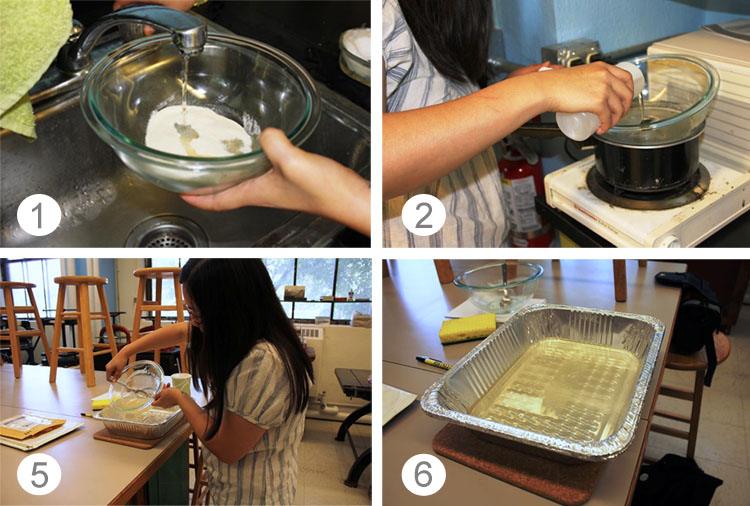
hectodirections


  1. Prior to beginning, pour the water over the gelatin and let it sit for a few hours (overnight is best)
  2. Heat the glycerin over medium/low heat – it just needs to be hot enough to melt the soaked gelatin
  3. Add the gelatin to the glycerin and gently stir until the gelatin is completely melted
  4. The mixture you end up with should be transparent and slightly yellow in color.
  5. Pour this mixture into the pan you want to print from – pour gently as to avoid making bubbles in the surface
  6. Let the pan sit and cool for a couple of hours until the gelatin has solidified…I got antsy and put the pan in the refrigerator for 20 minutes, which did the trick…

hectosteps copy

Printing

  1. Take your transfer paper and draw whatever you want to print on it with a firm hand and a hard stylus (a pen usually works).  Make sure that your lines are being transferred to your master sheet.  You can also use the transfer pencils to add designs directly to the master sheet.
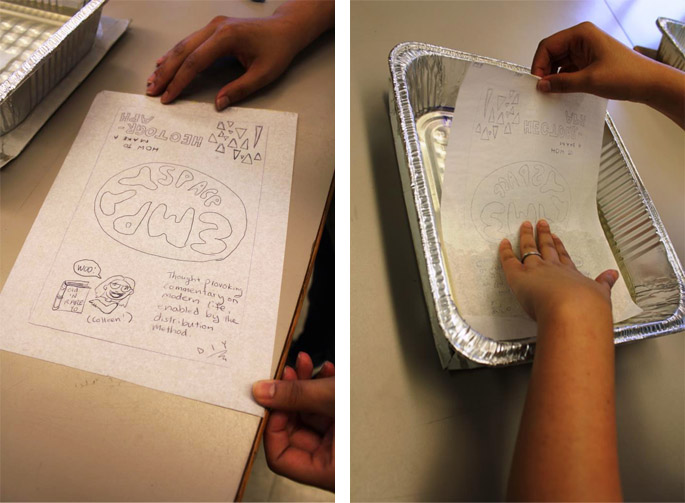
  2. Take your master sheet and place it FACE down on the solidified gelatin surface, making sure there are no bubbles and that there’s good contact between the gelatin and the master.  Let the master sit for awhile – I read somewhere that 1 second of sitting for every copy you want to make is a good rule of thumb.
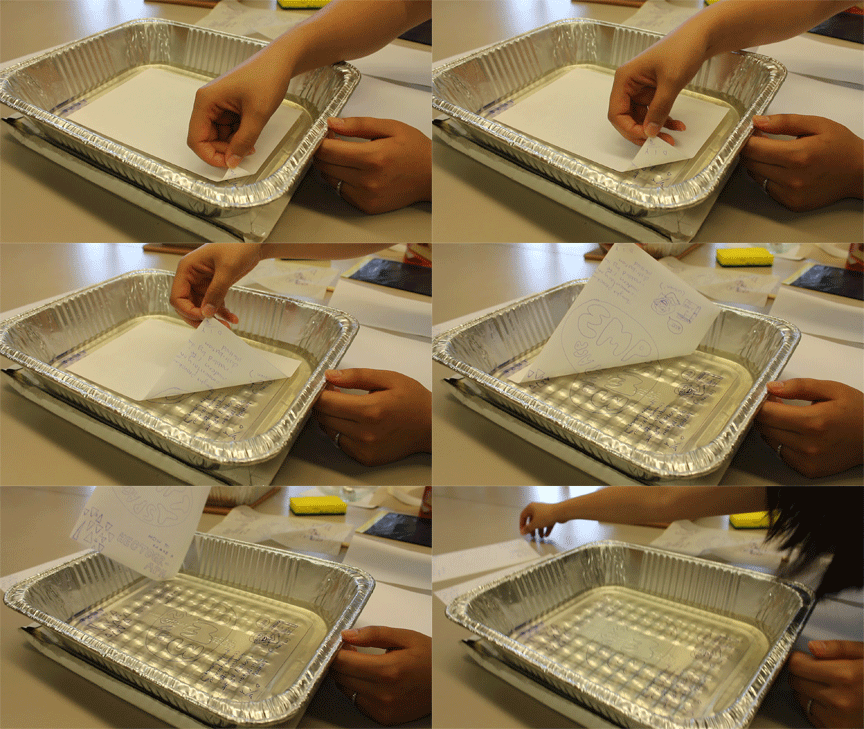
  3. Pull up your master sheet slowly – sometimes it helps to fold up a corner when placing it down so you have a tab to pull it up from
  4. You’re ready to print!  Place your paper on the gelatin surface and rub the back, much like the master sheet. Pull the sheet up and voila – you should have a duplicate of your master!
  5. Keep going until the prints get too light to read.
hectographtransfer

The master copy on transfer paper getting placed face down onto the gelatin surface.

hectograph

Pulling off a print

Look at this awesome gif that Colleen made of pulling up a print off the hectograph here.

IMG_1403

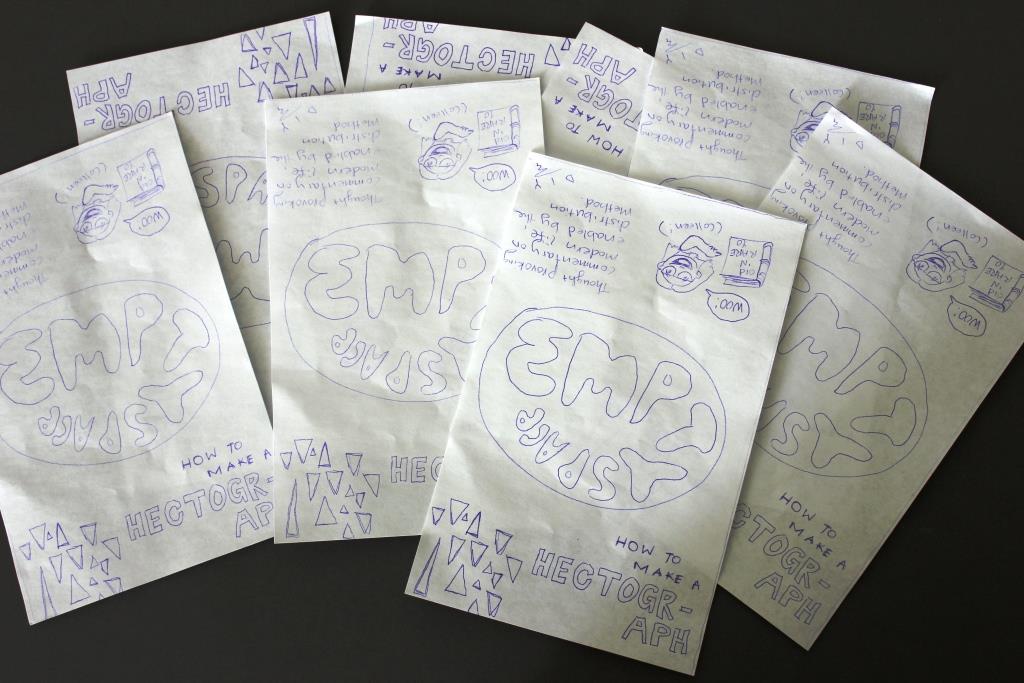
Here’s a sweet pile of prints we pulled from the hectograph!


I have received no intelligence of you yet nor any from home

Joseph Culver Letter, July 15, 1863, Page 1

Head Quarters, Co. “A”, 129th Regt. Ills.
Gallatin, Tenn., July 15th 1863

My Dear Wife

I have received no intelligence of you yet nor any from home. I recd. a letter from Bro. Johnie yesterday. He is quite well & in Camp at Shelbyville, Tenn. He writes for money, & I will send him $20 by mail this evening, though it is a great risk.

It still continues to rain. I found some of the small streams yesterday almost impassible. A continuous fog overhangs the Country.

We are all well. My anxiety to hear from you has become alarm for your Safety, and yet I cannot believe that if anything serious has happened our friends would not telegraph. May God’s blessings rest upon you. Kiss Frankie for me. I must close for this morning’s mail.

Farewell,

Your Affect. Husband
J. F. Culver

Searching for Gene, Genome & Protein Information? Get tips at Hardin on July 16th

Overwhelmed by the number of databases that the National Center for Biotechnology Information has to offer on genomes, genes and proteins? Wondering which database you should always start with? Would you like to learn how to set up an NCBI account to link articles in PubMed to records in other databases? Do you know about PubMed’s Gene Sensor? Are you familiar with the concept of linear navigation?

Learn all of these tips and more in this session that is designed for anyone who needs to search the NCBI databases for genomic information.

Our next session is
No time for a class?  We can help you with tips and support.