Skip to content
Skip to main content

Through good luck or by mistake, I am in camp this morning

Joseph Culver Letter, October 29, 1863, Page 1

Headqrs. Co. “A”, 129th Regt. Ills. Vol. Infty.
Nashville, Tenn., Octr. 29th 1863

My Dear Wife

Through good luck or by mistake, I am in camp this morning. I reported myself at 5 o’clock this morning in accordance with my orders, but no one came near me; so, after spending a couple of hours sitting upon a stump, I returned to camp to await another detail which I will not be surprised to see any minute.

While awaiting orders this morning, I stepped to the tent of Capt. Wilson, 79th Ohio, which is encamped at the north side of the R. R. Bridge.1 And, as it was some time after Reveille, I walked thoughtlessly in & saw a sight that reminded me of old times. His wife was with him, both in bed, sound asleep, his arms around her & her head pillowed on his bosom. I was almost selfish enough to envy them & turned around hastily and left the tent.

Both your letters of the 21st & 23rd with Charlie’s arrived this morning.2 Dr. Johnson tells me that those “Critical Eruptions” are very favorable omens, & that Frankie, unless he takes a relapse, is beyond danger; that, after the matter is all drawn out of his system, he will speedily recover. This is the best news I have had for a long time. I earnestly hope that you may ere this be relieved of the burden of your care & have opportunity to recruit your own health.

Charlie wishes me to understand that he has no friendly feeling towards “old Abe & his dear nigger.” I will write to him when I get opportunity & try and correct his opinions. I fear, if the sentiments expressed in his letter and Sister Lizzie’s are general among our relatives there, it may prove unpleasant for a Soldier’s wife.3 Yet as you never made any mention of expressed opinions there, I felt Satisfied that all was right. I felt somewhat alarmed on reading Charlie’s letter & wish to know now how my relatives stand. The task for you would be unpleasant and very unprofitable, so I will not ask it of you, but I formerly had correspondents in Carlisle which I know to be loyal, & I shall find out through them. If my Surmises are correct and any of them from enmity to the administration stand aloof from the interests of the Government, I want to know it, & woe be to them if I have the power to make them feel their willful error.

Smith got a photograph this morning, about the size of mine at home, for his wife & paid $7 for it. It is not good in my opinion.

The weather to-day is beautiful and pleasant. All the train guards but one that have been out over a week have returned last night. Mrs. Fitch is happy again.

The election in Livingston County is for County Treasurer, School Commr., and Surveyor. The Union candidates are Collins for Treas., Pearre for Commr., & Buck for Surveyor. The Copperheads are Maxwell for Treas. & the others I forget, & nobody seems to know which is no matter.4

The Army of the Cumberland, though devotedly attached to Rosecrans, feel that at least in the emergency at Chickamauga he was not adequate, & they will readily yield to another, hoping that in the coming Campaign, which is on an immense scale, Grant may be more successful. No one will ever replace Rosecrans in our affections, and, in all his associations with the Army up to Chattanooga, he will ever receive the highest commendations of praise. I cannot give you any extended history of affairs. At some other time I can say more.

I will send you the “Sentinel.” I sent one over a week ago. When you write to Remick, tell him to get Collins to continue the paper to your address. It has been paid for, & you may as well get it as not.

I gave you an account of the accident on the Rail Road in a former letter.5 I put the letter I wrote last night on the train this morning. I hope you will not yield to blues or homesickness. Happiness is very essential to health. I must close for drill. Give my love to all the family, and accept my heart’s best love for yourself. Kiss Frankie for me. May God bless you.

Your Affect. Husband
J. F. Culver

Tell me how Sister Lizzie likes her letter.6

  1. Capt. William Wilson had been mustered into service at Camp Dennison, Ohio, on Aug. 23, 1862, as captain of Company A, 79th Ohio. The regiment had been stationed at Gallatin, Buck Lodge, Lavergne, and Edgefield before being ordered to Nashville. The 79th Ohio was one of the five infantry and two cavalry regiments currently assigned to the Nashville garrison. O. R., Ser. I, Vol. XXXI, pt. I, p. 754; Reid, Ohio in the War, Vol. II, p. 455.
  2. Mary Culver’s letters of October 22 and 23, as well as Charlie’s, are missing from the Culver Collection.
  3. Sister Lizzie Zug had written, “We all love your wife very much, but I must tell you if you have changed your polaticks and gone with the Woolly heads as I have heard, I am affraid I will have to quarll with you.” At a recent Republican rally, a “man made a speech and said the war would not be over until we would all be made equil. Is this what you are fiting for? This very idea is disgusting?” Lizzie Zug to J.F.C., undated. Culver Collection.
  4. Marcellus E. Collins was a Pontiac lawyer; Nelson Buck, a 55-year-old, New York-born, Livingston County surveyor; Robert Maxwell, a 54-year-old, Virginia-born Livingston County farmer; and O. F. Pearre an Ohio-born attorney. When the voters went to the polls on Nov. 3, 1863, they elected the Republican candidates. History of Livingston Country p. 267.
  5. J.F.C.’s letter describing the train wreck is missing from the Culver Collection.
  6. J.F.C. had answered Sister Lizzie Zug’s letter, in which she had voiced her “disloyal sentiments,” on October 23.
Fortune favored me for once, & I went to Columbia, instead of Stevenson

Joseph Culver Letter, October 28, 1863, Letter 2, Page 1

Headqrs. Co. “A” 129th Ills. Vol. Infty.
Nashville, Tenn., Octr. 28th 1863

My Dear Wife

I wrote a hasty note to you this morning before I left, expecting to be absent several days, but fortune favored me for once, & I went to Columbia, instead of Stevenson, & consequently got home to-night.1 I have desired ever since the receipt of yours of the 19th inst. to write you a long letter2 but have signally failed. I shall possibly accomplish it to-night if sitting up late will do it. As I am on detail for the first extra train sent out, I may have to go in the morning; no one can tell, but to-night is my own if nothing happens. I will try at least to interest you, and if I can be instrumental in relieving your care or in anyway alleviating your trials, I will be happy indeed.

You told me in your letters of the 20th that you “live on my letters,” & I feel sorry that what few you have received since that time are short & unimportant. Your last received yesterday evening looks more hopeful than any late news, & I pray God that Frankie’s health may improve and your cares grow lighter. We cannot tell what the future may develop to us of joy or sorrow; yet the opportunity is offered for the strengthening of our Faith in Jesus, and the enlargement of our hopes. Two years ago we did not anticipate this sorrow. Then all looked prosperous, but are we less happy now? Had God in the dispensation of his Providence so ordered our afiairs that I were yet at home, who can tell but that some greater trial would have come to us. My heart responds to the sentiment expressed in your letter that in view of all the manifestations of God’s mercy & his goodness ever exercised toward me, with his promises and assurances for the future, I feel that I should not repine or murmer though the hand of affliction be laid heavily upon me. It would be well for me perhaps, if I were with you, not only to relieve you of a portion of your care but to profit by the chastisement God has doubtless wisely intended for our good.

My duties have been so unremitting and severe as to allow but little time for reflection. I feel very much worn down, both in mind and body, yet enjoy excellent health. The guarding of the trains was a light job at first. We made a trip in 3 days & both nights were spent within the lines of our troops where we could lay down and sleep. But of late our engines have become so much out of repair as to require from 4 to 8 days & running almost every night, which keeps us on constant watch.

Our trip to-day was very pleasant. The country through which the [rail]road passes is not thickly settled, but is very beautiful. Franklin is on the rout[e], which I described in a former letter.3 My guards were all of our own Company [A], which makes it very pleasant. Cooley was among the number, and it is the first duty he has done [since his release from the guard house]. He seems to be very happy.

I hear some trains coming in [from Stevenson], & I presume some of the boys will soon be in. Lt. McMurray has been out since last Tuesday, over a week, & Lt. Fitch has been gone a full week.4 His wife is very uneasy about him. She has been ordered to vacate the room they had rented & did not know where to go till his return. I think she is stopping with Mrs. Love.

I have no late news from Johnie, none since the last I sent you. I have not had time to answer the [Remick] girls’ letters yet, but will enclose some of them, as I cannot tell when I shall have opportunity to answer them. If I am so fortunate as to remain in camp to-morrow, I will try & write some. I recd. a letter this morning from Cousin Lucy J. Baker (formerly Dunmire).5 She is married to a gentleman who formerly went to school to me. He is a fine man & will make her a good husband though he was a widower & must have had quite a large family. She does not speak of having any family, however.

Quite a number of my scholars have gone to war, & many have died. Oh, what a record the closing of this war will present: of homes made desolate, families broken up, & of widows & orphans. All our relatives there are well. I will send you the letter as soon as answered.

I have not yet had time to write to Mother or Maggie. Lt. Smith says his wife is exceedingly anxious to see you. She regrets that she did not see things in their true light long ago & desires to make some reparation for her former conduct. I hope it may be lasting. Smith seems determined to keep up a constant broil in the company ever since his return [from furlough]. I am tried at times almost beyond measure, while I see no present remedy. He seems to forget everything that belongs to others’ happiness in his grasping ambition for promotion, & places himself only in a more disgusting position.

I have just recd. orders to report at the North R. R. Bridge to take charge of a forage train at 5 o’clock, A.M., which will be quite an early start. I cannot tell when I shall get home but possibly to-morrow night. I have not yet heard where the guard comes from.

We have no news from the front. Genl. Hooker has crossed the [Tennessee] river with his Army.6 We may possibly hear of him soon.

Give my love to all the family. I hope father’s health may continue to improve. When will Mother or Hannah write?

Let us, my Dear Wife, repose full confidence in the wisdom and mercy of our Heavenly Father. Though he chastise us, we will still love him. Though our trials be severe, yet we are hastening to our eternal home in Heaven. May God bless & keep you and continue his manifold blessings to us. Accept the sincere love

Your Affect. Husband
J. F. Culver

I shall devote a portion of the 3rd of next month to writing to you if I am in camp. By reference to the family record you can tell why.7 I have forgotten upon what day I may commemorate a like event for you. Please inform me in your next. I am looking anxiously for news from you.

Farewell,
J.F.C.

  1. The Central Alabama Railroad was operating south from Nashville to Columbia, and the 13th Wisconsin and 14th Michigan were posted at Franklin and Columbia. Magazines were being stockpiled by the Quartermaster Department should it be determined to reopen the railroad between Columbia and the Tennessee River, as a means of supplying General Sherman’s columns as they marched east from Cherokee and Eastport. Detachments from the 129th Illinois were required to guard the trains operating between Nashville and Columbia, as they were those running between Nashville and Stevenson. O. R., Ser. I, Vol. XXXI, pt. I, pp. 685, 755, 765.
  2. Mary Culver’s letter of October 19 is missing from the Culver Collection.
  3. J.F.C.’s letter describing Franklin is missing from the Culver Collection.
    On October 4, with Confederate cavalry striking toward the Nashville & Chattanooga Railroad, Colonel Case had been directed to hold the regiment ready to march at a moment’s notice: the men to carry three days’ rations in their haversacks and 100 rounds of ammunition. Three days later, with Wheeler’s column advancing west from Shelbyville, General Robert Granger ordered Colonel Case to march his regiment to the Chattanooga Depot and entrain his troops. One battalion was to take position at Franklin and the other would report to Col. Henry R. Mizner at Columbia.
    The train with the 129th aboard pulled out of the yards at 10 P.M., on the 7th and started south. One battalion detrained at Franklin about midnight and the second battalion, which included Company A, was run down to within eight miles of Columbia. There J.F.C. and his comrades got off the cars and marched to Columbia. When they arrived, they found the garrison preparing to resist an attack by Wheeler’s cavalry. The Rebels failed to appear, and the battalion on the 9th marched back to Franklin. On the 10th the entire regiment entrained and returned to Nashville. Grunert, History of the 129th Illinois, p. 37; Through the South with a Union Soldier, p. 86; Ward to Case, October 4, and Speed to Case, October 7, 1863, Regimental Papers, 129th Illinois, NA.
  4. Albert A. McMurray, a 36-year-old farmer, was mustered into service on Sept. 8, 1862, as a sergeant in Company C, 129th Illinois Infantry. Sergeant McMurray was commissioned 2d lieutenant of his company on March 25, 1863, at South Tunnel, Tennessee, and on May 25, 1865, he was promoted to captain. McMurray was wounded in the head at Lost Mountain, Ga., on June 15, 1864, and in the right leg at Peachtree Creek, Ga., July 20, 1864. Compiled Service Records of Union Soldiers, NA.
  5. The subject letter is missing from the Culver Collection.
  6. General Hooker had crossed the Tennessee River by the pontoon bridge at Bridgeport, on the morning of October 26, with most of the XI Corps and part of the XII Corps, and, pushing rapidly forward, occupied Lookout Valley. Meanwhile, General “Baldy” Smith had organized a force from the Army of the Cumberland. Fifteen-hundred soldiers were embarked at Chattanooga in small boats at 3 A.M. on the 27th, and dropped down the Tennessee nine miles to Brown’s Ferry. A second column, camped north of the river opposite Chattanooga, had marched across Moccasin Bend. The small boat party took the Confederates by surprise. A successful landing was made, reinforcements ferried across the Tennessee, a Confederate attack repulsed, and the Brown’s Ferry bridgehead secured. By 4 P.M. a pontoon bridge was in position and Smith’s troops confidently awaited the arrival of Hooker’s columns from Lookout Valley. Cist, Army of the Cumberland, pp. 238-241; O. R., Ser. I, Vol. XXXI, pt. I, pp. 77-78, 92-93.
  7. J.F.C.’s birthday.

I have just been ordered to Stevenson again though scarcely rested from my last trip

Joseph Culver Letter, October 28, 1863, Page 1

Head Qrs. Co. “A” 129th Ills. Vol. Infty.
Nashville, Term., Octr. 28th 1863

My Dear Wife

I have just been ordered to Stevenson again though scarcely rested from my last trip. I intended to write a long letter to-day but must wait until my return. I am very well & earnestly hope on my return to hear good news from you. May God bless you both. Yours of the 21st reached me yesterday evening.1

I shall probably be back in 3 or 4 days but may be gone a week or more, as there is no regularity in the trains. Give my love to all. Committing you to the protecting care of our Father in Heaven, I must say,

Farewell.

Your Affect. Husband
J. F. Culver

  1. Mary Culver’s letter of October 21 is missing from the Culver Collection.

Six Common Myths About Open Access

The Guardian’s Higher Education Network recently published a guest blog post by Peter Suber, Director of the Harvard Office for Scholarly Communication and author of Open Access (MIT Press, 2012).  The post debunks six common myths about open access for this year’s Open Access Week.

Here are the myths about open access, briefly noted:

  1. The only way to provide open access to peer-reviewed journal articles is to publish in open access journals.
  2. All or more open access journals charge publication fees.
  3. Most author-side fees are paid by the authors themselves.
  4. Publishing in a conventional journal closes the door on making the same work open access.
  5. Open access journals are intrinsically low in quality.
  6. Open access mandates infringe academic freedom.

As Suber notes in the post, the topic of open access is becoming a mainstream issue in higher education and public policy. Given the complexity of the issue, it is important to know that facts when considering if open access is the right model for sharing scholarship. Read the post here.

Workshop: Web of Science

Do you use Web of Science in your research? The UI Libraries provide free access to Web of Science, an excellent multidisciplinary citation database. Join us for a Web of Science Workshop and learn advanced techniques that will help you conduct your research more efficiently and effectively.

Lunch @ the Sciences Library
Web of Science Workshop
12:30-1:20pm, Wednesday, October 30th
102 SL (Sciences Library Classroom)

In this workshop, you will learn how to:

  • Access Web of Science from off-campus;
  • Use Advanced Search to retrieve more relevant search results;
  • Analyze search results by author, organization, publication year, etc.;
  • Save citations from Web of Science to RefWorks, EndNote and other citation managers;
  • Set up Saved Searches and Citation Alerts to keep up with the literature in your field;
  • Find the full-text of citations retrieved in Web of Science;
  • Get help when you need it!

This workshop is free and open to all UI students, faculty and staff. There is no need to register. You may bring your lunch if desired. Free coffee will be provided. If you have any questions, please contact Sara Scheib at sara-scheib@uiowa.edu or (319) 335-3024.

I came over to see Pa’s and your sick Babe on wendnesday last and have been here ever since helping to do what I can

Joseph Culver Letter, October 23, 1863, Letter 2, Page 1Dear Brother

I have for some time been intending to write to you I came over to see Pa’s and your sick Babe on wendnesday last and have been here ever since helping to do what I can Pa. thinks he is a little better but is in a critical condition The disease has taking hold of his lungs and has to cough and spit very much your little Boy the very picture of your self is very sick Mary thinks all the time he is getting better and I would fain hope with her if I could but my hopes are all dark with fears I tell you this that you may prepare yourselfe if the Good Lord should se fit to take him from you It would be very hard for to give him up he is such a deare little fellow I was expecting much pleasure when Mary would be here but sickness has prevented it thus far I hope you enjoy good health which is one of Gods rich blessings It is Sunday evening and I cannot see very well so you will excuse mistakes Mary and I are both writing I expect she writes two words for my one We all love your Wife very much but I must tell you if you have changed your polaticks and gone with the Woolly heads as I have heard I am affraid I will have to quarl with you You should have seen our grand Mass Meting on thursday although the day was bad wee had a stronger turn out than the republicks had on saturday One man made a speech and said the war would not be over until we would all be made equil Is this what you are fiting for the very idie is disgusting If Gog had intended al to be one couller it would be so with out man trying to make it so Mr Mullin is still runing our mill Jacob and the children are well I will now have to close for my eyes are to weak to write any more hoping to hear from you son

May the lord bless and keep you from all danger is my prare

your Sister
Lizie

Ans Octo 23rd 1863

On the Permanence of Open Access, by Ed Folsom

Today’s Open Access Week guest post comes from Ed Folsom, Professor in the English department at the University of Iowa. He is the co-Editor of the Walt Whitman Archive, “an electronic research and teaching tool that sets out to make Whitman’s vast work, for the first time, easily and conveniently accessible to scholars, students, and general readers.” It is published by the Center for Digital Research in the Humanities at the University of Nebraska–Lincoln under a Creative Commons License. Learn more here about open access and Open Access Week at the University of Iowa.

On the Permanence of Open Access

Ed Folsom

Why even talk about Open Access at this point? It is here to stay, has grown tenfold in the past decade, and is so obviously the way scholarship will be distributed and read in the future that all the reservations about it simply continue to dissolve as the months roll by. Journals that remain print only are becoming among the least read, and journals that are Open Access watch their readership increase exponentially. The concerns that continue to get expressed are almost all financial in nature, but online finances are changing as quickly as the technology: things have had a way of sorting themselves out remarkably well in a very short period of time. What seemed like major drawbacks five years ago are almost forgotten today. Whatever vestiges remain of the valuing of print and paper over online publication are quickly disappearing, too, as more and more universities are rewriting tenure and promotion guidelines to reward online scholarship. As fewer and fewer of us pick up print copies of journals and turn instead to the electronic copies of journals, we are producing a scholarly world only dimly anticipated a decade ago, a world where particular articles become the product sought (rather than complete issues of journals). Open Access allows articles in different journals to promptly engage each other, as social networks become scholarly networks, passing the most exciting new scholarship on via email, Twitter, Facebook. It may not be a great time to be looking for a job in the humanities, but it’s an amazing time to be a scholar of the humanities


Ed Folsom is Roy J. Carver Professor of English at the University of Iowa. His teaching and research have focused on nineteenth- and twentieth-century American poetry and culture, and he is particularly interested in the ways American poets have talked back to Walt Whitman over the years, and how Whitman tapped into American culture in surprising ways to construct a radical new kind of writing. In addition to running the Walt Whitman Archive, he has published many articles and books on Whitman’s relationship to art, culture, and technology. These include Walt Whitman: The Measure of His Song (Holy Cow! Press), Re-Scripting Walt Whitman: An Introduction to His Life and Work (Wiley-Blackwell), and Walt Whitman’s Native Representations (Cambridge University Press).

Let’s celebrate Mole Day!

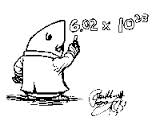
images4 images1 imgres2 images3From Wikipedia: Mole Day is an unofficial holiday celebrated among chemists and chemistry students on October 23, between 6:02 AM and 6:02 PM,[1][2][3] making the date 6:02 10/23 in the American style of writing dates. The time and date are derived from Avogadro’s number, which is approximately 6.02×10²³, defining the number of particles (atoms or molecules) in onemole of substance, one of the seven base SI units. Mole Day originated in an article in The Science Teacher in the early 1980s.[4] Inspired by this article, Maurice Oehler, now a retired high school chemistry teacher from Prairie du Chien, Wisconsin, founded the National Mole Day Foundation (NMDF) on May 15, 1991.[4] Many high schools around the United StatesSouth AfricaAustralia and in Canada celebrate Mole Day as a way to get their students interested in chemistry, with various activities often related to chemistry or moles. http://en.wikipedia.org/wiki/Mole_Day