Skip to content
Skip to main content

Notes from the John Martin Rare Book Room, November 2013

Notes from the John Martin Rare Book Room, November, 2013

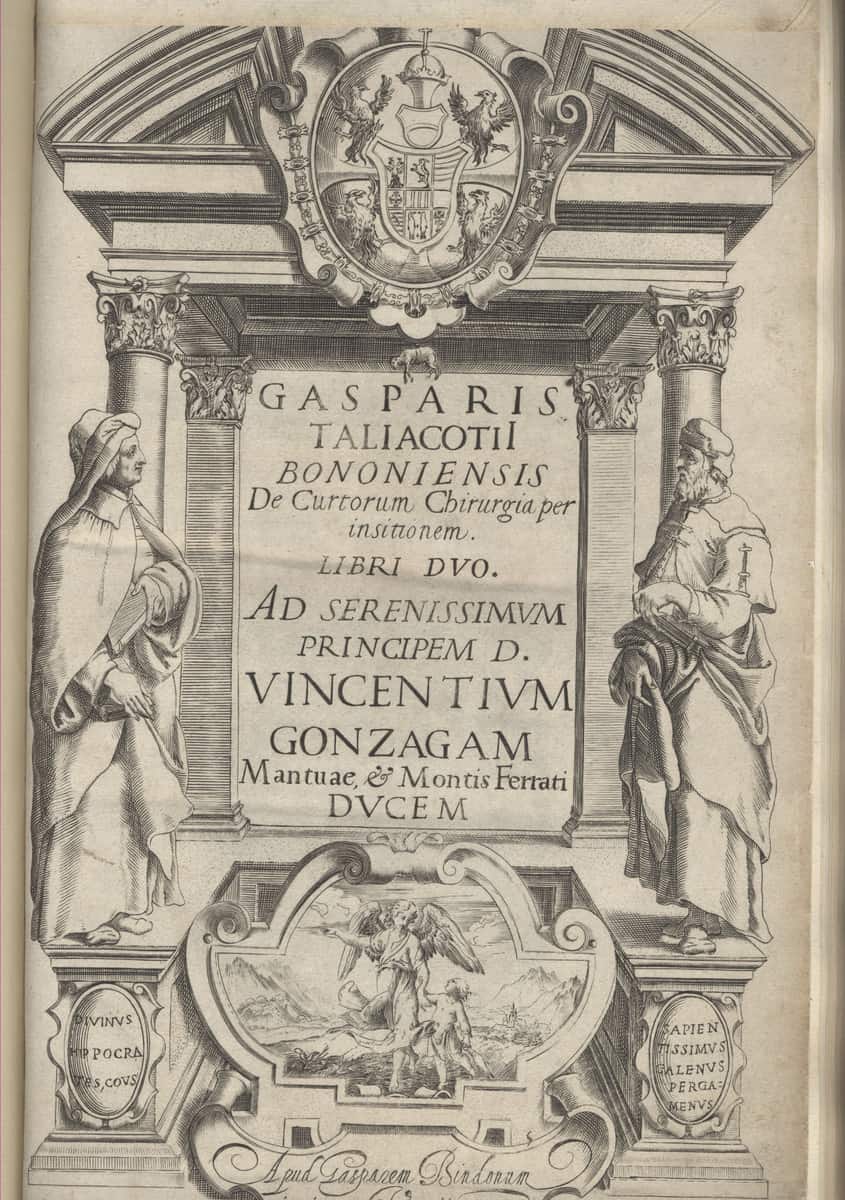
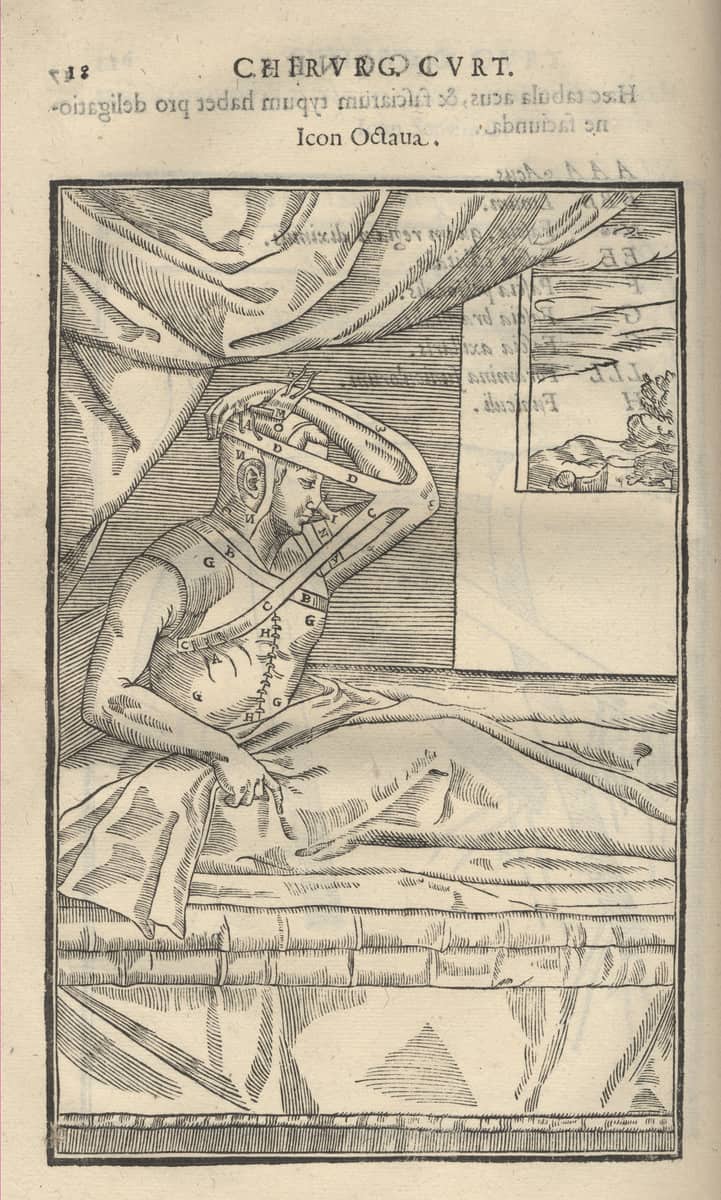
GASPARE TAGLIACOZZI (1545-1599). De curtorum chirurgia per insitionem, libri duo. Venice: 1597.

Tagliacozzi was professor of surgery and anatomy at Bologna. This work, “Concerning the surgery of the mutilated by grafting,” is a classic in the history of plastic surgery and is especially noteworthy for its description of rhinoplasty. Rhinoplasty had been practiced in ancient India and, in the thirteenth century, by a family of itinerant Sicilian surgeons who kept the operation a family secret. The volume is divided into two parts: “Theory of the art of plastic surgery,” and, “Practice of the art,” which describes and illustrates the instruments and operative procedures for restoration of the nose, lip, and ear. Tagliacozzi also fully discussed the complications, such as hemorrhage and gangrene, that often occurred during these operations.
Tagliacozzi-379-fp-001Tagliacozzi-379-018-001

World War II Map of Occupied Countries

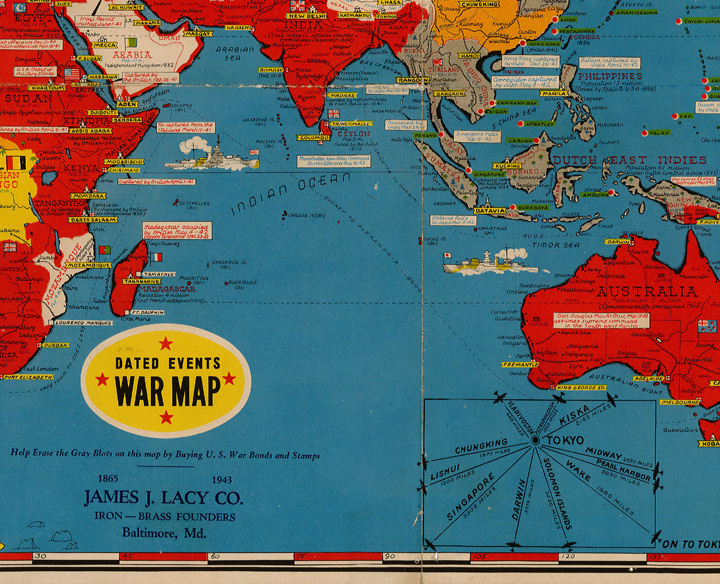
map_legend3Today is Veterans Day so we want to share this 1943 map of occupied countries, noted in gray. The legend reads: “Help erase the gray blots on this map by buying U. S. war bonds and stamps.” This map is part of the John N. Calhoun Papers. Calhoun lived in Burlington, Iowa. After earning his law degree at the University of Iowa, he served as a senator in the Iowa state legislature from 1933 to 1937. Major Calhoun served as a member of the U. S. Army in the Persian Gulf from 1942 to 1945 and was promoted to the rank of lieutenant colonel. Calhoun returned to his legal practice in Burlington following the war. His papers include other materials from his World War II service, such as photographs and correspondence.  We are grateful to have received John Calhoun’s papers from his wife after his death in 1972.

Myrtle Aydelotte in the Army Nurse Corps

myrtle1

myrtle2

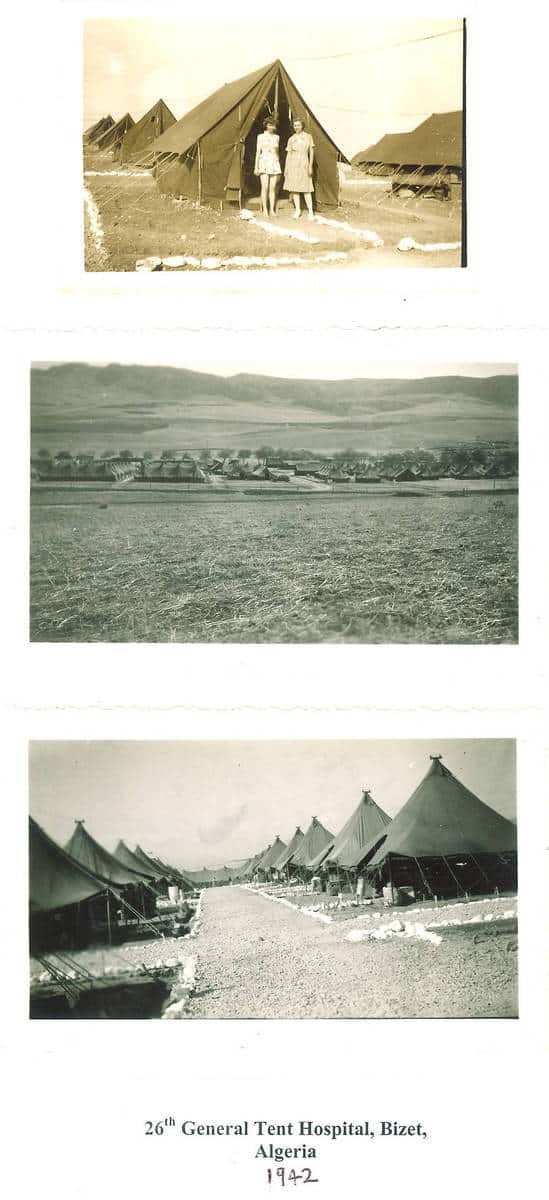
Myrtle Kitchell Aydelotte entered the Army Nurse Corps as an assistant chief nurse at the 26th General Hospital in North Africa in 1942, and in 1945 became chief nurse at the 52nd Station Hospital in Italy. At the University of Iowa, she held many positions from 1949 through 1976, including professor of nursing, Director and Dean of the College of Nursing, and director of nursing for the University of Iowa Hospitals and Clinics.

In 2008, Kathleen Krebs interviewed Aydelotte about her WWII experiences. Here are some excerpts from her summary of the interview:

“North Africa was a completely different and tremendous learning experience for Kitch and all of her unit. They landed to warmth, sunny skies, exotic aromas, ragged beggars, chaos, and the welcome availability of fresh fruit that, while it was most welcome, also made many nurses sick because it was so long since they had had any. Their bodies had become overly sensitive to citrus.”

“At Bizot, they were forced to set up their hospital in tents, some 400 of them, first housing 1000, then later 2000 beds.”

“Keeping things sterile was the number one priority and amid blowing dirt and sand, operating almost continuously with insufficient supplies, and with many infected wounds, this was a major priority and vigilance was at a maximum to prevent cross-contamination of patients. Flies were the bane of their existence and they discovered that their helmets were all-purpose vessels: they could bathe, shampoo, and launder in them.”

Myrtle K. Aydelotte donated her papers, including her memoirs, to the Iowa Women’s Archives in 1996.

Guide to the Myrtle Kitchell Aydelotte Papers

Iowa Digital Library

*This post is duplicated from the Iowa Women’s Archives Tumblr.

Improve Your Research Skills with PubMed: Going Beyond the Basics

PubMed is the National Library of Medicine’s index to medical literature and includes over 22 million bibliographic citations in life sciences. This one-hour session will show you how to improve your search results by using subject headings (MeSH) and advanced keyword searching techniques.

Our next session takes place:

Wednesday, November 20 from 10-11 am (Location: Hardin Library East Information Commons)

Register online or by calling 319-335-9151.

Too busy for class? Check out our PubMed tutorial.


Code for Coeds

code1

code2

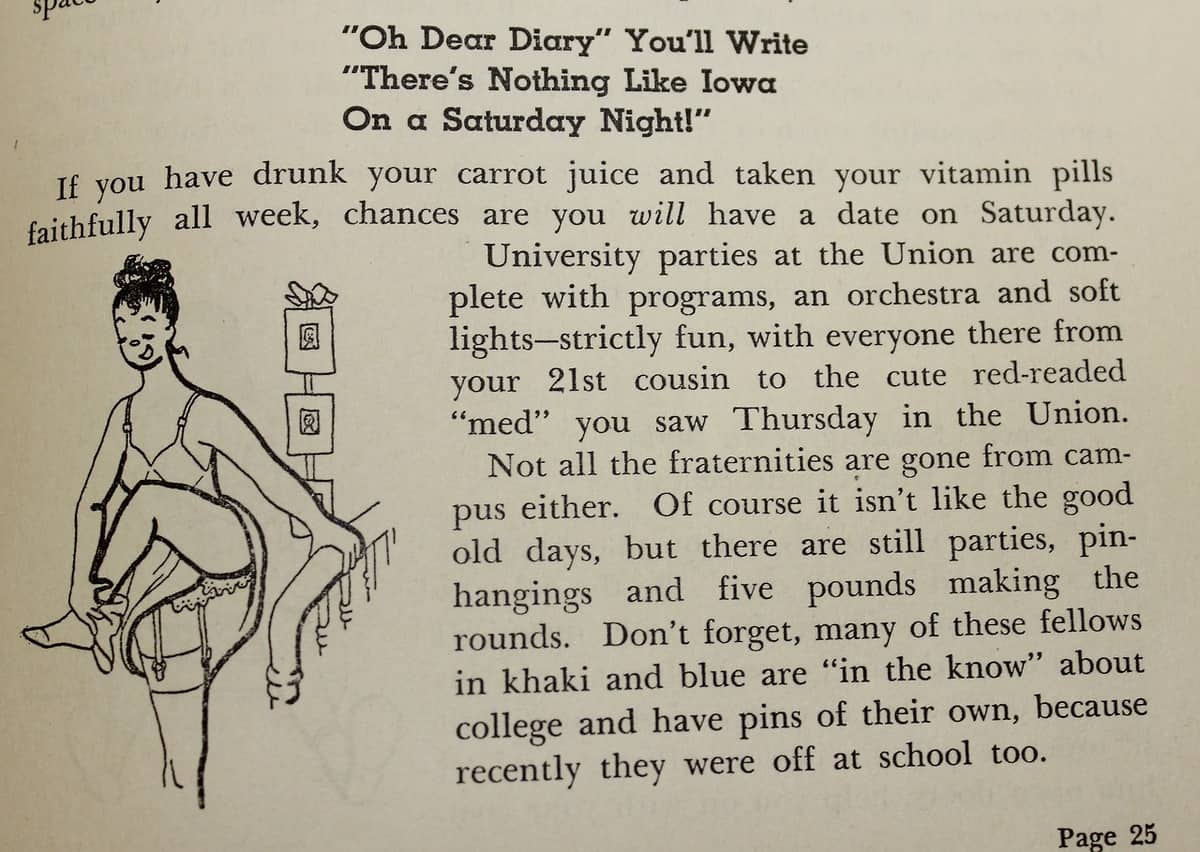
The “Code for Coeds” is a guide to campus life that was given to incoming women students at the University of Iowa from 1937 to 1968. This 1944-45 edition is included in the Louise Goldman Papers, and Goldman edited the handbook for the University Women’s Association.

Sounds like parties at the Union were very classy, with an orchestra, program, and soft lighting. Indeed, “There’s nothing like Iowa on a Saturday night!”

Guide to the Louise Goldman Papers

[From: Louise Goldman Papers. Series 2: State University of Iowa (University of Iowa). “Code for Coeds” – 1944-1945.]

*This post is duplicated from the Iowa Women’s Archives Tumblr.

Scopus Workshop

Have you tried Scopus, our new database? The UI Libraries provide free access to Scopus, an excellent multidisciplinary citation database. Join us for a Scopus Workshop and learn advanced techniques that will help you conduct your research more efficiently and effectively.

In this workshop you will learn how to:

  • Access Scopus from off-campus;
  • Use refine options to retrieve more relevant search results;
  • Create reports to analyze your results;
  • Save citations from Scopus to RefWorks, EndNote and other citation managers;
  • Save searches and set up alerts to keep up with the literature in your field;
  • Find the full-text of citations retrieved in Scopus;
  • Get help when you need it!

This workshop is free and open to all UI students, faculty and staff. There is no need to register. You may bring your lunch if desired. Free coffee will be provided. If you have any questions, please contact Sara Scheib at sara-scheib@uiowa.edu or (319) 335-3024.

Date: Wednesday, November 13, 2013
Time: 12:30pm –  1:20pm
Location: Sciences Library Classroom (102SL)
Branch: Sciences
Presenter: Sara Scheib
Categories: Workshop

Living Learning Community in IWA

newintown1

newintown2

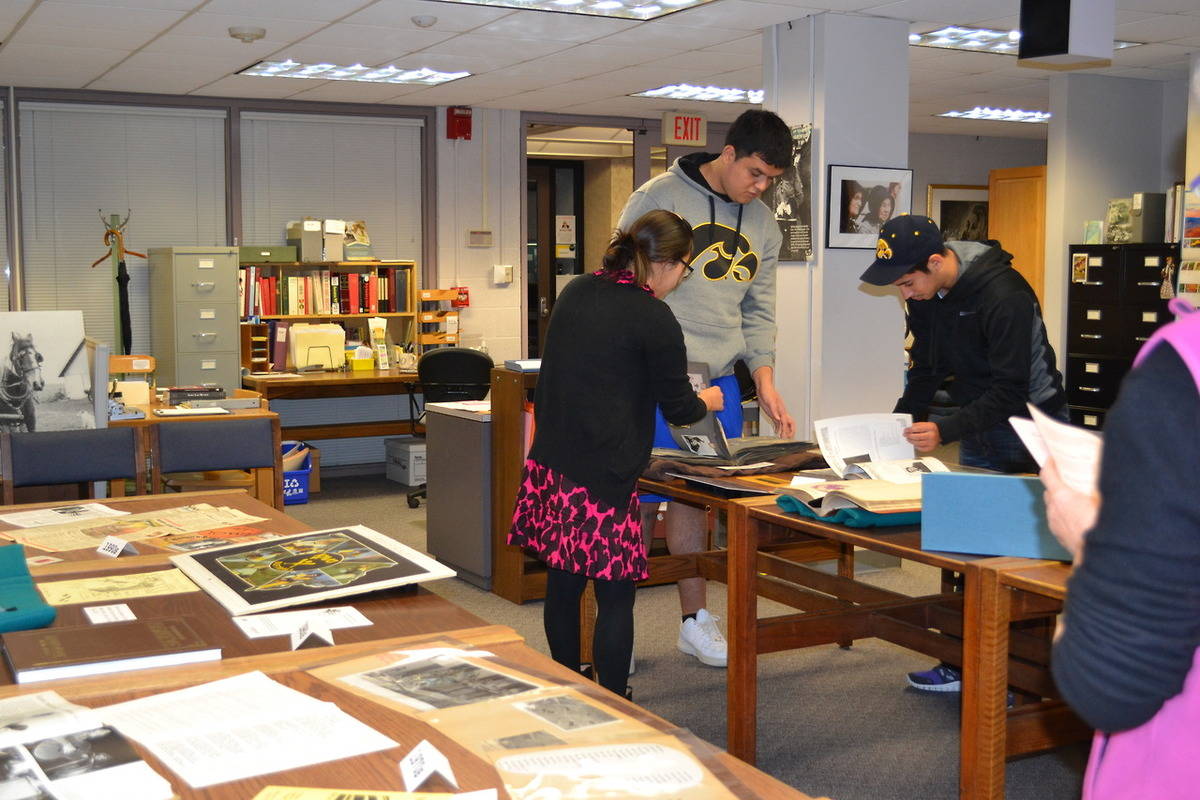
On Tuesday of this week, the Iowa Women’s Archives held an event for the “New in Town” Living Learning Community. We asked the question, “What was it like to be a student at Iowa 100 years ago?” Each table represented a decade from the 1910’s all the way to the 2000’s, so the group of first year students got the chance to explore the history of student life at the University of Iowa. Scrapbooks and yearbooks were a big hit!

*This post is duplicated from the Iowa Women’s Archives Tumblr.

UI Conservator Emeritus Gary Frost to participate in library and archives conservation program.

garyfrost1


The Andrew W. Mellon Foundation has awarded a generous grant to the Art Conservation Department at Buffalo State College. This funding will provide expanded development of Library and Archives Conservation training.

Frost will provide student instruction and advisement in the expanded program. He will travel to Buffalo twice a semester and provide a summer course in historical book structures. Students will have an opportunity for internships and exchange with the University of Iowa Libraries Conservation and Preservation department.

Frost continues to volunteer at the University of Iowa Libraries and also welcomes UICB/SLIS applicants within the American Institute for Conservation Mentor Program.