Skip to content
Skip to main content

I set down to write to you last night, after finishing my letter to Remick, but was interrupted

Joseph Culver Letter, February 9, 1864, Page 1

Head Qrs. 1st Brig., 1st Div., 11th A.C.
Nashville Febry. 9th 1864

My Dear Wife

I set down to write to you last night, after finishing my letter to [James W.] Remick, but was interrupted; and, no opportunity offering to-day, I sent it thinking that even the short note would be acceptable. We recd. no mail to-day, but to-morrow morning I hope to receive a letter from you dated at Pontiac. I enclosed Remick’s letter to you, so that you might become acquainted with its contents & thus be able to give those matters a little attention.1 Neither Fleming or Wolgamott have paid over anything, & Remick writes that the amount due him is $28.2 I will send some money home soon to apply on those notes; in the meantime, collect all you can.

I am not well to-night. I have had a very bad cold for several days, and I got so cold on Brigade Drill this afternoon that I have a fever to-night. The cook is making up a stew for me which I will take & go to bed, & I hope to be well in the morning. I was not up to the Regt. to-day, but presume all are well. Hoskins was much better yesterday.

I enclosed a letter from Bro. Thomas [Murphy] day before yesterday, with his Photograph, requesting mine. If you have one to spare, send it; I have none here. I will write to Bro. Johnie & him soon. I have no communications from home [Carlisle] since you left. I must write to Mother [Culver] again to-morrow. Sammy [Murphy] has not called here yet. I fear he has gone through without an opportunity of coming to see me.3

I wrote several days ago that the box of butter had arrived. We have tried it & found it excellent. I am waiting anxiously for news from Pontiac. Give my love to all. I know Mother [Murphy] will be rejoiced to see you. Remember me kindly to all our friends. May God bless and keep you

Your Affect. Husband
J. F. Culver

  1. The Remick letter is missing from the Culver Collection.
  2. For additional information about J. R. Wolgamott, see J.F.C.’s letter of Nov. 16, 1862. Efforts to secure more data on Fleming have been unsuccessful.
  3. J.F.C.’s fear was unfounded. Pvt. Sam Murphy was still at Camp Yates, 111. Adjutant General’s Report, State of Illinois, Vol. VIII, p. 656.

Save Time on Research with RefWorks

Want some help writing your next paper? Come to Hardin Library’s class on RefWorks and learn about this web-based bibliographic management tool. In this class, you’ll learn how to import citations from PubMed, how to enter references, how to create a quick bibliography, and how to add end and foot notes to your papers (Write-n-Cite). RefWorks is available for free to anyone affiliated with UI and can also be accessed remotely. Sign up to learn more about RefWorks and save yourself a lot of time next time you have to write a paper.

Our next session is
Tuesday, February 10, 9-10 am (Location: East Information Commons)
Register online here or by calling 319-335-9151.
No time for class?  Ask your librarian for a private consult!
refworks graphic

I received yours of the [4th?] written at Chicago last evening

Joseph Culver Letter, February 8, 1864, Page 1Pontiac Ill Feb 8, 1864

My Dear Husband

I received yours of the [4th?] written at Chicago last evening with my book worsted buttons cords silk &c I thank you for them all for the music more than I can tell I think the pieces are beautiful Emily and I sang until nearly eleven last night How did you like the ‘Home without a Baby” or did you not have time to notice it particularly? I will write off the words sometime and send them to you As you said nothing of the beads I conclude you did not have time to hunt for them I can send another time or wait till I go myself the worsted suits exactly, the book I’ve hardly had time to look at Did you ever read it? Howard has been very fretful ever since you left his gum is quite sore and we think two upper teeth are almost through. Im looking over the paper & yesterday I saw the name Howard Q Culver in the Illinois Legislature

I received a letter from Jonnie yesterday directed to you I will enclose it in this also one from Jim Critten written the 12th of Nov. I presume I need not send that to you it was written at Joliet. The meetings are still well attended Mr. Hill says the “back bone is gone” A girl who lives with Sally Boyles has been forward for prayers and it is creating no little excitement Mrs Remick was over here yesterday morning to see Mr. & Mrs Johnstone about it She seems to think salvation is not for such why not for them as well as for the men who ruin them. Nothing was said about Boris kneeling at the altar with their daughter but when a poor girl young too who has been ruined by him and his associates skirts are immediately pulled aside for fear of contamination A queer world this is

I have not been to church since you left Baby has been too troublesome

I received the $10 in the letter by mail and $25. by J W Smith I gave the first to him and he said “All right”

Your ragged pants have haunted me ever since you left Only two pair and through my negligence neither of them fit to wear I cannot write any more this morning Baby is so restless but will write this evening and direct to New York. Remember me kindly to all Carlisle friends I hope you will have a pleasant time. God bless and care for you my Husband Accept love and kisses from your Wife & Baby

Yours Ever
Mary M Culver

Enclosed is a letter to the Sunday School, which you will please deliver to some one to read

Joseph Culver Letter, February 7, 1864, Page 1

Head Qrs., 1st Brig., 1st Div., 11th A.C.
Nashville Feby. 7th 1864

My Dear Wife

Enclosed is a letter to the Sunday School, which you will please deliver to some one to read.1 I have been interrupted so often that I fear very much it will not prove interesting.

I have a very bad cold & a constant tickling in my throat & as the room is getting cold, & it is growing late, I do not deem it prudent to write much. It has just struck ten.

To-morrow will be a busy day, so that I shall not have time to write before the next mail goes out. Give my love to all. Do not forget to remember me to a throne of Grace. May God bless you. I feel very anxious to hear from you. Good night.

Your Affect. Husband
J. F. Culver

  1. J.F.C.’s  letter of February 7 to the Sunday  school  is missing from the Culver Collection.

Access 22 million bibliographic citations with our PubMed Express Open Workshop

PubMed is the National Library of Medicine’s index to the medical literature and includes over 22 million bibliographic citations in life sciences. This 30-minute session will show you how to find relevant articles fast using some of the basic features in PubMed. Workshops are free and open to all UI students and affiliates.

Our next session is:

Monday, February 3 from 2-2:30 pm

Location: Hardin Library East Information Commons

Contact us with questions at lib-hardin@uiowa.edu or by calling 335-9151.

Busy schedule? Get help from home with our PubMed tutorial.


A Look at Snow Removal Equipment New and Old

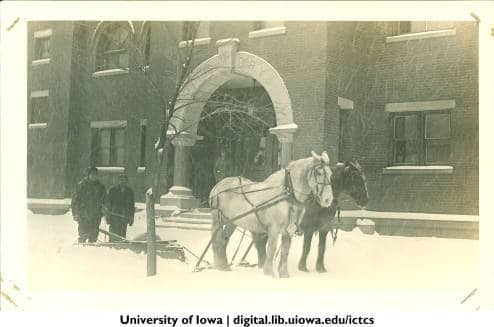
With all the snow we have been seeing this winter, there has been many different snow removal equipment in use including shovels, snow blowers, and plows.  This equipment used today has seen a lot of changes over the years.  For example, back in the 1920s, the University of Iowa used horse drawn snow plows as seen in the picture below.  (1)

 	Horses pulling a snow plow in front of Armory

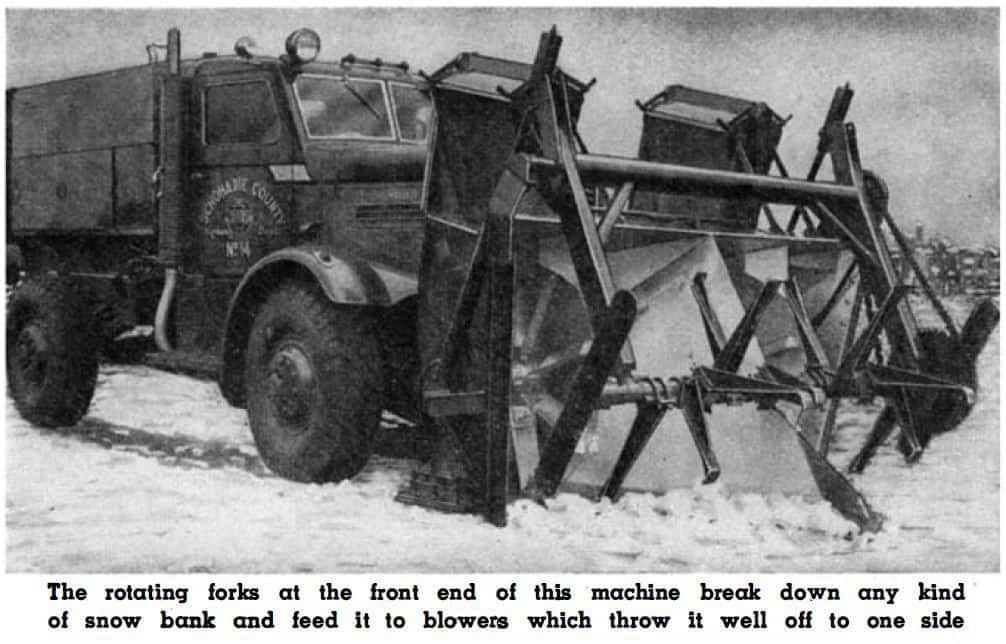
The first motorized snow plow was seen as early as 1913.(2)  By 1944, motorized snow plows were being used more and more as well as improvements to the machines such as the additions of rotating forks and snow blowers as seen in the picture below. (3)

Rotating Forks on Snow Plow

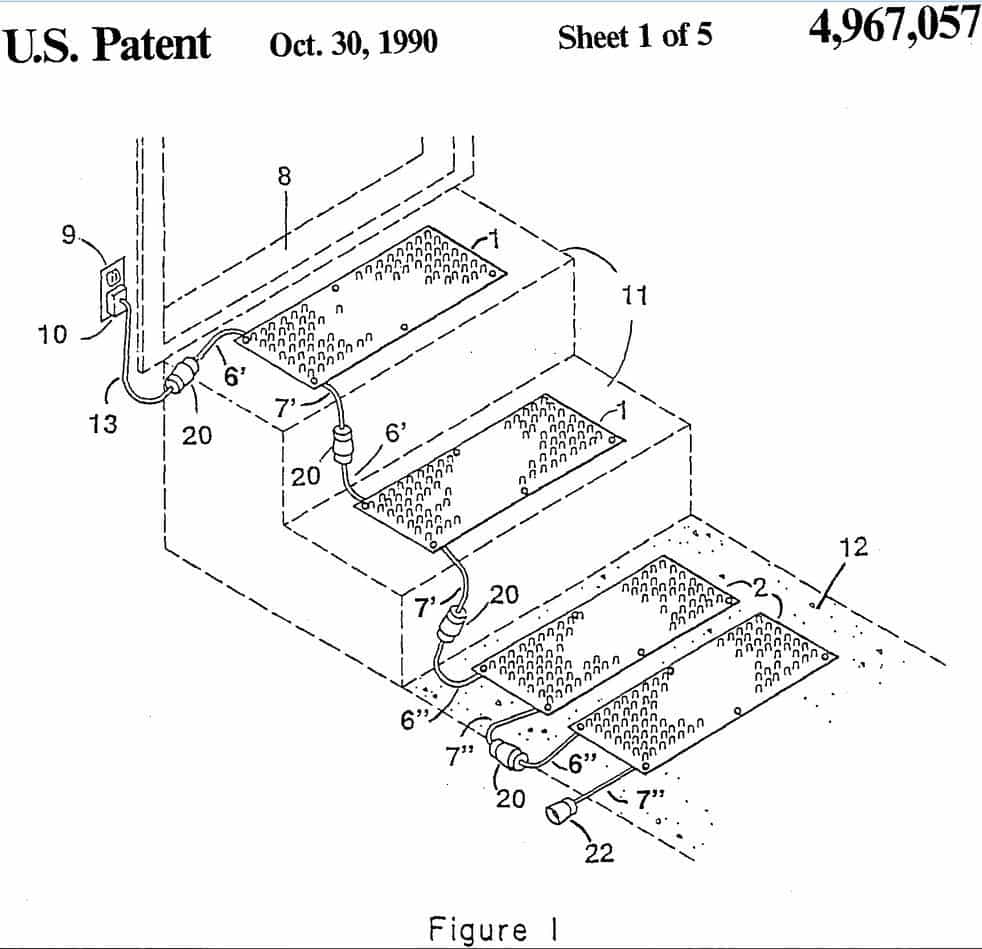
Today, there are patents for some facinating snow removal inventions including the following patent for snow melting heater mats. (4)

snow melting heater mats

Want to learn more?


References:

  1. Horses Pulling a Snow Plow in Front of Armory, The University of Iowa, 1920s. The University of Iowa Libraries Digital Library. http://digital.lib.uiowa.edu/cdm/ref/collection/ictcs/id/3385
  2. Snow Removal. National Snow & Ice Data Center. http://nsidc.org/cryosphere/snow/removal.html
  3. Hunt, Hal W. Winning the Battle with Snow.  Scientific American. Jan 1944: 19-21.  http://proxy.lib.uiowa.edu/login?url=http://www.nature.com/scientificamerican/journal/v170/n1/pdf/scientificamerican0144-19.pdf
  4. Bayless, Ronald E. and James M. Harvard.  Snow Melting Heater Mats. US4967057.  1990.http://patentscope.wipo.int/search/en/detail.jsf?docId=US37902859

The Boy Scouts: A Cultural History through Handbooks

What follows is a guest post from one of our student workers, Shawn Conley, an Eagle Scout and Boy Scout memorabilia collector.

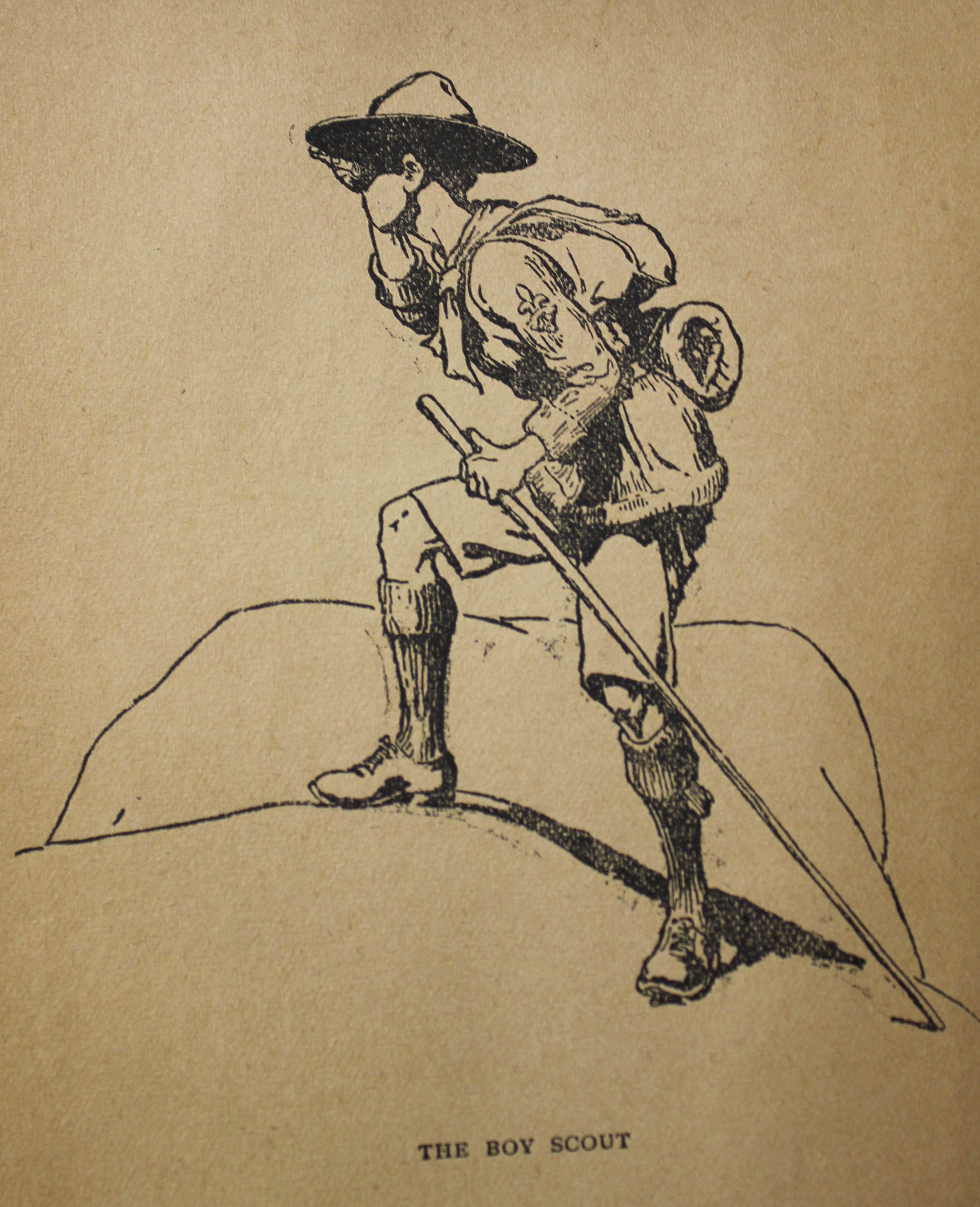
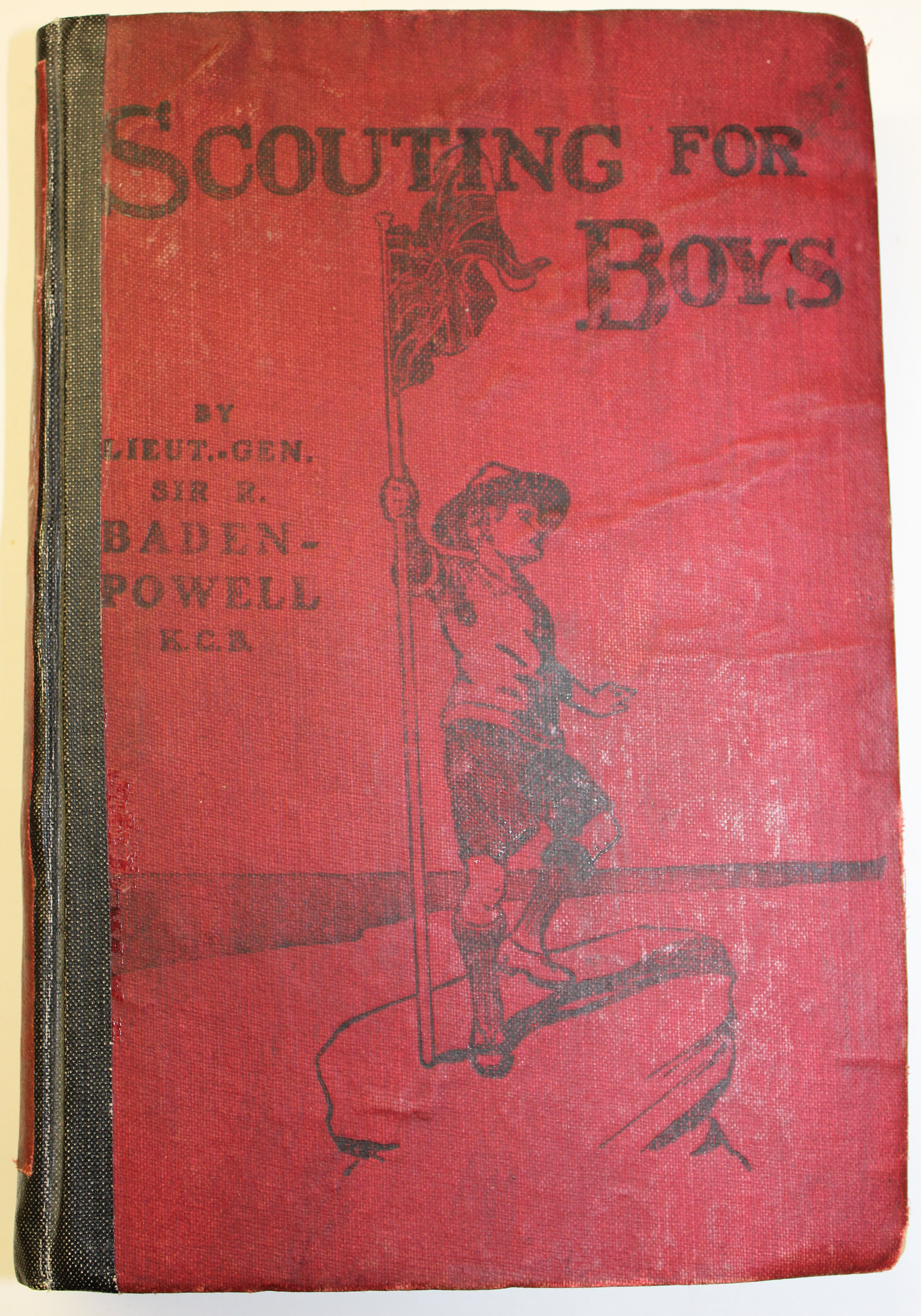
The classic image of the Boy Scout from Lord Baden-Powell's 1910 "Scouting for Boys".

The classic image of the Boy Scout from Lord Baden-Powell’s handbook “Scouting for Boys” (1910).

Since its founding more than a century ago, the Boy Scouts of America has striven to turn young men into well-rounded individuals and citizens of our society. Lord Baden-Powell, the founder of the original Boy Scouts in England, expressed the need for proper handbooks for the young scouts to use as a way of learning and becoming familiar with skills they would find useful. From how to escort a lady down the sidewalk to how to splint a broken leg, the Boy Scout handbook purveyed basic information and skills in handicrafts, first aid, castrametation, and moral values.

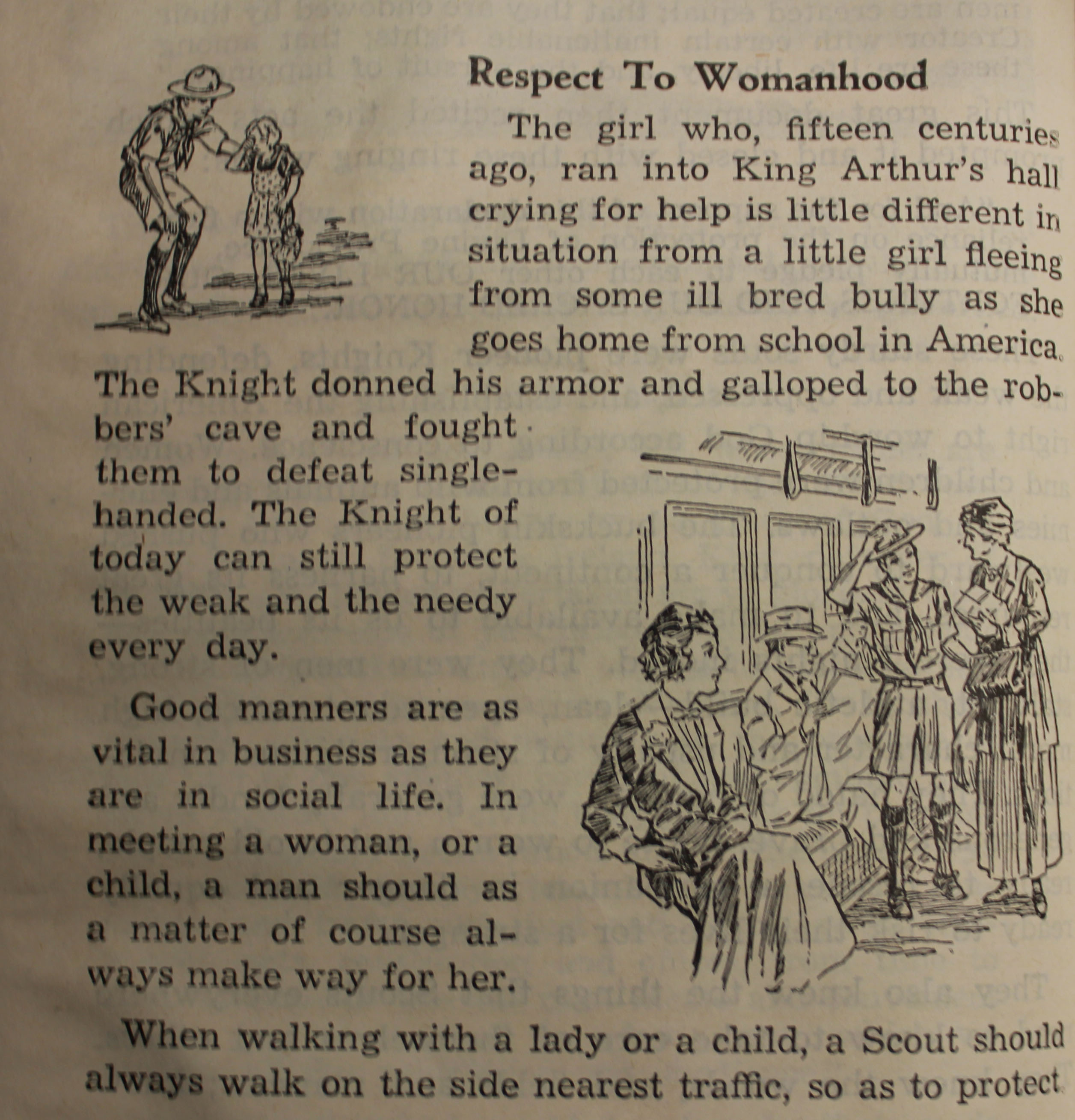
"Respect to Womanhood" (1945 Handbook).

“Respect to Womanhood” (“Boy Scout Handbook”, 1945).

First Aid is a major topic covered in every handbook. ("Boy Scout Handbook", 1965).

First Aid is a major topic covered in every handbook. (“Boy Scout Handbook”, 1965).

If one wanted to research the changing American culture from the early 20th century to the modern day, the handbooks of the Boy Scouts are a wonderful resource in deducing what the founders of the Scouting movement thought worthwhile for Scouts to know in turning them into productive citizens. Culture of the time-period is engrained into these handbooks. For example, during the Second World War when material rationing restricted what average Americans could purchase, the Boy Scouts produced uniforms of a less expensive, tan cotton canvas. These canvas uniforms are shown in the handbooks and how to properly sew on badges and insignia.

Upon examining Boy Scout handbooks of an earlier time, one might notice that very few are in excellent condition. These books were meant to be used, and used they were. From the author’s own perspective, his handbook was in tatters by the end of his Scouting career.

Why is the Boy Scout handbook so important? The handbook was, and still remains to be, the Scout’s greatest point of informational reference. Forgot how to tie a Clove Hitch? Consult your handbook. Can’t recall how many leaves a sprig of Poison Ivy has? The handbook knows! From how to properly swing an axe to properly cooking for your Patrol or Troop, the handbook strives to give Scouts the information they need to carry out skills necessary for being a good Scout. This aspect is as true now as it was 103 years ago.

"Scouting for Boys" by Lieut.-Gen. Sir R. Baden-Powell, K.C.B. (1910)

“Scouting for Boys” by Lieut.-Gen. Sir R. Baden-Powell, K.C.B. (1910)

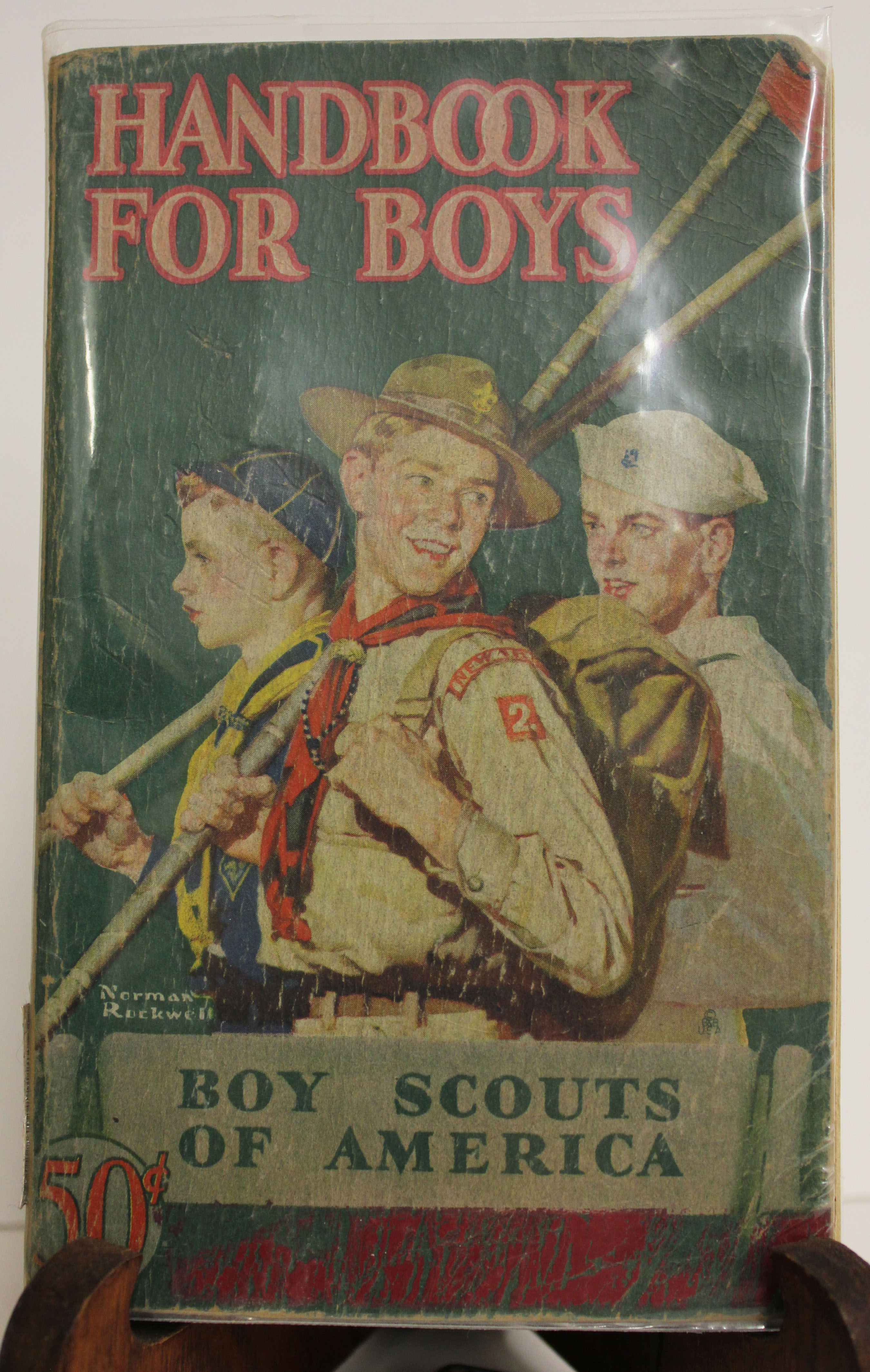
"Handbook for Boys" (1945).

“Boy Scout Handbook” (1945).

Perhaps more importantly, the handbook was a moral compass. Some sections of the handbook are geared specifically towards showing Scouts how they can be a positive influence on their communities. Some early examples of how Scouts influenced their communities was promoting and selling war bonds during the Great War and the Second World War, and conducting metal drives by going door to door and asking people for any scrap metal that could be melted down for the war effort. In the 21st century, helping the community can be something as simple as a food drive, which many Boy Scout troops across Iowa conduct every year. Therefore, the handbook was not only a reference for physical skill building, but also mental and moral skill building.

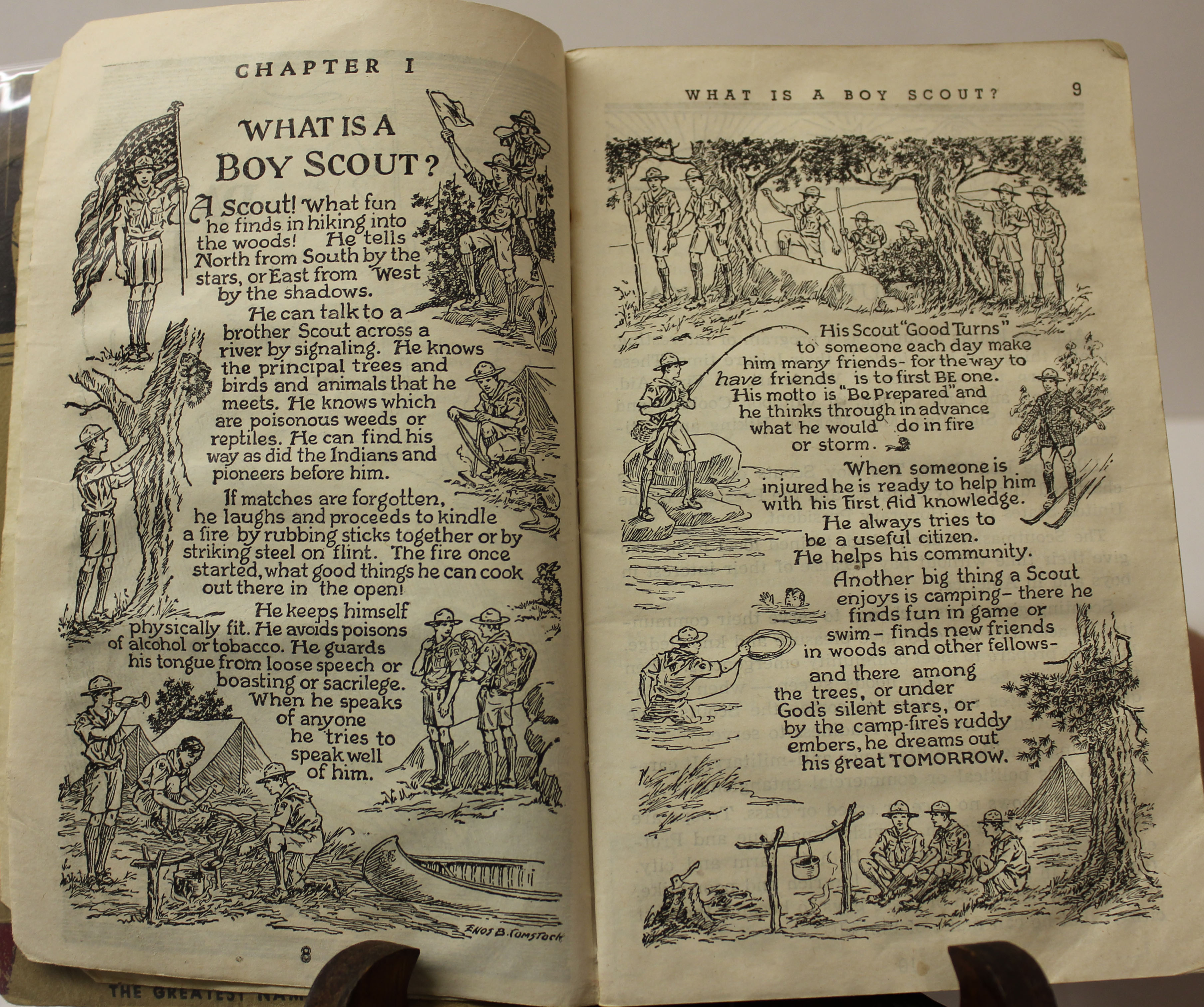
"What is a Boy Scout?" ("Boy Scout Handbook", 1945).

“What is a Boy Scout?” (“Boy Scout Handbook”, 1945).

The Special Collections department has a very nice Scouting collection, much of it about Scouting in Iowa. The collection also has a few early handbooks from both the Boy Scouts

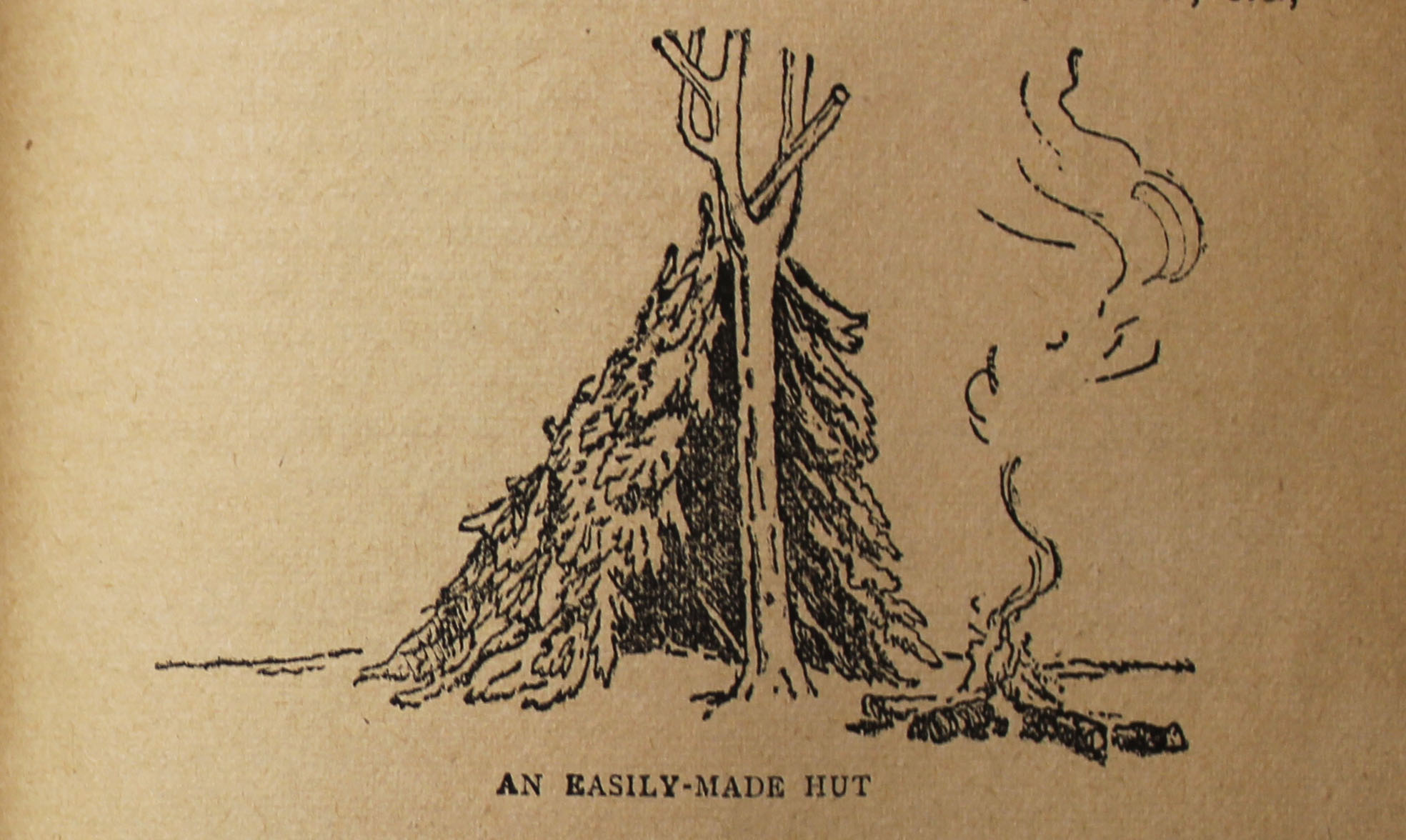
"An Easily-Made Hut" ("Scouting for Boys", 1910).

“An Easily-Made Hut” (“Scouting for Boys”, 1910).

and Cub Scouts (All photos in this post were derived from the handbooks in Special Collections). Stop on by and have a look. The author guarantees that in reading just a few pages, you’ll learn something totally new. Perhaps you can read up on how to properly escort a lady down the sidewalk (the man/Scout always walks on the woman’s side facing the street), or perhaps you can familiarize yourself with how to splint a broken leg or cook pies in a Dutch oven.

The handbooks of the Boy Scouts of America are truly a wonderful reference to anyone wanting to learn how to “Be Prepared” and to “Do a Good Turn Daily”.


– Shawn R. Conley

Announcing the completion of the William Osler Pamphlet Collection

About William Osler

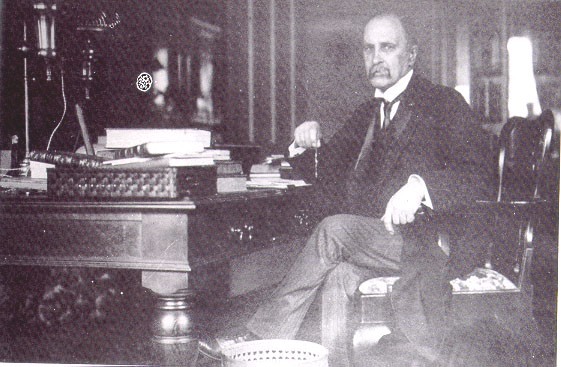
Sir William Osler, 1st Baronet (July 12, 1849 – December 29, 1919) was a Canadian physician and one of the four founding professors of Johns Hopkins Hospital. Osler created the first residency program for specialty training of physicians, and he was the first to bring medical students out of the lecture hall for bedside clinical training. He has frequently been described as the “Father of Modern Medicine.” Osler was not only a physician but a bibliophile, author, historian, and renowned practical joker. He had numerous ties to the University of Iowa. Special Collections holds letters between Osler and Campell Palmer Howard, a faculty member at the University, and Osler’s desk is housed in the John Martin Rare Book Room at Hardin (Room 401).

Hardin’s Osler Pamphlet Collection

From 1972 to 2010 the Hardin Library received a significant collection of documents by and about William Osler, including several copies donated by Dr. R. N. Larimer. The Rare Book room staff has provided helpful guides and online versions for much of this material. An index for the collection, which contains 317 items ranging from 1878-1976, can be found here.

[Osler at his desk]

Holy Carnitine! @Altmetric Is On To Something Big!

In our previous article, we talked about a ranking list done by Altmetric of the most popular research articles of 2013. An interesting anecdotal story at the Reference desk just a couple of days after publishing the article, I think, gives strong confirmation of the validity of the Altmetric ranking.

As I was working at the Reference desk, a library patron using a workstation in the reference area [who turned out to be Charles Rebouche, see more below] asked for help with a printing problem he was having. As I approached his station I couldn’t help noticing that the article he was trying to print was on Carnitine, which happened to be a prominent subject of one of the articles that was on the Altmetric ranking. I was especially struck when I noticed this because before I saw the Altmetric ranking list in December, I had never heard of carnitine. As I learned in writing about the Altmetric ranking though, it turns out that carnitine is an ingredient of red meat (and also many energy drinks) that’s implicated in new research as a possible contributor to cardiovascular disease.

After the patron’s printing problem was resolved, I talked to him about his interest in carnitine. Interestingly, I learned that he’s an emeritus faculty member who has spent much of his career on researching carnitine. I told him about my work with the Altmetric list, and about the article that was ranked as being one of the most popular research articles of 2013. He knew all about the surge in popularity of the subject that accompanied the article, he said, because he’s been asked to “come out of retirement” to do a presentation about carnitine, which is why he was in the library catching up on the latest research.

So, on one level, a cute, satisfying story about the rewards of working at the Reference desk. But beyond that, I think this little story shows that the Altmetric ranking is more than an abstract application of “big data,” that Altmetric popularity does indeed have a real effect that’s felt by real researchers!

[Dr. Rebouche has read and approved of this article. He has indeed done voluminous research on carnitine, as attested by his 41 PubMed citations!]

Tips for Searching Gene, Genome & Protein Information

Overwhelmed by the number of databases that the National Center for Biotechnology Information has to offer on nucleotide sequences, genes and proteins? Wondering which database you should always start with? Would you like to learn how to set up an NCBI account to link articles in PubMed to records in other databases? Do you know about PubMed’s Gene Sensor? Are you familiar with the concept of linear navigation? Learn all of these tips and more in this session that is designed for anyone who needs to search the NCBI databases for genetic information.


Our next session is:

Thursday, February 6 from 3-4 pm

Location: Hardin Library East Information Commons

Register here or contact us at 335-9151 or by email at lib-hardin@uiowa.edu