Skip to content
Skip to main content

Elements of the Practice of Medicine

Notes from the John Martin Rare Book Room

June, 2014

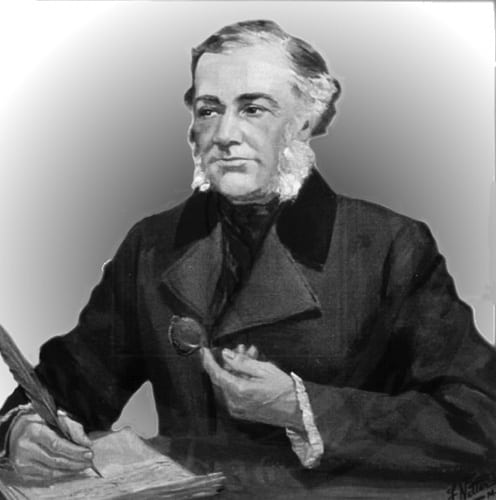
RICHARD BRIGHT (1789-1858) and THOMAS ADDISON (1793-1860). Elements of the practice of medicine. London: Longman, Orme, Brown, Green, and Longmans, 1839.

richardbright
This rare work represents a joint undertaking by two of the most famous physicians in nineteenth-century Europe. The preface describes it as “a work at once elementary and practical to which [teachers] might refer their pupils as a companion and assistant during the period of their studies.”

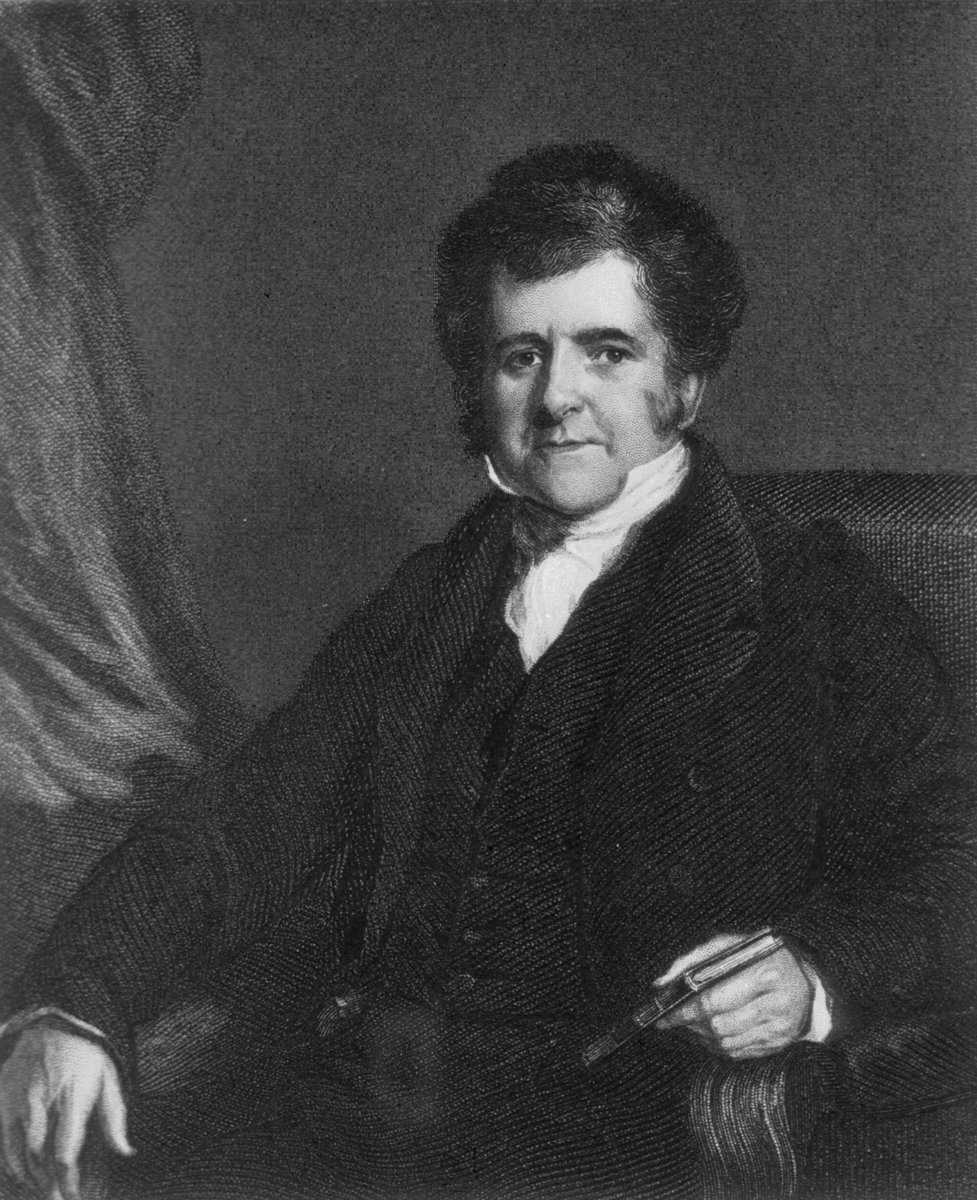
thomasaddison
Elements lists over sixty diseases and conditions and includes a lucid account of their histories, causes, prognoses, diagnoses, and treatments. Though the style is dated, the descriptions of the diseases excel in accuracy and conciseness. Originally issued in three parts from 1836 to 1839, the work is bound in  a single volume. The intended second volume was never published. Hardin has digitized 17 images from the book. See them here.

Text adapted from Donna Hirst, Curator, John Martin Rare Book Room.

Images: Respectively, Richard Bright, Thomas Addison. Credits: Wikimedia, prlog.org.

It is so hard for me to write to your Co and Regt now that my brother is gone

Joseph Culver Letter, June 1, 1864, Page 1Covington June “64
Dear Friend Culver,

Please pardon me for not writing sooner, I have been almost sick now for several weeks and you may guess did not feel much like writing.

It is so hard for me to write to your Co & Regt. now that my brother is gone. I wanted so much to write to you but could not. It brings everything so distinctly before my mind’s eye.

I can in imagination see my brother lying sick no mother or sister near him. I doubt not but that he had good attention, as good as could be given him. We shall never forget your kindness. God will bless you for being kind to the widow and orphan.

I recd a letter and photo from your wife. I have answered it. I feel like I had known her for years. I suppose you think by this time that we are never going to attend to that business but indeed you will get all belonging to you. You know we have no man here to attend to anything for us and it is hard for women to do all. I almost wish people could get along in the world without doing anything of the kind. Widows and orphans have a hard time of it. They frequently meet people that would sooner take from them than give to them. Indeed we have been robbed so much by people here. (yes and other places, people that my father had known for years before his death, and eaven our relatives) that we hardly know who to trust any more. How often I think of my dear uncle Jacob Ullery. How kind he was and how thoughtful when he was here. You know him. No doubt you know almost as much as I could tell you about him.

Last sabbath morning about 8 A.M. a locomotive came from Piqua (6 mi. East of here) and told the men that they had found a man on the track about 1 mi, from here chrushed to death. They went out and found a young man by the name of Silas Hallipeter dead.

He had been into town untill after 1′o’clock the night before. One man said he had been with him untill near that time, He was perfectly sober then. He was known to leave town about 1 A.M. Persons think that he was killed and then put on the track. They found a trail that looked like something had been drug along, they followed it and at some distance from the R.R. found a large pool of blood. Nothing has been done yet to find the perpetrator. They judge an Irishman, His friends I guess think it makes no difference how he was killed. They know he his dead and that is enough for them.

I have a few moments to write, and the mail is just going

Joseph Culver Letter, May 31, 1864, Page 1

Hd. Qurs. Co. “A” 129th Regt. Ills. Vol. Infty.
1 Brig. 3rd Div., 20th A.C. In front of Dallas, Ga.
Monday Eve. [sic] May 31st 1864
My Dear Wife

I have a few moments (10) to write, & the mail is just going. My health is excellent for which my heart is thankful. We have recd. no mail yet.

We occupy the front line on the right centre to-day.1 We were out supporting a “Battery” & have just returned.2 We lost no men since Saturday [the 28th] morning in my Company and but few in the Brigade.

Harry McDowell is setting beside me writing too. There has been no very heavy fighting to-day, only one light attack on our lines last night. Everything is very favorably; no skirmishing on our front.

We hear that there will be a mail up to-night. I feel anxious to hear from you. I fell asleep just before dinner behind the fortifications and dreamed of home & you. I presume it is because my mind has been so much occupied with Home thoughts since Harry’s return.3 I waked up imagining your arms around my neck & your head resting on my breast. May our Father in Heaven bless and keep you, preserve you in health and strength. I am very well contented & feel happy in the discharge of duty.

Give my respects to Miss Emma Thayer, Harry’s friend. Give my Love to Mother [Murphy] and Maggie & Remember me kindly to all. Write to Mother Culver often & let her know that I am well. May God keep you by Grace and bless us as we need, and hasten the day when we may unite our hearts with our voices in his praise and enjoy the pleasures and comforts of Home. Good bye.

Your Affect. Husband
J. F. Culver

  1. On the 27th, General Sherman had sent General Howard, reinforced by units from the Army of the Ohio, to feel for the Confederate right. The Federals found the Rebels at Pickett’s Mill and were repulsed with a loss of about 1,500. General Hardee’s corps on the Confederate left on the 28th made a forced reconnaissance of the position held by McPherson’s Army of the Tennessee east of Dallas and was repulsed with heavy casualties. Cox, Atlanta, pp. 76-87. Ward’s brigade on the 27th advanced its lines under a heavy fire to within a few hundred yards of the Confederate breastworks at New Hope Church and entrenched. In the day’s skirmishing, the 129th Illinois lost one killed and 10 wounded. Next day the brigade was relieved by the 2d Brigade, and on going to the rear was posted near a battery, “at which the enemy’s guns were firing. . ., every moment a shell exploding over or near us and cutting off the branches of the trees.” Grunert, History of the 129th Illinois, pp. 68-70; O.R., Ser. I, Vol. XXXVIII, pt. II, p. 366.
  2. The 129th was on picket on May 31, and was fired on by Rebel sharpshooters posted in the upper story of a house. To discourage the greyclads, two cannon were advanced to the picket line, and “a few shots from them stopped the mad firing of the Rebels.” Grunert, History of the 129th Illinois, p. 70.
  3. Lt. Harry McDowell had rejoined the regiment after a three-month absence in Illinois on recruiting duty. Compiled Service Records of Union Soldiers, NA.

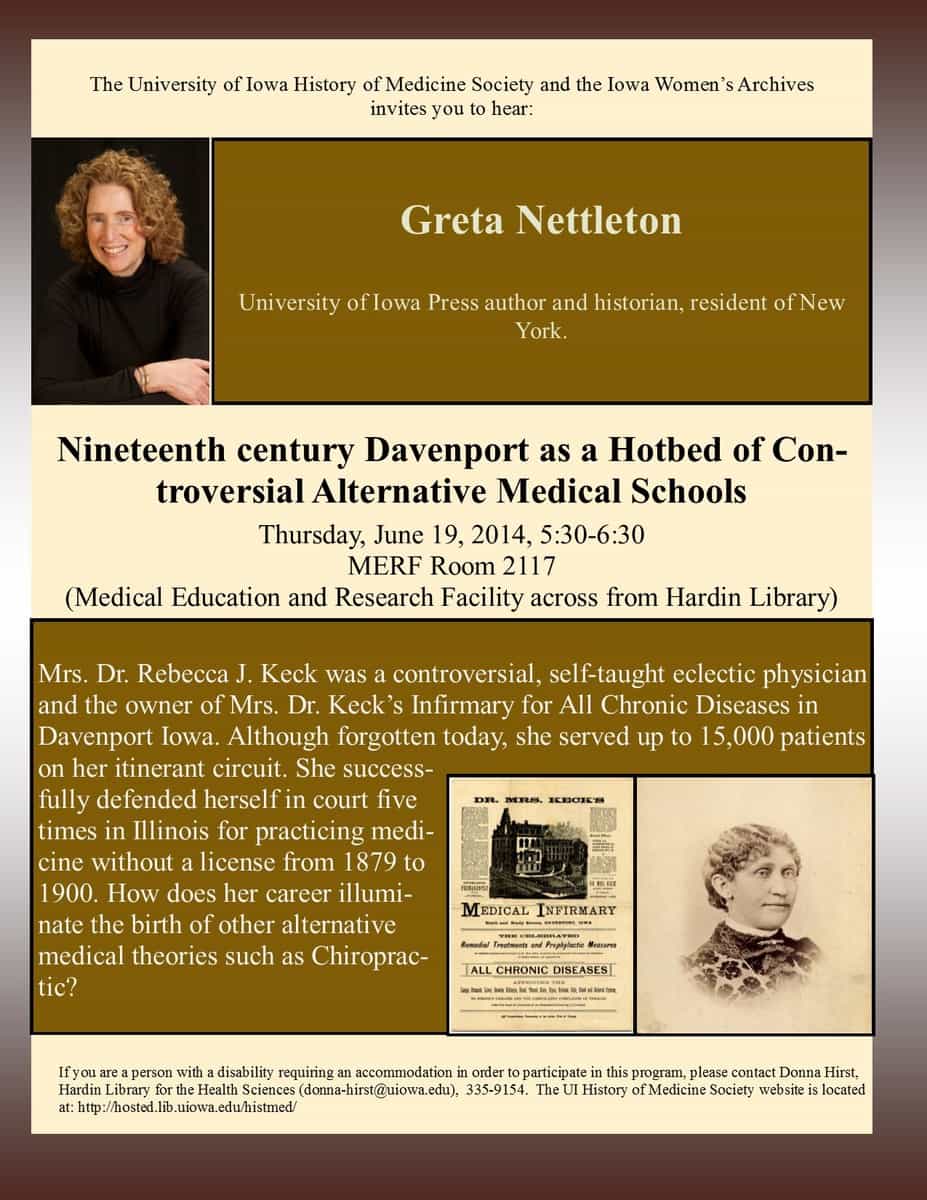
Nineteenth Century Davenport as a Hotbed of Controversial Alternative Medicine Schools

The University of Iowa History of Medicine Society & the Iowa Women’s Archives invite you to:

Nineteenth Century Davenport as a Hotbed of Controversial
Alternative Medicine Schools

Featuring Greta Nettleton, University of Iowa author and historian
Thursday June 19, 2014, 5:30-6:30 PM
MERF Room 2117 (Medical Education and Research Facility across from Hardin Library)

Medical HOMS  Nettleton 6-19

Mrs. Dr. Rebecca J. Keck was a controversial, self-taught eclectic physician and the owner of Mrs. Dr. Keck’s Infirmary for All Chronic Diseases in Davenport, Iowa. Although forgotten today, she served up to 15,000 patients in her itinerant circuit. She successfully defended herself in court five times in Illinois for practicing medicine without a license from 1879 to 1900. How does her career illuminate the birth of other alternative medical theories such as Chiropractic?

View the event on Facebook

If you are a person with a disability requiring an accommodation in order to participate in this program, please contact Donna Hirst, Hardin Library for the Health Sciences (donna-hirst@uiowa.edu), 335-9154. The UI Histort of Medicine Society website is located at http://hosted.lib.uiowa.edu/histmed.

Mother received your letter today and desires to answer it immediately

Joseph Culver Letter, May 30, 1864, Page 1Carlisle May 30 1864
Dear Sister Mary

Mother received your letter today and desires to answer it immediately so she came up to get me to write for her. You speak of writing to me. I received your letter with the shirt and am more obliged than I can tell you and am ashamed that I have delayed so long in replying it was not intentional I talked of writing every day. I am getting ready to go down to Harrys fathers as soon after commencement as possible which will be in 4 weeks and I have much to do also a brothers widow from Philad. is visiting us and expects to stay until we go down which also makes me have less time for letter writing. We are greatly relieved to hear from Frank we were so anxious and hope he may be safely kept through all the dangers which beset his path I know how anxiously you feel.

I hope you will have favorable news from your brothers soon Marcus is growing to be a big fat boy weighed 19 lbs a month ago and fills up his shirt pretty well I wear knit [wasted?] ones on him but the one you sent will be a nice keepsake to remember Aunt Mary by. He has taken a slight cold and is a little fretful today He will be six months old on the 15 of June. Mother says she was very glad to hear from you as she has received so few of the letters you have sent and hopes you will write often as she likes so hear about you. Hanna expects to be home in 3 or 4 weeks I do not know whether she expects to go back again or not but rather expect she will. she talks of bringing some of her schoolmates with her. Mollie is right well again she has been complaining more or less all summer. Ms is proceduring a little now for Dr Harman We have had the lot’s little graves fixed up and think of having a wooden fence put around it & stones in the fall if money is more abundant I planted some flowers on them a few weeks ago

Tuesday 31st May

I did not get finishing my letter last evening as company came in This house has been sold and we will have to move by Spring I am so sorry for the longer I stay here the better I like it.

Beccie has a hard time with her baby it has hernia and cries day & night We will go down tomorrow if Marvin seems better & nothing prevents We had Marvin baptized on last Wednesday He is a dear good baby and behaved so nicely

Enclosed I send you a picture we had taken off of a Daguerreotype of father It is not good but I think it is the best we can do I am sorry we cannot have one that looks more like him The place where mother lives is sold too it brought $6000 Penrose from Carlisle bought it Kate was up a little while yesterday she said they received a paper from California containing a paragraph that brother James is seriously ill his life was despaired of we are anxiously waiting for a letter

The Soldiers Aid Society of Middlesex of which Kate & Lou are active members are going to hold a Strawberry festival on the 11th of June at the Poor house Barn or rather a better term would be the County Barn Millers & Zugs are well Zugs have sold their farm & mill too I dont know what they expect to do Harry has written to Joe three times and received no reply tell him to write & tell him the news I have written here Write us a long letter & tell us all about yourself How is your health? when is the fete to come off you have never told me Baby Marion sends auntie a kiss Harry sends lots of love Write before we go away which will be about the 1st week in July we may be gone until the 1st of August or longer In much love

affectionately your Sister
Jennie C. Cheston

Kate says I shall tell you the reason she has not written before is she wanted to have a Photograph taken & give you in return for yours she will let you hear from her soon She send love

I forgot to tell you Miss Sarah Stuart sends much love

RefWorks to EndNote Transition Workshops

As you may have already heard, the University has acquired a campus-wide license for EndNote and the UI Libraries will end its subscription to RefWorks on December 31, 2014 (more info). Any free RefWorks accounts you have created will not be available after that date, but you can transfer your references to another service quickly and easily. In order to help our RefWorks users make this transition, we are offering several RefWorks to EndNote Transition workshops this summer:

  • Friday, June 13, 10-11:00 am
  • Monday, June 23, 1:30-2:30 pm
  • Tuesday, July 8, 2-3 pm
  • Wednesday, July 23, 3-4 pm
  • Thursday, August 7, 4-5 pm
  • Wednesday, August 20, 2:30-3:30 pm

In each workshop you will learn how to:

  • Sign up for a free EndNote Basic account;
  • Transfer your references from RefWorks to EndNote Basic;
  • Export references from popular databases for importing into EndNote Basic;
  • Use EndNote Basic to organize and share references;
  • Use EndNote Basic to format a bibliography in one of thousands of different styles;
  • Use the Cite While You Write plugin for Microsoft Word;
  • Get help when you need it!

All workshops are free and open to all UI students, faculty and staff. Workshops will be held in the Sciences Library classroom (102 SL). There is no need to register. If you would like assistance with transitioning from RefWorks and are unable to attend one of these workshops, please contact Sara Scheib to arrange a one-on-one consultation. If you have any questions, please contact Sara Scheib.

We moved up to this place on the evening of the 25th

Joseph Culver Letter, May 27, 1864, Page 1

Hd. Qurs., Co. “A” 129th Ills.
Behind the fortifications in front of Dallas, May 27th 1864
My Dear Wife

Yours of the 17th has just come to hand.1 I am very happy to hear that you were well. We moved up to this place on the evening of the 25th about 5 p.m. The enemy were concealed in the woods and opened a terrific fire upon the head of the column. The 1st Div. of our Corps was in advance & commenced skirmishing immediately. The 1st Div. drove the enemy back about 11/2 miles into their fortifications, & our Div. formed line of battle & moved up to their support.2 Coming up through the woods, the shell and shot fell thick around us. Walter Good, orderly of Co. “C”, had his right hand shot off.3 George Conner of my Company lost the index finger of his left hand.4 Only a few others in our Regt. were wounded & those but slightly.5

The firing on the front line was very heavy, & the loss of our 1st & 2nd Divisions, I understand, was severe.6 We moved up to within 30 yds of the 1st line & lay down. The fighting on our left was equally severe. The enemy, after attacking our front, attempted to turn our left flank, but the 4th Corps were in readiness to receive them & they were handsomely repulsed.7 I heard that the 4th Corps took 2 cannon but do not know it.8

Yesterday we were all day finding the position of the enemy & no hard fighting was done. We are told this morning that 2 Corps have already passed the enemy’s left flank, & we can hear cannonading far on our right.9 Also that 2 Corps are pushing the enemy’s Right-flank, & we can also hear cannonading far to our left. The object is to make the enemy fight a decisive battle here if possible. We now hold the fortifications on our right centre.10 If they will fight at all, we can whip them easily. We are supported by line after line & fortification after fortification for miles in our rear. Those that have just come up from the rear say that there is no end to our Army.

There has been heavy cannonading on the line we occupied yesterday but no response from the enemy. My health is excellent, & I feel very thankful God has specially preserved & blessed me. Chris [Yetter], Nate [Hill], Allen Fellows, & all are well. [Lt.] Bob Edgington was slightly injured by the falling of a limb cut off by a cannon ball on the evening of the 25th, but he is up all right again. I have never felt in better spirits. I can trust all consequences to God, & I feel that I have tried to discharge my whole duty. By this time you have full particulars of our battles. We feel very sanguine of success. We have from 40 to 60,000 troops coming that have not yet got up.11

I heard from Lt. Smith & our boys left at Resaca this morning. All are doing well; they have gone to Chatanooga & Smith to Nashville, from there he will either go home or have his wife come to him.

Still trust in God; He is caring for us & will preserve us. Let us praise and magnify him & strive diligently to do our duty. The Company are doing nobly, & I believe I love them more & more each day. Give my love to Mother & Maggie & Remember me to all our friends.

The heavy rains have cooled the atmosphere, & the weather is pleasant.12 Alf [Huetson] is busy making maps; he is well. I have not seen or heard from John or Sammy in three or 4 days, but, as no batteries have been engaged, I presume they are all right. May our Heavenly Father keep and bless you, and Holy Angels guard you. Watch & pray. Let us thank God for all his mercies. Accept much love,

from your Affect. Husband,
J. F. Culver
  1. Mary Culver’s letter of May 19 is missing from the Culver Collection.
  2. General Hooker’s XXX Corps advanced from Burnt Hickory in three columns on the 25th. The day was hot and humid and there were hundreds of stragglers. General Johnston, having learned from his cavalry that Sherman’s “army group” was across the Etowah and threatening to outflank his Allatoona line, started his army for Dallas. On the 25th Hood’s corps took position at New Hope Church, with Hindman’s division on the left, Stewart’s in the center, and Stevenson’s on the right. When the First Division of Hooker’s corps drove in Hood’s skirmishers, Butterfield’s Third Division diverged toward the right. The earthworks assailed by the Federals were defended by Maj. Gen. A. P. Stewart’s division. O. R., Ser. I, Vol. XXXVIII, pt. II, pp. 30, 123, 324; Ibid., pt. HI, p. 761.
  3. Walter Good, a 28-year-old farmer, was mustered into service on Sept. 8, 1862, as a private in Company C, 129th Illinois Infantry, and was promoted 1st sergeant on Dec. 6, 1862. 1st Sergeant Good was wounded in the right hand at New Hope Church on May 25, 1864, and hospitalized at Chicago’s Marine Hospital. His hand was amputated, and he was given a medical discharge on Nov. 10, 1864. Compiled Service Records of Union Soldiers, NA.
  4. George W. Conner, a 21-year-old farmer, was mustered into service on Sept. 8, 1862, as a private in Company A, 129th Illinois Infantry. Private Conner was wounded, one of the fingers on his left hand being shot off, at New Hope Church on May 25, 1864. He returned to duty and was mustered out near Washington on June 8, 1865. Ibid.
  5. Casualties in the 129th for the day were 5 wounded. O. R., Ser. I, Vol. XXXVIII, pt. II, p. 366.
  6. In the fighting at New Hope Church on the 25th, the First Division had 102 killed, 639 wounded, and 4 missing; the Second Division on the 25th and 26th lost 52 killed, 439 wounded, and 18 missing. Ibid., pp. 30, 125.
  7. One division of General Howard’s IV Corps (Newton’s) reached the area at 6 P.M. and went into action on Hooker’s left. J. D. Cox, Atlanta (New York, 1882), p. 73.
  8. There was no truth to the report that the IV Corps had captured two Rebel cannon on the 26th. During the day Schofield’s Army of the Ohio had taken position on the left of Howard’s IV Corps, his left extending to and covering the road from Allatoona to Dallas, via New Hope Church. O. R., Ser. I, Vol. XXXVIII, pt. I, p. 144.
  9. General McPherson’s Army of the Tennessee, early on the 26th, arrived from Van Wirt and occupied and fortified a line covering the approaches to Dallas. Confronting McPherson’s two corps was Lt. Gen. William J. Hardee’s Confederate corps. Cox, Atlanta, p. 74.
  10. On the 26th there was skirmishing along the entire 8-mile front. Sherman proposed to pin the Confederates in their earthworks and employ his superior numbers to turn Johnston’s right. Ibid., pp. 75-76.
  11. Culver overstated the number of men en route to reinforce Sherman’s “army group” as it thrust deeper into northwest Georgia. About 30,000 men from the Army of the Tennessee were currently under orders to report to General Sherman. Of these about 19,000 did, but the 11,000 men of Maj. Gen. A. J. Smith’s detachment, currently en route from Red River, were detained at Memphis to operate against Confederate cavalry in northeast Mississippi.
  12. There had been a severe thunderstorm on the night of the 25th, with the soldiers being drenched by a “cold, pelting rain.” This broke the heat wave which had gripped the region. O. R., Ser. I, Vol. XXXVIII, pt. II, p. 124.