Skip to content
Skip to main content

Save time and learn how to set up alerts for new articles and journal table of contents with our free workshop Wed. Feb 25, 10-11am

Want to know as soon as an exciting new article is published? Tired of skimming the websites or paper copies of multiple journals to see what is in the new issue?

This hands-on session will show you how to create a single destination for information from your favorite journals, databases, websites and blogs using RSS feeds and auto-alerts.

Our workshop is Wednesday, February 25, from 10am-11am.  Register online  or request a personal session.


North China Herald-Trial ends March 24th

The North China Herald is the prime printed source for the history of the foreign presence in China from around 1850 to 1940s. No other newspaper existed over such an extended period, and covers it in such incredible depth and variety. The fully text-searchable North China Herald Online will be one of the primary resources on a period which continues to shape much of China’s world and worldview.

Please send comments to min-tian@uiowa.edu


Lecture: From the Iowa Cow Wars of the Depression Era to Raw Milk Battles at MERF February 26

Russell Currier

Russell Currier

Mary Gilchrist

Mary Gilchrist

The University of Iowa History of Medicine Society invites you to hear Mary Gilchrist, retired Director and Professor of the University of Iowa Hygienic Lab and Russell Currier, Past President, American Veterinary Medical History Society.

Gilchrist and Currier will give a talk titled From the Iowa Cow Wars of the Depression to the Raw Milk Battles of the 21st Century–Protecting Iowan’s Health One Tussle at a Time” on Thursday, February 26, 2015 from 5:30pm-6:30pm in the Medical Education Research Facility (map)  room 2117.

Pasteur in his lab

Pasteur in his lab


For more information on the History of Medicine Society, or to donate, please see:  http://hosted.lib.uiowa.edu/histmed/index.html .

Learn to search patents, trademarks, and patent applications @Hardin Library on Tuesday, Feb. 24 11am-12pm

The purpose of this hands-on class is to introduce several resources found on the U.S. Patent & Trademark Office website that may be used to locate information on patents, trademarks and patent applications. Google’s patent searching feature  will be also be highlighted as a source for finding information on patents. Taught by Kari Kozak (Head, Lichtenberger Engineering Library).

The workshop is on Tuesday, February 24th, 11am-12pm, Hardin Library for the Health Sciences.

Database of the Week: ScienceDirect

Each week we will highlight one of the many databases we have here at the Pomerantz Business Library.

The database: ScienceDirect

“Full text collection of over 1,000,000 articles from 1995 to present covers a variety of subject areas and disciplines, including biochemistry, biological sciences, business, chemistry, earth sciences, economics, engineering, mathematics and computer science, neurosciences, physics and social sciences.” ScienceDirect

Where to find it: You can find it here, and under S in the databases A-Z list.

Use it to find:

  • Journal articles
  • Book chapters

Tips for searching:

  • Browse publication by subject: note – Business, Management & Accounting AND Economics, Econometrics & Finance heading
  • Use search bars at the top to search for, key words, authors, journal or book tile, volume, issue, page
  • Try the advanced search to further refine your search
  • Once you have done a first search, use the refine filters on the left hand side. Refine by: Year, Publication title, Topic, Content type, etc.

SDTutorials

View the tutorials provided by ScienceDirect here.

Want help using ScienceDirect ? Contact Willow or Kim and set up an appointment.

Patent Searching Xpress Class Today, Feb. 19!!

This class is a basic introduction to what a patent is and how to complete patents searches. Patents provide inventor exclusive rights to products they produce and also give great detailed information on certain products and methods. 

Today, 2:30 p.m., 2001C Seamans Center Library Computer Classroom, 30 minute class.

Taught by Kari Kozak, Head, Lichtenberger Engineering Library.

LIB_Feb_19_Patents


Alkaline batteries, lithium-ion batteries, potato batteries, but frog batteries?

To celebrate National Battery Day, take a moment to think how many times a day and in how many different ways you rely on batteries … cell phones, computers and tablets, cameras, hearing aids, car batteries, children’s toys, games, smoke alarms (have you checked that battery recently?), the list goes on.  Image what the world would be like if we only had frog batteries on which to rely…

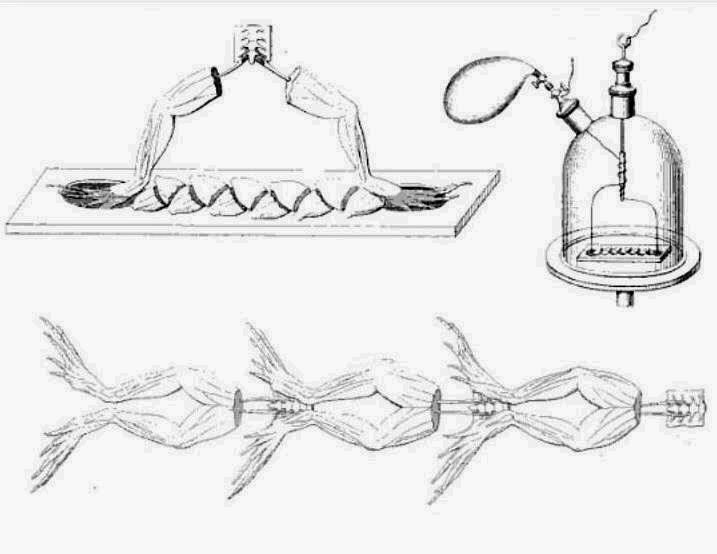
Matteucci's Frog Battery

Matteucci’s Frog Battery

Yup, frog batteries.  Carlo Matteucci developed the first well-known frog battery in 1845. A frog battery is an electrochemical battery and the general term of this class of battery is the “muscular pile.” But, long before there were frog batteries, Benjamin Franklin coined the term “battery” to describe an array of charged glass plates. His “Leyden Jars” were the early form of a capacitor. He not only came up with the theories, he had to create a new language to fit them. He coined the terms battery, charge, condenser, positively and negatively among others. These are the same terms that are used today. The rechargeable battery was developed in 1859 by the French inventor, Gaston Plante, and is the battery most commonly used in cars today. However, there is now a push for greener electric cars, and there are nearly 25 electric cars on the market today.  Now the race is on to create a SuperBattery – one that can power an electric car for 300 miles. The Tesla Models X and S are the only cars that come close so far. The Supercharger stations in China are among the world’s fastest and can fully recharge a Tesla in 75 minutes.

The Tesla Model S electric car next to the Tesla electric Roadster.

The Tesla Model S electric car next to the Tesla electric Roadster.

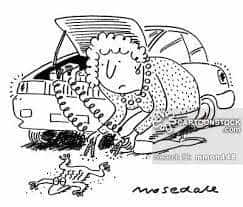
It is even possible to build your own electric car – building from the ground up or converting an internal combustion engine to electric. According to Seth Leitman, an industry leader in Green-Eco Friendly lifestyles, there are four reasons why EVs will be around a long time: They are fun to drive and own, they are cost efficient, they are performance efficient and they are environmentally efficient.  In the latest edition of his book, “Build Your Own Electric Vehicle,” he will take you, step-by-step through building your own electric vehicle.  His books, “Build Your Own Electric Vehicle,” and “Build Your Own Plug-in Hybrid Electric Vehicle” are available here in the library. The Leddy Lab in the Department of Chemistry at the University of Iowa is doing research on several areas, one of which is Fuel Cells and Batteries.  Fuel Cells are efficient and have environmental advantages which make them attractive power sources for everything from cars to laptops. Researchers at Virginia Tech are working on perfecting a sugar-powered “biobattery.” Recharging may be as simple as adding sugar. And so the development of the battery continues. From the potato batteries used in science classes to molten salt batteries, nickel-zinc batteries, rechargeable alkaline batteries, vacuum tube batteries, the sugar battery and fuel cells. And so the development of the battery continues. From the potato batteries used in science classes to molten salt batteries, nickel-zinc batteries, rechargeable alkaline batteries, vacuum tube batteries, the sugar battery and fuel cells.  I’m glad we don’t have to rely on frog batteries…. Car_Frog

Engineering Library TL220 .B68 2013

Engineering Library TL220 .B68 2013

References:

For more information:

I am getting impatient to hear from home

Joseph Culver Letter, February 17, 1865, Page 1Office Chief of Artillery, District of Tennessee,
Nashville, Tenn., Feb. 17th 1865.
Dear Sister Mollie:

I have just been making requisition on my memory for the recollection of writing you a letter a few days ago, but it refuses to render the account, therefore I conclude that I am mistaken – or rather as you once corrected me that I mistake in thinking that I have written you. I had fully intended to do it, about a week ago when I wrote to Leander, and am not now sure that I did not, but will proceed now as though I was sure that I had neglected my younger sister so long. I would on no account be so negligent in this matter did I not know that you have another “not a brother” who writes you often enough, almost, to keep you constantly reading. But do not think from this that I mean to relinquish a brother’s privalege to write to you as often, at least, as I feel like it and to expect letters from you. I am getting impatient to hear from home. Not a word from there, direct, since leaving it. I heard, indirectly, that Frank had left for the seat of war. I addressed a letter to him at Pontiac, but think it did not reach there till after he left. I have been very busy all week. We have been inspecting the Artillery at this post and it has been a very laborious work, but we finished it yesterday – inspected five Batteries – and now I have a leisure hour, and will devote the largest part of it to chatting with you. Some one wrote me – Gussie Kent I think – that Baby Howard was sick, had the whooping cough. I hope the little fellow is better. Write me a whole letter about your self and the baby – and I’ll not prohibit your saying a word about Frank. I had a letter from Bro. Tom dated at Cleveland, a few days ago. He was well. Did not give any news of consequence. The burden of his communication was about the girls. Mollie, I wish I was married – wish I had a good wife to bring down here. I am nicely situated for keeping house. We occupy for Head Qrs. a fine large mansion – the late residence of the rebel Col Bryan – and I could locate my family here in good style. Wouldn’t that be nice soldiering? Mollie you select me a wife and I’ll apply for a leave of absence of a week, to go and get married. I’ll beat Tom yet if he don’t be spry. But seriously, I think Sammy will beat both of us. Tom is too full of business to marry and I will never save money enough to purchase the necessary matrimonial papers. Sammy will turn out the only sensible boy in the family. He will come out of the service with five or six hundred dollars and be in circumstances to take unto himself a spouse and go into business. I have about made up my mind that it is better for me to be in the army than out of it. This is the only place in which I can support myself, and therefore I shall remain in the service of our Uncle until his rebellious children are subdued and then go to Mexico and join the Liberals. There I shall win fame enough to support me in my declining years. This is not an air castle that I am building, is it? I wish I had Sammy with me here. Write to him very often. He writes me that he gets letters from home only semi occationally. Love to all.

Goodbye Mollie
Very Affectionately
Your Brother
Wm J. Murphy

I went to the Dock this morning to see what time the boat would leave

Joseph Culver Letter, February 15, 1865, Page 1

Home Insurance Company
Office No. 135 Broadway.
New York, Feby. 15th 1865
My Dear Wife

I went to the Dock this morning to see what time the boat would leave. We may possibly not get away to-day on account of the ice. I met Capt. Horton, Co. “F”, on the boat & went with him up to the Lovejoy Hotel to see Capt. Coolidge, Brigade Quarter Master, and Capt. Endsley, 70th Ind.1 I will have plenty of good company & feel much happier this morning than yesterday. I was a little blue yesterday when I thought of making the trip with strangers, perhaps sea-sick most of the way. God has been very kind and good to me, & I feel very happy in His love.

Capt. Horton & myself went down Wall Street to the Ferry this morning to see the sights. The gold market had not opened yet, so we will go again about noon. On our way back, we called in here at the Home Ins. Co.2 They greeted me very kindly and offer[ed] to do anything in their power to make my stay in New York pleasant. I am writing in a very neatly furnished little office for private uses. Am all alone. There is an arm chair just to my right, & I have been trying to imagine Howard and you in it, while I talk with you. “Oh, how I wish you were here.”

There will be a vessel in from Fortress Monroe [Va.] at 12 o’clock with the latest news. You will receive them by the Chicago papers to-morrow.

I am extremely fortunate in meeting Capt. Horton, as I will have barely sufficient funds to pay my living to Savannah. I have tried to be very economical but everything is so enormously high. I wished to send you some nice book from here, but you must “take the will for the deed” this time.

I see by the telegraph news this morning that it is snowing in Chicago, and probably in Pontiac also. The snow in Western New York is reported 4 feet deep. All the roads running West are blocked up, so that I cannot expect another letter before I leave.

Capt. Horton left the Regt. on the 10th January at Savannah & has been home on leave of Absence. He gave me quite a history of the Campaign through Georgia. The boys were all well. The news of the capture of Branchville and evacuation of Charleston are repeated this morning. It will either be confirmed or denied by the news on the noon Steamer.

The boat that we go down on (“Constitution”) is not a very fine one but looks strong and good. Horton says all were sea-sick coming up, so you can imagine what my condition will be two days hence. We will be Six days going to Savannah unless we have better luck than common. The sea is very rough. The weather this morning was very clear and pleasant, but it is quite cloudy now & looks as if we might have rain.

Horton went around to the Lovejoy Hotel to see what time the other Officers intended to go on the Boat. I expect him back every moment when we will return to the Sweeny Hotel for my baggage.

If I have opportunity, I will write on the boat on the way down. It will be all new to me as I was never on the water. I would like very much to hear from Howard and you this morning. I presume you are at Maggie’s, & I hope well and happy. If it be true that we have presentiments of good or evil of those we love, you are indeed happy. I had very sweet communion with Our Father last night before retiring and feel this morning as if I can freely trust in all things. May he bless you always with health and happiness. The clock is striking 12, so I must again say Good Bye. Kiss Howard for Papa and accept a sweet one for yourself. May Our Father bless you.

Your affectionate Husband
J. F. Culver

  1. George W. Horton, a 25-year-old carpenter, was mustered into service on Sept. 8, 1862, as lieutenant in Company F, 129th Illinois Infantry. He was commissioned captain of his company on June 11, 1863. When the regiment left Nashville in February 1864, Captain Horton remained behind in the hospital but rejoined the company in time for the Atlanta Campaign. On January 11, 1865, he received a leave at Hardeeville and rejoined the regiment on April 4. Captain Horton was mustered out near Washington on June 8, 1865. Benjamin F. Coolidge was mustered into service on Aug. 23, 1862, at Camp Piqua, Ohio, as lieutenant and quartermaster of the 99th Ohio Infantry. In November 1862 he was assigned to General Ward’s staff as brigade quartermaster. Lieutenant Coolidge in January 1865 had been ordered to proceed to Nashville on official business. On rejoining the XX Corps at Goldsboro, he was given a temporary assignment as division quartermaster. Henry M. Endsley of Shelby County was mustered into service on Aug. 1, 1862, at Indianapolis, Indiana, as captain of Company F, 70th Indiana Infantry. Captain Endsley, having received a leave, left his unit on Oct. 20, 1864, and rejoined it in late March 1865. Compiled Service Records of Union Soldiers, NA.
  2. Before entering service, J.F.C. had been the Livingston County agent for the Home Insurance Company of 135 Broadway, New York City, New York.

The mails must be much delayed by the deep snow

Joseph Culver Letter, February 14, 1865, Page 1

Sweeny Hotel, New York Febr. 14th 1865
My Dear Wife

I arrived here at 4 P.M. & recd. your letter of the 8th. The one sent to Carlisle I did not get. The mails must be much delayed by the deep snow. I am sorry to hear of your own and Howard’s ill health, but hope you have both recovered ere this.

I went to the Q. M. Dept. and secured transportation on the “Constitution” which is to leave at noon to-morrow if not prevented by the ice on the Bay.1 I shall probably go aboard at any rate, and this is probably the last letter I shall write before I reach Savannah, so that it will probably be two or three weeks before you hear from me again.

I hope Maggie Chappell has done well, yet I was not at all favorably impressed with the reputation I heard of him.2 I wish them much happiness.

There is but little snow here though the streets are quite slushy.

If I thought you would do much of your writing from the “preacher’s,” I should certainly “donate a new pew,” however, I was too glad to hear from you to find fault with the penmanship. You may direct your letters hereafter to the Regt., though I have no idea when I shall reach it.

I wrote to you from Carlisle yesterday morning concerning the disposition of the money coming from Father’s estate in April.3 If it does not reach you, let me know.

I feel uneasy about Howard’s arm; I did not expect him to get so sick.4 I learned in Carlisle by letters received from Bloomington, Ills., that the Small-pox had become epidemic there, so much so, that the schools are suspended. I hope it will not reach Pontiac.

Your letter does not mention the progress of the [revival] meetings, yet I hope they are still improving in interest.

Rumor says Sherman has possession of Branchville.5 I hope it is true, as it will compel the evacuation of Charleston.6 In that event, I may land there instead of Savannah. I anticipate a few days sea-sickness; I hope not severe. My health is good.

You do not mention in your letter the money I sent you from Chicago, either for yourself or for Goodwin & Smith. I presume, however, it reached you; there was $25.00 for you & $10.00 for the others. The first (yours) was enclosed in a letter with the S.S. books, the other I sent by mail.

I thought I should write to the S. School or church from this place but do not feel like it to-night. There are very many things I should like to talk with you about to-night if I were with you, as it seems such a long time before I can reasonably expect to hear from you again. Keep in Good heart, let us trust in God to control all things for our good. I know you will be very lonely, but make use of every means in your power to keep cheerful. Be assured that whatever contributes to your happiness will meet my approbation.

We can hope for the future trusting in God. I feel that He will bless and keep you both. Kiss Howard for me & Sister Maggie [Utley] & the children. I ought to have written to Bros. John and Sammy again but have neglected it. Remember me to them when you write. Jennie & Hannah complain that you do not write to them often enough.

Remember me kindly to all our friends, especially those who have recently espoused Christ. I shall remember them at a Throne of Grace. I have committed both Howard and you to the care of “Our Father in Heaven,” and I feel content though it is hard to be so far from you. May He abundantly bless you with health, happiness, and a sufficiency of Grace. With much love and a lasting remembrance of your pure and holy affection, I must say Good Bye.

Your affectionate Husband
J. F. Culver

  1. Constitution was a 944-ton screw-propelled steamboat, built at Mystic, Connecticut, in 1863. She was wrecked off Cape Lookout, North Carolina, on December 12, 1865, with the loss of 40 lives. The Quartermaster Department had the responsibility of providing transportation for soldiers traveling on orders and en route to rejoin their units. Merchant Steam Vessels of the United States, 1807-1868, “The Lytle List” (Mystic, 1952), pp. 40, 264.
  2. Maggie Chappell was born in Indiana in 1836, and in 1860 she was living in Pontiac at the home of Joshua and Harriet Whitman. She had apparently married or was engaged to marry someone of whom J.F.C. disapproved. Eighth Census, Livingston County, State of Illinois, NA.
  3. The subject letter is missing from the Culver Collection.
  4. Before leaving Pontiac, J.F.C. had had Howard vaccinated for smallpox.
  5. Sherman’s line of march passed west of Branchville. On February 7 soldiers of General Howard’s wing reached the South Carolina Railroad at Midway, eleven miles west of Branchville. From there, they advanced on and captured Orangeburg.
  6. With Sherman’s columns astride the South Carolina Railroad, the defenders of Charleston found themselves in an increasingly precarious position. If Sherman turned his army toward the coast, they would be encircled by an overwhelming force and destroyed.