Skip to content
Skip to main content

Flying into Spring

Optimized-IMG_20150319_142825285
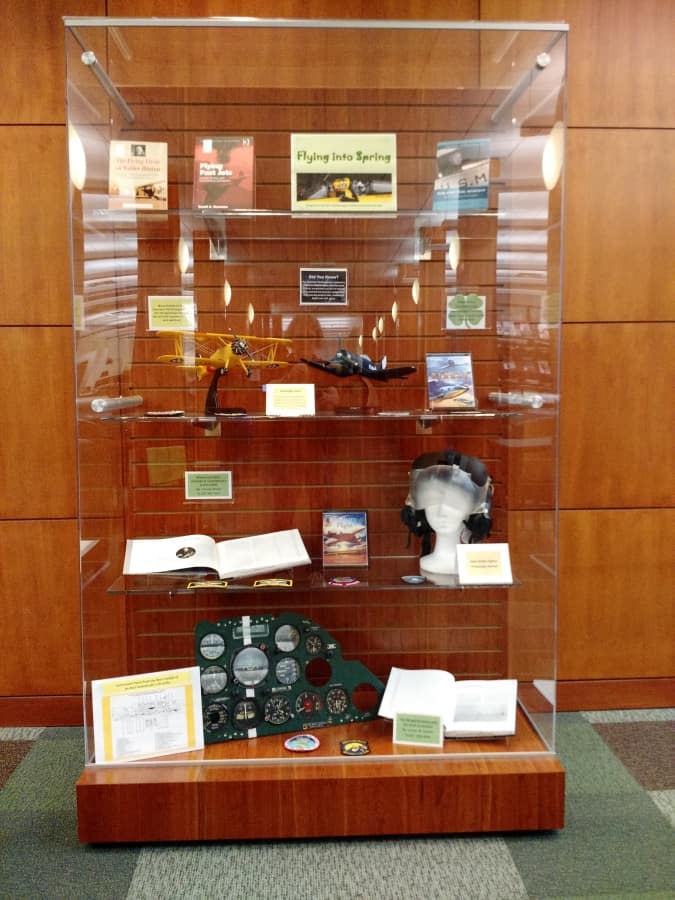
Welcome Spring! The Lichtenberger Engineering Library exhibit is now highlighting the dream of flight. The idea was inspired by Hayao Miyazaki’s last film The Wind Rises. The film is a look at the life of Jiro Horikoshi, the man who designed Japanese fighter planes during World War II, and his love of flight.

The fascinating exhibit items including aircraft models, a prototype helmet, an instrument panel, challenge coins, and patches are borrowed from the Operator Performance Laboratory. The Operator Performance Laboratory, a unit of the University of Iowa Center for Computer–Aided Design, is located at the Iowa City Municipal Airport. The laboratory, housed in a hangar, holds three aircraft and two simulators, and mainly conducts research on human-in-the-loop and intelligent autonomous systems. Believe it or not, when visiting the laboratory, we saw a big stuffed bear as a “pilot” in the cockpit of Beechcraft A-36 Bonanza!

The old-looking instrument panel in the exhibit case is from the rear cockpit of an Aero Vodochody L-29 Delfin. The Aero L-29 Delfin (dolphin), NATO designation Maya, is a military trainer aircraft. It was firstly designed and built by Aero Vodochody for the Czechoslovakian Air Force and Soviet Air Force. The laboratory’s L-29 can climb at the rate of 14 m/s (2,800 ft/min). The maximum speed of the aircraft is 820 km/h (510 mph). The range and service ceiling are 900 km (560 mi) and 11,500 m (37,700 ft).

For those who are passionate about flight, please check out related books and DVDs (https://www.pinterest.com/UIEnginLib/ ) from the Engineering Library. The library also holds non-technical books on aviation such as The Wright Brothers and the birth of aviation, and Women and flight: portraits of contemporary women pilots.

Come and see the exhibit to find more!

References

Operator Performance Laboratory website. Retrieved from https://hfdata.opl.uiowa.edu/opl/

Aero L-29 Delfin. Retrieved from http://www.military-today.com/aircraft/l29_delfin.htm

Research Aircraft Specification Sheet. Retrieved from https://hfdata.opl.uiowa.edu/opl/?q=l29

We arrived here at dark and cast anchor

Joseph Culver Letter, March 19, 1865, Page 1

At anchor off Morehead City, N.C.
Sunday night, March 19th 1865
My Dear Wife

We arrived here at dark & cast anchor, as our vessel draws too much water to cross the bar except at high water & in daylight. We will not get in until noon to-morrow. We hope to get direct to the Army.1

The New York papers of 16th, which we recd. off the “Atlantic” off Fort Fisher this morning, state that Sherman is at Goldsborough & the rail-road runs within 15 miles, & Schofield is represented at Kingston.2 We may be disappointed, however.

Our trip from Charleston has been very pleasant. The sea has been smooth as glass. I expected a rough trip at this season of the year but was happily disappointed.

We met the “Fulton” on her way to “Hilton Head” with the mail.3 I have not heard from you since I left, except yours of the 8th Febr. recd. in New York. You can imagine my anxiety to receive some intelligence of you. I will hope that you are well & happy. May God bless you.

It is six weeks tonight since I left you. Aside from the sights and changes, it has been about the dullest time I most ever passed. To-day has been but little like Sunday though the day has been very beautiful. We have not been out of sight of land to-day, but the coast from Wilmington up is very barren. We were not sufficiently near Fort Fisher to see its arrangement;4 it looks very formidable at a distance.

The name of this vessel is “New York” & belongs to the Vanderbilt Line.5 There are 1200 troops on board — 52nd Penna, 54th New York, 159th New York, & some detachments.6 Col. Merrill & Capt. Endslee, 70th Ind., and Burk of the Brig. Band compose our party. We left Dr. Bennett at Charleston.

I will write to-morrow if we stop long enough. I have written to-night so that should an opportunity offer we will go forward, and I might not have a chance to write before reaching the command. I am sorry that I have no good news to communicate. Let us hope, however, that God will be pleased very soon to bring this war to a close. Remember me in love to all our friends. I should have written more, but I lacked the energy or disposition, or something else, I don’t know what.

I have had the blues ever since I left home. Write very often. Kiss Howard for me, Pray for me.

Good Bye.
Your affect. Husband.
J. F. Culver

  1. Sherman’s army had started from Fayetteville for Goldsboro on March 15, the First and Third Divisions of the XX Corps taking the road for Averysboro. The next day near Averysboro.  the  129th Illinois, along with other units of Slocum’s wing,  engaged a Confederate force led by General Hardee. After a severe fight lasting until dark, the Confederates retreated. The Federals occupied Averysboro on the 17th. Grunert, History of the 129th Illinois, pp. 212-17.
  2. The New York papers of the 16th were premature in reporting Sherman at Goldsboro. On the 16th Slocum’s left wing was fighting the battle of Averysboro, and Howard’s right wing was near Owensville. General Schofield, following the defeat of General Hood’s Army of Tennessee at Nashville in mid-December, had been transferred to the Atlantic seaboard with his XXIII Corps. After capturing Wilmington, N.C., Schofield directed his attention to opening a route for supply of Sherman’s army by way of Morehead City and New Bern. By the last day of February, General Cox’s XXIII Corps divisions had been shifted from Wilmington to New Bern. Thrusting inland, the Federals on March 14 occupied Kinston. It was 65 miles from   Kinston to Averysboro. Cox, March to the Sea, pp. 147-62.
  3. Fulton was a 2,307-ton propeller-driven steamer, built in 1856, and calling New York her home port. Merchant Steam Vessels of the United States, 1807-1868, p. 69.
  4. Fort Fisher, one of the Confederate strongholds guarding the approaches to the Cape Fear River and Wilmington, had been captured by a Union amphibious force on January 15, 1864. Until the fall of Fort Fisher, the mouth of the Cape Fear had been a focal point for blockade runners.
  5. New York was a new propeller-driven steamer of 2,217 tons. Merchant Steam Vessels of the United States, 1807-1868, p. 138.
  6. The 52d Pennsylvania and 100 men of the 54th New York had been embarked at Charleston on March 17, while the 159th New York had boarded the ship at Savannah. These units were under orders to proceed to the mouth of the Cape Fear River, where they would report to the commanding officer, U.S. Forces. O. R., Ser. I, Vol. XLVII, pt. II, p. 897.

Birthing, Obstetrics & Midwifery – John Martin Rare Book Room open house March 26, 4-7pm

Join the University of Iowa History of Medicine Society and the University Libraries at an open house in the John Martin Rare Book Room, Hardin Library for the Health Sciences, on March 26, 2015 from 4:00pm-7:00pm.

28 books from 1551 to 1894 will be on display, covering:  Birthing

  • anatomy
  • midwifery
  • early obstetrics
  • disease

For more information on the History of Medicine Society, or to donate, please see:  http://hosted.lib.uiowa.edu/histmed/index.html

Colleen Theisen Receives Prestigious “Mover and Shaker” Award from Library Journal

UI Main Library - Staff Photos, September 2012Colleen Theisen of the University of Iowa Libraries has been named a “Mover and Shaker” in the library industry by the Library Journal.

Theisen was recognized in the magazine’s March 15 issue for her efforts to transform libraries in the 21st century. She was selected because of her commitment to the profession and her efforts to transform how library outreach and how we learn about, and interact with, the unique primary source collections in academic libraries. Library Journal especially noted herinnovative work connecting communities on campus and online to rare books and historic documents through social media, online video, and in the classroom

Theisen currently serves as special collections outreach and instruction librarian as part of Special Collections & University Archives

LJ’s newest class of Movers & Shakers proves once again that the library arena is rich with innovation driven by mission-focus,” said Rebecca T. Miller, group editor, Library Journal and School Library Journal. “Those identified come from across the library universe and beyond, and they are each transforming how libraries connect with and enrich their communities. We congratulate them, and look forward to seeing their ongoing contributions multiply.”

Theisen is from Cedar Rapids and graduated from Regis High School before completing her BA in Art History & Archaeology at the University of Missouri-Columbia. She followed her degree with a teaching certificate for secondary art education at Clarke College in Dubuque, before completing her Masters of Science in Information, specializing in archives and records management, at the University of Michigan in 2011. She has worked as outreach and instruction librarian at the University of Iowa for more than three years.

The 2015 Movers & Shakers were selected by the editors of Library Journal, the profession’s leading trade magazine. Each of the Movers & Shakers will be prominently featured in the March 15th issue of Library Journal and celebrated at a special luncheon in June during the American Library Association’s annual conference in San Francisco, CA. The print feature’s companion website is sponsored by OCLC and Boopsie, and it is available at www.libraryjournal.com/movers2015. The luncheon and awards ceremony is made possible by the support of sponsors, including Baker and Taylor, Demco, Mission Bell Media, OCLC, Plata Publishing, Rosen Publishing and Sage.

Read more about new inductees at www.libraryjournal.com/movers2015.


ABOUT LIBRARY JOURNAL
Founded in 1876, Library Journal is one of the oldest and most respected publications covering the library field. Over 75,000 library directors, administrators, and staff in public, academic, and special libraries read LJ. Library Journal reviews over 8000 books, audiobooks, videos, databases, and web sites annually, and provides coverage of technology, management, policy, and other professional concerns. For more information, visit www.libraryjournal.comLibrary Journal is a publication of Media Source Inc., which also owns School Library Journal, The Horn Book publications, and Junior Library Guild.

UI Libraries Launches Explorer’s Legacy Website

van allen siteThe University of Iowa Libraries has launched an online site that presents the history of the 1958 Explorer I satellite mission and the role played by UI astrophysicist James Van Allen in its success.

The site, Explorer’s Legacy, chronicles the mission that led to the first scientific discovery of the space age when Van Allen identified the radiation belts surrounding the earth. The website also provides, for the first time, access to the complete set of data collected during the Explorer I mission. Digitized from the original reel-to-reel tapes that have been preserved by the University of Iowa Libraries, these data represent the first scientific data returned to Earth from space.

The new website embeds digitized content from the Van Allen papers within a new narrative account of the mission written exclusively for the site by Abigail Foerstner, author of James Van Allen: The First Eight Billion Miles. The presentation provides a complete overview of the development, launch, and success of the Explorer missions, and highlights the participation of the Department of Physics & Astronomy at the University of Iowa in many subsequent space missions, including the current Van Allen probes that continue to make new discoveries within the radiation belts.

“It’s great to have the first scientific measurements ever made in space available to the public,” says Craig Kletzing, F. Wendell Miller Professor in the Department of Physics & Astronomy. “From those first days in 1958 to today’s Van Allen Probes mission, the University of Iowa is still at it, working to solve the mysteries of space.” The data tapes from the Explorer missions were created during the satellite’s orbits around the earth. When Explorer I was launched on January 31, 1958, it began to send a signal back to earth. A series of receiving stations were positioned around the globe that would listen in as the satellite passed overhead, and a technician would activate a reel-to-reel tape machine to record the signals.

In 2009, the University of Iowa began an effort to preserve the original analogue reel-to-reel tapes that were stored in the basement of MacLean Hall on the Pentacrest. Staff from the Libraries’ Preservation Department cleaned and stabilized the tapes onsite, and then transferred them to the Main Library. The entire collection is now physically stable and in appropriate environmental conditions. “This new resource is the culmination of years of effort to preserve these historic recordings,” says Greg Prickman, Head of Special Collections. “The availability of the data tapes in a digital format provides broad access to the foundational information of the space age.”

Explorer’s Legacy is the result of inter-disciplinary collaboration between librarians, conservators, physicists, writers, and digital media specialists. In years to come, it will only be getting bigger—the reel-to-reel tapes holding the data from the next successful mission, Explorer III, have already been digitized, and are being prepared for inclusion in the site.

The site was launched with support from the Roy J. Carver Charitable Trust.

SuDocs Have Moved!

FDLPThe University of Iowa Libraries is a congressionally designated depository for U.S. federal government information.  This collection of print publications (classified with the Superintendent of Documents or SuDocs scheme) was recently moved from the third floor to the northwest corner of the fifth floor in the Main Library. Not only is the space on the fifth floor more accessible to our users but this has allowed the Main Library to open up space on the third floor for our ever expanding Special Collections.

Please visit the guide to finding government information for further information about the U.S. government information resources:  http://guides.lib.uiowa.edu/us.

Broaden your literature searches using EMBASE – we can teach you how

EMBASE is a biomedical and pharmaceutical database containing bibliographic records with abstracts. Although there is overlap with records from PubMed, there are also many unique records.

This hands-on session will show you how to conduct basic searches using EMBASE’s quick search box, how to conduct searches using EMTREE subject headings, and how to use subheadings for drug and disease topics.

Our next sessions:
Tuesday, April 28th, 10:00 – 11:00 am (Location: East Information Commons)
Wednesday, March 18th, 12:00 – 1:00 pm (Location: East Information Commons)
Register online or by calling 319-335-9151.  You may also request a personal session for this or any of our other workshops.

embase graphic

We have just returned from a visit to Fort Sumpter

Joseph Culver Letter, March 14, 1865, Page 1

Charleston, S.C. March 14, 1865
My Dear Wife

We have just returned from a visit to “Fort Sumpter.” The water was not very rough, but it rained quite hard part of the time, & as a consequence we got wet through. We went out in a small rowboat, about as large again as old Charlie Jones’s in which you may recollect taking a ride one beautiful moonlight night several years ago.1

“Fort Sumpter” is to-day probably the strongest of its kind in the world, & it looks like an impossibility to have captured it by direct assault.2 We were shown through it by a man who was in it with Major Anderson when he surrendered it, and was also among the first to enter it after its evacuation by the Rebels.3 It is not quite as large as I expected to find it, yet much more complicated. I gathered a few shells as relics which I will try and preserve. There is only a sergt. & 8 men in the “Fort”. Those portions [of Fort Sumter] facing our Batteries on the Island [Morris] are all battered down, & over the ruins are various kinds of abattis, over which it would have been impossible for troops to force their way against even a feeble resistance. We came by “Castle Pinckney” on our way in;4 it is very well finished but has never been used. Around two sides of Sumpter there are tons of iron (solid shot & shell) which it would seem might occupy years in throwing there.

I will enclose in this some papers that I should have left at home. The two receipts put in the drawer with my other recpts, & the license in an envelope marked “Licenses.” I think it probable we will try & get to Hilton Head to-morrow, & from there to Wilmington.

We received the New York Herald & Tribune yesterday but there is but little news. We have no news here, and it is as dull as you can possibly imagine. I can scarcely expect to hear from you if we leave here before the next mail arrives, but I shall hope that you are all well and happy.

May God bless you. It is wet & gloomy this afternoon. Remember me in love to all our Friends. Kiss Howard for me.

Good Bye.
Your affect. Husband
J. F. Culver

  1. Charles Jones was a prosperous Livingston County farmer.
  2. Fort Sumter had been attacked by Union ironclads on April 7, 1863. Repulsed with the loss of one vessel, the Federals retired. They returned that summer, and, having secured possession of Morris Island, opened fire on the morning of August 17 on Fort Sumter with all their batteries. A number of ironclads at periodic intervals joined in the bombardment. The masonry walls were pounded into ruins at a number of points, but the Confederate defenders burrowed into the rubble. On the night of Sept. 8, 1863, the Rebels repulsed a landing party. The bombardment was resumed, but failed to dislodge the defenders who remained in possession of Fort Sumter until the night of February 17, 1865, when Charleston was evacuated. D. Ammen, The Atlantic Coast (New York, 1883), pp. 91-110, 130-156.
  3. Maj. Robert Anderson on April 13, 1861, had surrendered Fort Sumter to Confederate authorities after a 34-hour bombardment. This event was the point of no return on the road to the Civil War. On April 14, 1865, Anderson, now a brigadier general, returned to Fort Sumter to raise the same United States flag that he had lowered four years before. Warner, Generals in Blue, pp. 7-8.
  4. Castle Pinckney was a masonry fort guarding the entrance to Cooper River. Situated as it was in the inner harbor, it had not been subjected to bombardment as had Forts Sumter, Moultrie, and Johnson, and the defenses of Sullivan’s and James Islands.

PI DAY CELEBRATION! March 13, 2015

Tomorrow is the Pi Day to end all Pi Days!

3.1415! 

IMG_6724


Thanks to IEEE for the great freebies!!

Thanks to IEEE for the great freebies!!


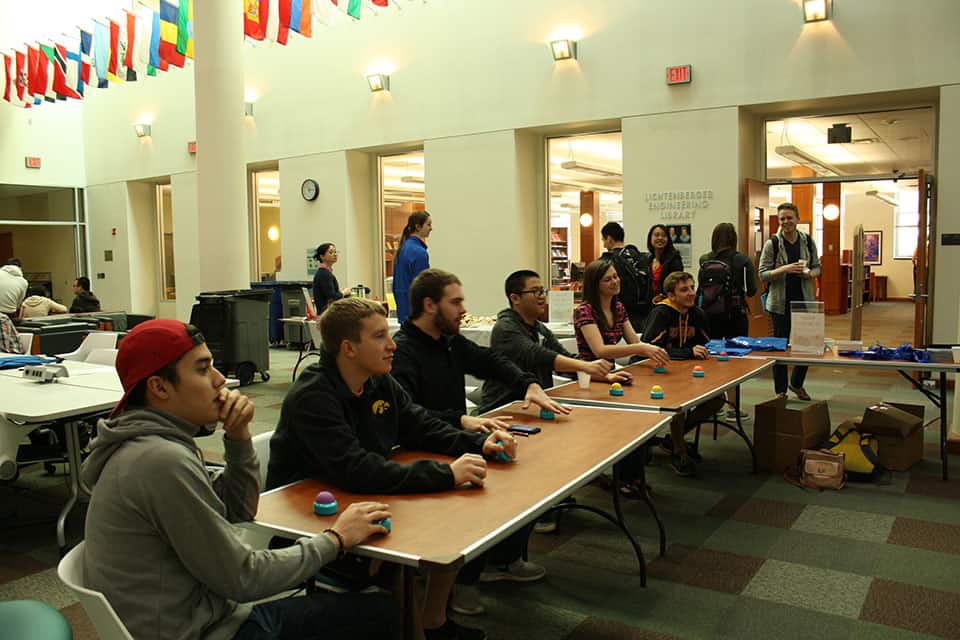
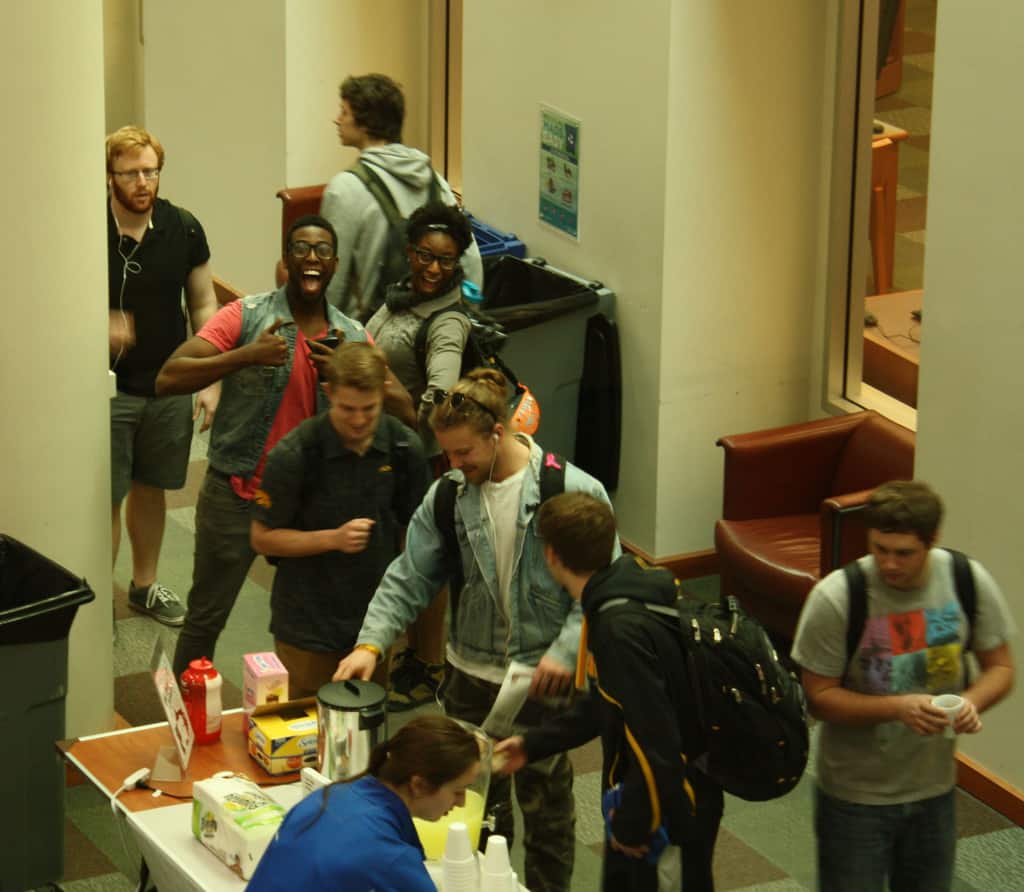
We celebrated a day early with free apple pie bites, trivia and freebies from IEEE!


In 2 hours, 300 pie bites were consumed and many students bravely took on the 7 trivia games that were played.

Who hit the buzzer first?

Who hit the buzzer first?


Many students were in the Student Commons cramming for their next exam, but managed to take time out to either play a game of trivia or to cheer on those who were playing.


Stopping by on our way out of town for Spring Break!

Stopping by on our way out of town for Spring Break!


 Some stopped between classes and others stopped before they left town for spring break.


Check our facebook page for more photos (and be sure to like our page while you are there!)

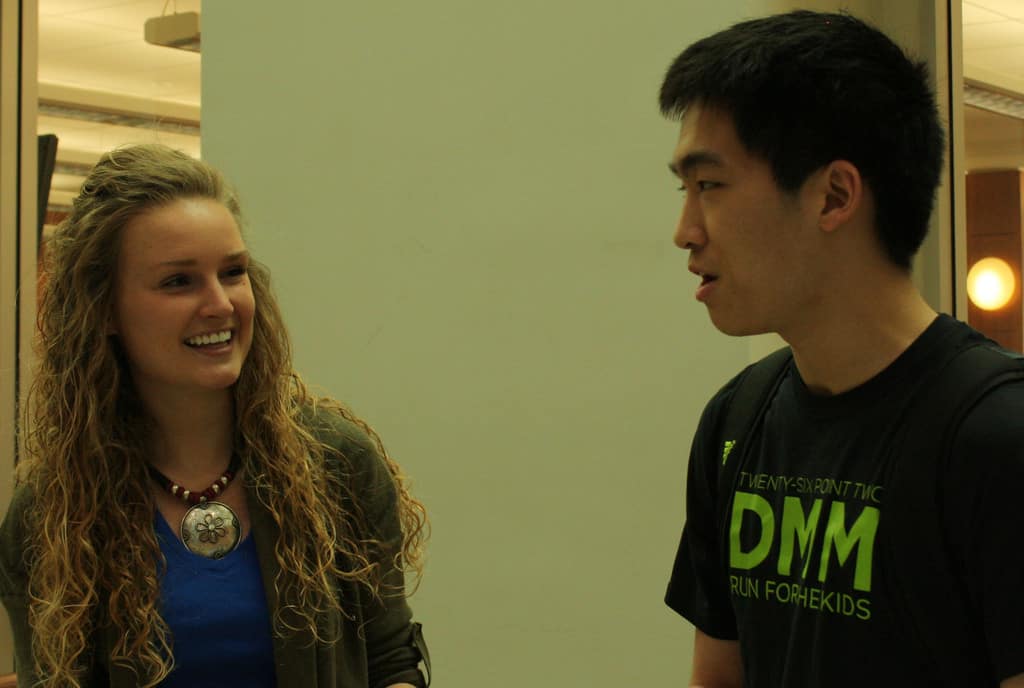
And thanks so much for Tau Beta Pi for co-sponsoring and to members Handbin Tao, Molly Berringer, Austin Hangartner, Allison Kindig, and Erin Leppek!

Now, just how many digits of Pi have you memorized?

I memorized over 20....

I memorized over 20!


See you next year!!! Plan to be there or be square!