Skip to content
Skip to main content

No time wasted: What is Leap Day, anyway?

Every four years, the Gregorian calendar gives us an interesting phenomenon called a “leap year.” The result? Countries that follow the Gregorian calendar end up with an extra day on the calendar: Feb. 29.

So why does this chronological quirk hit every four years? It actually takes Earth 365.242190 days to orbit the sun, leaving an “overflow” of five hours and 49 minutes. As Jackie Faherty, an astronomer at the American Museum of Natural History in New York, told NPR, “…that .242190 days to go around the sun is the entire reason why we have a leap year.”

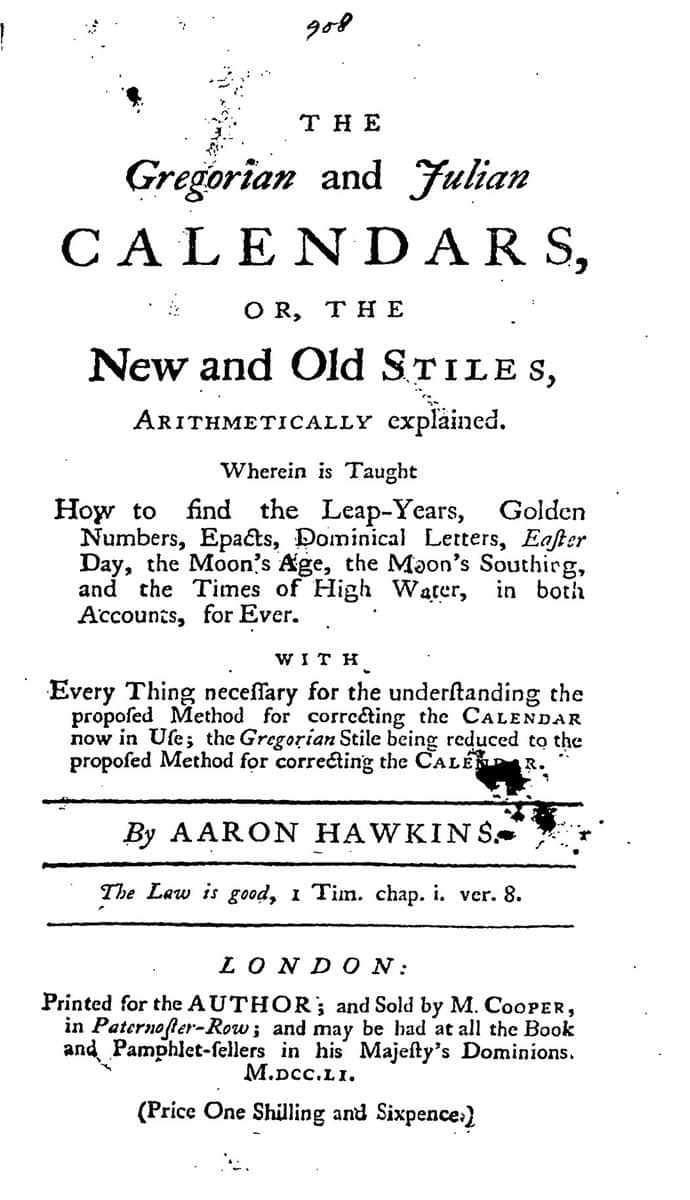
The Gregorian calendar we use today began by papal decree in 1582, and the first Leap Day took place in 1584. In London in 1751, Aaron Hawkins wrote a pamphlet explaining the mathematical basis for the leap year and the need to make up for the five hours and 49 minutes that go uncounted in an ordinary year. 

Both the 16th-century pope and his 18th-century champion were unknowingly preventing a headache for future computer scientists, who now benefit from their precision when programming systems.

Now to shake things up a bit: leap years don’t always occur every four years. The rules are actually slightly more complicated:

  • If the year is evenly divisible by four, it is a leap year, unless
  • …the year is also evenly divisible by 100, in which case it is not a leap year, unless
  • …the same year is also divisible by 400, in which case it is a leap year.

This means that programmers have to create a leap year function that takes a single integral argument (the year) and determines whether the year is a leap year. If programmers did not take this into account when setting up systems, it would throw off entire programs every four years, with a cumulative effect over time. 

In theory, the need for leap years is not limited to Earth; if humanity ever settles on Mars, for example, we’ll have to hash things out all over again. But our calendar says that’s a problem for another day.
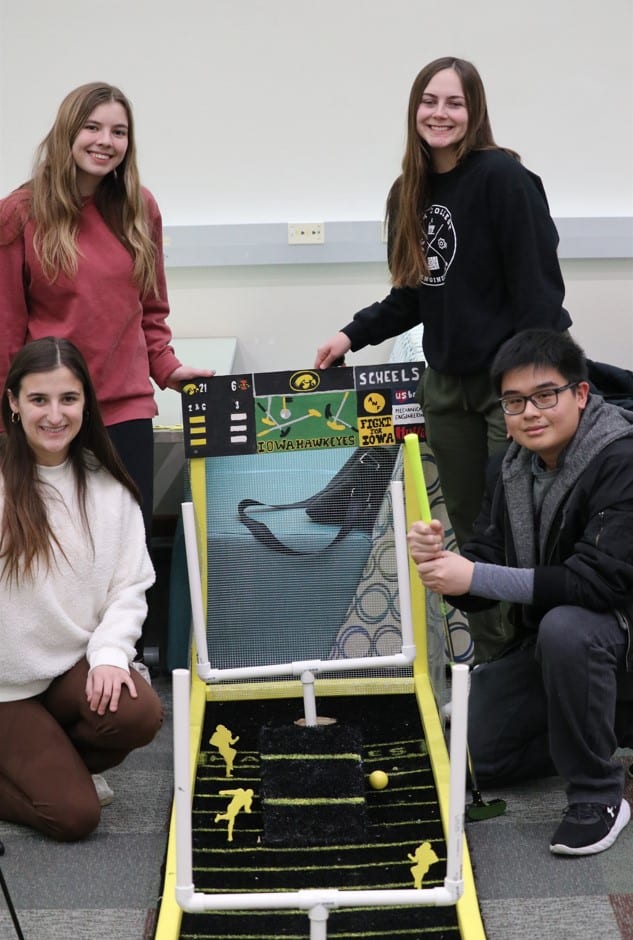
Engineering Open: Minigolf Design Challenge 2024 Results!

We had a fantastic time trying out all the new fairways at the teams created for the Engineering Open on Friday, Feb 23. Congratulations to the winners and thanks to all who joined us! Whether or not you took home one of our 3D-printed trophies, you’re all champions to us, and this tradition is definitely here to stay.


The 2024 winners were:

1st place: Lichtenberger Engineering Library

2nd place: Continental Crossings

3rd place: Mechanical Engineering

People’s Choice: Continental Crossings & Civil Engineering


Special thanks to our sponsors, College of Engineering NEXUS, Engineering Technology Center (Machine Shop & Electronic Shop), and the Lichtenberger Engineering Library.

Find your next read by checking out Blind Date with a Book at Lichtenberger Engineering Library

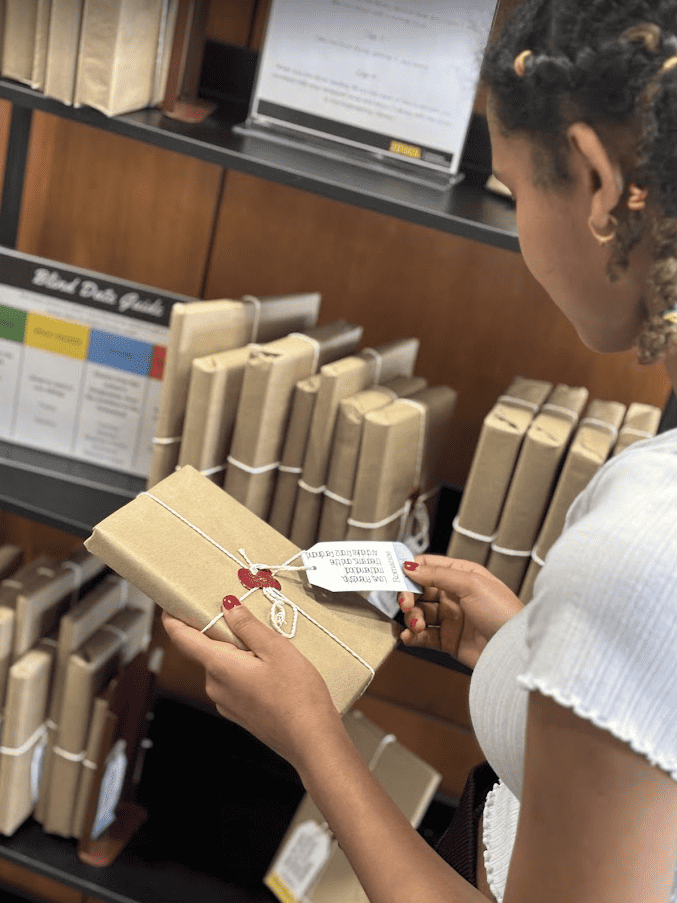
Get a jump on your reading goals in a fun and surprising way with our Blind Date with a Book. You can check out a surprise book by visiting the main floor of the Lichtenberger Engineering Library and finding the Blind Date with a Book shelf in front of the wooden wall. If you have trouble finding it, just ask at the service desk.

All the books are individually wrapped with a fun clue on a tag. Here are the tags from a few of the available books:

  • A photographic chronicle of America’s favorite pastime
  • Magic, rebellion, dukes, and epic battles!
  • Get crafty with a very common crafting material
  • A thumping good detective-ghost-horror-who dunnit-time travel romantic-musical-comedy-epic

Interested? These mysterious items and more are available. Come in today to pick one up!

Feb. 7 InnoConnect networking event brings JPEC to Lichtenberger Engineering Library

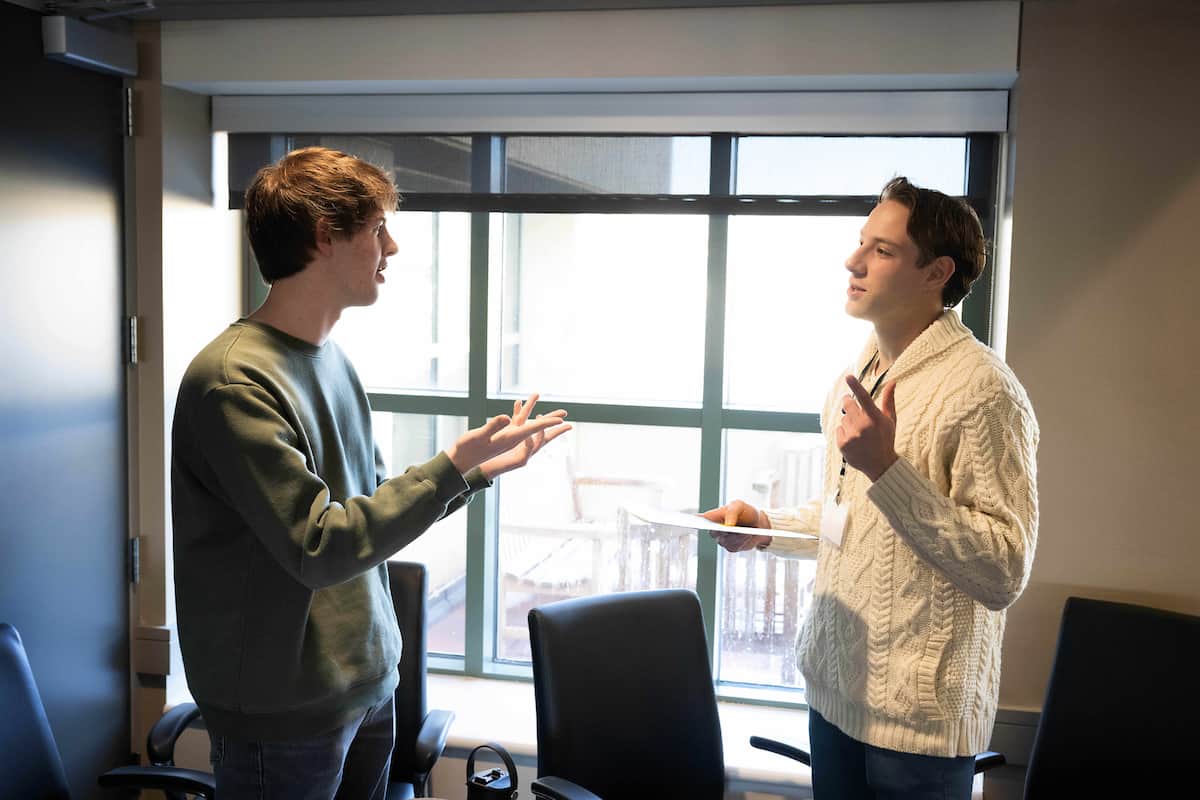
Unlock the power of collaboration! The Lichtenberger Engineering Library is partnering with the John Pappajohn Entrepreneurial Center’ (JPEC) to bring you InnoConnect: Uniting Minds in Business and Tech. This brand-new, two-hour speed networking event on Wednesday, Feb. 7 is designed for aspiring innovators and budding entrepreneurs.

Not sure where to start? That’s fine—attendees don’t have to bring a full business plan or a completely developed idea to participate, just an open mind and an interest in collaboration.  

We caught up with Jay Cooper, director of the Undergraduate Student Incubator at JPEC, to learn more about this upcoming event. Learn more about Jay’s vision for the future of this partnership from the brief Q&A below.

How does JPEC work to support student entrepreneurship on campus?
JPEC facilitates entrepreneurial success for students through our programs and our partnerships. We have several programs, both on and off campus, which revolve around helping people solve problems for the greater community. Our undergraduate, graduate, and faculty incubator programs help those at all stages learn how to start up through classroom activities and connections to entrepreneurs and creatives throughout the state of Iowa.

What is the goal of the InnoConnect program?
My hopes for this program are to build connections between non-technical and technical people in order to build great things. There are a lot of great potential partnerships on this campus – I’m hoping to increase the number of creative collisions that occur by bringing together people who may not traditionally cross paths.

Who should make sure to attend?

The target audience for this event is individuals who enjoy building solutions to problems but don’t consider themselves “business people.” Idea people are a dime a dozen; creators, inventors, and builders are much harder to find.

Ready to sign up? Visit the official event page to reserve your spot. Space is limited and will be offered on a first come, first served basis.

ACM open access agreement extended for University of Iowa authors

Association for Computing Machinery (ACM) Read-and-Publish Agreement for Open Access Continuity

The University of Iowa Libraries is pleased to announce the extension of the Read-and-Publish agreement with the Association of Computing Machinery (ACM) for three more years (now effective through Dec. 31, 2026). Through the agreement, all corresponding authors affiliated with the University of Iowa will have their research articles published open access in perpetuity in ACM journals, conference proceedings, and magazines, at no cost to the authors. In addition, the university community will continue to receive unlimited and unrestricted access to all content in the ACM Digital Library.

What should UI corresponding authors consider when assigning publication rights to ACM?

Since ACM already terminated transfer of copyright, authors will retain all rights to their work. UI corresponding authors should choose the “Institutional Paid Open Access/Permissions Release” option. This “Permissions Release” option means that a corresponding author agrees to grant ACM non-exclusive permission to publish their work in the ACM Digital Library and make it open access.

If you embrace the idea of sharing and distributing knowledge, we recommend using a Creative Commons license on the published version of your work. A Creative Commons license enables others to share and use your work provided that attribution is given to you, the author. For more information about a Creative Commons license, check out ACM’s Creative Commons Licensing Options.

How many research articles were made open access by UI corresponding authors from 2021–2023?

A total of 30 articles, including 24 conference proceedings and 6 journal articles, were open access during the period of 2021–2023. Two thirds of these corresponding authors were from computer science, but it’s exciting to see that faculty, students, staff and researchers in education, engineering, business, and geography are more frequently publishing with ACM. All these articles are now showcased within the featured collection of “UI Libraries Support Open Access” in the Iowa Research Online (UI’s institutional repository).

To learn about another open access agreement, this time from the Royal Society of Chemistry, check out this blog post.

What’s in store this semester at the Engineering Library

Welcome back! We’re happy to see you again. Here are a few events you can get involved in this semester with the Engineering Library: 

Join a team today for the Engineering Open: Mini Golf Design Challenge!  

The Mini Golf Design Challenge is back! Get creative and join a design team to build a mini golf hole themed around your team’s interest. The event will take place on the afternoon of Friday, Feb.23.  Sign-ups to be on a team are now open.  Individuals who are looking to be on a team can fill out the form here to sign up and be organized by department to work on a fairway. We will have up to 12 fairways in total, six fairways for each of the six departments, plus six additional groups and teams. The additional fairways are for university-recognized clubs and groups that are affiliated with the College of Engineering. If you are affiliated with a club or team and would like to build a fairway, please email lib-engineering@uiowa.edu with your organization’s name and team members. Team space is limited and first come, first served.   

Begin a new venture in the new year! 

Unlock the power of collaboration by joining our two-hour speed-networking event tailored for aspiring innovators and budding entrepreneurs. Whether you’re studying business, computer science, or engineering, this is your chance to connect with like-minded undergraduate students. Bring your entrepreneurial spirit and ideas, or simply showcase your expertise – everyone is welcome! Just bring a passion for innovation and a desire to find potential business partners. Let’s create synergies that could shape the future of entrepreneurship together! This event is sponsored by the John Pappajohn Entrepreneurial Center (JPEC) and the Lichtenberger Engineering Library. Sign up to reserve your spot today. 

Pop-Up Workshops 

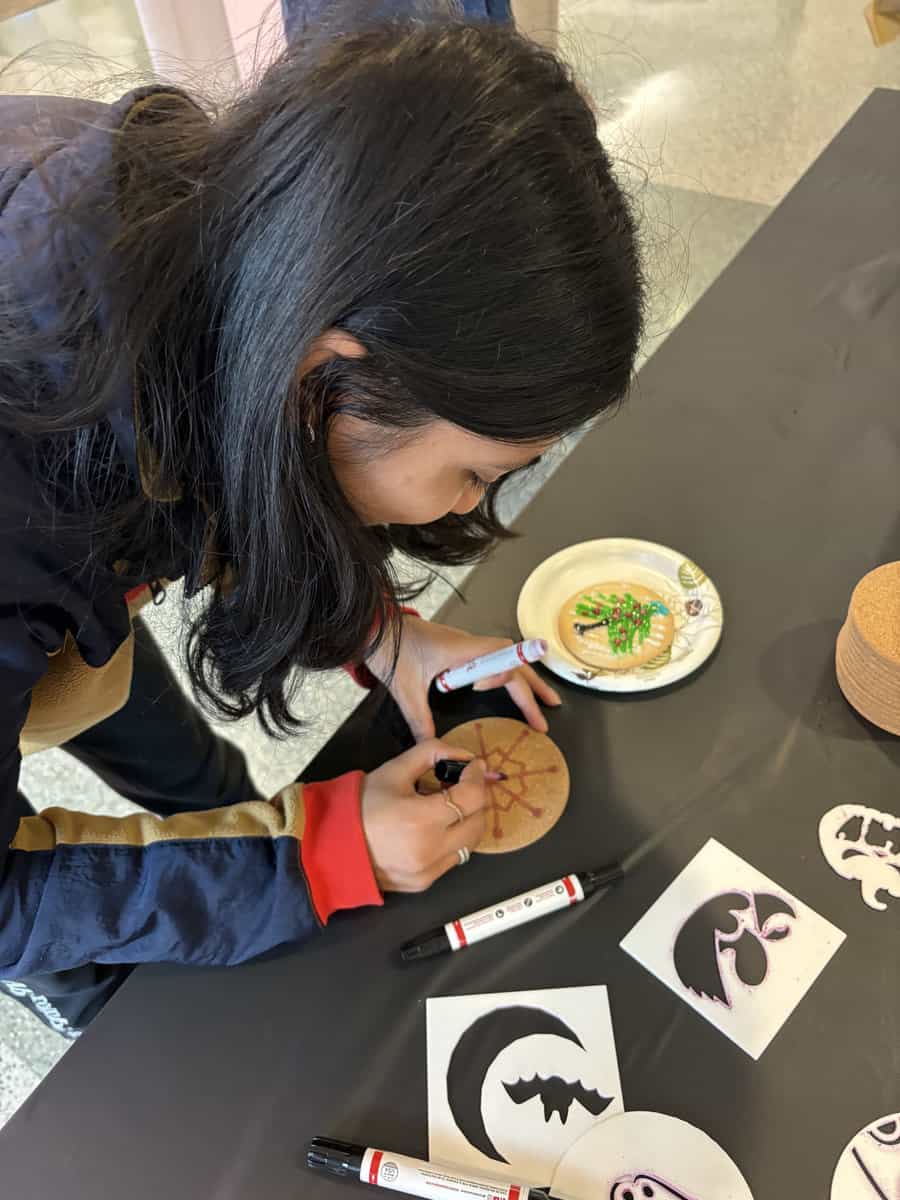
Give your brain a break and get creative for a few minutes with monthly themed crafts. These activities should only take you about 10-20 minutes to complete. Stop by at any time during the two hours, to take a break and let your creative juices flow.   

Winter Break Hours

If you are in town during Winter Break you can stop in and see us! Just make sure to check our hours below:


Dec 18 – Dec 22 Monday – Friday: 8:30 am – 5:00 pm 

Dec 25 – Jan 1 Closed 

Jan 2 – Jan 12 Monday – Friday: 8:30 am – 5:00 pm 

Jan 15 Closed 

Jan 16 Normal Hours Resume with weekends 


If you need to get in touch with us outside of these hours you can reach us at lib-engineering@uiowa.edu and we will get back to you as soon as we can.

Finals Week in the Engineering Library!

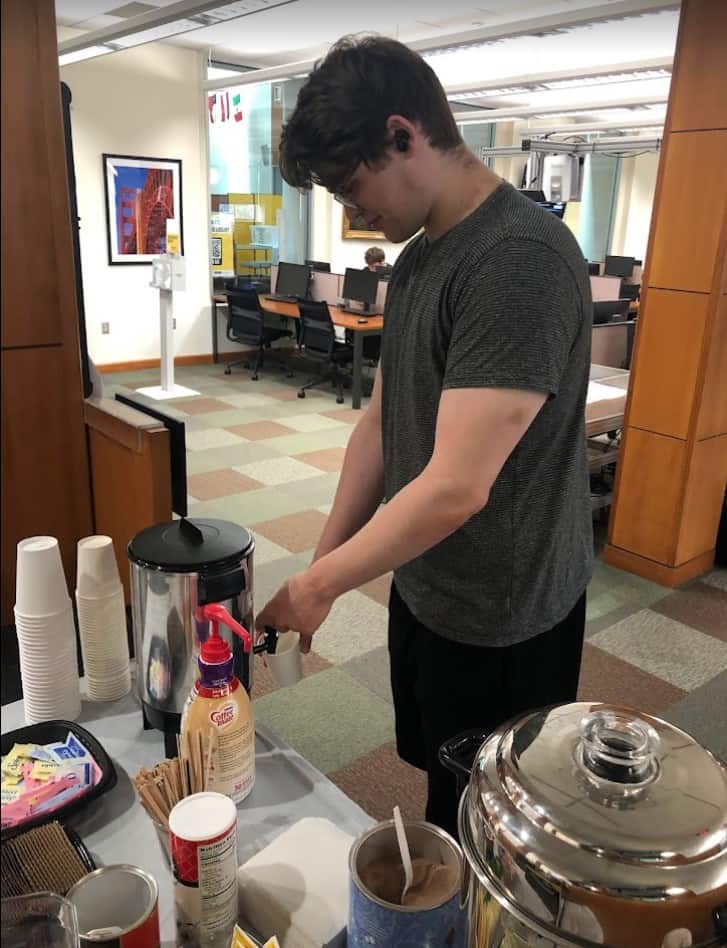
We are here for you for Finals Week! The Engineering Library will be open late and also be serving a variety of hot drinks including coffee, hot chocolate, and tea. Group study space is upstairs and quiet study space can be found on our lower level.

If you need study tools you can check them out from our Tool Library. You can also find earplugs, textured calming strips coloring books and more on the counter next to the printers. If you need help finding anything just ask at the service desk, we are happy to help!

If you need someone to talk to about the stress of Finals Week, you can find help at the IMU, where they are hosting drop-in hours at Student Care and Assistance Monday-Wednesday from 8 a.m. to 5 p.m. in room 123 IMU. No appointment necessary. The IMU’s full Finals Week schedule includes therapy dogs, yoga, and a meditation room.

Lichtenberger Engineering Library Finals Week Hours 

Sunday (12/10) 2 p.m. – midnight 

Monday (12/11) 8:30 a.m. – midnight 

Tuesday (12/12) 8:30 a.m. – midnight 

Wednesday (12/13) 8:30 am – midnight 

Thursday (12/14) 8:30 a.m. – midnight 

Friday (12/15) 8:30 a.m. – 6 p.m. 

You’ve Got This!

Turkey Day patents

Happy Thanksgiving! Have you ever thought about all of the intellectual property that goes into your Thanksgiving feast? From roasting ovens to catchy jingles, intellectual property is everywhere.

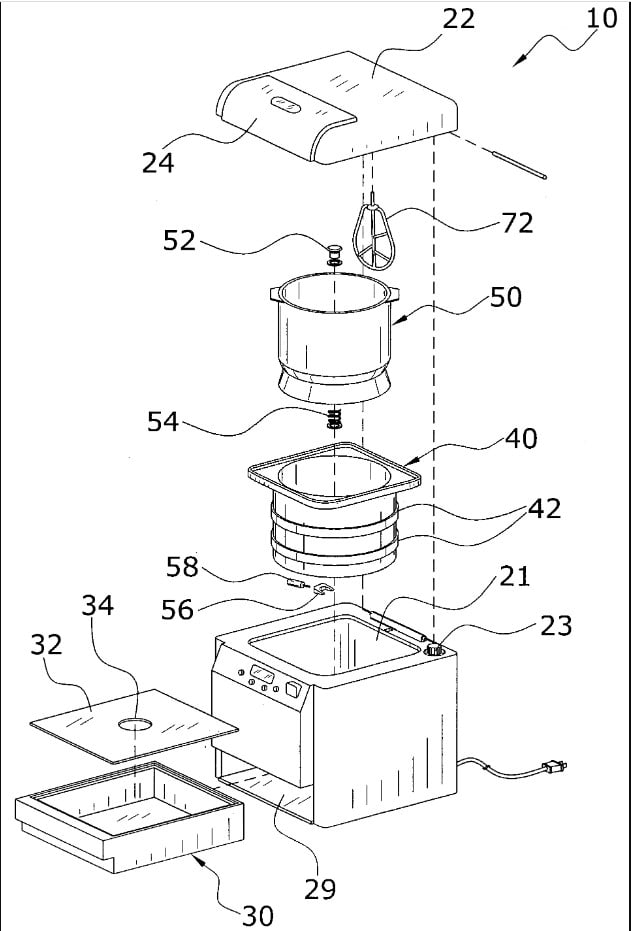
Have you ever gotten stuck on mashed-potato duty and just couldn’t bring yourself to do all that boiling and mashing? This Automatic Mashed Potato System could be just the thing you’re looking for! Just put in potatoes and water and this machine will boil, mash, and season the perfect spuds just for you. The potatoes will still need to be peeled by hand.

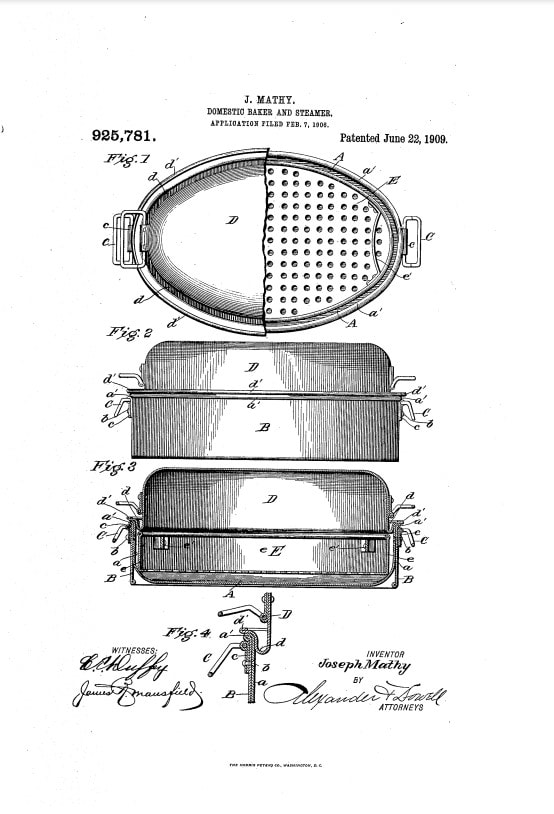
Remembering to baste the turkey while juggling the rest of the cooking can be difficult. This fancy roasting pan patented by Joseph Mathy in 1906 can help! Specially designed to encourage steaming, is pan will ensure your turkey stays moist while you’re putting together the green bean casserole and sweet potatoes.

Have a safe and happy holiday!