New Staff:
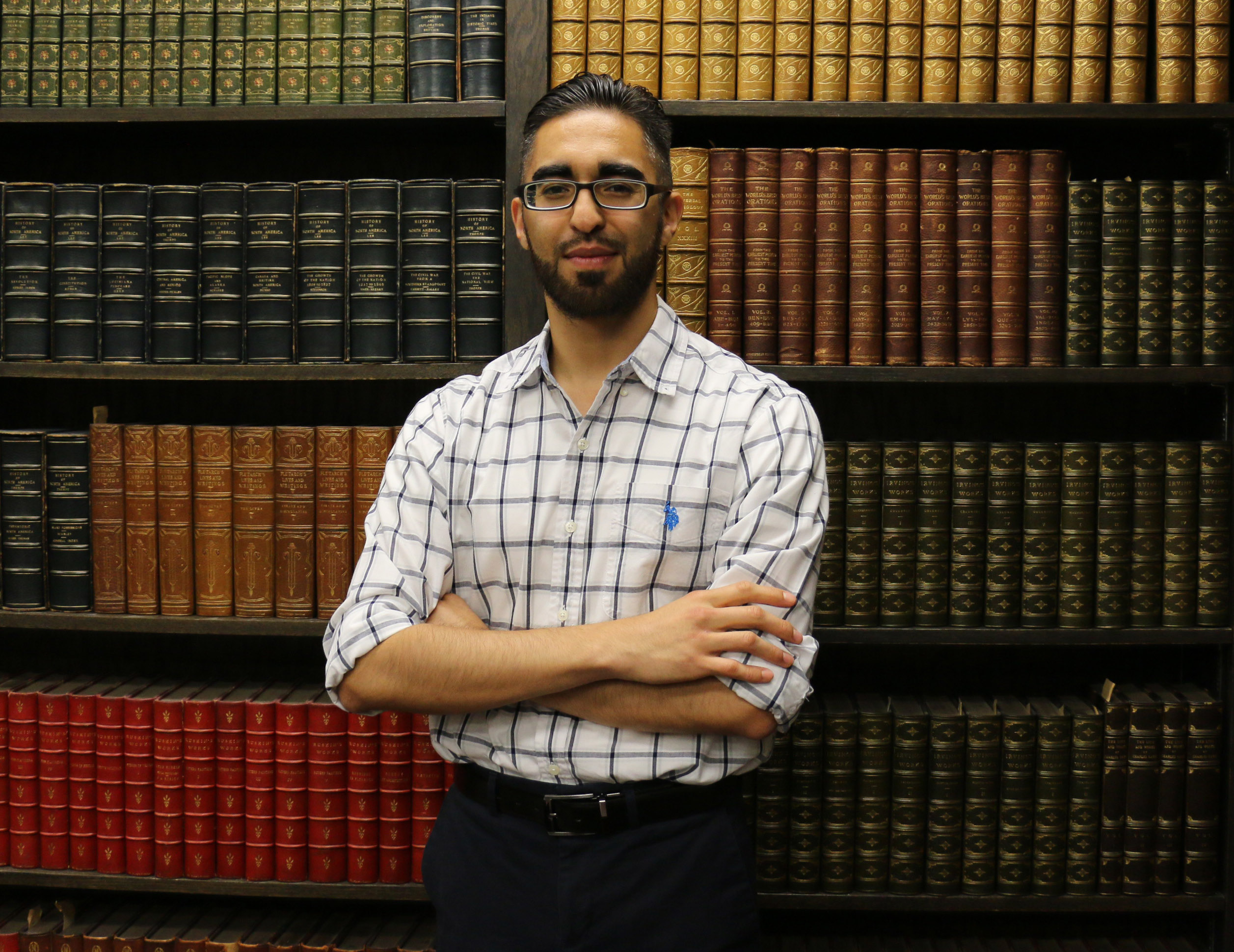
Alonso Avila is a new librarian and will begin his residency at the University of Iowa Libraries by spending a year working in Special Collections & University Archives. In May 2015, he received his Master’s degree from the Graduate School of Library and Information Science at the University of Illinois at Urbana-Champaign (UIUC). Prior to UIUC, Alonso worked as a special education tutor at a charter high school in Chicago, and also served two years in Peace Corps Jordan. Alonso’s research interests include the intersection of youth culture and social justice, as well as the interrelationship between librarianship and hip hop’s 5th element, knowledge AKA information literacy. While at The University of Iowa Libraries, he plans on building and gaining a new set of skills that will help him become a successful academic librarian whether in Chicago or any other institution around the world.
From the Web and Social Media:
1. Iowa Public Radio Interview
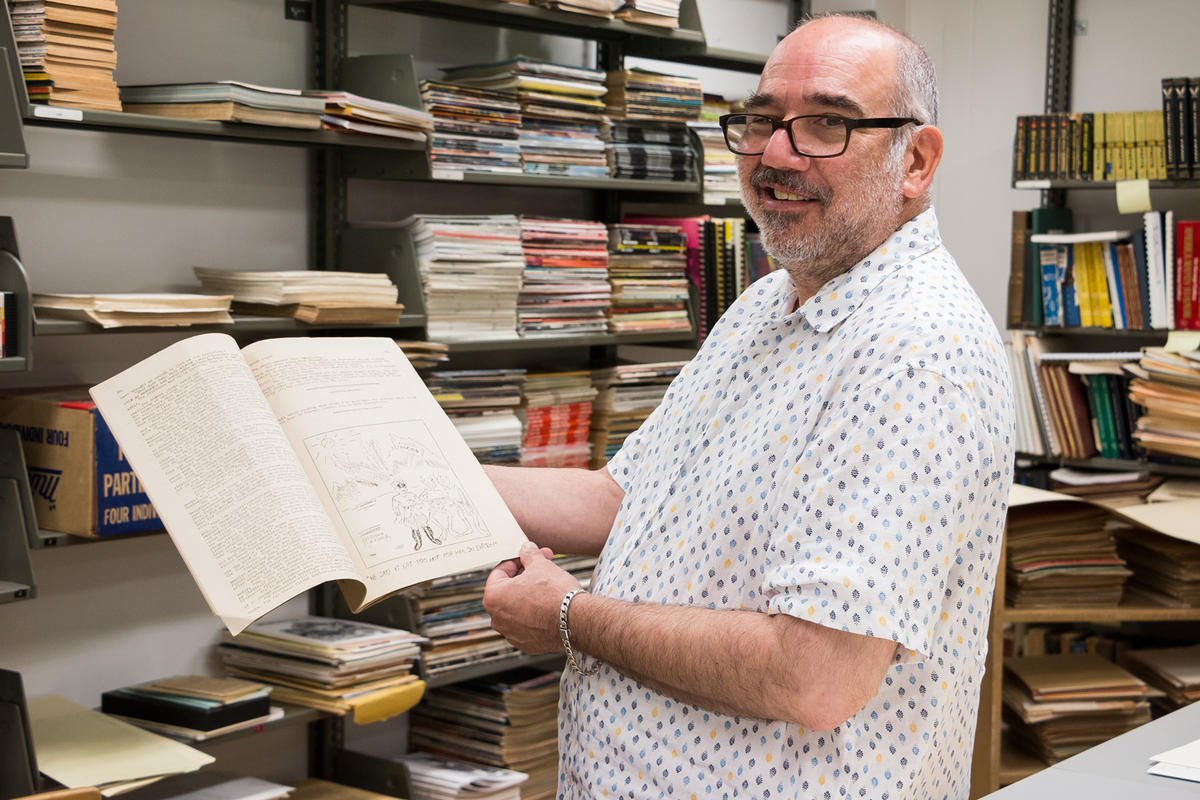
PHOTO BY JOHN PEMBLE
Librarians Peter Balestrieri and Laura Hampton were interviewed on Iowa Public Radio this week about digitizing 1930s-1950s science fiction fanzines. You can hear the four minute interview or read the transcript here.
2. Cheryl Jacobsen Calligraphy Video
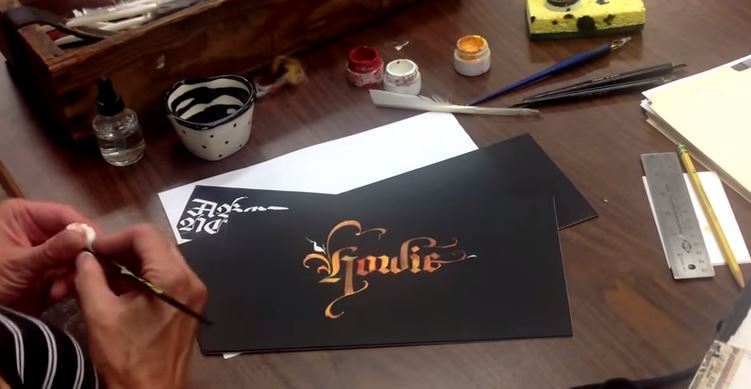
Cheryl Jacobsen, professional calligrapher and Lettering Arts instructor for the University of Iowa Center for the Book spoke about historic black letter hands from Medieval manuscripts at the Iowa Bibliophiles meeting last week. While there, she did a calligraphy demonstration and Colleen Theisen put together this short video of her work.
New Acquisitions:
1. Emblem book
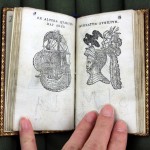
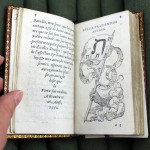
Paradin. Devises Heroïques. Lyon 1551.
This is the first edition of the first illustrated book of devices, or emblem book. Iowa has a growing collection of emblem books, which are frequently used for class sessions, but none are quite like this. Paradin’s devices went without explanation until the second edition was printed in 1557 with more text. This first edition, with its complete lack of explanation, is oddly appealing in its vagueness.
2. Facsimiles of Historic Bindings
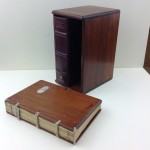
Two wonderful new facsimiles have arrived that are extremely high quality reproductions of early types of medieval manuscripts and their bindings.
The first is Historia Langobardorum by Paul the Deacon which is a 9th century text that is fundamental to understand the relationship between the Lombards, the Franks, the Byzantine Empire and the Papacy. The bare boards binding allows students to view how the quires are assembled and sewn in the text.
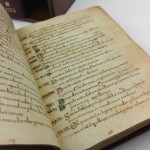
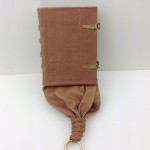
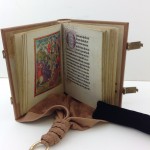
The second is Liber Precum, a facsimile of a 16th century book with a girdle style binding. The manuscript combines two Latin texts, each written and decorated separately and apparently unique in the forms found in this book: the first portion of the manuscript is a series of prayers on the life and Passion of Christ, and the second is a set of sermons and prayers in prose and verse, many attributed to distinguished spiritual authors, among them Saints Anselm, Gregory, Bernard, Jerome, and Thomas, as well as Jean Gerson and others. It includes 41 full page miniatures.
Want to stay connected? Follow us on social media:


