Skip to content
Skip to main content

DRP welcomes Rob Shepard!

Digital Research & Publishing is pleased to announce that Rob Shepard has accepted our offer to be the new Geospatial Information Systems (GIS) Librarian for the UI Libraries. Rob comes to us from the University of Nebraska – Lincoln where he is pursuing a Ph.D. in Geography.

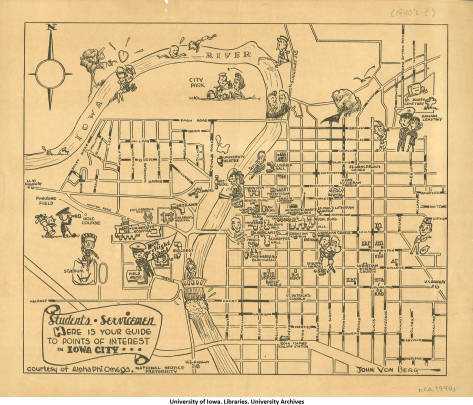
University of Iowa campus map, ca. 1943

We at DRP are looking forward to the talents and experience Rob brings that will further enhance the accessibility and usability of geospatial resources (everything’s spatial!) in the Iowa Digital Library.  Rob will also be working on cross-campus coordination of GIS and support for faculty research and other Libraries partners.

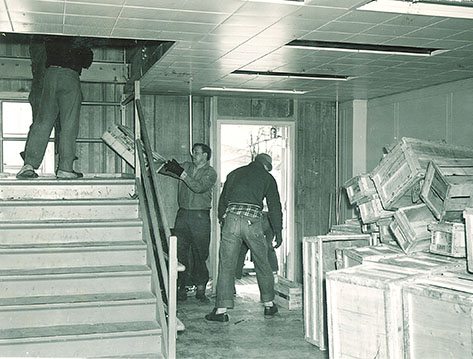
Moving items into Main Library, the University of Iowa, 1951

Welcome, Rob!

IRO November 2014 Usage

We regularly look at usage information for Iowa Research Online. The software shows us the 10 items receiving the most downloads overall (total use is averaged out across how long the item has been publicly (freely) available), which allows new items to enter the top ten. However, this list tends to remain similar from month to month (and day to day). Looking at the number of downloads for a specific month sometimes highlights different items, but typically the most used items remain similar across months.

The most used items for November were:

Other than the first item, they all appear on the most popular papers list.

In order to find other items that are seeing an increase in their usage, we have begun comparing the use of an item with the previous month. These items may not have had the largest use overall, but the number of downloads was quite a bit higher in November than in October.

Congratulations to the authors of the works!

Science fiction fanzines planned for DIY History

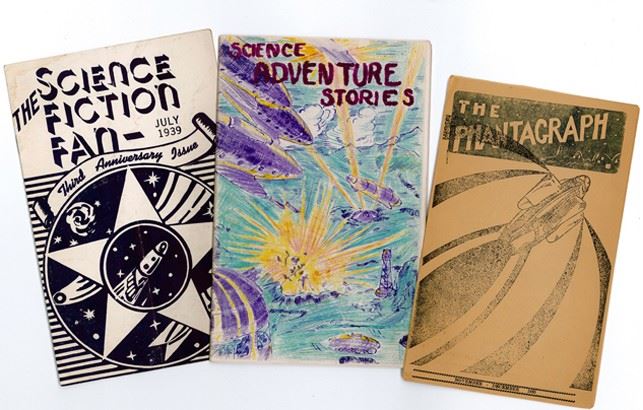
Selected fanzines from the Hevelin Collection, featuring hectographed and hand-colored covers and writing from early science fiction fans. Images courtesy of UI Libraries and Special Collections.

The University of Iowa Libraries has announced a major digitization initiative, in partnership with the UI Office of the Vice President for Research and Economic Development. 10,000 science fiction fanzines will be digitized from the James L. “Rusty” Hevelin Collection, representing the entire history of science fiction as a popular genre and providing the content for a database that documents the development of science fiction fandom…

Science fiction fanzines are amateur publications made by individuals or groups that discuss books, films, politics, and many other public and personal matters. They were initially written for a limited audience and distributed via personal connections and gatherings, beginning in the 1930s in the United States and Europe. Within the pages of science fiction fanzines lies previously inaccessible and unstudied primary documentation of the social history and popular culture of the 20th century.

Science fiction fanzine writers were intimately involved with many aspects of science fiction literature during the golden years of its development. The list of names is impressive: Ray Bradbury, Robert Heinlein, Arthur C. Clark, Robert Bloch, Leigh Brackett, Frederik Pohl, Harlan Ellison, Joe Haldeman, Michael Moorcock, Roger Zelazny, Marion Zimmer Bradley, Robert Silverberg, Roger Ebert, George R.R. Martin, Forrest Ackerman, and many others were actively involved in fanzine culture….

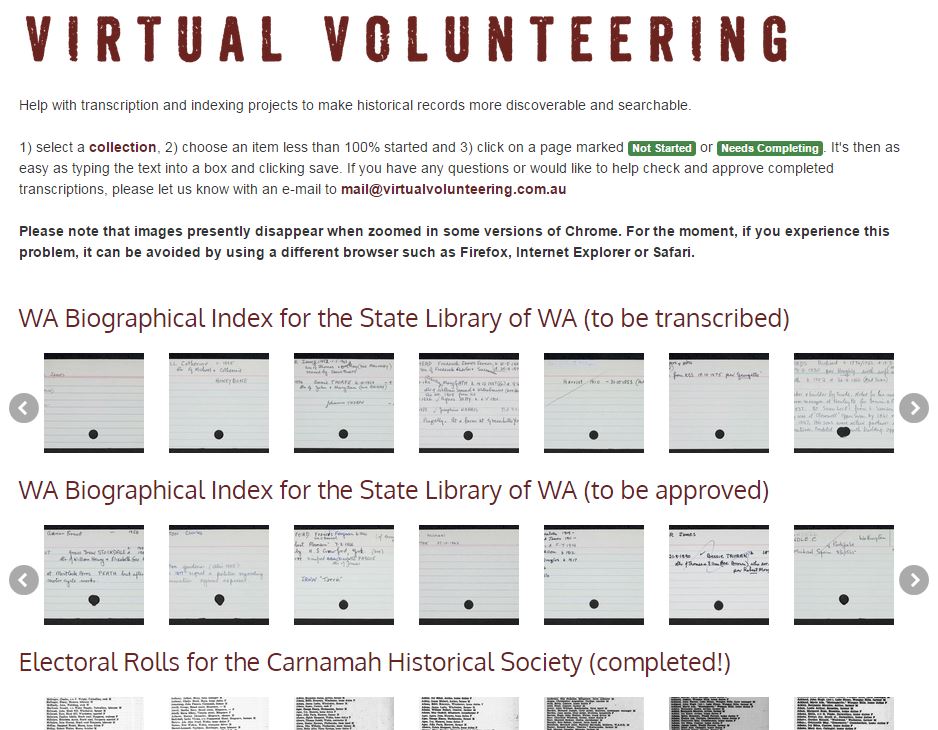
Once digitized, the fanzines will be incorporated into the UI Libraries’ DIY History crowdsourcing site, where a select number of interested fans (up to 30) will be provided with secure access to transcribe, annotate, and index the contents of the fanzines. This group will be modeled on an Amateur Press Association (APA) structure, a fanzine distribution system developed in the early days of the medium that required contributions of content from members in order to qualify for, and maintain, membership in the organization. The transcription will enable the UI Libraries to construct a full-text searchable fanzine resource, with links to authors, editors, and topics, while protecting privacy and copyright by limiting access to the full set of page images.

Read full press release

Use of Older Theses

By far the most heavily used collection in Iowa Research Online are our theses and dissertations. Most of the items in the collection are from the last decade, either from graduates who voluntarily submitted their thesis electronically or dating from after December 1999 graduation when electronic submission required by the Graduate College for all non-M.F.A graduates. All of them are freely available worldwide (after an embargo period, if requested).

We have also digitized a small number of older theses. We digitize items when requested by an interested reader, with the copyright holder’s permission. We are also posting digitized out of copyright theses as time allows. As one would expect, these items do not receive nearly as much use as the newer theses. However, we are pleased to see that they are receiving steady use, far more than the print theses circulated.

In all, these 217 theses have been downloaded 20,966 times, used on average once every 5 days. In fact, six items have averaged more than 1.2 uses/day, including two that have been downloaded more than 1000 times!  In early May 2010 we ran a report to count circulation of theses, with data covering the previous five years. The highest use of any thesis was 60 circulations. The 2nd highest number was 16. Only 5,695 showed any circulations (average circulations 2.6 for those that circulated and 0.7 overall). 

Graduation Year Title Author Degree Use/Day Total Downloads
1914 Morphology of cannabis sativa L Reed, Joyce Master of Science 2.023 534
1921 The development of Milton’s prosody Hunter, Grace Eva Master of Arts 1.204 236
1931 The catenary Kacmarynski, J. P. Master of Science 1.521 1,217
1949 A formal analysis of Hawthorne’s The Blithedale romance Levang, Lewis Dwight Master of Arts 2.024 498
1961 The Production book of “The Diary of Anne Frank” Longacre, Allan Kurtz II Master of Arts 1.219 1,403
2008 Teacher-initiated talk and student oral discourse in a second language literature classroom : a sociocultural analysis Thoms, Joshua J Doctor of Philosophy 1.320 545

If you are interested in having your thesis digitized and added to our open access collection, please let us know by submitting this permission form (PDF).

Crowdsourcing soldiers on

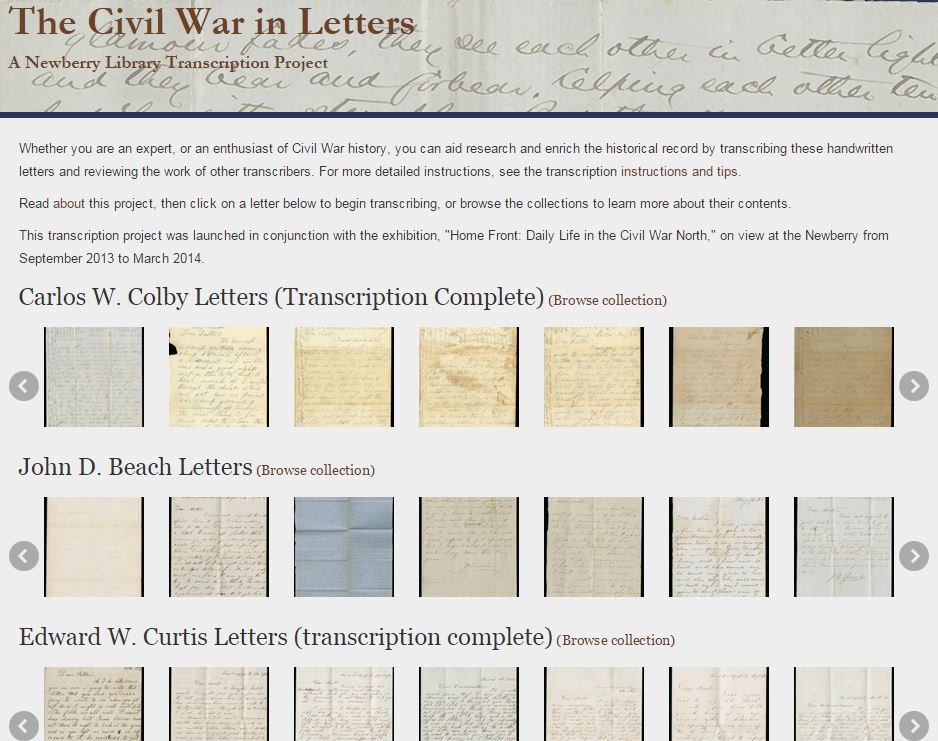
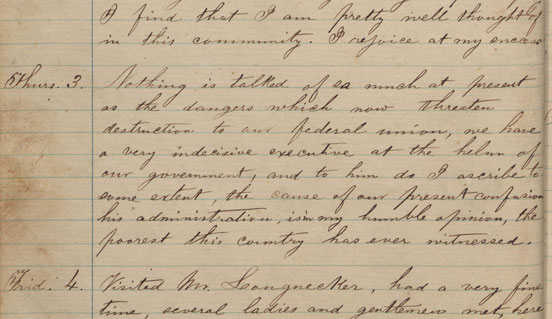
George C. Burmeister diary, 1861 | Civil War Diaries and Letters

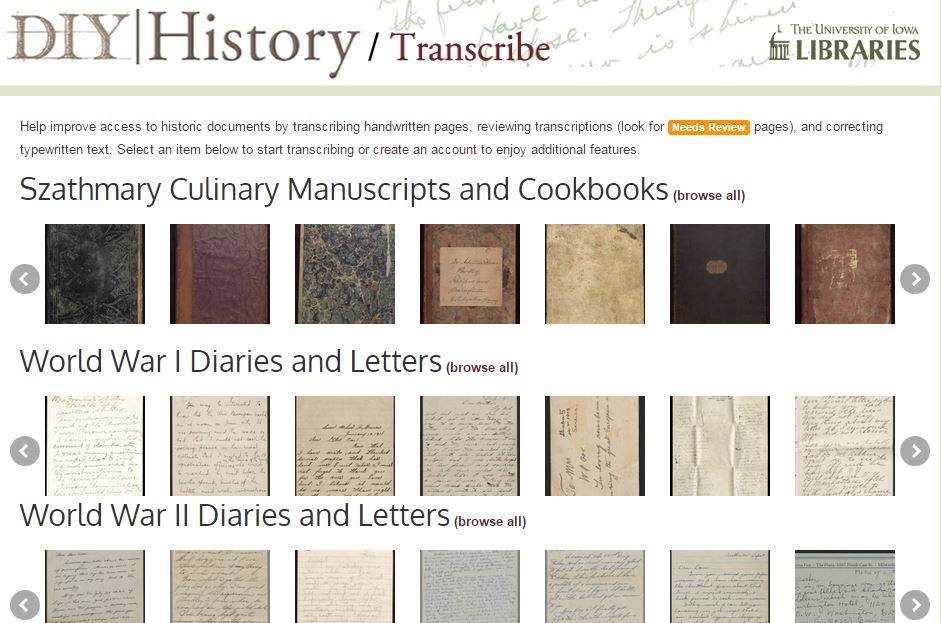
While our long-delayed launch of World War I & II documents at DIY History continues to be long delayed, there are still plenty of items currently available for transcription, including several new additions to our original crowdsourcing collection: Civil War Diaries and Letters.

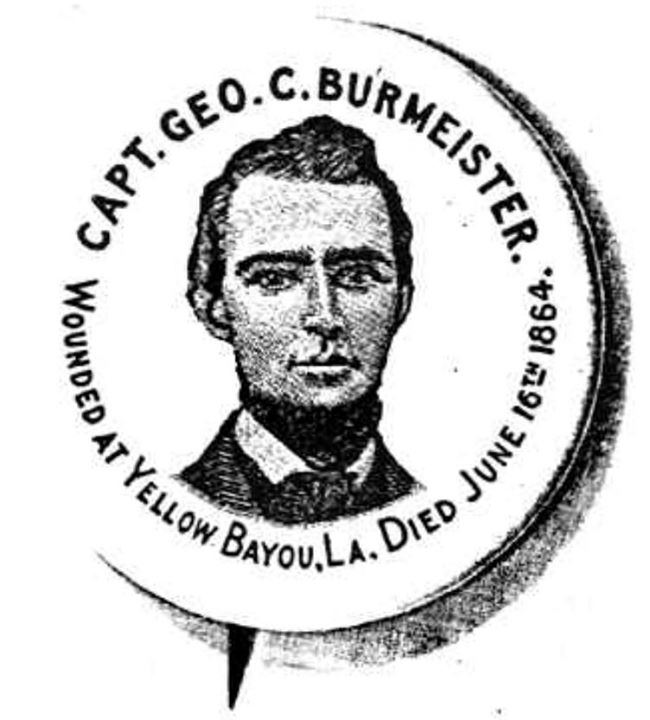
Among these are four diaries written by Muscatine, Iowa, native George C. Burmeister, a schoolteacher turned Civil War captain. From his first, optimistic entry on January 1, 1861 (“Once more we look with anxious expectations into the future, and fondly cherish this day as a harbinger of anticipated fortune”) to his 1864 newspaper obituary (“Let his memory be cherished as one who died that liberty might live”), Burmeister’s story unfolds in the diaries as he enlists in the First Iowa Infantry, musters out, studies business and law, applies to the UI, rejoins the army as a captain, and dies in the Battle of Yellow Bayou.

Please visit DIY History to help preserve and improve access to the stories of Captain Burmeister and his fellow soldiers.

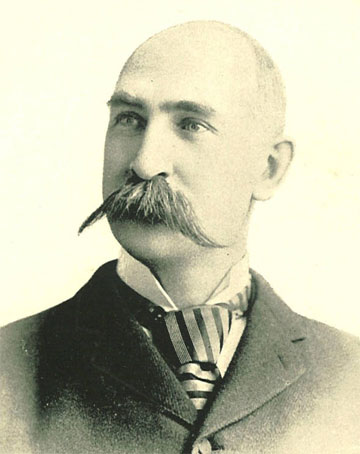
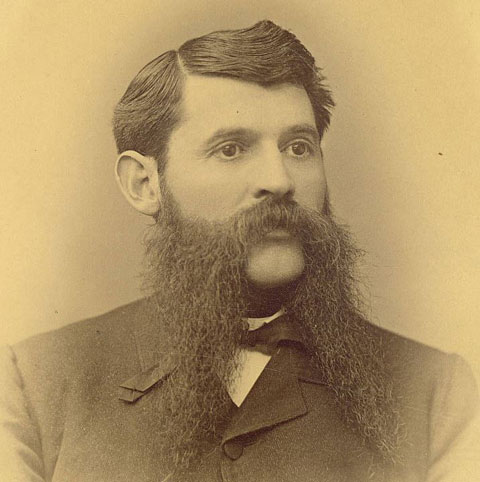
Burmeister image via Ancestry.com and the Muscatine in the Civil War Facebook group